
Aluminum Lead Frame Magazine for Semiconductor Packaging: Custom Carriers for Die Bond, Wire Bond and Molding Lines
Aluminum lead frame magazines from Southern Machinery: precision carriers for die bond, wire bond, molding and trim-and-form lines, built to your drawing.
Sep 17, 2026 · Updated Sep 17, 2026 · Southern Machinery
Aluminum Lead Frame Magazine for Semiconductor Packaging: Custom Carriers for Die Bond, Wire Bond and Molding Lines
A lead frame is one of the most fragile things in a semiconductor packaging plant. It arrives as a thin metal strip with fine etched or stamped features, it must stay perfectly flat through die attach, wire bond, molding and trim and form, and it is handled dozens of times between those steps. Most lead frame damage is not caused by a machine. It is caused by handling — a stack that shifts, a slot that is too wide, a burr that nicks the plating, a magazine that was never engineered for the frame format sitting inside it.
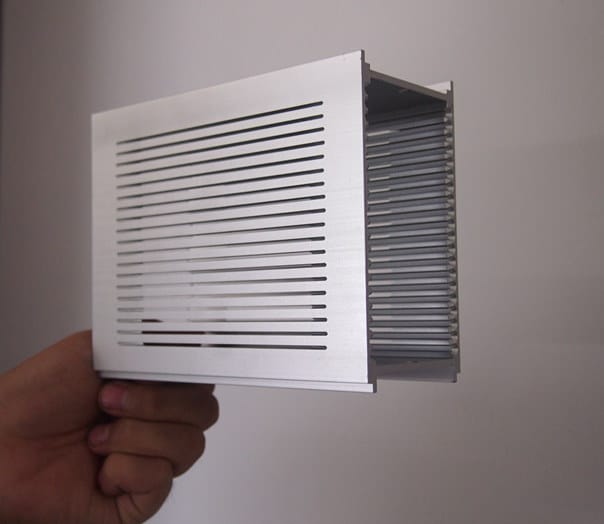
Southern Machinery manufactures custom aluminum lead frame magazines for exactly this problem. These carriers are designed for the safe storage, transfer and automated handling of lead frames during semiconductor assembly and packaging processes, and they are built to order from your drawings, technical specifications or reference samples. Different overall dimensions, internal widths, slot quantities, slot pitches, openings and structural configurations can be manufactured to suit different lead frame formats and production requirements.
Southern Machinery has been supplying PCB assembly automation equipment from Shenzhen since 2011 and serves 237+ customers worldwide. Our core business is SMT and THT PCB assembly equipment — insertion machines, Wave Soldering systems, board handling, Reflow Ovens, inspection and process support — and the same precision-machining and material-handling discipline that goes into that equipment is what we apply to lead frame carriers and semiconductor packaging accessories.
What Is an Aluminum Lead Frame Magazine Used For?
An aluminum lead frame magazine is a precision carrier that holds lead frames in individual slots so they can be stored, transported and automatically loaded and unloaded by semiconductor assembly equipment — most commonly die bonders and wire bonders.
The magazine does four jobs at once:
- Protects the lead frame. Precision-machined slots and guide surfaces hold each frame in a defined position, so frames do not rub, shift or stack against each other.
- Enables automation. A magazine gives a die bonder, wire bonder or other packaging tool a repeatable pick position. Without a carrier that locates the frame accurately, automated loading is unreliable.
- Stands up to production environments. Aluminum construction with corrosion-resistant finishes keeps the carrier stable through repeated handling, and it resists the contamination exposure that comes with plating, molding and marking areas.
- Carries identification. Laser marking and engraving let you put a part number, lot code or customer reference on the magazine itself, which supports traceability through the packaging line.
Unlike a PCB magazine, a lead frame magazine is not a generic mechanical part. Slot pitch, slot depth and internal width are all tied to the specific frame format it will carry, which is why these carriers are normally custom-manufactured rather than ordered from a catalogue.
Why Lead Frame Carriers Are Not Interchangeable with PCB Magazines
EMS and ODM engineers often ask whether a standard PCB magazine loader or unloader magazine can be reused for lead frames. In most cases it cannot, and the reasons are mechanical rather than commercial:
- Lead frames are thinner and more delicate than PCB substrates. A slot with too much clearance lets the frame tilt and touch its neighbour. A slot with a rough edge scratches plating or bends a lead.
- Contact edges matter. Lead frame magazines are specified with smooth, polished and deburred contact edges so that the parts of the frame that will later be wire bonded or soldered are not damaged in handling.
- Dimensional stability matters. Aluminum alloy or aluminum extrusion is chosen for lightweight construction combined with stiffness, so the magazine does not flex and change slot geometry when it is loaded.
- The magazine has to match the machine. The applicable machine model — the die bonder or wire bonder that will interface with the magazine — is a specification input, not an afterthought.
Southern Machinery supplies both sides of this world. For PCB assembly lines we provide magazine loaders and unloaders, conveyors, PCB turnover units, vacuum loaders and the full board handling range. For semiconductor packaging, we manufacture lead frame magazines to drawing. The two product families sit on the same engineering foundation: locate the workpiece precisely, protect it in transfer, and make sure the next machine receives it in a known state.
Typical Application Scenarios
Aluminum lead frame magazines are used across the semiconductor packaging flow, and each stage puts different demands on the carrier:
- Die bonding. The magazine feeds frames to the die bonder in a repeatable position so die placement stays accurate and cycle time stays stable.
- Wire bonding. Fine bond pads and leads must reach the wire bonder undamaged; deburred slots and controlled clearance protect the bonding surfaces.
- Semiconductor molding. Frames are carried to and from molding in a carrier that holds them flat and separated.
- Plating. Corrosion-resistant aluminum construction and appropriate surface finishes support use in plating areas.
- Trim and form. Frames move through lead trimming and forming operations where a bent lead is a scrap unit.
- Marking and inspection. Carriers with laser-marked identification help tie a physical magazine to a lot record.
- Lead frame storage and transportation. Lightweight aluminum keeps handling loads reasonable while protecting the frames in storage and between plants.
- Semiconductor assembly automation. Anywhere an automated tool loads or unloads lead frames, the magazine is the interface element.
How the Magazine Connects to a Full Assembly Line
A lead frame magazine is a line element, not a standalone accessory, and it is worth thinking about it that way during planning.
Upstream, the magazine is loaded with frames — either manually at a loading station or through an automated magazine elevator. Slot geometry decides how fast and how safely that loading step can be done.
At the process tool, the magazine docks with the die bonder, wire bonder or other packaging equipment. The critical questions are the interface dimensions, the frame presentation height and the way the tool extracts the frame from the slot. These are documented from the applicable machine model when the magazine is specified.
Downstream, filled magazines move to the next operation, and empty magazines return. Because the carriers are lightweight aluminum, they are practical to move by hand or by automated transport.
Across the wider factory, the same principle — controlled material presentation — applies to the SMT and THT side of the business. Southern Machinery supplies SMT and THT auto insertion machines, Wave Soldering systems, Reflow Ovens, board handling systems, inspection equipment and process support machines, and we can discuss lead frame carriers as part of a broader material handling and packaging plan rather than as an isolated purchase. If your project also touches PCB-level assembly, we can review the two sides together so magazines, carriers and board handling hardware are not specified in isolation.
Key Selection Parameters to Confirm Before You Order
Because every lead frame magazine we build is customized, the specification comes from your inputs. These are the parameters that have to be settled before manufacturing:
- Lead frame format and dimensions. The frame outline, thickness and material determine the slot opening and support geometry.
- Internal loading width. How much of the frame the slot supports, and where contact is allowed to occur.
- Slot quantity, slot pitch, slot width and slot depth. The core of the specification, and the parameters most often changed between projects.
- Slot profile and guide surfaces. Precision-machined profiles ensure frames seat consistently and load smoothly.
- Overall dimensions and footprint. Must fit the loading station, storage rack and process tool.
- Openings, covers, handles, stoppers and locking structures. Decides how the magazine is handled and whether frames can move in transit.
- Material. Aluminum alloy or aluminum extrusion, selected for the balance of weight, stiffness and durability.
- Surface treatment. Brushing, sandblasting, standard anodizing or hard anodizing, chosen according to application requirements and the environment the magazine will work in.
- Marking and identification. Laser marking or engraving for part numbers, lot references or customer identification.
- Applicable machine model. The die bonder, wire bonder or other equipment the magazine will interface with.
- Order quantity and packaging. Including special packaging according to shipping requirements.
Because these carriers are made to order, we do not publish a fixed dimensional table. Any catalogue-style "standard" dimension set would be an assumption rather than a specification, and a magazine that is 1 mm out on internal width is not a near miss — it is a scrapped part or a damaged frame.
What to Send Us for a Quotation
To quote a custom lead frame magazine accurately, please provide:
- The magazine drawing, or a reference sample we can measure
- Lead frame dimensions
- Slot specifications — quantity, pitch, width and depth
- Required surface treatment
- Applicable machine model
- Order quantity
If you do not have a drawing yet, a sample or even a photograph with critical dimensions is usually enough to start the conversation, and we can work through the slot geometry with you.
ROI, Quality and Throughput Perspective
Lead frame magazines are a small line item compared with die bonders and wire bonders, but they touch yield in several direct ways.
Scrap and rework. A bent lead or a scratched bonding surface is generally not repairable on a lead frame. Carrier geometry that holds frames securely and edges that are deburred and polished reduce the handling damage that shows up later as reject units at trim and form or final visual inspection.
Throughput and OEE. Slots that are machined to a consistent pitch and depth mean the loading step behaves the same way on the first frame of a lot and the last one. That predictability is what keeps automated loading from jamming and what keeps operators from slowing the line down to compensate for a carrier that does not present frames cleanly.
Operator variance. When handling is defined by the carrier rather than by individual technique, output depends less on who is on the shift. This is the same logic behind automating manual insertion on the THT side of a factory: define the geometry, and the process stops drifting.
Traceability. Laser marking and engraving on the magazine let you tie a carrier to a lot or customer reference, which shortens containment when a quality question arises.
Storage life and contamination control. Corrosion resistance and the right surface finish protect the frame in storage and in environments such as plating and molding areas, where an unprotected carrier degrades and starts contributing particles.
The simplest way to evaluate the return is to look at your current frame damage and handling time, then compare it with the cost of carriers that are specified to the frame format and the machine. If handling damage is showing up at trim and form or final inspection, the carrier is one of the first places worth reviewing.
Service and Support from Southern Machinery
Southern Machinery has served electronics manufacturers since 2011 from Shenzhen, China, with 237+ customers worldwide. Alongside lead frame magazines, we supply:
- SMT and THT auto insertion machines for radial, axial and odd-form components
- Wave Soldering and selective soldering systems
- SMT placement equipment, Reflow Ovens and stencil printing support
- Board handling systems — magazine loaders and unloaders, conveyors, PCB turnover and vacuum loading
- Inspection and process support equipment, including SPI and AOI
- Spare parts, retrofit kits, repair services, machine upgrading and operator training
You can browse the product catalogue at file.autoinsertion.com and view machine photos at ph.smthelp.com.
FAQ: Aluminum Lead Frame Magazines
What is an aluminum lead frame magazine used for?
It is a precision carrier used to store, transport and automatically load and unload lead frames during semiconductor packaging. It is most commonly used with die bonders and wire bonders, and also in molding, plating, trim and form, marking and inspection operations.
Are lead frame magazines standard products or custom-made?
Southern Machinery manufactures them to order. Overall dimensions, internal loading width, slot quantity, slot pitch, slot width, slot depth, openings, covers, handles and locking structures can all be configured for a specific lead frame format and production requirement.
What information do I need to provide to get a quotation?
A magazine drawing or reference sample, the lead frame dimensions, the slot specifications, the required surface treatment, the applicable machine model and the order quantity. If you have no drawing, a sample or a dimensioned photograph is normally enough to begin.
Which surface finish should I choose — brushed, sandblasted, anodized or hard anodized?
The finish is selected according to the application. Brushed and sandblasted finishes are common general-purpose options, while standard anodizing and hard anodizing add surface durability for more demanding production environments. Tell us where the magazine will be used and we will recommend a finish.
Can the magazine be laser marked for traceability?
Yes. Laser marking, engraving, identification labels and special packaging can be provided, which supports traceability of the carrier through the packaging line.
How do I confirm the magazine will fit my die bonder or wire bonder?
Provide the applicable machine model when you specify the magazine. The interface dimensions and frame presentation are checked against that model, which is why machine compatibility is one of the required inputs for a quotation.
Get Configuration Advice from Southern Machinery
If you are specifying lead frame carriers for a new packaging line, or replacing magazines that are damaging frames, send us the frame dimensions, a drawing or a sample, and the machine model they will run on. Our engineering team will work through slot geometry, internal width, surface finish and identification requirements with you and come back with a configuration recommendation.
Contact: jasonwu@smthelp.com | +86 13602562576
Product catalogue: file.autoinsertion.com
Machine photos: ph.smthelp.com
Website: www.smthelp.com
Southern Machinery Sales and Service Co., Ltd — Your Smart EMS Factory Partner. SMT and THT PCB assembly automation equipment, supplied and supported worldwide since 2011.
Comments