
Wave Soldering Titanium Claws (Fingers): Stable PCB Transport for THT Lines by Southern Machinery
Unstable PCB transport is a hidden cause of bridging, skips and icicles in wave soldering. Southern Machinery supplies precision titanium claws and fingers that hold boards steady through fluxing, preheating, soldering and cooling - reducing rework, protecting throughput and extending part life. With 200+ stocked models for Jintuo, Nitto, Vitronics Soltec, ERSA, Kaitai and more, plus exact replication from sample or drawing, teams can replace OEM fingers without production delays. This guide covers geometry selection, machine compatibility, line integration and how to match the right claw to your wave solder conveyor.
Aug 14, 2026 · Updated Aug 14, 2026 · Southern Machinery
Wave Soldering Titanium Claws (Fingers): Stable PCB Transport for THT Lines by Southern Machinery
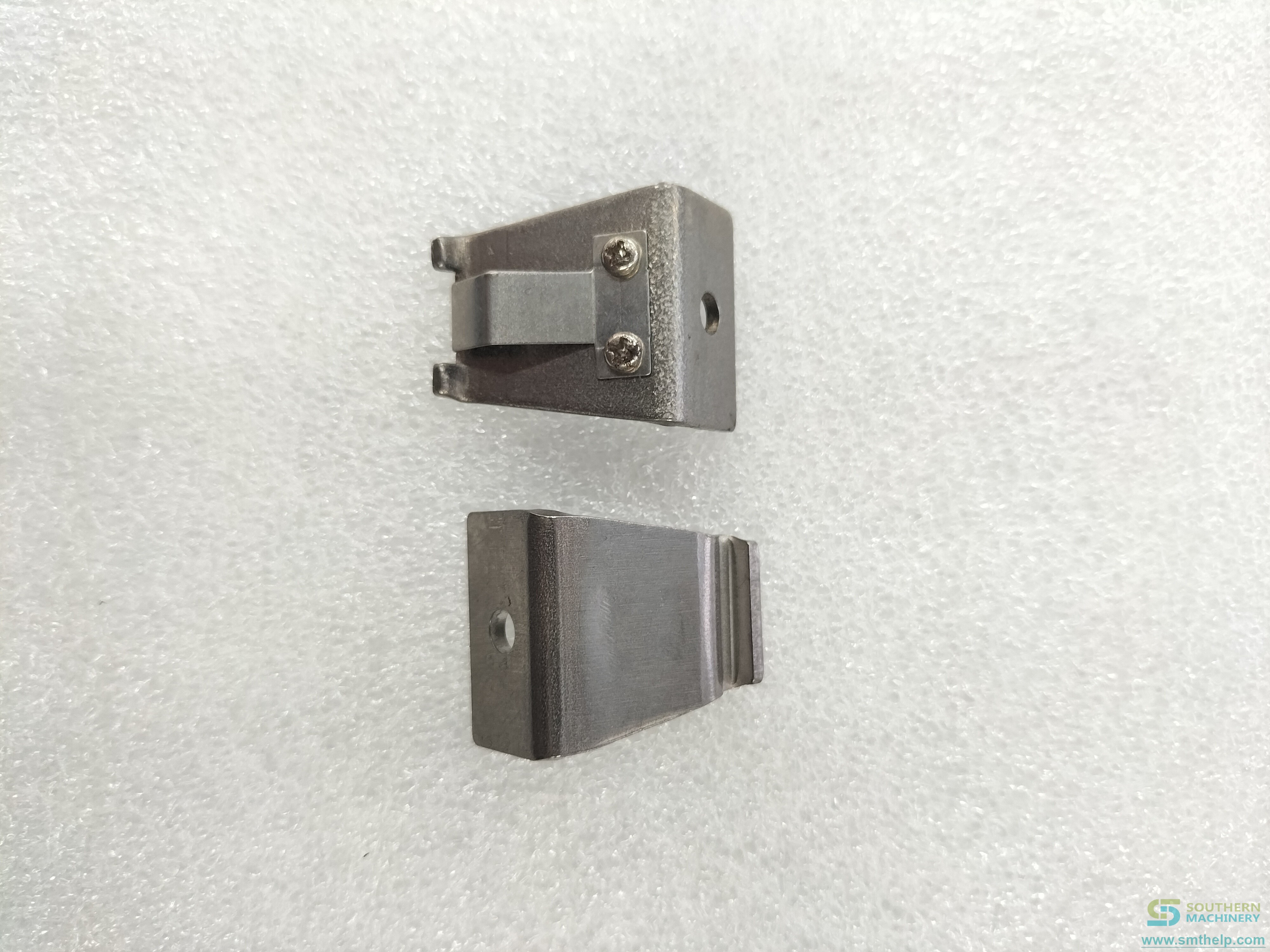
When a wave soldering line produces bridging, skips or icicles, the first suspects are usually flux, solder and temperature. Often the true culprit is mechanical: the conveyor claws cannot hold the PCB steady through the process. Wave soldering titanium claws (also called fingers) are the precision contact parts that grip and guide boards from fluxing to cooling, keeping the board flat, angled and stable so the wave meets the joint - not the board.
Southern Machinery, a Shenzhen-based SMT/THT PCB assembly automation equipment manufacturer founded in 2011, supplies titanium claws and fingers for domestic and imported wave soldering machines, with 200+ stocked models covering Jintuo, Nitto, Vitronics Soltec, ERSA, Kaitai and more.
What is this machine used for?
Wave soldering titanium claws (fingers) are conveyor wear parts used on wave soldering machines. Their job is to carry each PCB through fluxing, preheating, soldering and cooling while maintaining contact, angle and stability. The claw is the only component that touches the PCB the whole way through the thermal journey:
- Fluxing - the claw carries the board into the fluxer at a consistent angle.
- Preheating - it holds the board flat as heat rises and board stiffness drops.
- Soldering - it keeps stable contact with the wave, with no jitter and no lift.
- Cooling - it allows a smooth exit without icicles or board drop.
When the board shakes, the wave solder defects appear. Standard titanium claws help prevent mechanical-caused defects such as bridging, solder skips, icicles, board warp and sag, and part collisions caused by wrong claw geometry.
Why PCB transport stability drives wave soldering quality
Many EMS and ODM teams replace flux, solder and nozzles while ignoring the conveyor. Vibration and sagging change the board's contact with the wave, and defects follow:
- Bridging - vibration and sagging change contact with the wave, and excess solder bridges fine leads.
- Solder skips - an unstable board lifts out of the wave at the wrong moment, so leads miss the solder entirely.
- Icicles - inconsistent wave contact pulls solder into points as the board exits.
- Board warp and sag - heavier, larger and thinner PCBs flex during preheat and soldering; standard claws cannot hold the board flat.
- Wrong claw geometry - an "almost right" claw with the wrong size or angle still fails: parts near the board edge collide, or the board slips.
- OEM part bottlenecks - original fingers are slow and expensive to replace, and every day a conveyor waits is lost output.

What precision titanium claws change at the conveyor
Feature: Machined from high-grade titanium alloy, with a reference sheet of 0.078 in ±0.0075, vibra-tumbled with all burrs and sharp edges removed.
Advantage: Titanium withstands extreme heat without degradation, resists corrosion from flux and solder chemistry, and stays dimensionally stable.
Benefit: Accurate and secure PCB transport across the whole thermal journey - fewer defects and longer part life, with a clean contact point that solder does not wet to.
Key specifications for part evaluation
| Parameter | Standard reference |
|---|---|
| Material | High-grade titanium alloy (reference drawing: titanium 0.078 in ±0.0075) |
| Finish | Vibra-tumble; all burrs and sharp edges removed |
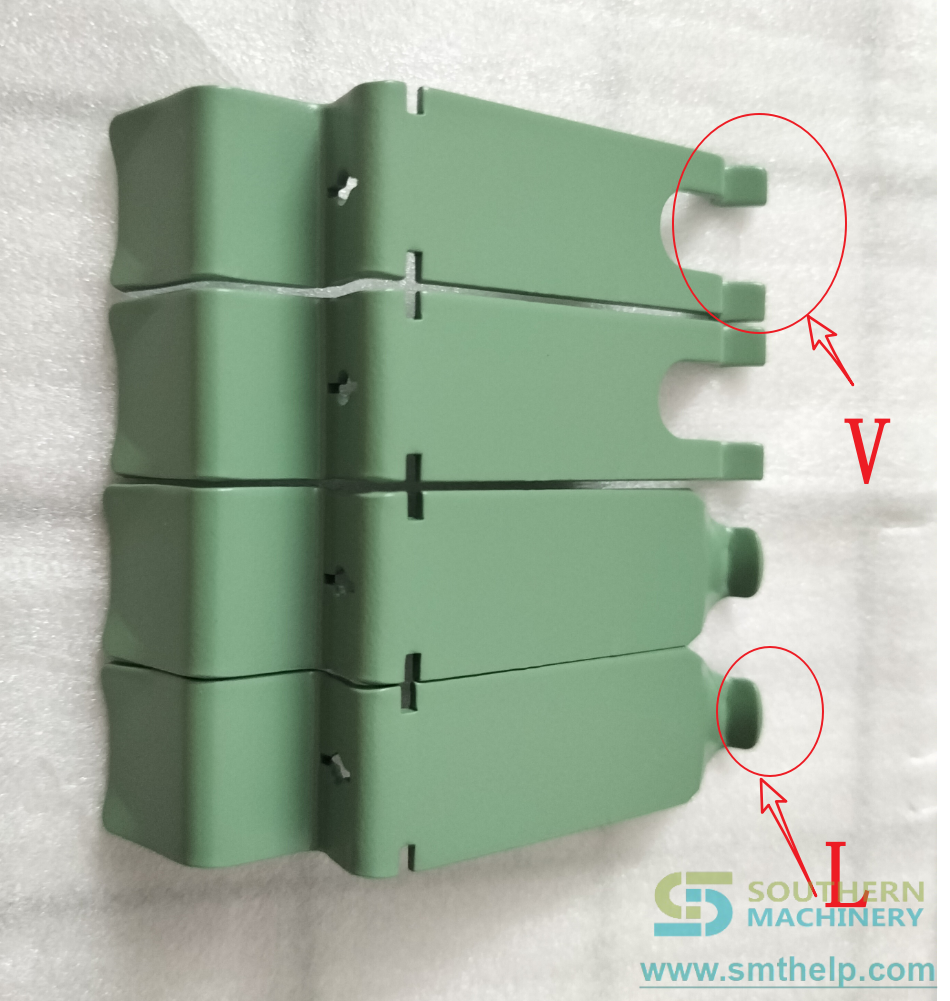
| Geometry types | L-type, V-type, single-hook, double-hook, duckbill, pressing plate, heavy-duty, column, wide, ultra-thin |
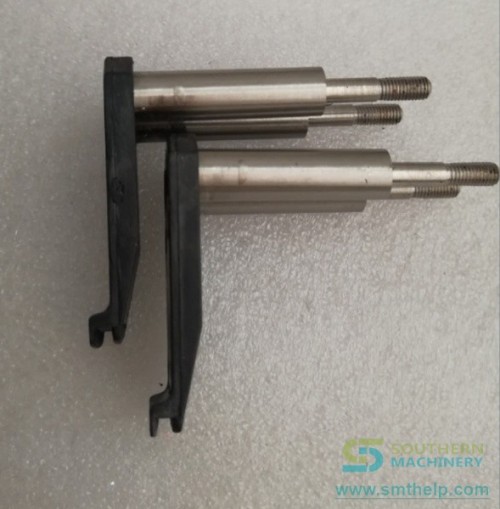
| Heavy double claw | Multi-part JT10434-series configurable support rated up to 80 kg; prevents board flex through preheat and soldering |
| Reference drawing | Vitronics Dover Soltec L 423210 finger (drawing GSC#5721-1); L-shape C450126-B style verified |
| Stock | 200+ models in stock, ready for dispatch |
| Customization | Made from a physical sample, clear multi-angle photos, or your drawing |
| Packing | Per-piece protection for safe international shipment |
Claw dimensions, bend angles and tolerances depend on the conveyor and machine model, and are subject to final technical confirmation against your sample or machine model.
Typical application scenarios
- High-mix EMS and ODM lines that switch board types frequently and need predictable transport quality.
- Heavy, thick or sagging boards that require the dedicated heavy double claw rated up to 80 kg of support.
- Boards with components near the edge, where V-type fingers provide clearance without losing grip.
- OEM finger replacement for Jintuo, Nitto, Vitronics Soltec, ERSA/Kurtz, Kaitai, Duoduo, Chaoyue, Honghui, Changrong, Taike, HuaBang and Hexi machines.
- Automotive, industrial control, medical and power electronics boards where solder-joint reliability and rework control matter.
How to integrate into a complete PCB assembly line
Titanium claws are a drop-in conveyor part, but they affect the whole THT process chain. In a typical Southern Machinery line:
- Board handling - loader and conveyor feed boards into the line.
- SMT placement - stencil printing, pick-and-place and reflow for SMD work.
- THT insertion - axial (S-4000), radial (S-3000) and odd-form (S7900) insertion machines place through-hole components.
- Wave soldering - claws maintain stable PCB transport through fluxing, preheat, soldering and cooling; machines such as the SW-350 or S-SW450 benefit directly from the right finger set.
- Inspection and unloading - AOI or manual inspection, then exit conveyor.
Because Southern Machinery supplies SMT, THT, wave soldering, board handling and inspection equipment as a complete line solution, the claw set can be matched together with line integration, spare parts support and professional training.
Key selection checklist
Before ordering, prepare these inputs for a fast and accurate match:
- Wave solder machine brand and model - about 50% match certainty.
- Multi-angle photos of the worn claw (ideally next to a ruler) - about 90% match certainty.
- A physical sample - 100% match certainty, including bend angles and hole positions.
- Board characteristics - size, thickness, weight and sag risk, to choose between standard and heavy double claws.
- Component clearance - components near the board edge call for V-type fingers.
- Quantity and delivery target - stocked models dispatch quickly; custom claws follow the 3-step match process with specification confirmation within 24 hours.
Note: domestic machines often change claw dimensions and angles between batches, so always confirm the current claw on the conveyor when ordering.
ROI, quality and capacity value
- Less rework: eliminating mechanical-caused bridging, skips and icicles reduces touch-up and inspection cost.
- Less downtime: 200+ models in stock mean fingers can be dispatched quickly instead of waiting on OEM lead times.
- Longer part life: titanium resists heat and flux chemistry, so the claw keeps its dimensions instead of deforming or wetting with solder.
- Higher first-pass quality: consistent board angle through the wave supports stable solder joints across the run.
- Lower risk on replacements: the 3-step match process raises certainty from about 50% (brand and model) to about 100% (physical sample) before you commit a batch.
Match-certainty levels and load ratings are Southern Machinery source-stated reference values; actual quality and capacity results depend on line configuration and process conditions.
FAQ
Why titanium, and why does material quality matter?
Titanium withstands the heat of the wave without degrading, resists corrosion from flux and solder chemistry, and holds its dimensions so the board angle stays constant. A weak or plated claw can deform, wet with solder, or shed particles into the process - all defect sources.
What is the difference between L-type and V-type fingers?
L-type gives maximum edge support for standard PCBs where component clearance is not an issue. V-type is designed for boards with components close to the edge, providing clearance without sacrificing a secure grip.
How do I identify the right claw for my machine?
Start with the machine brand and model, then send clear photos of the worn claw from several angles, ideally next to a ruler. For full certainty, send a physical sample - Southern Machinery replicates it exactly, including bend angles and hole positions.
What about heavy, large or thin boards that sag?
Standard claws may not prevent warping on heavier boards. The dedicated heavy double claw (multi-part JT10434-series) is rated up to 80 kg of support and configurable, holding boards flat through preheat and soldering.
Do you supply claws for Vitronics Soltec, ERSA and Kurtz machines?
Yes. Reference fittings include the Vitronics Soltec finger L-shape C450126-B and C450001 family (Dover Soltec L 423210 drawing) and ERSA/Kurtz finger types supplied per quotation. Send your part number or drawing for confirmation.
What is the lead time for standard and custom claws?
Stocked models (200+) dispatch quickly from inventory. Custom claws start with the 3-step match process - the specification is confirmed within 24 hours, then manufacture continues from sample or drawing. Exact delivery is confirmed per order.
Next step
Send your wave solder machine brand and model, photos of the worn claw, or a physical sample for a match. Southern Machinery confirms the exact geometry and quotation within 24 hours, with on-site diagnosis, repair and installation support available after the sale.
Contact Southern Machinery for a quote: info@smthelp.com or WhatsApp +86 136 0256 2576.
Southern Machinery was founded in 2011 in Shenzhen, China and serves 237+ global customers with SMT/THT PCB assembly automation equipment. The company provides complete line solutions covering SMT, THT, wave soldering, board handling and inspection, with a focus on high efficiency, cost-effectiveness, global service, spare parts support and professional training.
Comments