
Wave Soldering Pressure-Plate Fixture: Synthetic Stone PCB Carrier by Southern Machinery
Boards that lift, shift or sag in the solder wave create bridges and open joints that cost rework. A wave soldering pressure-plate fixture from Southern Machinery holds PCBs flat and stable through the wave, using high-hardness synthetic stone that resists heat and flux corrosion. Each fixture is customized by sample or drawing, with a reference 48-hour prototype before production, so high-mix EMS and electronics factories can ramp faster and keep wave soldering quality consistent. Learn how the fixture fits a complete SMT/THT line and what to specify when requesting a quote.
Aug 15, 2026 · Updated Aug 15, 2026 · Southern Machinery
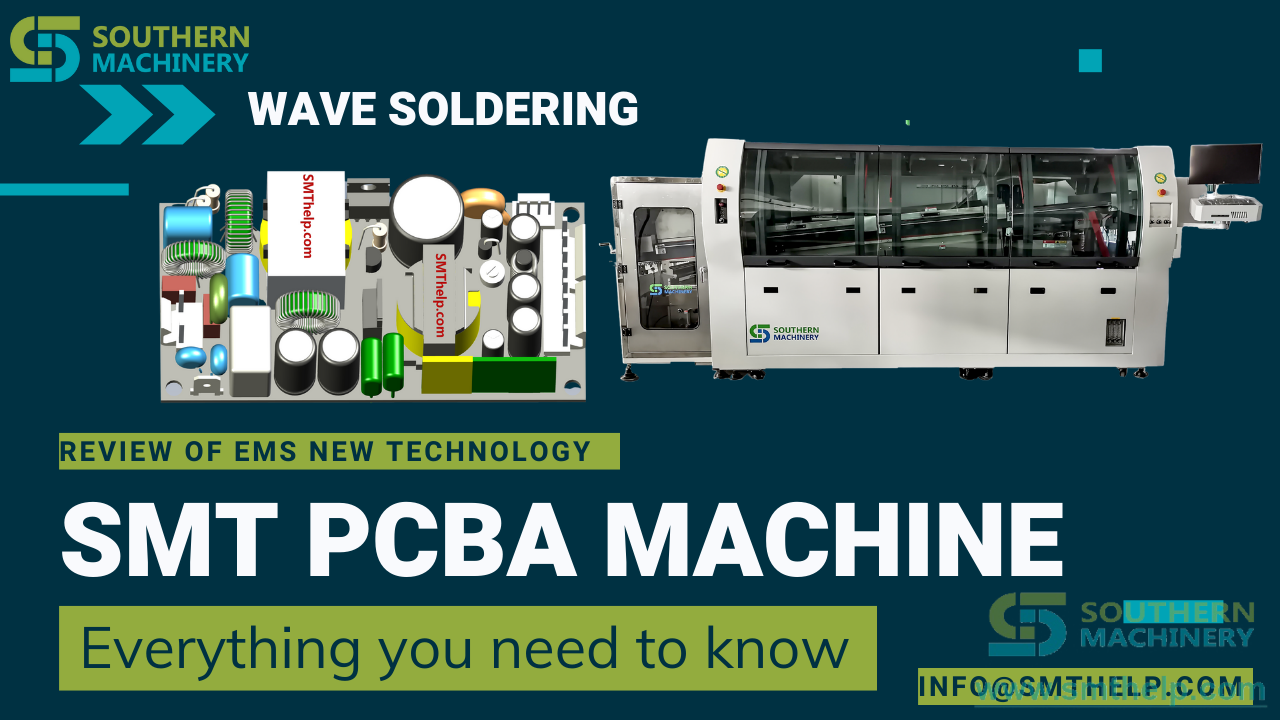
Southern Machinery's wave soldering pressure-plate fixture is a custom carrier that keeps PCBs flat, aligned and stable as they pass through the solder wave. It is built from high-hardness synthetic stone (高硬度合成石), a material selected for high-temperature and corrosion resistance, and is engineered around your board — by sample or by drawing — with a reference 48-hour prototyping turnaround before full production.
What is this machine used for?
A wave soldering pressure-plate fixture is a wave soldering carrier with a hold-down plate. It keeps the PCB flat and stable as the board travels through the solder wave, preventing lifting and shifting that cause solder bridges and open joints. It is used in THT and mixed SMT/THT assembly lines wherever through-hole components, connectors or pluggable parts must be soldered on a wave soldering machine.
Why board flatness decides wave soldering quality
Wave soldering quality is largely decided before the board reaches the solder. If tooling cannot keep the board level, the solder cannot wet consistently across all joints. Common failure modes on the floor include:
- Boards that float off the wave — unstable PCBs lift, shift or sag, creating bridges and open joints.
- Tooling that cannot take the heat — fixtures that warp under wave temperature scrap boards and need frequent replacement.
- Flux attack and corrosion — wave flux corrodes poor tooling materials quickly.
- Standard carriers that do not fit — generic pallets ignore your board layout and component heights.
- Long custom lead times — slow fixture vendors delay line ramp-up.
- Dirty pallets — flux residue on carriers transfers to the next board.
A pressure-plate fixture directly addresses these points: the board is held flat, the material resists heat and corrosion, and the design follows your board rather than forcing your board into a generic frame.
High-hardness synthetic stone: material built for the wave
The reference material for the wave soldering pressure-plate fixture is high-hardness synthetic stone (高硬度合成石), specified for the wave process.
| Property | Reference configuration |
| --- | --- |
| Product | Wave soldering pressure-plate fixture (波峰焊压板治具 / 过炉载具) |
| Application | Wave soldering carrier for PCB through the solder wave |
| Material | High-hardness synthetic stone (高硬度合成石) |
| Features | High-temperature and corrosion resistant; easy maintenance |
| Customization | By sample (来样定制) or by drawing (来图定制) |
| Prototyping | 48-hour reference turnaround |
| User feedback | 5.0 / 5.0 with 100% positive reviews (60+ reviews reference) |
The material reference of 300 °C+ is provided for initial evaluation and remains subject to final technical confirmation against your board and wave process. Dimensions, layout and clamping details are confirmed against your board.
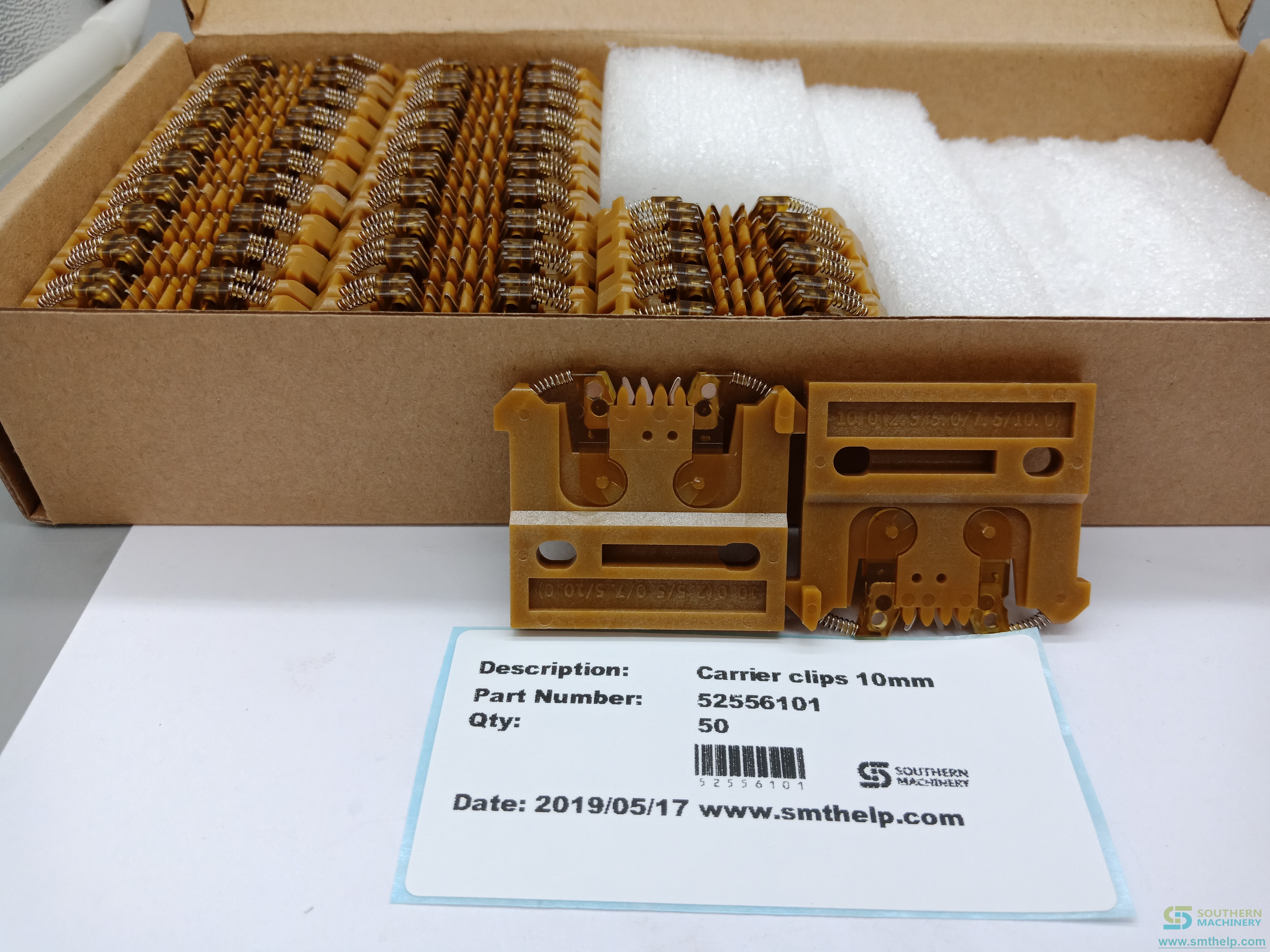
Customized by sample or by drawing
Every fixture is designed around the actual board. You send a board sample (来样定制) or an engineering drawing (来图定制), and Southern Machinery confirms the material and design — typically within 24 hours — then builds a prototype for your approval, with 48 hours as the reference prototyping turnaround. Production follows only after you approve the prototype.
Typical applications
Pressure-plate fixtures suit wave soldering work where PCB flatness is critical, including:
- THT and mixed SMT/THT boards with connectors, relays, transformers, pluggable terminals and other through-hole parts.
- High-mix EMS and ODM production, where board layout and component heights change frequently and generic pallets waste setup time.
- Boards with thin substrates or asymmetric layouts that tend to warp or lift under wave temperature.
- Automotive electronics, medical electronics, industrial control and other quality-sensitive assemblies where bridges and open joints are not acceptable.
How it fits into a complete PCB assembly line
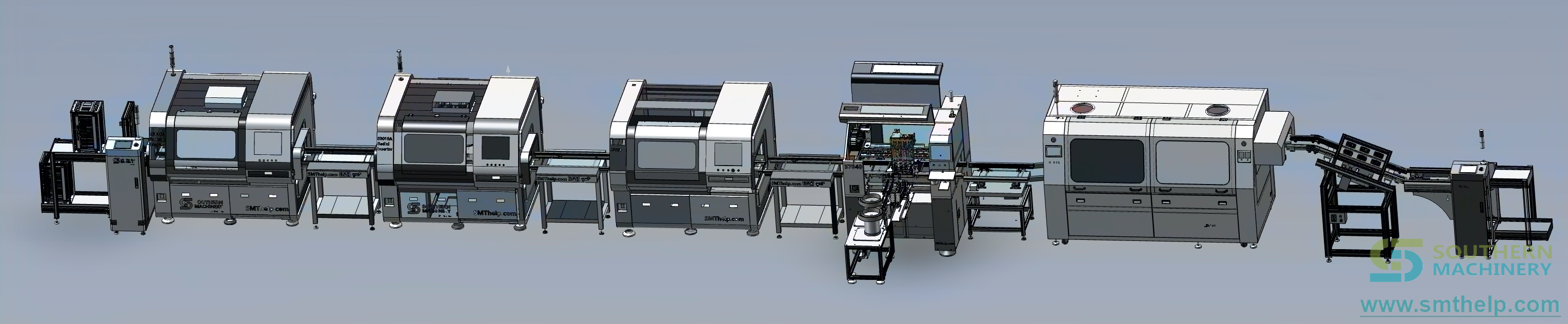
A typical Southern Machinery line runs from solder paste printing and SMT placement through reflow, then THT insertion (axial, radial, odd-form) and wave or selective soldering, followed by board handling and inspection. The pressure-plate fixture sits at the wave soldering step: boards are loaded onto the carrier, held flat by the pressure plate, transported through the solder wave, and unloaded for inspection and downstream handling.
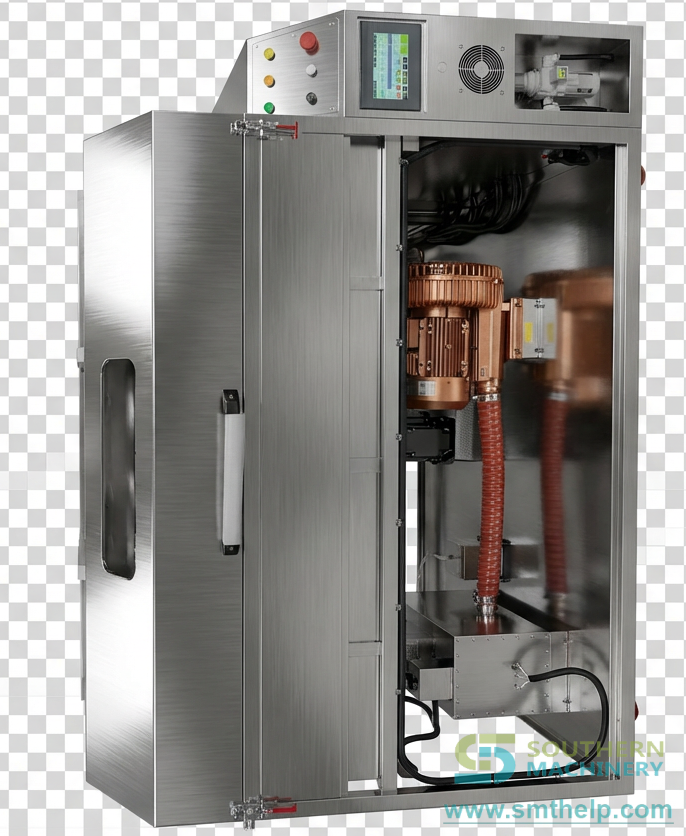
For continuous operation, pair the fixture with a fixture or pallet cleaning machine. Flux residue left on carriers transfers to the next board; a cleaning step keeps the carrier surface stable and prevents contamination between runs.

Selection checklist for a pressure-plate fixture
Before requesting a quote, prepare:
- PCB size, thickness, panelization and top/bottom component layout.
- Component heights and areas that need hold-down support or protection.
- Wave soldering process temperature and flux type.
- Board sample or engineering drawing (for by-sample or by-drawing customization).
- Expected quantity and number of fixtures per shift.
- Whether a prototype approval step is required before production.
- Cleaning and maintenance workflow for the fixture between runs.
ROI, quality and capacity value
- Fewer bridges and open joints. A flat, stable board means consistent solder contact, which reduces rework and repair.
- Less scrap from tooling. Heat- and corrosion-resistant synthetic stone reduces warping and premature replacement.
- Faster ramp-up. The reference 48-hour prototype lets you validate the design before committing to full production.
- Better line utilization. Correctly fitted fixtures reduce changeover time and keep the wave soldering station running.
- Cleaner process. Pairing the fixture with a cleaning machine prevents flux residue transfer board after board.
Numbers above are reference values from the source material and depend on your board, process and configuration; final figures are subject to technical confirmation.
FAQ
What is a pressure-plate fixture?
It is a wave soldering carrier with a hold-down plate that keeps the PCB flat and stable as it passes through the solder wave, preventing lifting and shifting.
What material is it made of?
High-hardness synthetic stone (合成石), chosen for high-temperature and corrosion resistance in the wave process.
How do I customize one?
Send a board sample (来样定制) or engineering drawing (来图定制); Southern Machinery designs the fixture around your board and confirms it with a 48-hour prototype.
How long does prototyping take?
The reference prototyping turnaround is 48 hours, with full production following your approval.
Is the fixture reliable?
Reference listings carry a 5.0 / 5.0 rating with 100% positive reviews, with users citing precise positioning, high-temperature durability and stable PCB holding. These are reference figures and depend on the final design confirmation.
How do I get a price and delivery time?
Email info@smthelp.com or contact WhatsApp +86 136 0256 2577 with your board sample or drawing and quantity. Quotation and delivery schedule are provided after technical confirmation — typically the same working day.
Get a quote for your board
Send your board size, wave process and quantity to Southern Machinery. The team replies with a design direction, prototype plan, quotation and delivery schedule.
- Email: info@smthelp.com
- WhatsApp: +86 136 0256 2576
Southern Machinery, founded in Shenzhen, China in 2011, serves 237+ global customers with SMT/THT PCB assembly automation equipment — from SMT placement, THT insertion, wave soldering and board handling to inspection. Every solution is backed by global service, spare parts support and professional training, so you get an automation partner rather than just a supplier.
Comments