
Wave Solder Pallet Cleaning Machine by Southern Machinery
Solvent soaking and hand scrubbing are the expensive way to clean wave solder pallets. See the SME-5200 water-based cycle, filtration and running cost.
Oct 7, 2026 · Updated Oct 7, 2026 · Southern Machinery

A pallet cleaning machine is the step that keeps baked flux off the fixtures your boards ride on. The SME-5200 from Southern Machinery is a batch fixture cleaning machine for wave soldering pallets, reflow oven coolers, selective-soldering fixtures and SMT trays. Pallets load into a rotating SUS304 basket, take a 720-degree curtain of heated water-based cleaning liquid for 5-15 minutes, rinse on warm tap water and leave dry under 80-90 degrees C hot air, while a closed-loop three-stage filter keeps the chemistry alive cycle after cycle. It is water-based by design: the user manual forbids volatile organic cleaning solvents outright because they may cause fire or explosion.
What does a pallet cleaning machine clean on a wave solder line?
It cleans the tooling, not the board: wave soldering pallets and carriers that hold the PCB flat and mask pads, plus reflow oven coolers, selective-soldering fixtures and SMT trays. The residue is flux that spattered and baked on, solder balls, grease and dust.
The fixtures that carry flux into the wave
Cycle after cycle the residue bakes onto the mask window sealing faces, pockets, threads and spring channels. Southern Machinery recommends a white-wipe audit: wipe the sealing faces, check the spring channels with a torch, and if the wipe does not come back white the fixture holding the board has become the contamination source.
Why hand scrubbing stops working
Flux that has been through hundreds of solder cycles is a hardened, partially carbonised film. A brush reaches the flat faces; the residue that transfers onto the next board lives where the brush cannot go - and every pallet waiting on the bench is a wave solder machine waiting for a fixture.
Solvent or water-based? What a fixture cleaning machine costs to run
The four-line cost model every solvent bath produces
Line one is the solvent itself, eventually hauled away as hazardous waste. Line two is the people lifting fixtures in and out of an open bath. Line three is the compliance stack: fire load in the insurance survey, VOC exposure in the ventilation assessment, hazardous-waste manifests, and the audit finding that pairs an open solvent bath with a wave solder machine. Line four is bath carry-over, because the tenth fixture out of a dirty bath leaves with a film of the first nine.
What the SME-5200 manual says about solvent
The 2020 SME-5200 user manual states that volatile organic cleaning solvents are strictly forbidden on the machine because they may cause fire or explosion. The hazard is designed out rather than managed with a fire cabinet and a vapour survey - heat, time, rotation and pressure replace what solvent was doing.
Where the recurring cost actually sits
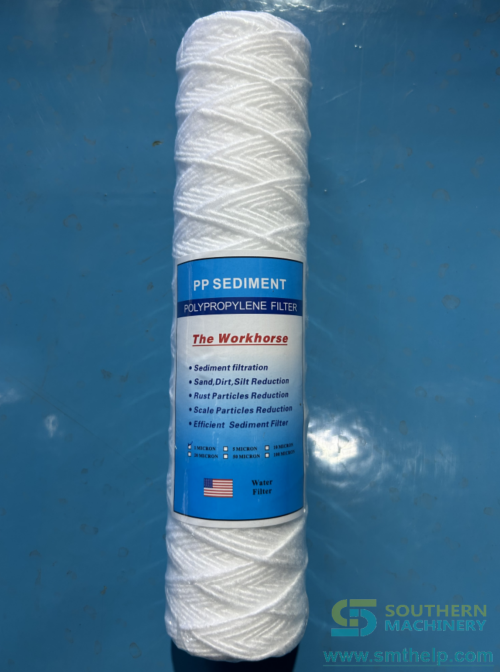
The wash liquid is not single-use. It recirculates through three filtration stages for the whole cycle, and a compressed-air blow-back recovers the liquid still sitting in pipes, rods, nozzles and on the fixtures. The consumable that remains is the filter set: five 20 micron cores, typically changed every 15 to 30 days depending on soil load, and swapped in three moves.
How the SME-5200 pallet cleaning cycle works
| Stage | What happens | Figures from the source document |
| --- | --- | --- |
| Load and lock | Pallets stack into the round SUS304 basket; the cover closes on air springs and locks, with a guard switch that stops the machine if the door opens | Basket envelope phi 1000 mm x 200 mm (H); pallets to 450 mm cleaning height |
| Wash | The basket motor turns the load while upper, lower and front-side spray rods lay a heated water-based liquid curtain over it | 5-15 minutes per soil level; 80 L tank; normally 40-45 degrees C, up to 80 degrees C for heavy soil |
| Liquid recovery | Compressed air blows residual liquid out of pipes, rods, nozzles and fixtures back into the tank | 1 minute, adjustable to the observed flow-back condition |
| Rinse | A separate 80 L tank with its own pump and pipework rinses the load on heated tap water | 1-2 minutes, normally 40-45 degrees C |
| Hot-air dry | A high-pressure blower pushes air through an air heater and air knives sheet the water off the load | 10-20 minutes; air heated to 90 degrees C, normally 80-90 degrees C |
| Filtration | A coarse screen protects the pump, a mid screen catches solder balls and solids, fine cores pull out the flux | 2 mm and 100 micron stainless screens, five 20 micron cores (20-inch); 20 micron accuracy |
720 degrees of rotation instead of a flat spray tunnel
A spray tunnel suits flat boards. Fixtures are three-dimensional, with mask windows, pockets, threads and spring channels that each cast a shadow a flat curtain cannot reach. Rotating the load while three liquid rods and three water rods spray from above, below and the front side means every face passes through every curtain, and offset nozzles overlap instead of leaving seams.
Spray pressure you can read on a gauge
Cleaning and rinse pressure gauges sit on the panel beside electrical pressure sensors, and the machine alarms below 2.0 and above 7.0 kg/cm2. Too low wets the flux; too high blasts seals and drives liquid where it should not go. PID control holds the liquid, water and air temperatures, heaters carry over-temperature protection at +10 degrees C tolerance, and tank level switches stop pumps and heaters from dry running.
Key selection parameters for a fixture cleaning machine
| Parameter | SME-5200 as published |
| --- | --- |
| Cleaning method | High-pressure spray with heated water-based liquid; the basket rotates while the load moves back and forth under the spray curtain |
| Basket size | phi 1000 mm x 200 mm (H) maximum |
| Maximum pallet height | 450 mm (machines built for a different cleaning height differ) |
| Cleaning liquid tank | 80 L, heated from room temperature to 80 degrees C (normally 40-45 degrees C) |
| Rinse water tank | 80 L, separate tank and pipework, same temperature range |
| Cycle time | Wash 5-15 min + recovery 1 min + rinse 1-2 min + dry 10-20 min |
| Filtration | Three stages at 20 micron accuracy: 2 mm screen, 100 micron screen, five 20 micron cores |
| Control | Mitsubishi PLC with touch panel, saved recipes, password-protected soft settings |
| Construction and noise | SUS304 structure, piping and tanks; 70 dB or lower with sound-proof cotton lining |
| Utilities | AC 380 V 50 Hz 63 A, about 33 kW; compressed air 0.5-0.7 MPa at 400-600 L/min; tap water feed; drains for spent liquid and rinse water; one phi 120 mm vent |
| Footprint | L 1400 x W 2000 x H 1500 mm, about 600 kg, with 1.5 m clear in front and 1 m at the side for service |
| Rinse water | Tap water - no DI plant is required for fixture rinsing |
Throughput follows batch arithmetic rather than a conveyor speed. At the manual's mid-range cycle - 10 minute wash, 2 minute rinse, 15 minute dry - the machine runs roughly 17 baskets in an 8-hour shift before your load and unload allowance. Count fixtures per basket, not baskets per shift.
How the SME-5200 fits a complete PCB assembly line
On a through-hole line the machine sits beside the fixture loop rather than in the board flow: pallets return from wave soldering, take a batch cycle, and go back to the clean side of the line. At 70 dB or lower it can stand next to the line instead of in a shed.
What surrounds it is largely Southern Machinery scope too - the PCB cleaning machine range for boards, the DIP assembly line for the insertion and soldering loop, and the wider one-stop PCB assembly total solution covering SMT, THT, wave soldering, board handling and inspection. Southern Machinery has built SMT and THT equipment in Shenzhen since 2011 and supports lines with spare parts, retrofit and training.
The machine has its own SME-5200 pallet cleaning machine product page inside the cleaning and coating range. Every number above is traceable to the SME-5200 user manual (2020), the installation protocol on the same file library, and the validation report from trials on production pallets at a Schneider Electric factory.
What does the payback on a fixture cleaning machine look like?
The method Southern Machinery uses counts only the labour the bench gives up, and leaves out yield and compliance savings:
annual freed bench labour = operators freed x loaded wage per hour
                          x working hours per day x working days per month x 12
simple payback (months)   = machine price / annual freed bench labour x 12
A worked example: two operators, two hours a day at the bench, a loaded wage of 18 USD per hour and 22 working days a month gives 1,584 USD a month, or roughly 19,000 USD a year; against a 40,000 USD machine that is about 25 months. These figures are an example only, depend on your configuration and your own measured bench hours, and are subject to final technical confirmation. The real number is normally shorter, because the arithmetic ignores the yield lost to dirty fixtures and the compliance costs that disappear with the bath.
FAQ
Can I use solvent in the SME-5200 to clean faster? No. The user manual states that volatile organic cleaning solvents are strictly forbidden because they may cause fire or explosion; heat, time, rotation and pressure do the work instead.
What exactly does the SME-5200 clean? Wave soldering pallets and carriers, reflow oven coolers, selective-soldering fixtures and SMT trays - anything that fits the phi 1000 x 200 mm basket envelope.
How long is one cycle, and what throughput should I plan for? Wash 5-15 minutes, rinse 1-2 minutes, dry 10-20 minutes, plus about a minute of flow-back. A mid-soil cycle is 25-35 minutes, so roughly 14-19 baskets in an 8-hour shift before your load and unload allowance.
What chemistry and water does it need? A water-based cleaning agent for the 80 L wash tank, selected for your flux type, and tap water for the 80 L rinse tank - no DI plant is required for fixture rinsing.
Will it damage delicate fixtures or loose parts? The load rotates in the basket rather than being blasted along a conveyor, and pressure is even across the rods with no blind zone. With the right basket inserts, springs, hold-down pins and small components stay in place; the trials cleaned hold-down components with springs and pins still fitted.
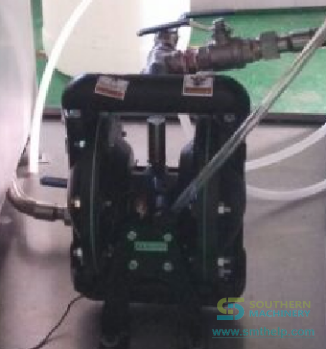
What protects the machine and the operator? Pressure alarms below 2.0 and above 7.0 kg/cm2, heater over-temperature protection at +10 degrees C tolerance, tank level switches against dry running and overflow, and a door guard switch that stops the cycle. Diaphragm pumps fill and drain both tanks, so nobody lifts hot chemistry.
Talk to Southern Machinery about your fixture loop
Send a photo of your dirtiest flux-caked pallet, your flux type and your pallet count per shift. Southern Machinery runs the trial on your own fixtures and returns a configuration sheet with the basket envelope, cycle times and the water-based chemistry sized to your soil.
Comments