
THT Radial Components Splicing Tape (3/5/6-Hole): Selection & Line Integration Guide by Southern Machinery
SCT-series THT radial components splicing tape from Southern Machinery joins the tail of a running radial reel to the head of a new one offline, so AI insertion machines and radial taped feeders keep feeding without stop
Oct 13, 2026 · Updated Oct 13, 2026 · Southern Machinery
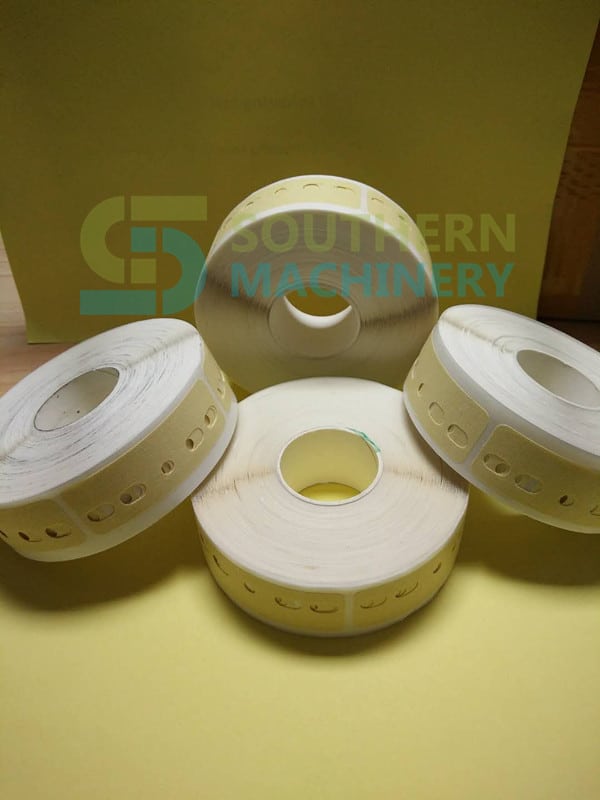
THT Radial Splicing Tape Selection | Southern Machinery
THT radial components splicing tape - the SCT series from Southern Machinery - joins the tail of a running radial reel to the head of a new one offline, so vertical and horizontal AI insertion machines and radial taped feeders keep feeding without a stop. It is die-cut for 12.7 mm and 15.0 mm carrier tape in 3-hole, 5-hole and 6-hole patterns, on masking or kraft paper, for radial capacitors, inductors, diodes, resistors and similar taped odd-form parts.
A radial reel never runs out at a convenient moment. It runs out mid-shift, mid-board, with the feeder already loaded - and the line pays in stopped machine time, re-threading, scrapped short reels, and the first risky components after every restart. The fix is not a better operator. It is a controlled splice, prepared offline, while the current reel keeps running.
What does THT radial splicing tape do on an insertion line?
Radial taped components arrive on 12.7 mm or 15.0 mm carrier tape and feed into AI insertion machines and radial taped feeders. When a reel empties, the machine stops. Splice tape removes that stop: join the tail of the old reel to the head of the new one with a die-cut splice, align the feed holes, and load one continuous master reel - no threading, no guessing pitch, no restart ramp. The adhesive face never contacts the component body, so material reliability is preserved through every splice.
3-hole, 5-hole or 6-hole: how do you choose the right die-cut pattern?
The hole pattern must match the carrier tape your components arrive on. Order the wrong count and the splice will not seat - and most mismatches surface on the line, late at night, with a feeder jammed. Three things decide the pattern: tape width (12.7 or 15.0 mm), hole pitch, and feeder sprocket position. Match all three and the splice seats every time.
| Pattern | Typical use | SCT coverage |
|---|---|---|
| 3-hole | Standard radial taped components on 12.7 / 15.0 mm carriers | SCT-031000 (masking), SCT-030500 (kraft) |
| 5-hole | Wider-pitch carriers and heavier taped reels | SCT-051000 (masking), SCT-050500 (kraft) |
| 6-hole | Universal pattern for 12.7-15.0 mm tape; vertical and horizontal machine variants | On request |
| 2-hole / custom | Legacy or OEM-specific carriers | Custom die-cut on request |
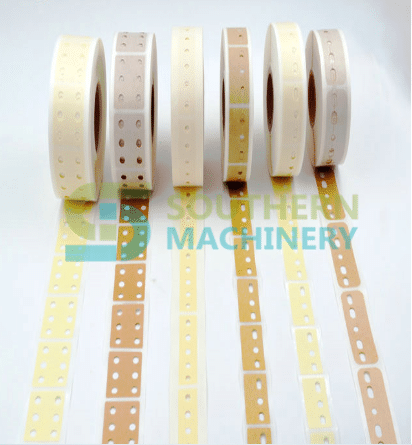
Not sure which pattern you run? Send a photo of your taped component - Southern Machinery identifies it, usually the same day.
Masking paper or kraft paper: which carrier survives your feeder?
Both carriers splice; they do not behave the same in a feeder that pulls, indexes and peels all day. Masking paper conforms to the tape path - the right choice for vertical inserters where the splice bends around guides. Kraft paper is surface-coated for a smooth, low-friction path - the right choice where an AI machine demands low drag. Both use the same high-viscosity synthetic-rubber adhesive that holds the splice without transferring to feeder surfaces, and both are precision die-cut. A carrier that is too stiff jams the guide; an adhesive that creeps leaves residue on the sprocket. Both show up first as intermittent misfeeds - which is why the SCT specification calls for no residual glue, verified on your own line: splice a reel, run 500 feeds, inspect the sprocket and guide rail.
What does a manual reel change really cost your line?
Every manual changeover runs the same sequence: stop, unload, re-thread, re-align pitch, restart, wait for feeding to stabilise - minutes of machine and operator time, dozens of times per shift. Short reels too small to re-thread become scrap, and feeder sprockets are most likely to mis-index right after a manual change, so the components placed just after a restart are always the risky ones. Offline splicing removes that sequence: the changeover happens while the line runs, and the machine sees one continuous reel. Southern Machinery documents the process efficiency gain at up to +15% versus manual reel changes - and that gain comes from everything the splice removes: stops, re-threading, scrapped short reels and misfeeds.
Example calculation (illustrative only - replace with your own line data; actual results depend on configuration and are subject to final technical confirmation):
Recovered machine time per month
= changeovers per shift x minutes per manual change x shifts per day x working days per month

Example inputs:
= 12 changeovers/shift x 4 min x 2 shifts/day x 22 days
= 2,112 minutes, about 35 insertion-machine hours per month
Even recovering half returns roughly 17 machine-hours per month to output - before counting scrapped reels and rework boards. The THT insertion ROI calculator and the auto insertion readiness checklist run the same arithmetic with your own numbers.
How do you splice a radial reel without stopping the line?
Four steps, all offline while the current reel keeps feeding:
- Confirm the tape. Check tape width (12.7 or 15.0 mm), hole pattern and component type. Send a photo if anything is unclear - compatibility is confirmed before you order.
- Splice offline. Align the tail of the running reel with the head of the new reel and apply the splice tape so the feed holes stay clear. Precision die-cutting makes the operator's job alignment, not measurement.
- Load one master reel. The die-cut holes match the sprocket immediately - no threading, no guessing.
- Keep feeding. The machine indexes through the splice without stopping - no residual glue, no re-alignment, no restart ramp.
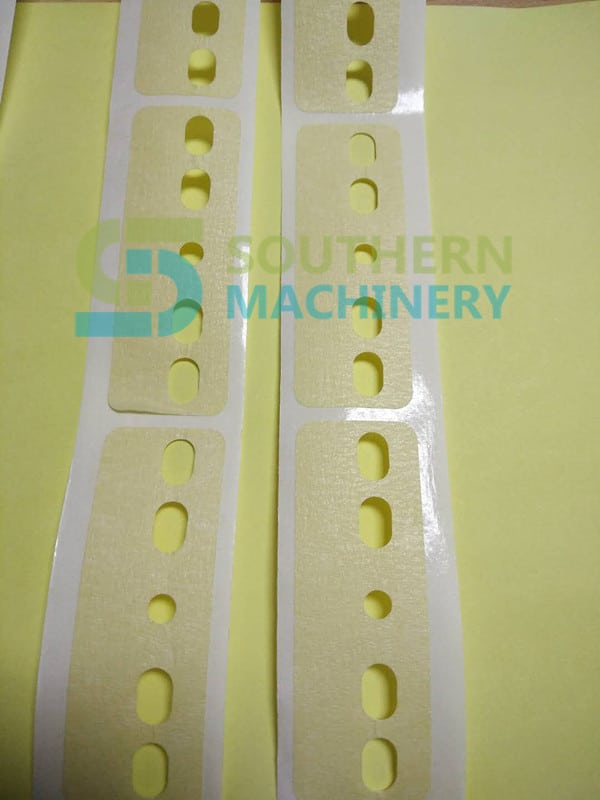
How does splicing tape fit into a complete PCB assembly line?
Splice tape is a small consumable with a systems job: keeping the material feed continuous between the radial tape feeder and the insertion head. On a THT line it works alongside the radial tape splice cutter for 12.7 / 15.0 mm tape, the THT auto insertion machine solution that places axial, radial and odd-form components, and the high-viscosity AI splicing tape product page with the full SCT specification - plus machine documentation, 3D previews and ROI tools on the Southern Machinery product catalog board.
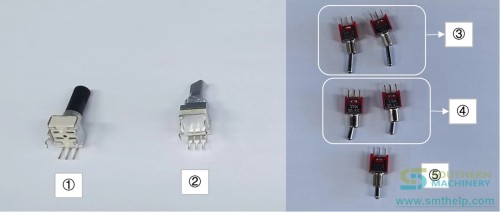
For EMS and ODM lines running mixed radial reels: standardise the splice at a line-side station, keep a verified sample of each pattern in the binder, and let new operators match the sample rather than memory.
Which SCT model should you order?
Four stock models cover the common 3-hole and 5-hole patterns in both carriers. 2-hole, 6-hole, black PET and custom die-cut sizes are produced on request - MOQ and lead time confirmed per order. Prices are published for reference; confirm the current quotation and stock status before ordering.
| Model | Pattern | Carrier | Roll quantity | Unit price |
|---|---|---|---|---|
| SCT-031000 | 3-hole | Masking paper | 1000 pcs | $16.00 |
| SCT-030500 | 3-hole | Kraft paper | 500 pcs | $8.00 |
| SCT-051000 | 5-hole | Masking paper | 1000 pcs | $25.00 |
| SCT-050500 | 5-hole | Kraft paper | 500 pcs | $12.00 |
Typical 3-hole size is 42 mm x 36 mm; rolls ship in export cartons. Samples are available before bulk order; bulk orders ship within 2 days of confirmation.
How do you keep the efficiency gain after week one?
The tape is the easy part; the routine holds the gain. Three habits: a line-side splice station (tape, cutter, straight edge) so operators prepare the next reel while the current one runs; a verified sample binder - one confirmed sample per pattern; and weekly tracking of changeover minutes, the number that is your proof and improves as the routine settles. Add a sprocket and guide check to weekly preventive maintenance - if residue appears, the tape is wrong for your line, not the schedule.
Next in this series: matching carriers to machine orientation - vertical versus horizontal inserters - and the first-article splice check that catches a mismatch before production.
FAQ
Which tape widths does the SCT splice tape fit?
12.7 mm and 15.0 mm radial carrier tape.
Which components can be spliced with it?
Radial capacitors, inductors, diodes, resistors and similar taped odd-form parts, on vertical and horizontal AI insertion machines and radial taped feeders.
How many pieces per roll, and how is it packed?
500 or 1000 pieces per roll depending on the model, packed in export cartons.
Do you supply 2-hole, 6-hole or custom sizes?
Yes - 2-hole, 6-hole, black PET and custom die-cut sizes are produced on request; MOQ and lead time are confirmed per order.
Will the adhesive leave residue in my feeder?
The high-viscosity synthetic-rubber adhesive is engineered to hold the splice without transferring to feeder surfaces. Run the 500-feed check on your own line with the sample before bulk ordering.
How do I order, and how fast do you deliver?
Send tape width, hole pattern and machine model to info@smthelp.com or WhatsApp (+86 136 0256 2576). Samples come first; bulk orders ship within 2 days of confirmation.
Get the right splice for your tape
One photo of your taped component is enough for Southern Machinery to confirm the model, carrier and hole pattern - usually the same day. Shenzhen Southern Machinery has designed and manufactured SMT / THT equipment and consumables for smart EMS factories since 2011, serving 237+ customers worldwide with high-efficiency, cost-effective automation, global service and spare-parts support.
Send your tape photo and request a sample: info@smthelp.com - WhatsApp +86 136 0256 2576 - SCT product page
Comments