
SMT Feeders From Southern Machinery: Factory-Tested for Fast Setup and Stable Feeding
An SMT feeder is the material-supply backbone of every pick-and-place line: it presents components in the exact position the placement head expects, cycle after cycle. When a feeder is slow to set up or feeds inconsistently, the whole line pays in pick errors, machine stops and rework. That is why Southern Machinery factory-tests every feeder before shipment, so fast setup and stable feeding are verified on the machine, not discovered on your floor. This buyer's guide covers what SMT feeders do, where tape, tube, tray and bowl feeders fit in PCB assembly, how they integrate with SMT, THT and wave soldering lines, and what to evaluate before you buy.
Aug 15, 2026 · Updated Aug 15, 2026 · Southern Machinery
SMT Feeders From Southern Machinery: Factory-Tested for Fast Setup and Stable Feeding
Every component that goes through a pick-and-place machine first passes through a feeder. If the feeder is slow to set up or feeds inconsistently, the entire SMT line pays for it — in pick errors, machine stops, rework, and lost output. That is why Southern Machinery factory-tests every feeder before it ships: so that what arrives on your floor is a feeder that sets up fast and feeds stable from the first reel to the last.
<iframe width="560" height="315" src="https://www.youtube-nocookie.com/embed/ynzSdVSD2FE?rel=0" title="SMT feeder factory testing" frameborder="0" allow="accelerometer; autoplay; clipboard-write; encrypted-media; gyroscope; picture-in-picture; web-share" allowfullscreen></iframe>
Southern Machinery is a Shenzhen-based SMT, THT, and PCB assembly automation supplier founded in 2011, serving 237+ customers worldwide with feeders, insertion machines, wave soldering, and board handling equipment.
What is this machine used for?
An SMT feeder is the material-supply module of a pick-and-place line. It presents components in a precise, repeatable position so the placement head can pick them reliably, every cycle. Feeders handle components in several formats:
- Tape feeders — the standard format for resistors, capacitors, diodes, and ICs on carrier tape.
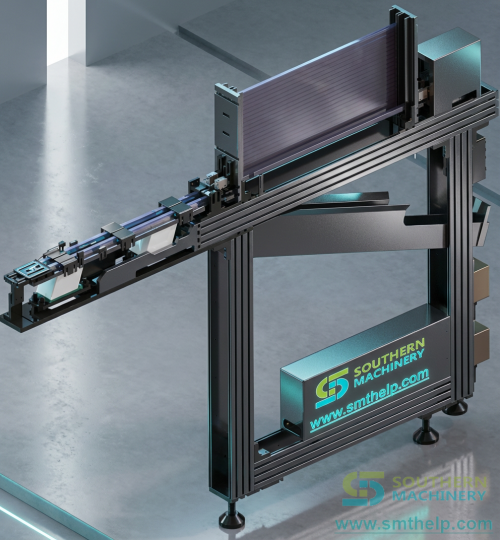
- Tube (stick) feeders — for DIP, radial, and other components supplied in tubes, including horizontal stacked tube feeders such as the JM-10 and JM-20 styles used with JUKI-class mounters.
- Tray feeders — for larger ICs, connectors, and odd-form parts supplied in matrix trays.
- Bowl (bulk) feeders — for loose components such as terminals, safety capacitors, switches, transformers, and hardware parts; the BF-2002D dual-deck bowl feeder is a typical example.
For a buyer, "fast setup" means your operators can change a reel, tube, tray, or bowl quickly and get back to production. "Stable feeding" means the feeder presents components at the correct position consistently — no misfeeds, no skipped parts, no jams mid-shift. A feeder that passes factory testing gives you confidence that both hold up under production conditions.
Typical applications
- High-mix EMS lines with frequent changeovers — fast feeder setup shortens changeover time, which matters most when you run many small batches per shift.
- THT and odd-form component feeding — bowl feeders feed loose terminals, safety capacitors, switches, and transformers directly to insertion machines, replacing tedious manual handling.
- Radial and axial component lines — radial taped feeders and axial feeders supply capacitors and diodes to placement and insertion equipment in lighting, power supply, and appliance production.
- Tube-fed DIP assembly — stacked tube feeders keep a steady stream of DIP and radial parts available for JUKI, Samsung, Yamaha, Fuji, and similar mounters.
- Automotive and industrial electronics — car audio, vehicle power supplies, and energy-saving lighting lines benefit from stable feeding of mixed component formats.
How it fits into a complete PCB assembly line
Feeders are not standalone machines — they are the material-supply backbone of the SMT process. In a typical line, solder paste is printed, inspected by SPI, components are placed by pick-and-place machines fed by tape, tube, tray, and bowl feeders, and the board is reflowed and checked by AOI. THT work continues with auto-insertion machines and wave soldering, with board handling systems moving product between stations.
Southern Machinery covers the whole ecosystem: SMT pick-and-place machines, radial and odd-form insertion machines, lead-free dual wave soldering machines, 3D SPI and AOI inspection, PCB cleaning and depaneling, board handling, and ESD products. When you source feeders from the same supplier as the rest of the line, you get mechanical and communication compatibility that is verified before delivery — which is exactly what the factory test in the video demonstrates.
Key selection parameters
When evaluating SMT feeders — whether new or refurbished — check these categories with your supplier:
- Component formats supported — tape width and pitch, tube dimensions, tray size, or bulk/bowl handling.
- Mounter compatibility — feeders must match the electrical and mechanical interface of your placement machines (Panasonic, JUKI, Fuji, ASM, Yamaha, Samsung, Universal, and others).
- Communication and control — how the feeder talks to the mounter and how setup parameters are configured.
- Changeover speed — how quickly operators can swap reels, tubes, trays, or bowls.
- Feeding stability — consistent presentation position, low misfeed tendency, and jam resistance in production.
- Floor space efficiency — options such as double-deck designs that reduce the footprint per feeder bank.
- Build quality and service life — materials, mechanism design, and availability of spare parts.
- Customization — whether the supplier can design a feeder for non-standard or odd-form components.
Specific cycle rates, accuracy figures, and prices depend on the machine model, the component mix, and your line configuration — request the datasheet for the exact model you are evaluating.
ROI and quality perspective
From a buyer's perspective, the value of a factory-tested feeder shows up in three places. First, output: fewer misfeeds and machine stops mean more placement cycles per hour across the line. Second, quality: consistent presentation position reduces pick errors, which lowers rework and scrap on the PCBA. Third, labor: fast setup and stable feeding reduce operator intervention, so one person supervises more machines.
For EMS companies running high-mix, low-volume work, faster changeover directly converts into more sellable hours. For high-volume producers, stable feeding protects the throughput of expensive placement equipment. Over the life of the line, avoiding rework and idle time usually outweighs the initial feeder investment — and matching feeders to the rest of the line from one supplier simplifies maintenance and spare-parts management.
FAQ
What types of SMT feeders are there?
Tape feeders, tube (stick) feeders, tray feeders, and bowl (bulk) feeders are the main types. Each suits different component formats — tape for standard SMD parts, tubes for DIP and radial parts, trays for large ICs, and bowls for loose or odd-form components.
How do I know if a feeder is compatible with my pick-and-place machine?
Compatibility depends on the mechanical interface and communication protocol of your mounter. Check the feeder against your machine brand and model — Southern Machinery supports feeders for Panasonic, JUKI, Fuji, ASM, Yamaha, Samsung, Universal, and other common mounters.
What does "factory testing" mean for an SMT feeder?
It means the feeder is set up and run on a machine before shipment to verify feeding stability, setup behavior, and communication. The video shows this test being performed — it is your assurance that the feeder works out of the box.
How do SMT feeders affect CPH?
Feeding stability and changeover speed directly influence placement throughput. Misfeeds and stops interrupt the placement cycle, while slow changeovers consume productive time. Stable, fast-setup feeders help protect your line's CPH.
Can feeders handle odd-form or bulk components?
Yes. Bowl feeders are designed for loose components such as terminals, safety capacitors, switches, transformers, and hardware parts, and custom feeders can be designed for non-standard components.
Where can I get feeder spare parts or custom feeders?
Southern Machinery supplies feeder spare parts for major machine brands and offers SMT feeder design and manufacturing for custom applications. Contact them for the full feeder catalog.
Contact Southern Machinery
Ready to evaluate a factory-tested feeder for your line? Southern Machinery serves 237+ customers worldwide with SMT, THT, and PCB assembly automation equipment from Shenzhen, China.
- Email: jasonwu@smthelp.com
- Product catalog: file.autoinsertion.com
- Product images: ph.smthelp.com
- Website: smthelp.com
Comments