
T-870A BGA Rework Station by Southern Machinery
T-870A BGA Rework Station by Southern Machinery: controlled hot-air rework for BGA, QFN, and CSP packages with optical alignment and repeatable reflow profiles.
Aug 15, 2026 · Updated Aug 15, 2026 · Southern Machinery
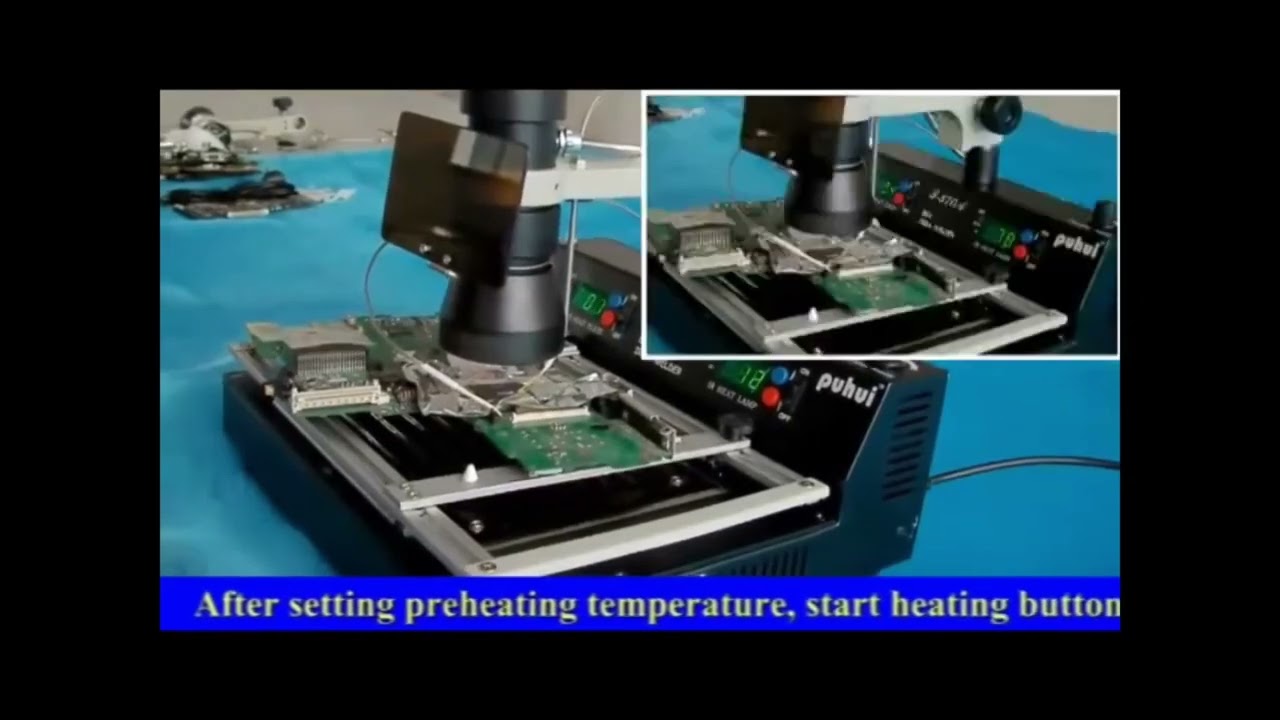
T-870A BGA Rework Station by Southern Machinery
BGA rework is the most demanding repair step in PCB assembly. A single misaligned reflow profile can warp the board, damage neighboring components, or create latent joint defects that pass AOI and fail in the field. The T-870A BGA Rework Station from Southern Machinery gives repair and NPI teams a controlled, repeatable way to remove, replace, and reflow BGA, QFN, CSP, and other area-array packages — without gambling on manual hot air.
What is this machine used for?
The T-870A is a BGA rework station: a bench-scale system that combines controlled heating, optical alignment, and precision placement so an operator can desolder a defective BGA package, clean the pads, place a replacement component, and reflow it with a defined thermal profile. In production terms, it is the equipment used when a board fails AOI or functional test after reflow and the defective IC must be replaced instead of scrapping the whole PCB.
The operation video for the T-870A — published on Southern Machinery's YouTube channel — walks through the machine's working sequence: board positioning, alignment of the component to the pads, and the heating/reflow cycle. Typical BGA rework stations of this class combine top hot-air heating, bottom preheating for large or multilayer boards, and an optical or CCD alignment system so the replacement ball grid lands exactly on its footprint.
Why controlled BGA rework matters
Area-array packages hide their joints under the component body. You cannot see a BGA solder joint until X-ray, and you cannot rework one reliably with a handheld hot-air gun:
- Uneven heating warps boards. A large BGA on a multilayer PCB needs balanced top and bottom heating; localized heat alone causes bow and lifted pads.
- Misalignment means rework of the rework. A BGA placed a fraction of a millimeter off its footprint often fails electrically and must be removed again — multiplying cost and risk.
- Thermal damage is invisible. Overheating can crack solder balls, delaminate the substrate, or damage adjacent fine-pitch components before the defect is ever detected.
- Consistency is the goal. A documented, repeatable profile is what separates controlled rework from repair roulette.
The T-870A addresses exactly these failure modes: controlled reflow, optical alignment before heating, and a repeatable workflow that a trained operator can run shift after shift.
Typical Application Scenarios
BGA rework stations belong in any facility that assembles or repairs area-array packages:
- EMS / electronics manufacturing services — post-AOI and post-functional-test repair of BGA boards, plus quick-turn NPI debugging where prototypes need component swaps.
- Automotive electronics — repair of engine control modules, ADAS boards, and infotainment units where a scrapped PCB is expensive and replacement ICs are hard to source.
- Medical electronics — controlled rework of sensor and imaging boards where process documentation and traceability matter.
- Industrial control and power electronics — rework of large BGAs on PLC, inverter, and servo-drive boards that need bottom preheating to avoid warp.
- Telecom and networking — repair of routers, switches, and base-station boards with dense BGA populations.
- Service and repair centers — reballing, IC replacement, and salvage of returned or field-failed boards.
How It Integrates into a Complete PCB Assembly Line
The T-870A is an offline rework station — it does not sit inline like a printer or reflow oven. It supports the line from the repair and engineering area:
- Post-AOI / post-X-ray repair. Boards flagged after inspection are routed to rework instead of scrap.
- NPI and prototyping. Engineering swaps components during new product introduction without tying up the production line.
- Field-return service. Failed boards from customers are repaired, tested, and returned — recovering revenue that would otherwise be written off.
- Process development. Validating soldering profiles for new BGA packages before they enter volume production.
In a complete Southern Machinery line — stencil printing, pick-and-place, reflow, wave soldering for THT, AOI, board handling — the rework station is the final safety net that keeps high-value boards in production.
Key Selection Parameters
When evaluating a BGA rework station, confirm these parameters with the supplier against your actual board mix:
- PCB size range — the maximum board size the work holder and bottom heater can accommodate.
- BGA/component size range — the smallest and largest packages the alignment and nozzle system can handle.
- Heating configuration — top hot-air, bottom preheating, or combined IR; independent zone control for large boards.
- Temperature control — closed-loop control, thermocouple feedback, and profile programmability (multi-segment curves).
- Alignment method — optical/CCD split-image alignment, laser positioning, or manual reticle.
- Profile data management — saving and recalling profiles, USB or network export for process documentation.
- Footprint and power — bench or floor standing, electrical and compressed-air requirements for your facility.
Southern Machinery also offers the SR-430A BGA rework station with published catalog specifications (closed-loop K-type thermocouple control, top and bottom hot-air plus IR preheating, CCD optical alignment, and PC-controlled profiles). Ask which model fits your board sizes and rework volume.
ROI, Quality & Throughput Perspective
The ROI case for a BGA rework station is built on saved boards and avoided scrap:
- Fewer scrapped PCBAs. A high-value board with a failed BGA costs far more than the rework operation that saves it.
- Lower rework rework rate. Optical alignment and controlled profiles reduce the misplacement and overheating that create second failures.
- Consistent quality. A documented profile produces the same result at 8 a.m. and 8 p.m., from operator to operator.
- Faster NPI. Prototype component swaps happen in minutes instead of waiting for a new production run.
- Service revenue. Repairing field-return boards instead of replacing them protects customer relationships and margins.
For an EMS factory, the rework station is not a cost center — it is the tool that converts expensive failures into recoverable yield.
FAQ
Q: What is a BGA rework station used for?
A: It removes and replaces BGA and other area-array IC packages on assembled PCBs using controlled heating, optical alignment, and precision placement — so defective components can be swapped without scrapping the board.
Q: Why can't I rework BGA with a manual hot-air gun?
A: BGA joints are hidden under the component, and hand-held heat is uneven. A rework station provides balanced top/bottom heating, a defined thermal profile, and alignment before reflow, which prevents board warp, pad damage, and misplacement.
Q: Does the T-870A work inline with an SMT line?
A: No — it is an offline rework station used in the repair and engineering area, supporting post-AOI repair, NPI debugging, and field-return service alongside the production line.
Q: Which industries use BGA rework stations?
A: EMS manufacturers, automotive electronics, medical devices, industrial control, telecom, and service/repair centers that assemble or repair boards with BGA, QFN, and CSP packages.
Q: What support does Southern Machinery provide?
A: Southern Machinery (founded 2011 in Shenzhen, China, serving 237+ customers worldwide) provides machine selection advice, spare parts, training, and after-sales support for its SMT and THT equipment, including BGA rework stations.
Q: Can I see the T-870A in operation?
A: Yes — Southern Machinery publishes operation and application videos on its YouTube channel, and you can request a demonstration or configuration advice from the sales team.
Contact Southern Machinery for Configuration Advice
Choosing the right BGA rework station depends on your board sizes, package types, and rework volume. Contact Southern Machinery for configuration advice:
- Jason Wu — jasonwu@smthelp.com | +86 13602562576
- Website — www.smthelp.com (SMT/THT PCB assembly automation since 2011)
- Catalogs — file.autoinsertion.com
- Machine photos — ph.smthelp.com
- Video library — youtube.com/c/Smthelping
Comments