
STF-1002 Dual-Lane Stacked Tube Feeder for High-Mix SMT Assembly | Southern Machinery
Dual-lane stacked tube feeding for high-mix SMT lines: the STF-1002 from Southern Machinery keeps JUKI, Panasonic and FUJI mounters fed with tube-packed ICs.
Aug 8, 2026 · Updated Aug 8, 2026 · Southern Machinery

STF-1002 Dual-Lane Stacked Tube Feeder for High-Mix SMT Assembly | Southern Machinery
Tube-packed components — DIP and SOIC ICs, relays, connectors and other stick-fed parts — are a permanent fixture of high-mix SMT lines. The STF-1002 Stacked Tube Feeder from Southern Machinery attacks the two costs that tube feeding usually hides: operator reload time and placement-machine idle time. Built as a dual-lane stacked magazine, it holds multiple component tubes at once, advances them automatically to the pick position, and keeps JUKI, Panasonic, FUJI, ASM and Universal SMT mounters fed without an operator standing by.
This guide explains what the STF-1002 does, where dual-lane tube feeding pays off, and what to verify before you specify one for your line.
What is this machine used for?
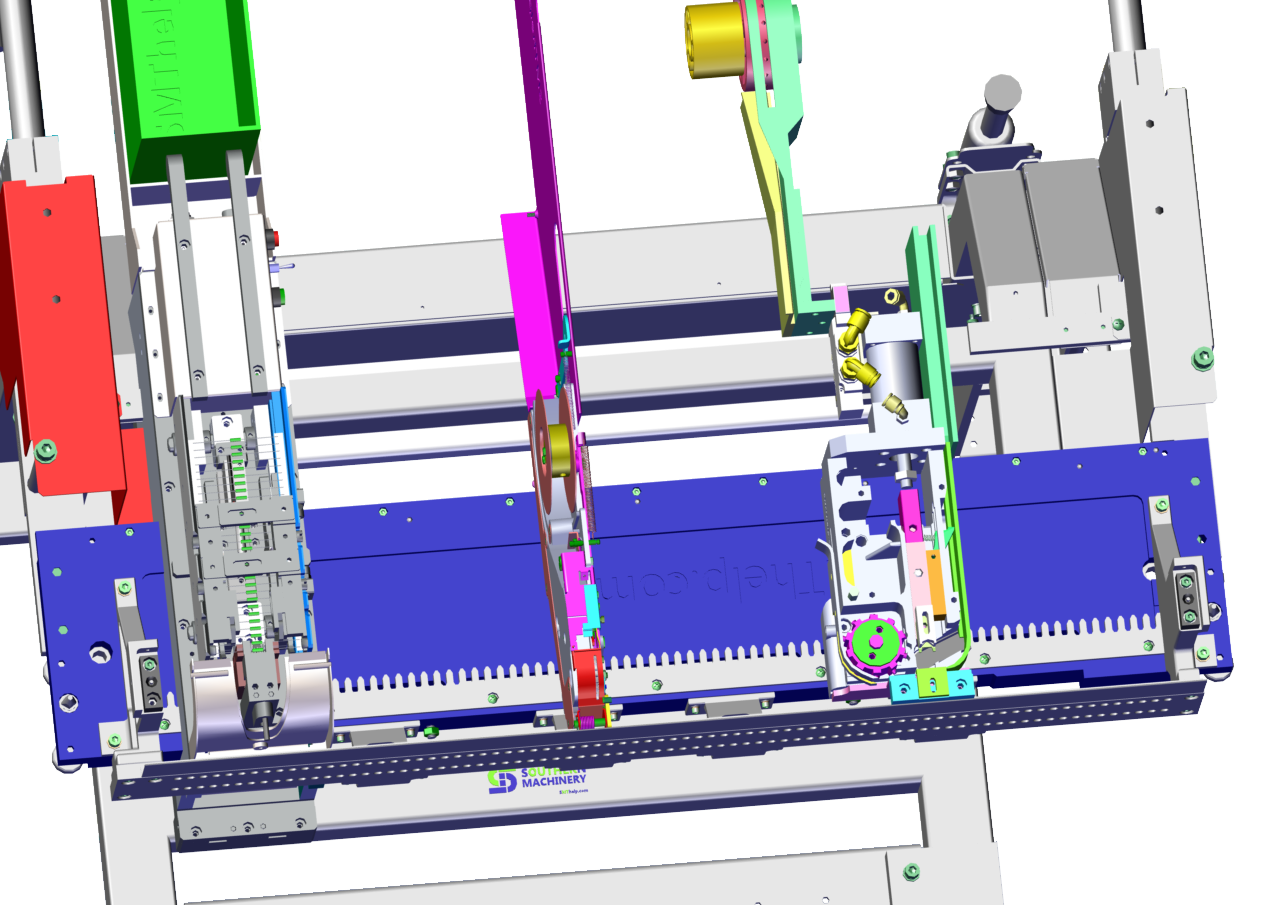
The STF-1002 is an SMT peripheral — a stacked tube Feeder — that supplies tube-packaged components to a Pick and Place machine. Instead of loading one stick at a time into a single-lane feeder, the STF-1002 stacks multiple tubes in a magazine and feeds them automatically to the pick position, so the placement head takes components continuously.
The dual-lane configuration is the feature that matters most for high-mix production: it lets one feeder slot handle two tube lanes (for example, two IC types, or two lanes of the same type for longer unattended runtime), and the documented 16-lead IC demonstration shows the feeder handling multi-lead packages reliably. Fewer reload stops, less operator attention, and consistent feeding geometry add up to higher placement-machine utilization — which is the real output metric of any SMT line.

Typical Application Scenarios
- EMS / contract manufacturing — high-mix lines that rotate tube-fed ICs across many product builds. A stacked magazine absorbs product changeover without constant reloading.
- Automotive electronics — ECU, body-control and sensor boards with DIP/SOIC logic and driver ICs, where placement uptime directly affects line throughput.
- Industrial control — PLC, inverter and motor-drive boards with tube-packed ICs and relays, where batch sizes vary and changeover speed matters.
- Medical electronics — mid-volume, high-reliability PCBs where consistent feeding and traceability are expected.
- Power supply and LED lighting — driver boards mixing SMD passives with tube-fed ICs and connectors.
The dual-lane design is especially valuable in EMS environments where the same feeder bank must support multiple IC package types across different work orders.
How It Integrates into a Complete PCB Assembly Line
The STF-1002 mounts on the placement machine's feeder bank like any SMT feeder, so integration follows the standard SMT line flow:
- Stencil printing deposits solder paste on the PCB.
- Pick and Place machines mount SMDs. The STF-1002 occupies a feeder slot and presents tube-fed components at the correct pick position — no change to your mounter's core programming beyond feeder setup.
- Reflow Oven solders the SMD side.
- THT / Wave Soldering or selective soldering handles through-hole components for mixed-technology boards.
- Cleaning, inspection (SPI/AOI) and board handling complete the line, with MES-ready equipment available for data collection.
Because Southern Machinery supplies the full line — printers, mounters, Reflow Ovens, Wave Soldering, board handling, cleaning and inspection — the STF-1002 can be specified as part of a complete line or retrofitted into an existing feeder bank.

Key Selection Parameters
Confirm these points with Southern Machinery before purchase (values depend on your component list and mounter model):
- Mounter compatibility — feeder base/slot interface and electrical/communication protocol for your machine. The STF-1002 product line covers JUKI, Panasonic, FUJI, ASM and Universal platforms.
- Tube format — tube width, length and package types the feeder accepts (DIP, SOIC, SOT, relays, connectors).
- Stack capacity and lane count — how many tubes the magazine holds per lane and whether dual-lane fits your product mix.
- Component dimensions — body sizes and lead counts (including 16-lead IC class parts) you need to feed.
- Feeding reliability — how tubes advance and components are presented without jams or double-feeds; check sensing and compensation features.
- Changeover — how quickly lanes can be re-loaded or swapped between tube types on high-mix lines.
- ESD protection — grounding and static-safe materials for sensitive IC packages.
- Air and power — compressed-air and electrical requirements at the feeder position.

ROI, Quality & Throughput Perspective
The business case for a stacked tube Feeder is built on recovered placement time and reduced operator labor:
- Fewer reload stops. A stacked magazine extends the time between manual tube changes. On a multi-head mounter, every reload stop costs placement output across the whole line.
- Less operator labor. Instead of hovering at the feeder bank, operators load a batch of tubes and spend their time on kitting, inspection and line balancing.
- Consistent feeding = fewer placement misses. Automated, repeatable tube advancement removes the human variability that causes misfeeds, missed picks and downstream rework.
- Dual-lane flexibility. Two lanes per slot mean more IC types resident at the machine, fewer changeovers, and better line balance on high-mix EMS floors.
- Scalability. The same feeding logic scales across product families that share tube packaging.
For a factory running tube-packed ICs daily, payback comes from compounding line efficiency — recovered placement time, reduced operator attention and lower rework — rather than a single headline number.
FAQ
Q: What is the STF-1002 Stacked Tube Feeder used for?
A: It supplies tube-packaged SMD components — DIP/SOIC ICs, relays, connectors and similar stick-fed parts — to a Pick and Place machine, holding multiple tubes in a stacked magazine so the mounter stays fed without constant operator reloading.
Q: Which SMT mounters is it compatible with?
A: Southern Machinery lists compatibility across JUKI, Panasonic, FUJI, ASM and Universal platforms. Exact slot interface and communication protocol should be confirmed against your mounter model.
Q: What does the dual-lane configuration do?
A: One feeder slot can handle two tube lanes, letting the line keep more component types resident at the machine (or run two lanes of the same part for longer unattended runtime). The STF-1002 dual-lane demo includes 16-lead IC feeding.
Q: How is it different from a single-tube feeder?
A: A stacked feeder holds multiple tubes in a magazine and advances them automatically, so operators reload far less frequently than with single-tube feeders — reducing placement stops on long runs and high-mix lines.
Q: Can it be retrofitted into an existing SMT line?
A: Yes. It occupies a standard feeder slot on the mounter, so it can be added to an existing feeder bank or specified as part of a complete Southern Machinery line.
Q: How does automated tube feeding improve quality?
A: Automated, repeatable tube advancement reduces misfeeds and missed picks caused by manual handling, and lowers the risk of component damage from frequent operator contact.
Contact Southern Machinery for Configuration Advice
The STF-1002 Stacked Tube Feeder is supplied by Southern Machinery (Shenzhen, China; founded 2011), an SMT/THT PCB assembly automation equipment specialist serving 237+ customers worldwide with full-line solutions: SMT placement, THT automation, Wave Soldering, board handling and inspection — plus spare parts, training and global support.
- Contact: Jason Wu — jasonwu@smthelp.com | +86 13602562576
- Website: https://www.smthelp.com
- Product catalogs: https://file.autoinsertion.com
- Machine photos: https://ph.smthelp.com
*Watch the STF-1002 in action: https://www.youtube.com/watch?v=9z_GdxxF5js*
Comments