
Stencil Cleaner Filtration Guide by Southern Machinery
Stencil cleaner filtration: 10/5/1 µm solvent recirculation, a 40 L working fill and a 1,500-cycle filter change counter on the S-1688 stencil cleaner.
Oct 7, 2026 · Updated Oct 7, 2026 · Southern Machinery
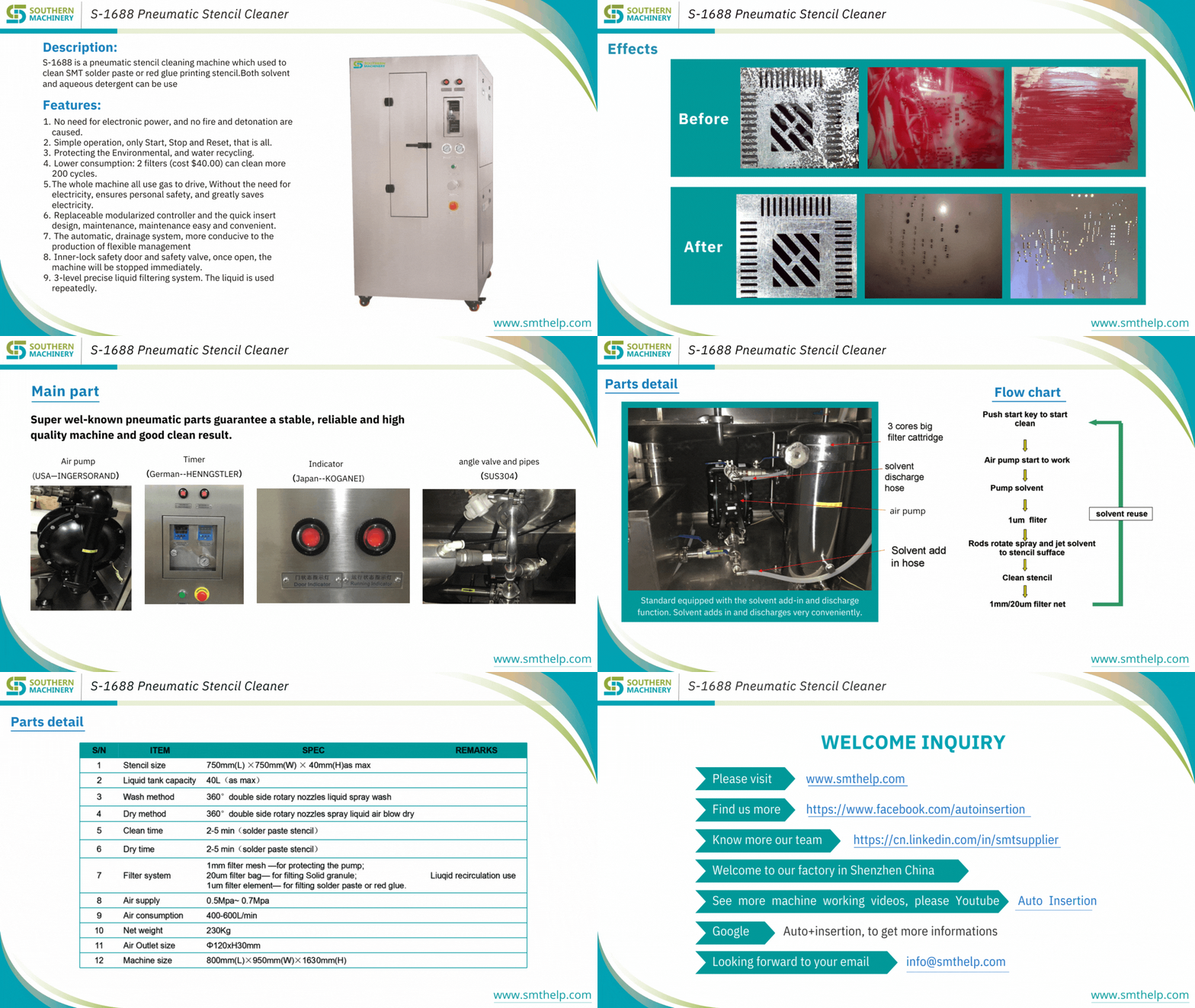
Stencil cleaner filtration decides whether the fluid reaching your next stencil is clean chemistry or a suspension of what the last one shed. The S-1688 pneumatic stencil cleaning machine returns solvent from its sealed chamber through three graded stages — 10 µm, 5 µm and 1 µm — before the diaphragm pump drives the spray arms at an adjustable 0.2–0.3 MPa. A counter logs every cycle and the manual schedules the element change at 1,500 cycles.
What does stencil cleaner filtration actually do?
Wash and rinse are quoted in minutes — 2–4 min wash, 2–4 min rinse, 2–5 min dry — but the fluid those stages use is not fresh. It recirculates from a 40 L working fill inside a 50 L tank, and every stencil leaves something in it: dried paste chunks, red-glue film, flux bleed, solder balls.
Filtration decides which of those the next stencil ever sees again. Without it, recirculation is a slower way of re-applying yesterday's residue.
10 µm, 5 µm and 1 µm are three jobs, not three spares
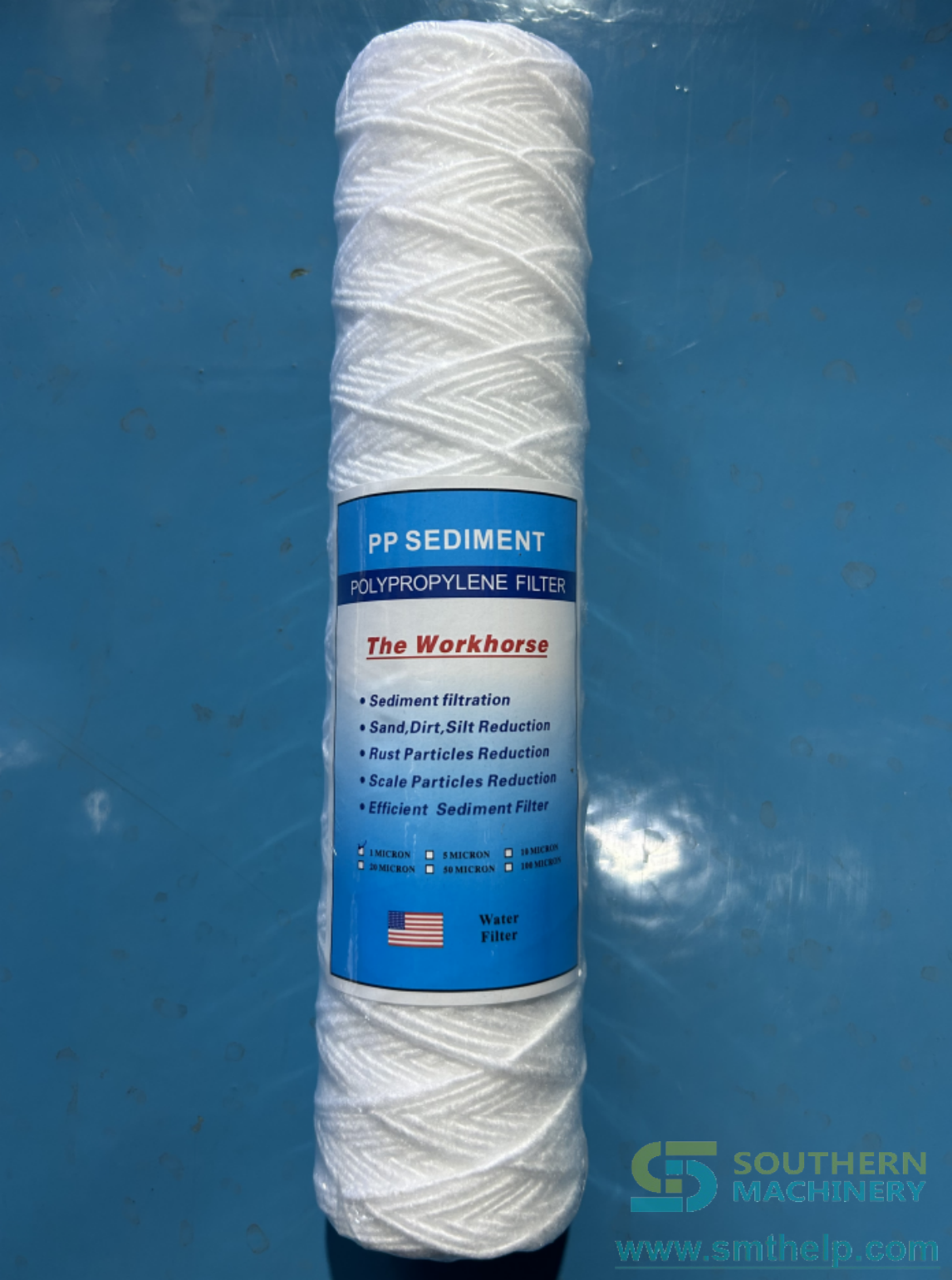
The 10 µm stage takes coarse debris that would clog spray arms. The 5 µm stage polishes out mid-range particulate. The 1 µm stage catches solder balls and pigment before they re-deposit on a freshly rinsed face. A single strainer removes what is visible; three graded stages remove what would otherwise be sprayed back on.
What a loaded filter does to a "clean" stencil
An exhausted element is not a slower cleaner — it is a distributor. Once the 1 µm stage saturates, particles pass it to the spray arms, and a stencil finishes a full timed cycle carrying particulate on its aperture walls. That is how deposit volumes drift within a shift.
What does poor filtration cost you per stencil?
Two bills arrive: one on the purchase ledger, one filed under something else.
The solvent bill that never gets reconciled
An open bench loses solvent continuously — what evaporates overnight, plus the tray scrapped with the dirt still in it. In a closed recirculating chamber, what leaves the system is the debris the filters capture, not the chemistry: losses are measured at change-out in litres, not drums. The manual's tank figures support that — 50 L maximum, 40 L working fill, 20 L minimum.
The defect bill that arrives as "random" bridging
Residue that survives cleaning becomes a print defect the printer gets blamed for: apertures narrowed on one side of the frame, thin deposits near the middle, bridging inspection catches — or does not. A loaded filter turns a cleaning machine into a source of that variance, and the counter is what makes it auditable: every stencil increments a pneumatic counter running to 999,999, paired with the manual's scheduled element change at 1,500 cycles.
When should you change stencil cleaner filter elements?
The manual's answer is mechanical: at 1,500 counted cycles — provided the parts around the filter let the counter mean something.
The counter, not the calendar
A calendar interval assumes the same screen count every week. A counter does not. The manual's cycle arithmetic is a sum rather than a promise: a light routine-paste stencil runs about 2 min wash, 2 min rinse, 2 min dry plus a minute of handling — near eight stencils an hour — while a heavy red-glue or long-dried-paste screen runs 4 min, 4 min and 5 min and returns about four. At four an hour, 1,500 cycles arrives long before a quarterly calendar box suggests.
What belongs in the spare-parts cabinet
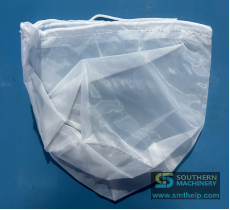
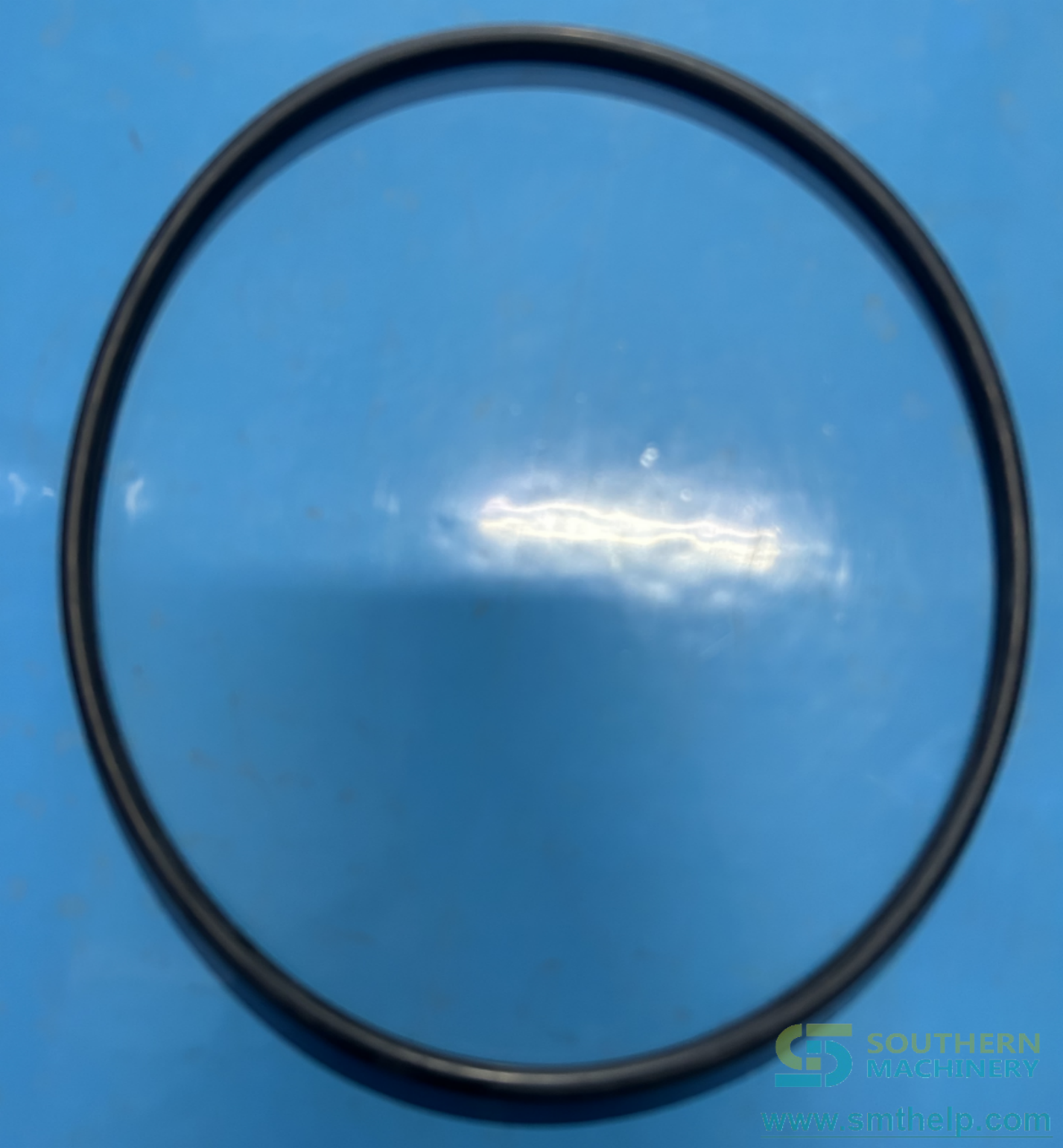
The documented consumables are few and specific: 10 / 5 / 1 µm replacement elements, the filter-barrel sealing ring, the replaceable filter bag, and the door sealing strip that holds the seal at 0.4–0.6 MPa supply pressure.
The hardware behind them is named in the S-1688 documents — an Ingersoll Rand diaphragm pump, a Festo or Hengstler timer by production batch, SMC or Koganei switches and indicators. Spare parts ship in one working day; customisation is quoted on a one-month window.
How the S-1688 slots into a complete PCB assembly line
A stencil cleaner is a print-room machine; its neighbours are the printer upstream and reflow downstream. The S-1688 asks for no power connection — pump, spray rotation, timing, counting and door logic are all pneumatic, documented at 0 kW. It consumes three services instead: 0.4–0.6 MPa dry air on a Φ12 mm quick joint, a Φ125 mm exhaust duct run outside, and its own earth point.
Three manual constraints belong on the floor plan: 1 m clear on all sides for filter changes and tank cleaning, 3 m from electrical equipment, and no shared exhaust with heat-source equipment such as reflow or wave soldering.
Southern Machinery answers the line-level question as well as the machine-level one: SMT line and THT assembly equipment built in Shenzhen since 2011, more than 237 customers worldwide, and the one-stop PCB assembly solutions and S-1688 maintenance manual behind every figure here.
Stencil cleaner selection parameters
Source-verified S-1688 values to compare against your screen park. Values support initial evaluation and remain subject to final technical confirmation against your stencil sizes, chemistry and volume.
Model — S-1688 full pneumatic stencil cleaning machine
Primary loads — stencils (steel mesh), glue screens, copper screens; wire mesh, squeegees, fixtures and PCBs as documented secondary loads
Stencil size — standard 29 inch and below (user manual); the 2019 deck quotes 750 × 750 × 40 mm chamber geometry for the same family — both variants are published, so confirm against your largest screen
Filtration — three stages, 10 µm, 5 µm, 1 µm, solvent recirculated
Solvent capacity — max 50 L, min 20 L, working fill 40 L
Cycle times — wash 2–4 min, rinse 2–4 min, dry 2–5 min
Cleaning pressure — adjustable, typically 0.2–0.3 MPa at the spray arms
Air supply — 0.4–0.6 MPa dry compressed air, 400–600 L/min × 2, Φ12 mm quick joint (the 2019 deck quotes 0.5–0.7 MPa)
Exhaust — Φ125 × 25 mm top outlet, ducted independently outside
Control — full pneumatic logic, timer 10–999 s, counter 0–999,999, one-button start / stop / reset
Footprint — 980 × 700 × 1730 mm, 320 kg (user manual; the 2019 deck quotes 800 × 950 × 1630 mm and 230 kg)
Electrical — none required; both chamber doors are interlocked and the pneumatic timer is lockable
The single-chamber S-1688 runs one chemistry family; the dual-chamber S-1688B runs two independent chambers and solvent circuits — the documented answer when paste meshes and red-glue screens must not share a bath. The family also extends to the SME-750II, which runs two stencils per pneumatic cycle, and the SME800, which adds electric drive, DI rinse and hot-air blades.
ROI: the recirculating-filtration arithmetic
Price filtration as three lines and let the reader supply the fourth.
Annual filtration value =
    (solvent litres not evaporated  x  solvent price per litre)
  + (bench cleaning hours removed   x  loaded wage per hour)
  + (stencils and meshes not scrapped  x  replacement price)
  - (filter elements per year  x  element price)

Example only — depends on configuration, subject to final technical confirmation:
  1,500 cycles per filter change; 6 stencils/hour standard duty
  Annual element changes = annual stencils / 1,500            ->  derived
  Element cost reference = USD 35-40 per pair (catalogue)     ->  example
  Solvent, wage and stencil-scrap lines = your own plant data ->  not supplied
Only two figures come from source: the manual's 1,500-cycle interval and a catalogue reference of roughly USD 35–40 per pair of elements. The solvent, labour and scrap lines must come from your own floor — which is why Southern Machinery publishes a calculator, not a promised payback.
FAQ
What is stencil cleaner filtration for?
It separates paste residue, glue film, flux bleed and solder balls out of recirculated cleaning fluid, so the spray arms deliver clean chemistry on cycle one and cycle nine hundred alike. On the S-1688 that happens in three graded stages: 10 µm, 5 µm, 1 µm.
How often do the filter elements need changing?
The manual schedules the element change at 1,500 counted cycles, recorded on a pneumatic counter running to 999,999. Real life depends on paste chemistry and soil level — not specified in source beyond that interval, so confirm your duty with Southern Machinery.
Does the S-1688 need an electrical connection?
No. Pump, spray rotation, timing, counting and door interlocks all run on 0.4–0.6 MPa compressed air. What it does need is a Φ125 mm exhaust duct run outside, an earth point and 1 m clearance.
Which spare parts should be stocked with a pneumatic stencil cleaner?
The 10 / 5 / 1 µm filter elements, the filter-barrel sealing ring, the circuit filter bag and the chamber door sealing strip. Southern Machinery dispatches spare parts in one working day.
Can one S-1688 handle every screen in the print room?
The documented application covers stencils, glue screens and copper screens, with wire mesh, squeegees, fixtures and PCBs as secondary loads. The constraint is chemistry rather than size: where paste meshes and red-glue screens must stay in separate baths, quote the dual-chamber S-1688B.
Are the published S-1688 figures consistent between documents?
No, and the source says so. The manual and the 2019 deck disagree on weight (320 kg vs 230 kg), footprint, maximum stencil size and air supply; both are published side by side rather than averaged. Confirm the applicable set in writing before ordering.
Next step
Send Southern Machinery a photo of a "clean" stencil from your line and your daily screen count. The reply covers the cycle plan, filter life at your volume and the air demand your compressor has to see — configuration, quotation and a process recommendation within 24 hours, with free installation and operator training.
Email [info@smthelp.com](mailto:info@smthelp.com), message WhatsApp +86 136 0256 2576, or read the parameter tables first in the S1688 stencil cleaner catalogue and the S-1688 pneumatic stencil cleaner product document.
Comments