
SRT7001 Reel Terminal Feeder for THT Automation by Southern Machinery
The SRT7001 Reel Terminal Feeder by Southern Machinery helps EMS, ODM, automotive electronics, appliance, and industrial control manufacturers automate FASTON and tab terminal feeding for odd-form THT insertion. Instead of relying on manual terminal presentation before wave soldering, the feeder presents reel-packed terminals at a repeatable pick point for compatible insertion equipment. This can reduce operator dependency, improve process consistency, and make mixed SMT + THT lines easier to balance. Southern Machinery, founded in Shenzhen in 2011, supports complete PCB assembly automation projects covering SMT, THT insertion, wave soldering, board handling, inspection, training, global service, and spare parts support.
Jul 19, 2026 · Updated Jul 19, 2026 · Southern Machinery
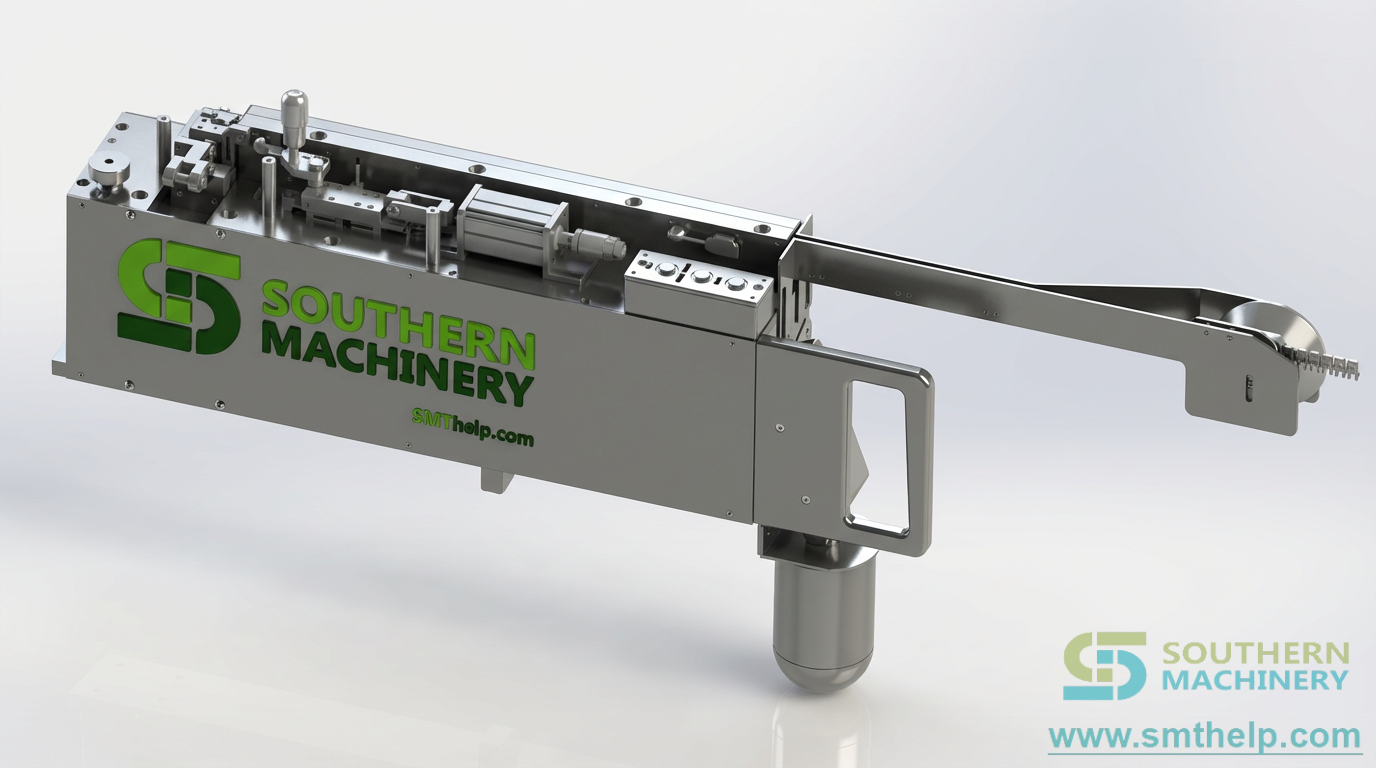
SRT7001 Reel Terminal Feeder for THT Automation by Southern Machinery
For EMS, ODM, automotive electronics, appliance control, and industrial power board manufacturers, terminal insertion is often one of the last manual bottlenecks in an otherwise automated PCB assembly line. The SRT7001 Reel Terminal Feeder by Southern Machinery is designed to feed FASTON, tab, and similar reel-based terminals into an odd-form THT insertion process, helping factories reduce manual handling and make terminal presentation more repeatable.
Southern Machinery, founded in Shenzhen in 2011, focuses on SMT and THT PCB assembly automation equipment. We support full-line projects across SMT, THT auto insertion, wave soldering, board handling, and inspection, with cost-effective equipment, professional training, spare parts support, and service for 237+ global customers.
What is this machine used for?
The SRT7001 Reel Terminal Feeder is used to present tape-and-reel terminals to an odd-form insertion head or compatible automation platform. Instead of an operator manually loading terminals from bags, trays, or simple jigs, the feeder indexes the terminal reel and presents each part at a stable pick point. The insertion head can then pick the terminal using a customized nozzle or gripper and insert it into the through-hole position on the PCB before wave soldering.
Typical parts include FASTON terminals, tab terminals, and similar reel-packed THT components used on power supplies, automotive modules, appliance controllers, and industrial control boards.
Why manual terminal feeding becomes a production bottleneck
Manual terminal feeding is common in mixed SMT + THT factories, but it creates unstable takt time. One operator may feed consistently for the first hour, then slow down as fatigue increases. Another operator may handle the same terminal differently, creating variation in pick quality, insertion position, or component condition.
For low volume this may be acceptable. For repeated terminal insertion across shifts, it becomes a real manufacturing issue:
- Takt time changes from operator to operator.
- Terminals can be misoriented, bent, or inconsistently presented.
- Odd-form insertion equipment may wait for manual feeding instead of running smoothly.
- Quality teams have to manage more variation before wave soldering.
- Production supervisors need more labor just to keep the THT section moving.
The SRT7001 does not magically solve every THT problem, but it gives the line a more machine-friendly way to supply terminals.
How the SRT7001 works in a THT PCB assembly line
1. Reel loading and tape guidance
The operator mounts the terminal reel on the feeder shaft and routes the tape through the guide path. The terminal tape is guided toward the pick point so the terminal sits in a consistent mechanical position for the next cycle.
The source document describes the SRT7001 as a dedicated reel terminal feeder for FASTON and similar terminals supplied on tape and reel. The real integration details, including brackets, clearances, and electrical interface, are customized according to the host machine and terminal family.
2. Indexed terminal presentation
The feeder indexes the reel by terminal pitch and presents the next part to the same pick area. This helps the odd-form head find the part at a repeatable reference point instead of depending on manual placement.
For buyers, the key point is simple: the feeder must match the terminal reel format and the host machine's pick geometry. Southern Machinery can review your terminal reel data, PCB, and current machine platform before confirming the final configuration.
3. Pick, insert, and solder
Once the terminal is presented, the odd-form head uses a dedicated nozzle or gripper to pick the part and insert it into the PCB. After insertion, the board can continue to the downstream THT process, normally wave soldering or selective soldering depending on the board design.
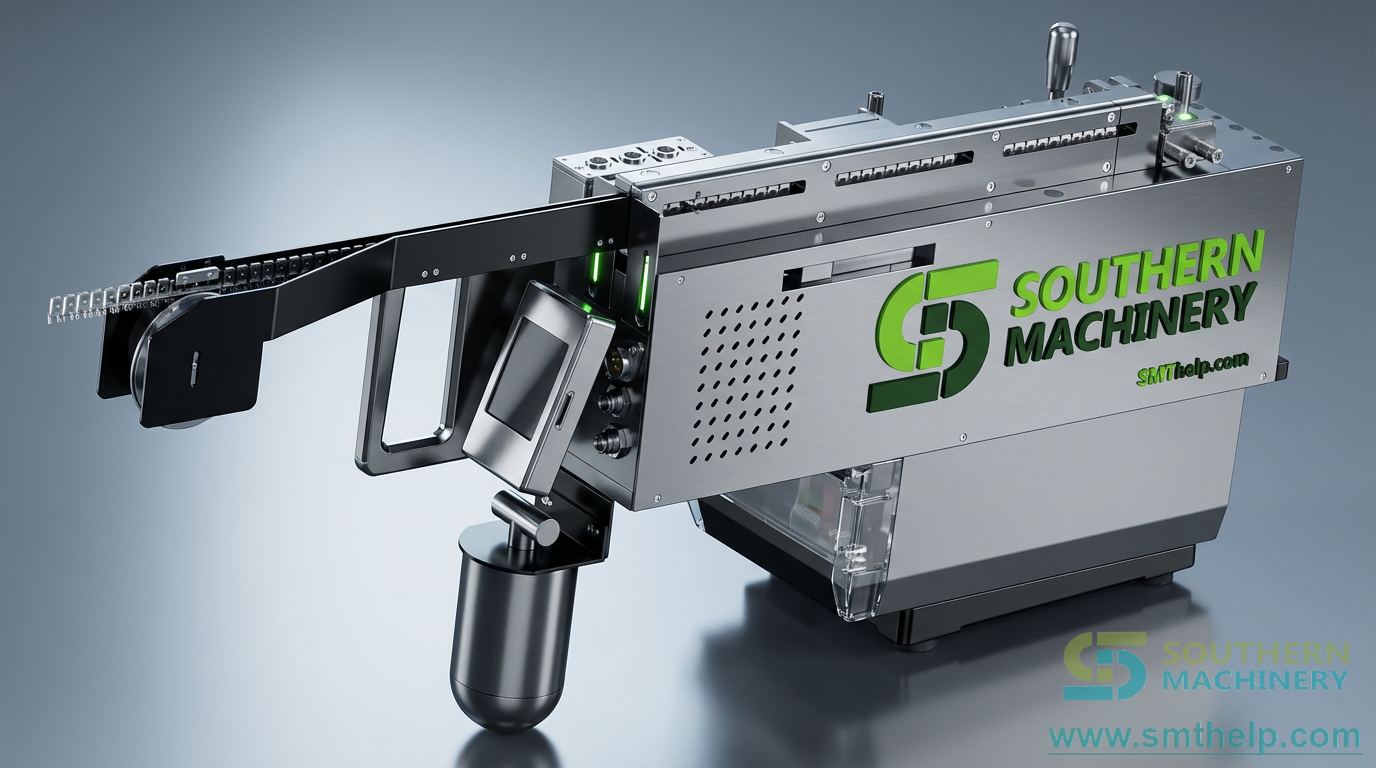
Typical applications
The SRT7001 is most relevant when your product uses repeated terminal insertion and you want the THT section to run with less manual feeding.
Common application scenarios include:
- Power supply PCB assembly with FASTON or tab terminals for input/output connections.
- Automotive electronics where terminals must be presented consistently for repeated insertion.
- Appliance control boards using robust through-hole terminal connections before wave soldering.
- Industrial control boards with mixed SMT and THT component structures.
- High-mix EMS lines where different terminal families require controlled feeding and customized tooling.
A practical example: if your SMT section is already automated but one worker still feeds terminals manually before wave soldering, the terminal operation can define the whole line speed. In that case, a reel terminal feeder plus proper nozzle/gripper design can make the process easier to control.
How it connects into a complete PCB assembly line
Southern Machinery does not treat the SRT7001 as a standalone accessory only. It should be reviewed as part of the whole SMT + THT flow.
A typical complete line may look like this:
- SMT section: PCB loader, automatic stencil printer, pick-and-place, reflow oven, and optional SPI/AOI.
- THT insertion section: board buffer, odd-form insertion machine or compatible host platform, SRT7001 reel terminal feeder, and customized nozzle/gripper.
- Wave soldering section: fluxing, preheating, soldering, cooling, and outlet handling.
- Board handling and inspection: conveyors, buffers, loaders/unloaders, NG/OK sorting, visual inspection, AOI, ICT, or FCT depending on quality requirements.
This full-line thinking matters. A feeder that works mechanically but does not match your board handling, takt time, or soldering process will still create problems. Southern Machinery can help align the feeding method with insertion, soldering, and inspection so the line is practical on the factory floor.
Key selection parameters to confirm
Before finalizing an SRT7001 proposal, the following details should be checked. These are not optional details; they decide whether the solution is stable.
| Selection item | What to confirm | Why it matters |
| --- | --- | --- |
| Terminal type | FASTON, tab terminal, solder tab, or other reel terminal family | Determines gripper/nozzle and feed path design |
| Reel format | Tape width, pitch, reel size, orientation, and packaging quality | Confirms indexing and presentation feasibility |
| Host platform | JUKI, Panasonic, Yamaha, Southern Machinery odd-form insertion, or other automation equipment | Determines mechanical bracket and I/O interface |
| PCB data | Board size, terminal hole position, insertion direction, and panelization | Confirms reach, clearance, and insertion sequence |
| Downstream process | Wave soldering or selective soldering | Confirms terminal stability before soldering |
| Production volume | Boards per shift, terminal count per board, shifts per day | Helps decide whether automation is justified |
| Changeover needs | Number of terminal families and product variants | Determines tooling strategy and feeder quantity |
Exact electrical details, I/O logic, voltage, mounting design, and tooling should be confirmed after reviewing the real terminal samples and host machine.
ROI, quality, and capacity value
For the right product, the SRT7001 can support three practical manufacturing goals.
Labor reduction
The feeder reduces dependence on manual terminal presentation. This is especially useful when a line has several terminal positions per PCB or runs across multiple shifts. The real labor saving depends on your terminal count, cycle time, operator arrangement, and production schedule.
More stable quality
A repeatable pick point helps reduce variation before insertion. With the right nozzle or gripper, the terminal can be picked without unnecessary deformation and inserted more consistently into the PCB.
Better line balance
A fully automated SMT line loses value if the THT terminal step is still unstable. Automating terminal feeding can help the odd-form insertion process keep pace with upstream and downstream equipment.
For high-mix production, the main value may not be maximum speed. It may be repeatability, easier training, fewer feeding mistakes, and a more predictable THT process.
Why choose Southern Machinery
Southern Machinery is a Shenzhen-based manufacturer established in 2011, focused on high-efficiency, cost-effective SMT and THT PCB assembly automation equipment. For SRT7001 projects, we can support more than a feeder quotation. We can review your application and help design the full line around the real manufacturing process.
Our scope includes:
- SMT line equipment and integration.
- THT auto insertion and odd-form insertion solutions.
- Wave soldering and selective soldering process support.
- Board handling, conveyors, buffers, loaders, unloaders, and line connection.
- Customized feeders, nozzles, grippers, brackets, and integration support.
- Remote support, installation guidance, training, and spare parts support for overseas customers.

FAQ
Can SRT7001 feed every terminal type?
No. It is designed for reel-based terminals such as FASTON, tab, and similar parts, but the final feasibility depends on the terminal shape, tape format, pitch, orientation, and host machine interface. Southern Machinery should review samples or drawings before confirmation.
Can it connect to an existing odd-form insertion machine?
In many cases, yes, but the bracket, pick position, and I/O interface need to be checked. The source document mentions integration with existing SMT or odd-form platforms, but final compatibility must be confirmed for your specific machine.
Do I need customized nozzles or grippers?
Usually yes. Terminals are not simple chip components. A customized nozzle or gripper helps pick the terminal securely without deforming it and supports reliable insertion.
Is this only for automotive electronics?
No. Automotive is one common use case, but SRT7001 may also fit power supplies, appliance controllers, industrial control boards, and other PCB assemblies that use reel-packed THT terminals.
Should I use wave soldering or selective soldering after insertion?
It depends on your PCB design, thermal mass, soldering access, and production mix. For many THT terminal applications, wave soldering is practical. Selective soldering may be better when the PCB has sensitive areas or localized soldering requirements.
What information should I send for a proposal?
Send the terminal drawing or sample photo, reel/tape data, PCB drawing, production volume, current insertion machine information, and target automation level. With that, Southern Machinery can match the closest feeder, tooling, and line configuration.
CTA: request an SRT7001 feasibility review
If manual FASTON or terminal feeding is slowing your THT PCB assembly line, send Southern Machinery your PCB drawing, terminal reel data, and current line layout. We will review whether the SRT7001 Reel Terminal Feeder fits your application and recommend a practical integration plan covering feeder, nozzle/gripper, insertion process, wave soldering, and board handling.
Comments