
SRT7001 Reel Terminal Feeder for Terminal Insertion Automation by Southern Machinery
The SRT7001 Reel Terminal Feeder by Southern Machinery helps EMS, ODM, automotive electronics, medical electronics and industrial control factories convert reel terminals into a stable, machine-ready supply for SMT/THT hybrid assembly. Built around reel-to-reel feeding, custom brackets, I/O mapping and nozzle or gripper options, it supports fewer manual touches, more consistent terminal presentation and easier integration into automated PCB assembly lines. Final speed, compatibility and tooling should be confirmed against the terminal reel, host machine and line configuration.
Jul 23, 2026 · Updated Jul 23, 2026 · Southern Machinery
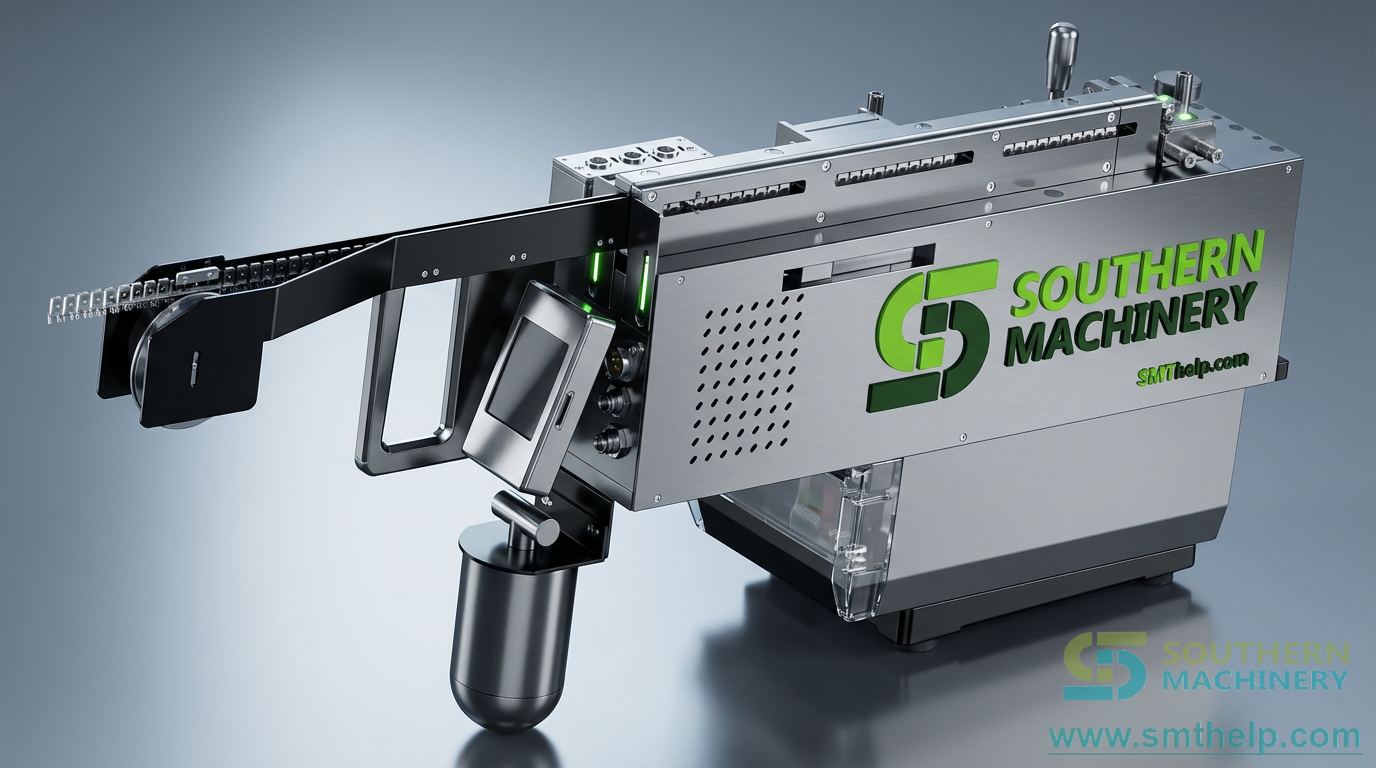
SRT7001 Reel Terminal Feeder for Terminal Insertion Automation by Southern Machinery
For EMS, ODM, automotive electronics, medical electronics and industrial control factories, reel terminals can become a difficult automation gap: they are often small, orientation-sensitive and quality-critical, but manual feeding creates operator-dependent variation. The SRT7001 Reel Terminal Feeder by Southern Machinery is designed to convert reel terminals into a stable, machine-ready supply for SMT/THT hybrid automation lines.
The source document positions the SRT7001 as a reel-to-reel terminal feeding solution for THT odd-form insertion, with custom brackets, I/O mapping and tooling options for integration with Panasonic, JUKI and YAMAHA equipment families. Southern Machinery can also support custom nozzles and grippers when the terminal geometry requires controlled pick, transfer and insertion.
What is this machine used for?
The SRT7001 Reel Terminal Feeder is used to feed terminals supplied on reels to a stable pick point for automated terminal insertion or SMT/THT hybrid assembly. In practical line planning, it helps replace repetitive manual terminal presentation with a repeatable feeding process that can be connected to compatible mounters, terminal insertion equipment or robot-assisted handling cells, depending on the final line configuration.
The business value is straightforward: fewer manual touches, more consistent component presentation, lower dependence on operator skill and better control of terminal insertion quality before downstream soldering.
Why terminal feeding is a bottleneck in PCB assembly
Manual terminal feeding is not only a labor issue. It also affects repeatability. A terminal can be misoriented, damaged, inconsistently placed at the pick position or delayed by operator handling. In high-mix production, these small interruptions can accumulate into line stops, rework and unstable cycle time.
For purchasing and manufacturing engineering teams, the core question is not whether a feeder looks automated. The core question is whether it can present the specific terminal reel format with stable indexing, proper clearance and an interface that the host equipment can actually use.
Key capabilities from the source document
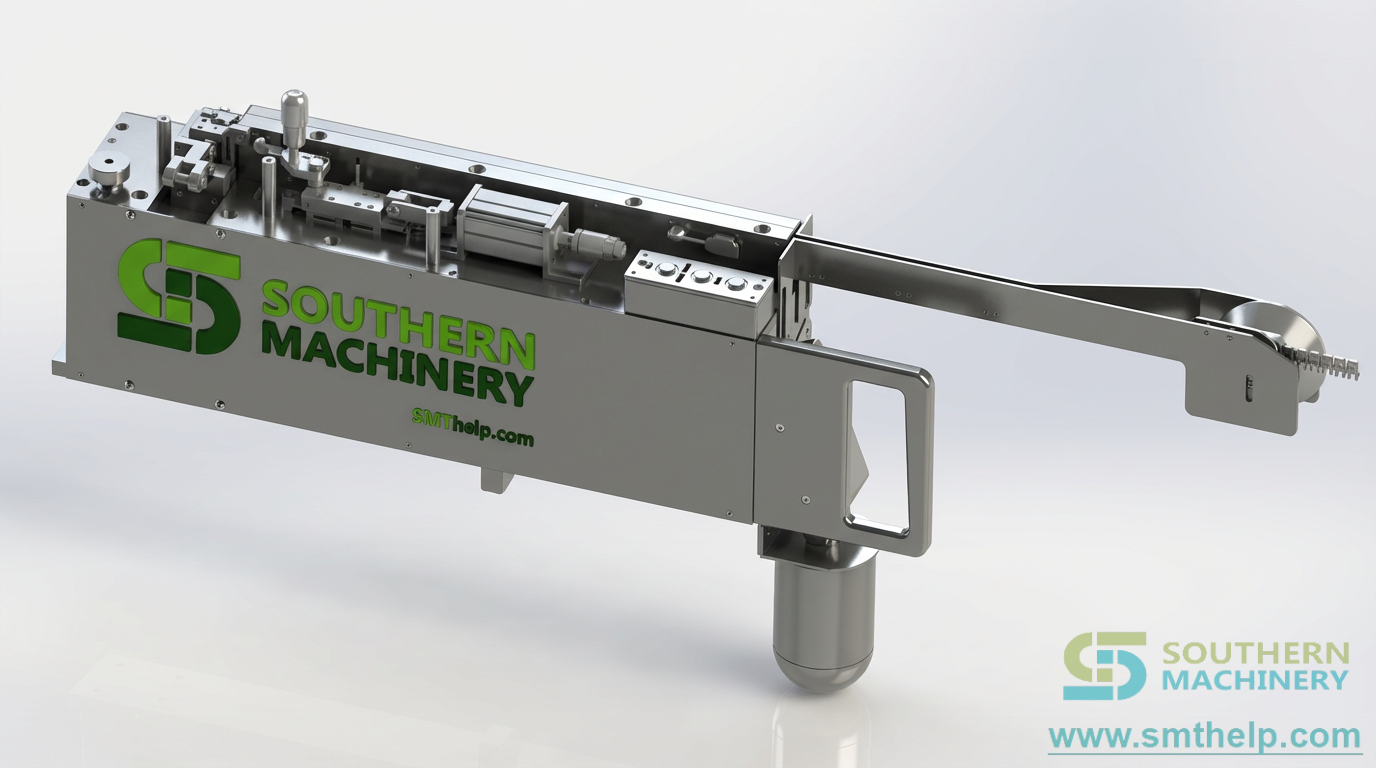
The source document describes the SRT7001 around four practical capabilities:
- Reel-to-reel feeding: continuous reel feeding helps reduce changeover interruptions and keep terminal presentation consistent across production runs.
- Universal compatibility: the feeder is described as compatible with Panasonic NPM/CM, JUKI RS/RX and YAMAHA YS series through custom brackets and I/O mapping.
- Precision feeding mechanism: the source document lists feeding accuracy of +/-0.3 mm for stable indexing and guided tape path control.
- Custom nozzle options: customized nozzles and grippers can be used for different terminal sizes and geometries to support controlled pick and insertion.
All final compatibility, cycle time and tooling choices should be confirmed against the terminal drawing, reel/carrier details, host machine model and line layout.
Typical application scenarios
Automotive electronics
Terminal insertion often appears in control boards, power modules, connectors and other assemblies where mechanical connection quality matters. Automated reel terminal feeding can help stabilize repetitive terminal presentation before insertion and soldering.
Industrial control boards
Industrial electronics may include mixed SMT parts, odd-form parts and terminals on the same PCB family. A dedicated terminal feeder helps engineers integrate terminal handling into a more repeatable hybrid assembly process.
Medical and high-reliability electronics
Where traceability, consistency and process discipline matter, reducing manual handling around terminals can support more controlled production conditions. This is especially relevant when terminal insertion quality influences downstream wave soldering or selective soldering results.
High-mix EMS production
High-mix EMS factories need feeder solutions that can be adapted to different host equipment and terminal formats. The source document highlights custom brackets, I/O mapping and tooling, which are important when one factory supports multiple customer assemblies.
How to connect it into a complete PCB assembly line
A practical SMT/THT line can combine solder paste printing, SPI, SMT placement, reflow, through-hole insertion, terminal feeding, odd-form insertion, wave soldering, inspection and board handling. The SRT7001 fits into the THT/odd-form automation zone where reel terminals must be prepared for pick and insertion.
A common integration path is:
- Confirm terminal reel format, pitch, dimensions, carrier design and pickup requirements.
- Confirm host equipment model and mechanical interface, such as Panasonic NPM/CM, JUKI RS/RX or YAMAHA YS series when applicable.
- Define bracket, I/O mapping and signal behavior, including start, ready and error logic.
- Select or design the nozzle/gripper for the terminal geometry.
- Validate pick position, clearance, insertion quality and downstream soldering stability.
- Train operators and maintenance staff on loading, cleaning, changeover and spare parts handling.
Southern Machinery, founded in 2011 in Shenzhen, China, focuses on SMT/THT PCB assembly automation equipment and can support complete line planning across SMT lines, THT insertion, wave soldering, board handling and inspection options. The company serves 237+ global customers with high-efficiency, cost-effective automation, global service, spare parts support and professional training.
Key selection parameters for buyers
Before requesting a quotation, prepare the following information:
- Terminal type and drawing, including body size, pin geometry and material handling constraints.
- Reel and carrier details, including pitch, tape width, reel capacity and orientation.
- Required host machine or robot model.
- Expected production mix, changeover frequency and shift pattern.
- Required feeding accuracy and acceptable tolerance window.
- Available power and signal interface; the source document lists DC 24V supply and start/ready/error signal concepts.
- Required mounting envelope and clearance around the host machine.
- Nozzle or gripper requirements for damage-free pick and stable insertion.
- Downstream process, such as wave soldering or selective soldering.
- Validation plan for sample terminals and pilot production.
Source-document specification checklist
The source document lists these planning references: feeding accuracy of +/-0.3 mm, feeding speed up to 1,200 CPH, terminal pitch range of 2.0-12.0 mm, reel capacity of 3,000-10,000 pcs per reel, DC 24V power supply and compatibility references for Panasonic NPM/CM, JUKI RS/RX and YAMAHA YS series. Treat these as source-document planning values that depend on configuration and are subject to final technical confirmation.

ROI, quality and capacity value
The ROI logic is not a guaranteed percentage. It comes from removing repeated manual feeding steps, reducing operator-dependent terminal presentation, stabilizing the pick point and lowering the risk of insertion-related defects. For a buyer, the strongest business case usually appears when the same terminal operation runs frequently, when labor availability is unstable, or when manual terminal handling creates quality variation that affects downstream soldering and inspection.
A sound ROI review should compare:
- Current manual operators required per shift for terminal feeding.
- Actual line stops caused by terminal handling.
- Scrap, rework or inspection failures linked to terminal insertion.
- Changeover time and recovery time after misfeeds.
- Expected feeder tooling and integration cost.
- Maintenance, spare parts and operator training requirements.
FAQ
Can the SRT7001 work with every SMT machine?
The source document lists compatibility references for Panasonic NPM/CM, JUKI RS/RX and YAMAHA YS series through custom brackets and I/O mapping. Final compatibility must be confirmed from the exact host model, machine interface and terminal format.
Does it only handle one terminal type?
The source document emphasizes custom nozzles and grippers for different terminal sizes and geometries. The real changeover scope depends on terminal pitch, tape format, pickup geometry and tooling design.
Is the listed 1,200 CPH speed guaranteed?
No. The source document lists up to 1,200 CPH, but actual output depends on terminal geometry, host equipment, insertion sequence, line balance and validation results.
Why use a reel terminal feeder instead of manual loading?
A reel feeder can provide a more stable and repeatable pick point, reduce repetitive manual handling and support a more automated SMT/THT hybrid line. This is especially useful when terminal feeding affects quality consistency or cycle time.
What information is needed for an engineering proposal?
Send the terminal drawing, reel photos, pitch, carrier/tape details, expected output, host machine model, available space and downstream soldering process. Southern Machinery can then review bracket, I/O and nozzle/gripper requirements.
Can Southern Machinery support a complete line, not only the feeder?
Yes. Southern Machinery provides SMT, THT, wave soldering, board handling and inspection-related automation solutions, with global service, spare parts support and professional training for PCB assembly factories.
CTA: request a terminal feeding review
If your PCB assembly line still depends on manual terminal feeding, send Southern Machinery your terminal reel specification, host machine model and target production plan. The engineering team can review whether the SRT7001 Reel Terminal Feeder, custom tooling and line integration approach fit your SMT/THT automation roadmap.
Comments