
SRT7001 Reel Terminal Feeder for THT Automation by Southern Machinery
The SRT7001 Reel Terminal Feeder helps EMS and ODM factories automate FASTON and tab terminal feeding for THT odd-form insertion. Instead of relying on manual feeding from bags or trays, it presents reel-packed terminals at a repeatable pick point for compatible insertion machines, SMT platforms, or robotic cells. This article explains what the feeder is used for, how it connects into a complete PCB assembly line, which buyer parameters must be confirmed, and how Southern Machinery supports SMT, THT, wave soldering, board handling, inspection, spare parts, service, and training for global electronics manufacturers.
Jul 2, 2026 · Updated Jul 2, 2026 · Southern Machinery
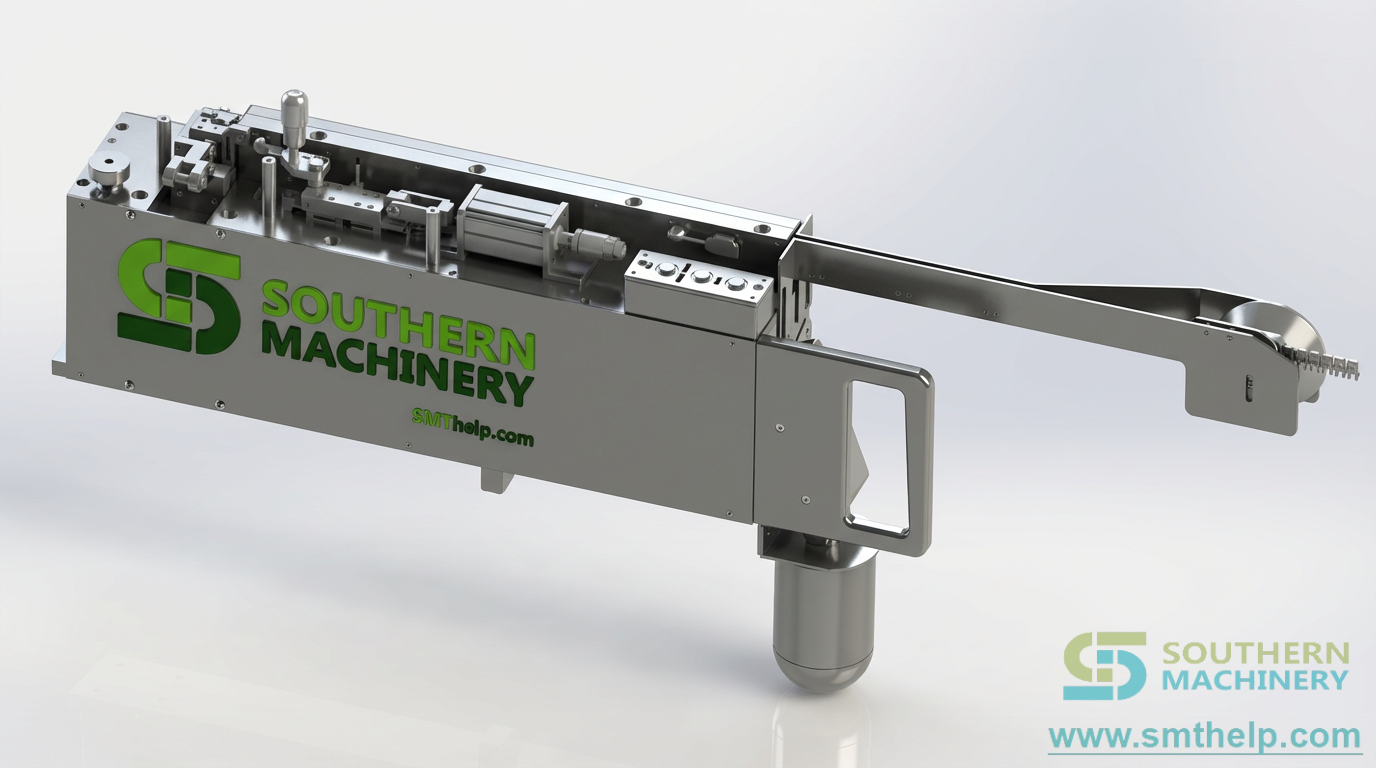
SRT7001 Reel Terminal Feeder by Southern Machinery
Manual feeding of FASTON terminals, tab terminals, and other reel-packed odd-form parts is a small process step that can create a large production bottleneck. Operators can keep a line running, but the output often changes by shift, product mix, and fatigue level.
The SRT7001 Reel Terminal Feeder by Southern Machinery is designed for EMS and ODM factories that want to automate terminal feeding for THT odd-form insertion. It presents reel-based terminals from tape and reel in a controlled, repeatable way so a compatible odd-form inserter, pick-and-place platform, or robotic cell can pick the part with custom tooling and insert it before wave soldering.
Southern Machinery was founded in Shenzhen, China in 2011 and serves 237+ global customers with SMT/THT PCB assembly automation equipment. Our focus is complete line integration: SMT, THT insertion, wave soldering, board handling, inspection, spare parts, service, and professional training.
What is this machine used for?
The SRT7001 Reel Terminal Feeder is used to feed FASTON, tab, and similar terminal components from tape and reel into automated THT odd-form insertion processes.
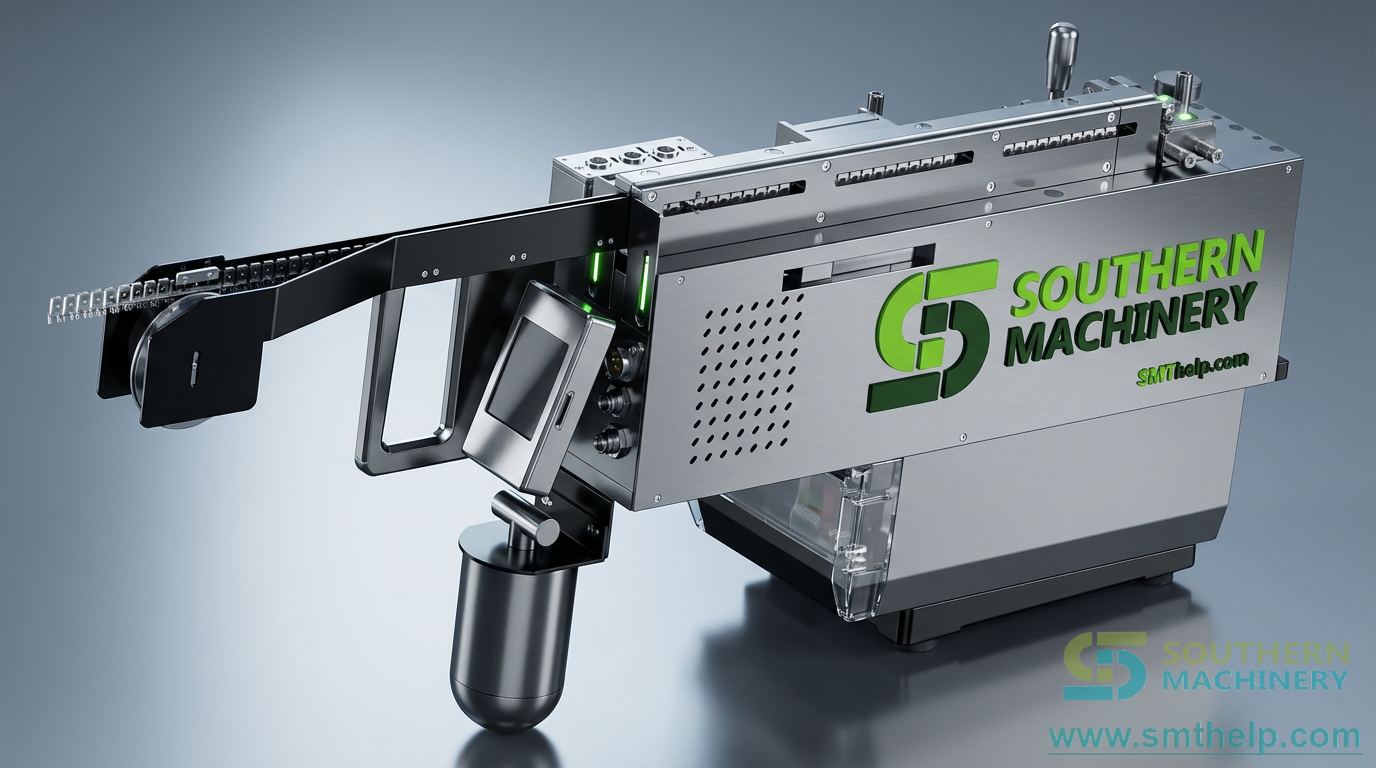
In practical terms, it converts a terminal reel into a stable machine-feeding source. The feeder indexes the tape by pitch, presents each terminal at a consistent pick point, and works with custom nozzles or grippers so the host machine can pick and insert the part with less manual handling.
Typical target boards include power supplies, automotive electronics, appliance control boards, and industrial control PCBs where robust THT terminal connections are required before wave soldering.
Why terminal feeding becomes a bottleneck
Many factories automate SMT placement first, then leave odd-form THT terminals to manual benches. That can work for low volume, but it becomes unstable when the same terminal appears across thousands of boards.
Common problems include:
- Unstable takt time caused by manual feeding from bags, trays, or simple jigs.
- Operator fatigue during repetitive terminal handling.
- Miss-picks or inconsistent orientation when terminal presentation is not controlled.
- Difficult integration when the terminal shape does not fit standard SMT tape feeders.
- Higher rework risk before wave soldering if insertion quality varies by operator.
SRT7001 addresses this by presenting reel-packed terminals at a defined pick location. The machine is not a universal answer for every odd-form part, but it is a practical automation path when the terminal can be supplied on tape and reel and the host machine can be matched mechanically and electrically.
How SRT7001 fits into a complete PCB assembly line
The feeder should be planned as part of a full SMT/THT line, not as an isolated accessory.
A typical line concept is:
- SMT section: PCB loader, stencil printer, pick-and-place, reflow oven, and optional AOI.
- THT preparation: SRT7001 feeds reel-packed terminals to the host machine.
- Odd-form insertion: A compatible odd-form machine, SMT platform, or robotic cell picks the terminal with a custom nozzle or gripper and inserts it into the PCB.
- Soldering: The board moves to wave soldering or selective soldering depending on product design.
- Inspection and test: Visual inspection, AOI, ICT/FCT, and traceability can be configured according to quality requirements.
Southern Machinery can support the surrounding equipment, including THT insertion machines, wave soldering, board handling conveyors, buffers, and inspection options. This matters because a feeder only creates real value when the downstream insertion and soldering process can keep pace.
Key selection parameters for buyers
Before quoting or confirming a feeder concept, Southern Machinery needs to review the component, PCB, and host machine. The most important points are listed below.
Terminal and reel details
- Terminal type, such as FASTON, tab terminal, solder terminal, or similar stamped metal component.
- Tape and reel format, pitch, orientation, and reel size.
- Component drawing, photos, and sample reels.
- Whether the terminal can be picked without deformation.
- Required insertion orientation and insertion depth.
Host machine and integration
- Host platform: odd-form inserter, SMT platform, robotic cell, or other automation equipment.
- Mechanical mounting space and bracket requirements.
- Pick point X/Y/Z reach and clearance.
- Electrical I/O requirements, such as start, ready, error, and sensor status.
- Whether custom nozzle, gripper, or tooling is required.
Process and line requirements
- Target board output per hour or per shift.
- Number of terminals per PCB.
- Product mix and changeover frequency.
- Wave soldering or selective soldering process after insertion.
- Inspection, traceability, and maintenance requirements.
The source document describes customized mechanical brackets, I/O interface, presence/empty or jam sensing, motor-driven indexing matched to reel pitch, and custom nozzles or grippers for terminal families. Final details should be confirmed using your actual component samples and host machine model.
ROI, quality, and capacity value
For most EMS buyers, the ROI case is not only about feeder speed. It is about removing an unstable manual step from the THT process.
The expected value normally comes from four areas:
- Labor reduction: fewer operators are needed for repetitive terminal feeding work.
- Quality stability: terminals are presented at a consistent pick point, reducing operator-dependent variation.
- Line balance: feeding can be synchronized with odd-form insertion instead of depending on manual pace.
- Scalability: when volume grows, the factory can expand automation instead of adding the same number of manual feeding operators.
Real ROI depends on local labor cost, number of terminals per board, shift pattern, component packaging, host machine speed, and soldering capacity. Southern Machinery should calculate this case-by-case after reviewing your PCB, BOM, and current manual process.
Typical application scenarios
SRT7001 is most suitable when the same terminal family is used repeatedly and can be supplied in reel form.
Common scenarios include:
- Power supply boards with multiple FASTON or tab terminals.
- Automotive electronics and harness-related PCBs with repeated THT terminals.
- Industrial control boards that require robust terminal connections.
- Appliance control boards where terminal insertion happens before wave soldering.
- Mixed SMT/THT EMS lines where odd-form terminals are the main manual bottleneck.
For very low-volume production or constantly changing terminal shapes, a manual or semi-automatic approach may still be more flexible. For stable or growing product families, SRT7001 can be a cost-effective step toward full THT automation.

Why choose Southern Machinery
Southern Machinery is a Shenzhen-based manufacturer founded in 2011, focused on high-efficiency and cost-effective SMT/THT PCB assembly automation equipment.
The advantage is full-line thinking. Instead of only supplying a feeder, Southern Machinery can help review:
- SMT line connection and board flow.
- THT insertion method and host machine compatibility.
- Wave soldering or selective soldering requirements.
- Board handling, buffers, loaders, unloaders, and inspection points.
- Custom nozzle, gripper, bracket, and feeder integration.
- Training, spare parts, and remote or on-site service support.
For overseas buyers, this reduces integration risk. A terminal feeder, insertion head, PCB support, soldering process, and inspection plan must work together. Southern Machinery can help match the equipment class and configuration before you invest.
FAQ
Is SRT7001 a standalone insertion machine?
No. SRT7001 is a reel terminal feeder. It presents terminals to a compatible host machine, odd-form inserter, SMT platform, or robotic cell. The complete solution depends on your insertion equipment and line layout.
What components can it feed?
The source document focuses on FASTON, tab, and similar terminal components supplied on tape and reel. Final feasibility depends on the terminal drawing, tape pitch, orientation, stiffness, and pick method.
Can it work with existing SMT or odd-form machines?
It may be integrated with compatible platforms using customized mechanical brackets and electrical I/O. Final compatibility must be confirmed with the exact host machine model, available space, pick position, and signal requirements.
Does it eliminate all manual THT work?
Not by itself. It targets reel-packed terminal feeding. Other THT parts such as large connectors, transformers, relays, heatsinks, or special odd-form parts may need different feeders, odd-form insertion equipment, or manual assist.
What should I send for evaluation?
Send terminal drawings, reel photos, tape pitch information, PCB drawings, expected output, host machine model, and your current insertion process. Samples are strongly recommended before final tooling confirmation.
Can Southern Machinery provide the full line around this feeder?
Yes. Southern Machinery can support SMT, THT insertion, wave soldering, board handling, inspection, spare parts, training, and integration support for a complete PCB assembly automation line.
CTA: review your terminal insertion process
If terminal feeding is slowing down your THT line, send Southern Machinery your PCB drawing, terminal reel specification, current host machine model, and target output. Our sales engineers can check whether SRT7001 fits your process or whether another THT automation approach is more cost-effective.
For the most accurate proposal, include component samples and a short video of your current manual insertion step. That helps us design the feeder, tooling, bracket, and full line concept with fewer assumptions.
Comments