
SRT7001 Reel Terminal Feeder: Bridging SMT and Robotic Cells by Southern Machinery
Reel-fed terminals can become an awkward handoff between high-volume SMT operations and robotic insertion cells. Southern Machinery's SRT7001 Reel Terminal Feeder is designed to present continuous-strip terminals through a controlled electro-mechanical interface, helping manufacturing teams evaluate a more repeatable material flow. This guide explains where the feeder fits, how to plan the mechanical and signal handoff, which application details to validate, and how it can support a practical PCB assembly automation roadmap.
Aug 3, 2026 · Updated Aug 3, 2026 · Southern Machinery
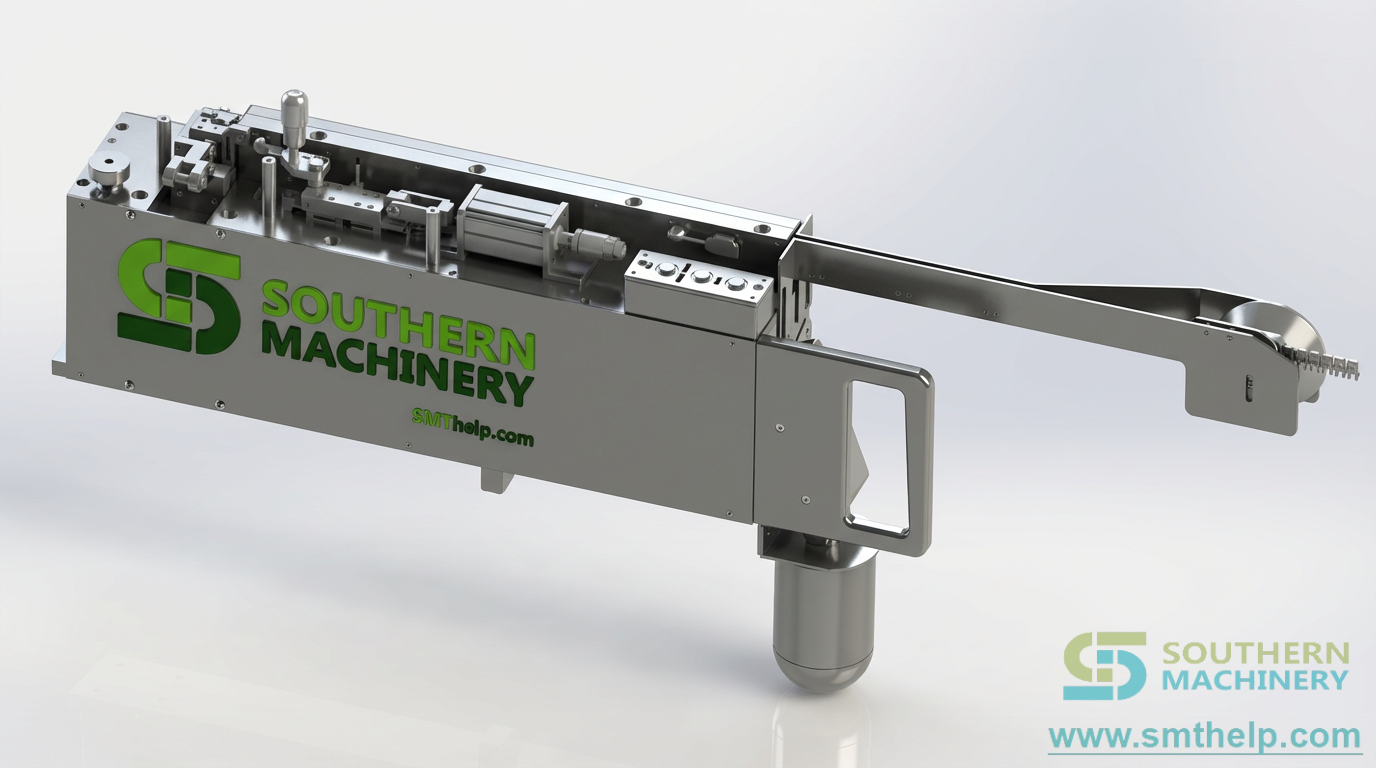
SRT7001 Reel Terminal Feeder: Bridging SMT and Robotic Cells
For many electronics manufacturers, reel-fed terminals create a material-handling gap. Standard SMT processes are optimized for repeatable pickup, while terminals and other odd-form parts may need a dedicated presentation method before placement or insertion. The SRT7001 Reel Terminal Feeder from Southern Machinery is intended to provide an electro-mechanical interface for continuous-strip terminals in SMT mounter and robotic-cell workflows.
What is this machine used for?
The SRT7001 Reel Terminal Feeder is used to advance and present reel-fed terminals for automated pickup. It is relevant where a production team wants to connect a terminal supply reel with an SMT placement environment or a standalone robotic cell, rather than relying on manual presentation at the pick point. The source material describes pilot-hole indexing, adjustable guide rails, a component presentation area, and separate drives for terminal indexing and cover-tape or interleaf handling.
Why terminal presentation deserves its own engineering review
A terminal feeder is not simply a reel holder. The output must be mechanically stable enough for the planned pickup method, while the machine or robot needs a clear approach path and a dependable handoff signal. In a mixed SMT/THT factory, these small interfaces often determine whether an automated cell is easy to commission and maintain.
The SRT7001 concept is built around positive engagement with the terminal strip's pilot holes instead of relying only on friction. Adjustable guide rails are described to constrain lateral movement. Its presentation zone is intended to give SMT nozzles or robotic grippers access to the terminal at a repeatable pickup location.
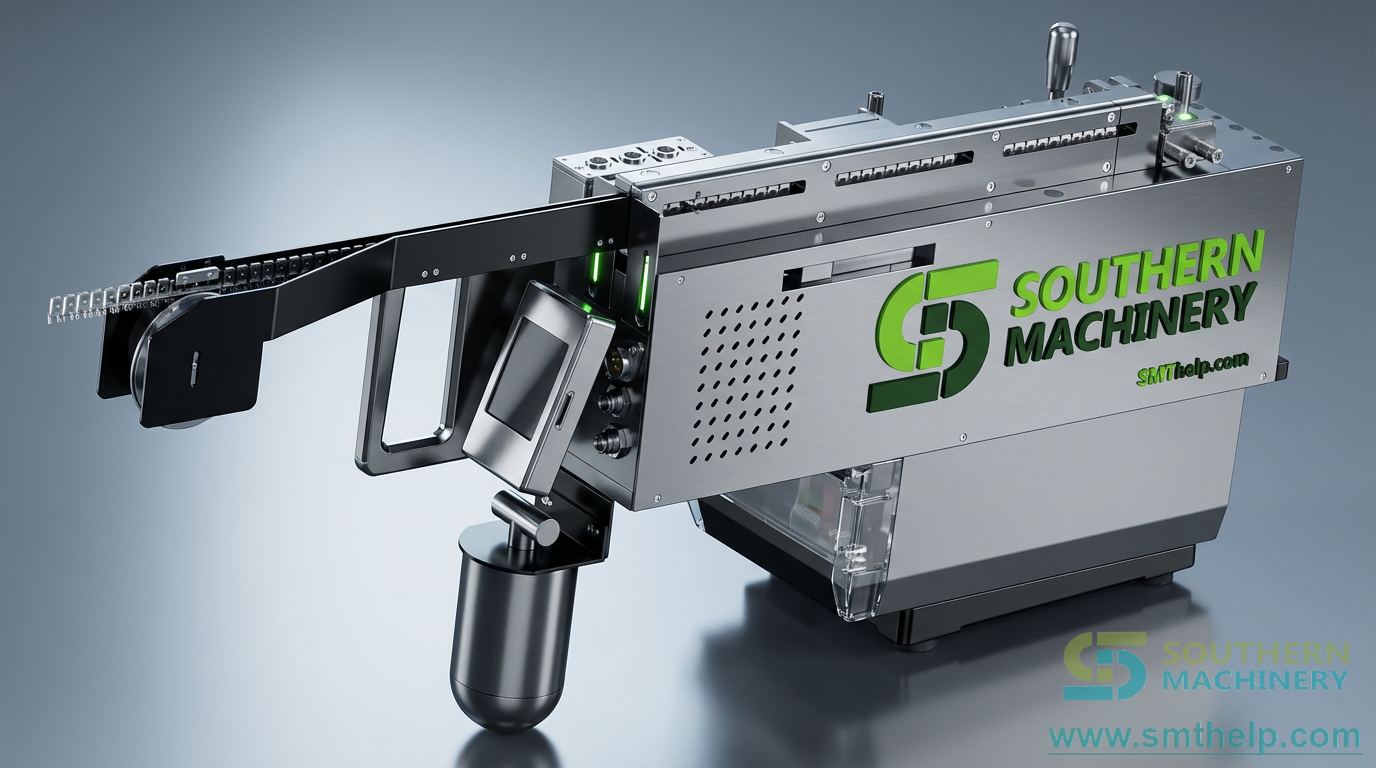
Typical application scenarios
Terminal placement in SMT-supported assembly
Some PCB programs combine conventional SMT placement with terminals that must be supplied from a reel. A feeder evaluation can focus on the physical interface with the selected mounter, terminal geometry, tape format, pickup tooling, and the available feeder positions.
Robotic terminal or odd-form cells
In a robot cell, the key question is whether the presented terminal can be picked with a fixed, validated motion. The source material describes 24 V I/O handshaking for a robot application. The final signal sequence, gripper design, safety interface, and recovery logic should be confirmed during engineering review.
Flexible production with changing terminal families
EMS and ODM teams frequently face changing BOMs and terminal variants. A feeder platform can be considered when it helps the team organize reel supply and presentation consistently across recurring product families. Compatibility remains dependent on the actual terminal strip, pilot-hole pattern, material properties, and target equipment.
How to connect the feeder to a PCB assembly line
A complete line starts with material control and ends with a validated process, not only a feeder installation. A typical integration sequence is:
- Confirm the terminal package. Review the strip pitch, pilot-hole layout, terminal shape, reel condition, and any cover tape or interleaf material.
- Define the pickup interface. Match the feeder presentation location to the nozzle, gripper, or end-effector and verify clearance through the full pickup motion.
- Map the controls handshake. Document ready-to-pick, advance, fault, reset, and safe-stop behavior between the feeder and the mounter or robot.
- Build the downstream process. Connect placement or insertion with PCB transfer, board support, inspection, and any required wave-soldering or post-process station.
- Run representative trials. Use actual terminals and boards to validate pickup, handling, insertion or placement, and recovery after normal production interruptions.
Southern Machinery, founded in Shenzhen in 2011, supports SMT, THT, wave soldering, board handling, inspection, and related PCB assembly automation. This broader line perspective matters because feeder selection is most valuable when it works with the full material, board-flow, and process-control plan.
Key selection parameters for buyers and process engineers
Use this checklist before requesting a configuration recommendation:
- Terminal drawings, material, dimensions, and allowable orientation
- Reel and strip format, including pilot holes and cover-tape or interleaf requirements
- Target platform: SMT mounter, SCARA robot, 6-axis robot, or another automated station
- Required pickup tool, clearance envelope, and board or fixture constraints
- Signals and controls requirements, including 24 V I/O where applicable
- Expected product mix, changeover method, and operator replenishment workflow
- Quality-validation plan for pickup, placement, insertion, and traceability
- Needed training, spare-parts approach, and global service expectations
ROI, quality, and capacity value
The value case should be based on a buyer's own current process data, not a generic promise. A controlled terminal-presentation interface may help reduce variation introduced by manual presentation and can make the pickup point easier to define during automation design. Its real impact depends on terminal consistency, cycle requirements, changeover frequency, error recovery, and the upstream and downstream stations.
For a defensible business case, compare current labor content, stoppages, scrap or rework causes, and line waiting time with a trial configuration using representative parts. Any expected throughput, quality, or payback result is application-specific and subject to final technical confirmation.
Frequently asked questions
Can the SRT7001 be used with both SMT equipment and a robot?
The source material positions it for SMT mounter interfaces and standalone robotic cells. Confirm the specific mechanical and electrical interface with Southern Machinery before purchase.
Which terminals can be evaluated?
Reel-fed continuous-strip terminals are the intended use case. Supply terminal drawings, strip samples, pilot-hole information, and reel details for an engineering review.
Does it eliminate the need for vision inspection?
Not necessarily. Whether vision is needed depends on the terminal, tooling, tolerance stack, quality target, and the robot or mounter process. It must be validated in the final cell design.
What signals should an integration team plan for?
Plan the feeder-ready, advance, fault, reset, and safe-stop sequence. The source notes 24 V I/O handshaking for robot applications; confirm the exact protocol and wiring for the selected configuration.
Can Southern Machinery support a complete line?
Yes. Southern Machinery provides PCB assembly automation solutions across SMT, THT, wave soldering, board handling, and inspection, with global service, spare-parts support, and professional training.
Plan the terminal-feeding interface before the line is fixed
A terminal feeder should be selected alongside the actual terminals, target platform, tooling, and production flow. Share your terminal drawings, reel specification, intended equipment, and output objectives with Southern Machinery. Our engineering team can help scope an SRT7001 evaluation and connect it to a cost-effective, high-efficiency PCB assembly automation solution.
Comments