
SRT7001 Reel Terminal Feeder for Robotic and SMT Integration by Southern Machinery
The SRT7001 Reel Terminal Feeder helps EMS factories move terminal feeding from manual handling to a more stable automated workflow. Based on Southern Machinery's source landing page, it serves as a bridge between reel-p
Jul 4, 2026 · Updated Jul 4, 2026 · Southern Machinery
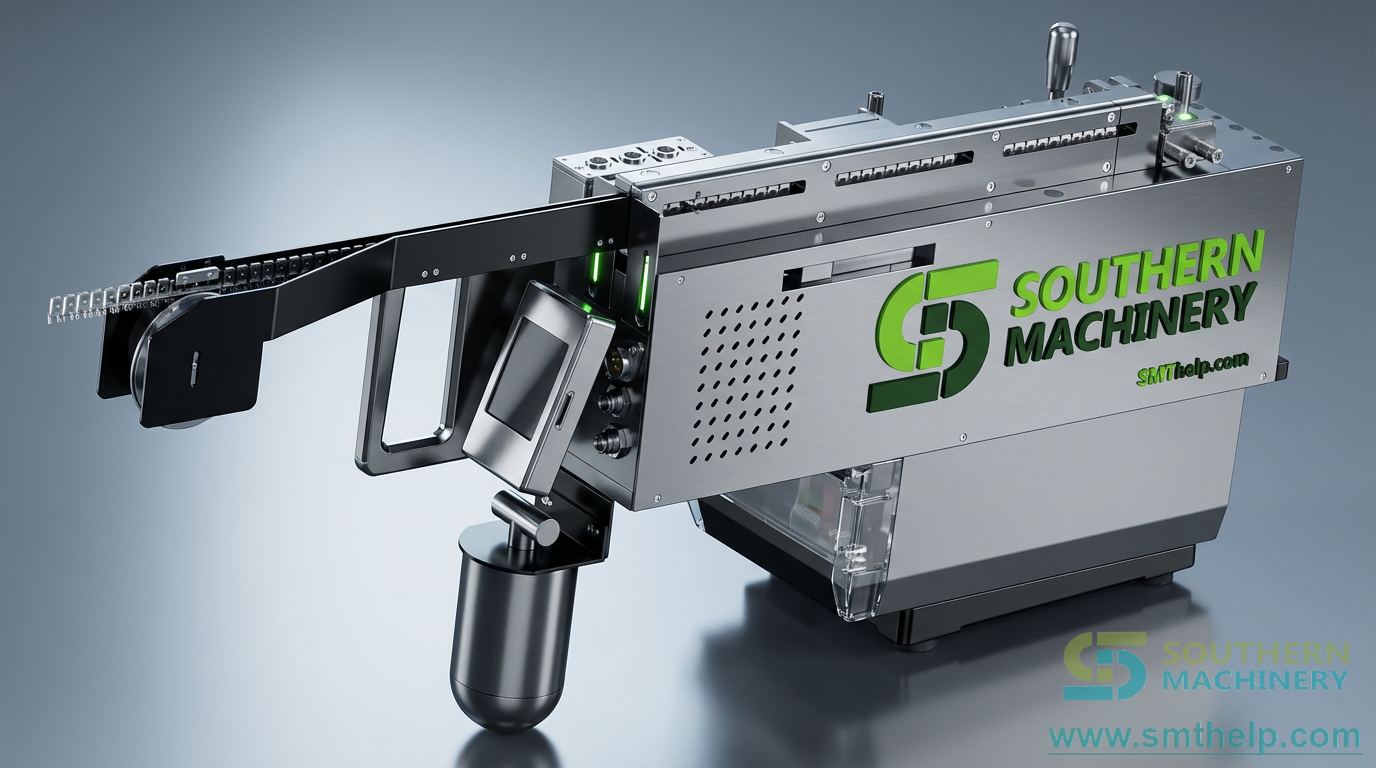
SRT7001 Reel Terminal Feeder for Robotic and SMT Integration by Southern Machinery
For many EMS factories, terminal insertion is one of the last manual steps left between a clean SMT line and a fully automated PCB assembly process. Reel-packed terminals can be difficult to present consistently, especially when the next process involves a robot arm, a pick-and-place machine, or a customized THT insertion station.
The SRT7001 Reel Terminal Feeder from Southern Machinery is designed to fill this gap. The source product page positions it as a practical integration bridge between odd-form terminal feeding, SMT mounters, and robotic assembly cells. Instead of treating terminal feeding as a separate manual station, the feeder helps present parts in a controlled, repeatable way so the rest of the line can run with fewer interruptions.
What is this machine used for?
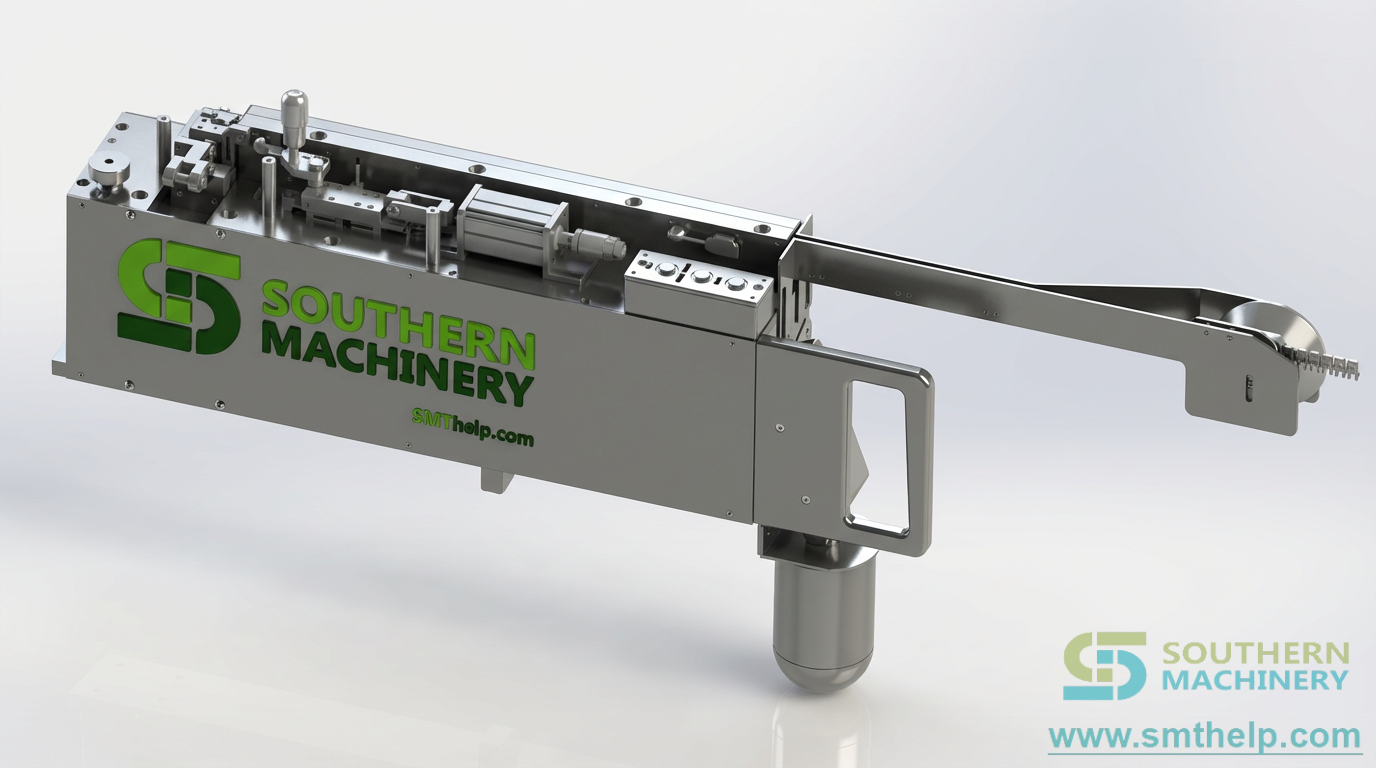
The SRT7001 Reel Terminal Feeder is used to feed reel-packed terminals, including FASTON-style and similar stamped terminals, into automated SMT or THT assembly workflows.
In simple terms, it takes terminals supplied on a reel and presents them to the next machine or robot in a more controlled pick position. The next step may be an SMT mounter with a suitable nozzle, a SCARA or 6-axis robot, or a custom insertion cell designed around the customer's terminal and PCB design.
This matters because terminal feeding is often where automation projects slow down. A robot can only be stable if the part presentation is stable. A pick-and-place machine can only place reliably if the terminal arrives in the right orientation and position. The feeder is therefore not just a small accessory; it is part of the automation logic of the line.
Why terminal feeding becomes a bottleneck
In mixed SMT and THT production, standard chip components are easy to automate. Reels, trays, and standard SMT feeders already support high-volume production. Terminals are different. They may be heavier, taller, asymmetrical, or packed in a way that is not friendly to standard SMT feeding.
Typical factory problems include:
- Operators manually separating terminals before insertion.
- Inconsistent pick position for a robot or customized nozzle.
- Frequent line stops caused by feeding jams or mis-picks.
- Difficulty moving from manual terminal insertion to a repeatable automated process.
- Extra quality risk when terminals are not seated consistently before soldering.
For factories building power supplies, automotive electronics, industrial controls, LED drivers, appliance controllers, or connector-heavy PCB assemblies, this small feeding step can define the real output of the whole line.
How the SRT7001 fits into a complete PCB assembly line
Southern Machinery normally treats this as a line problem, not just a feeder problem. A practical layout may look like this:
SMT section
The PCB first goes through a loader, stencil printer, pick-and-place, reflow oven, and optional SPI/AOI inspection. If the terminal can be handled by an SMT mounter with a suitable customized nozzle or gripper, the SRT7001 may support the feeding side of that operation.
THT or odd-form section
After SMT, the PCB moves to THT insertion. Depending on the product, this may include radial insertion, axial insertion, odd-form insertion, terminal insertion, or a robotic insertion cell. The SRT7001 can support reel terminal presentation where the terminal format matches the feeder concept and the final tooling is confirmed.
Soldering and inspection
After insertion, boards may move to wave soldering, selective soldering, visual inspection, AOI, ICT, or FCT. For terminal-heavy boards, soldering quality depends heavily on stable insertion depth and repeatability before the board reaches the soldering process.
Board handling and traceability
For medium- and high-volume EMS factories, the feeder should be planned together with conveyors, buffers, PCB loading/unloading, barcode scanning, and MES or traceability needs. This is where Southern Machinery's broader product scope matters: SMT, THT insertion, wave soldering, board handling, inspection options, training, spare parts, and line integration can be discussed as one project.
Key selection parameters for buyers
Before choosing a reel terminal feeder, the engineering team should confirm the actual terminal and line condition. The source page shows the SRT7001 as a feeder for smart EMS integration, but the final configuration still depends on your component and machine interface.
Important points to confirm include:
- Terminal type and packaging: FASTON-style, stamped terminal, solder tab, custom terminal, or another reel-packed part.
- Carrier format: reel width, pitch, pilot hole style, strip strength, and whether cover tape or paper handling is involved.
- Pick method: SMT nozzle, pneumatic gripper, mechanical gripper, robot end-effector, or customized insertion head.
- Target machine: SMT mounter, robotic cell, terminal insertion station, or another customized automation platform.
- Required orientation: whether the terminal must be cut, formed, indexed, or presented at a specific angle before pickup.
- PCB constraints: insertion hole layout, board thickness, clearance around nearby components, and whether soldering will be wave or selective.
- Line control: ready-to-pick signal, basic I/O, safety interlock, and how the feeder should communicate with the host machine.
- Maintenance needs: access for cleaning, strip loading, changeover, and spare part replacement.
If exact speed, repeatability, or insertion force is required for a quotation, Southern Machinery should confirm it against the terminal sample, drawing, and host equipment. Do not size this type of automation from a brochure number alone.
ROI, quality, and capacity value
The ROI of the SRT7001 is usually tied to three practical improvements.
First, it can reduce repetitive manual handling. When operators manually pick and pre-position terminals, the work is slow, tiring, and inconsistent. Automating the feeding step helps move operators toward supervision, material replenishment, inspection, and higher-value process control.
Second, it supports more stable quality. If the terminal is presented in a controlled position, the downstream robot or placement machine has a better chance of picking correctly. That can reduce mis-picks, wrong orientation, and line stops. Final defect reduction depends on the full process, tooling, PCB design, and soldering setup, so it should be validated with samples.
Third, it improves line planning. A feeder that can be integrated into SMT or robotic workflows gives the factory more choices. A buyer can start with one automated terminal station, then expand toward a fuller THT automation line with insertion, board handling, soldering, and inspection.
For a real ROI study, Southern Machinery would ask for your current manual labor count, shift pattern, terminal quantity per board, current defect issues, target output, and whether the project is a new line or a retrofit.
Typical applications
The SRT7001 concept is most relevant for PCB assemblies where terminals are repeatedly inserted or placed and the factory wants to reduce manual dependence.
Common application areas include:
- Power supply boards with blade terminals or high-current connectors.
- Automotive and EV electronics with connector-heavy layouts.
- Industrial control boards that mix SMT components with THT terminals.
- Appliance controller boards requiring stable terminal presentation.
- LED driver and power electronics boards where manual terminal insertion limits output.
- EMS factories upgrading from manual odd-form insertion to semi-automatic or automatic cells.

Why work with Southern Machinery
Southern Machinery was founded in 2011 in Shenzhen, China and focuses on cost-effective, high-efficiency equipment for SMT and THT PCB assembly automation. The company serves 237+ global customers and supports projects from individual machines to complete integrated lines.
For this type of feeder project, the practical advantage is engineering support. Terminal automation usually needs more than a catalog item. It may involve feeder matching, customized nozzle or gripper design, robot interface discussion, line layout, sample testing, operator training, spare parts planning, and after-sales support.
Southern Machinery can help evaluate whether your terminal should be handled by an SMT mounter, odd-form insertion machine, terminal insertion station, or robot cell. If the exact model or configuration is not confirmed from the source document, the right approach is to match the closest Southern Machinery feeder and tooling solution from the catalog after checking your component sample.
FAQ
Can the SRT7001 work with every terminal?
No. Reel terminal feeding depends on the terminal shape, reel format, pitch, material rigidity, and pickup method. Southern Machinery should review your terminal drawing, reel sample, and target host machine before confirming compatibility.
Is this only for FASTON terminals?
The source documents mainly discuss reel terminal feeding and FASTON-style terminal automation. Similar reel-packed terminals may be possible, but the final solution should be confirmed by sample testing and tooling review.
Can it connect to SMT mounters and robots?
The source landing page positions the SRT7001 as suitable for SMT and robotic integration. The actual interface, signal logic, mounting, and pickup tooling still need to be checked against your machine brand and production cell design.
Do I need a custom nozzle or gripper?
Often yes. Terminals are usually not handled like standard chips or ICs. A customized nozzle, vacuum pickup, or mechanical gripper may be needed to hold the terminal securely without deformation.
Should I choose this feeder or a full odd-form insertion machine?
If your main problem is presenting reel-packed terminals to an existing SMT or robotic process, a feeder-based solution may be enough. If you need full insertion force control, clinching, multiple odd-form parts, and inline automation, a dedicated odd-form or terminal insertion machine may be more suitable.
What information is needed for a quotation?
Please share terminal drawings or photos, reel packing details, PCB drawings, target output, host machine brand/model, current manual process, and whether the line uses wave soldering or selective soldering after insertion.
CTA: Send your terminal sample before choosing the feeder
If terminal insertion is still a manual bottleneck in your SMT/THT line, send Southern Machinery the terminal drawing, reel photo, PCB layout, and target output. We can check whether the SRT7001 Reel Terminal Feeder or another Southern Machinery feeder, nozzle, gripper, or insertion solution is the better fit.
The goal is simple: build a stable, cost-effective PCB assembly line that reduces manual work, improves consistency, and leaves room for future automation growth.
Comments