
SRT7001 FASTON Terminal Feeder for THT PCB Assembly by Southern Machinery
For EMS factories building power electronics, industrial controls, appliance boards, and automotive electronics, manual FASTON and reel terminal feeding often becomes a hidden THT bottleneck. The SRT7001 Reel Terminal Fe
Jul 4, 2026 · Updated Jul 4, 2026 · Southern Machinery
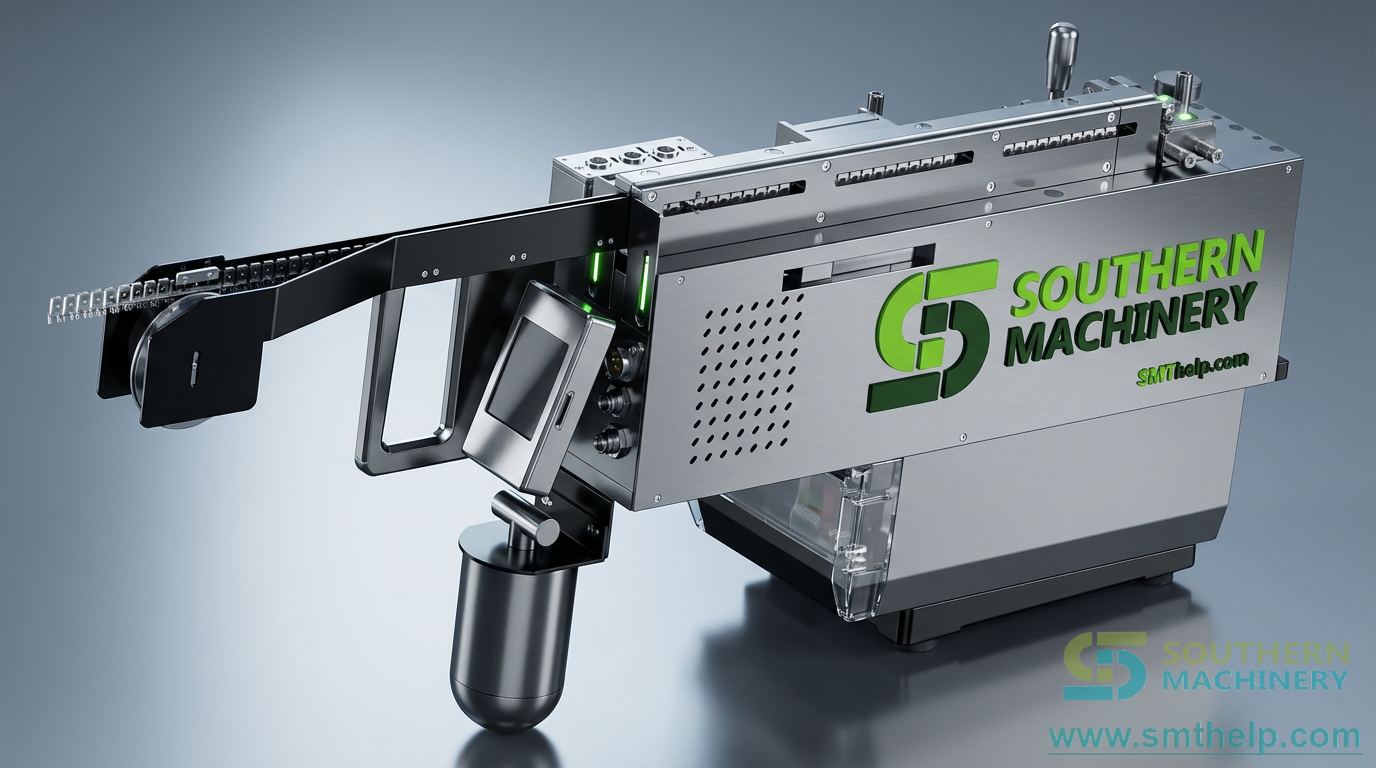
SRT7001 FASTON Terminal Feeder for THT PCB Assembly by Southern Machinery
FASTON terminals, wire-to-board terminals, crimp terminals, and pin connectors are small parts, but they can slow down a whole THT assembly process when feeding is manual. Operators must prepare terminals consistently, keep the pitch aligned, avoid deformation, and present the part at the same pickup point every time.
The SRT7001 Reel Terminal Feeder from Southern Machinery is designed to solve that problem by converting reel-packed terminals into a stable, machine-ready supply for terminal insertion automation. For factories running hybrid SMT/THT products, it helps make terminal feeding more repeatable and less dependent on operator skill.
Southern Machinery was founded in Shenzhen, China in 2011. We focus on cost-effective SMT and THT PCB assembly automation equipment, including SMT lines, THT insertion, wave soldering, board handling, inspection, feeders, nozzles, and customized tooling. Our team supports 237+ global customers with equipment integration, spare parts support, training, and practical line planning.
What is this machine used for?
The SRT7001 Reel Terminal Feeder is used to feed reel-packed terminals into an automated SMT/THT production process. Instead of relying on manual terminal preparation, the feeder indexes terminals from a reel, guides the tape path, and presents the terminal at a stable pickup point for downstream insertion or robotic handling.
In simple terms: it helps your line pick terminals more consistently.
This is useful when your PCB uses parts such as:
- FASTON-style terminals
- Pin connectors
- Wire-to-board terminals
- Crimp terminals
- Other reel-packed odd-form terminal components
The source product page positions the SRT7001 for high-mix EMS lines where terminal insertion quality, stable pickup, and repeatable feeding directly affect downstream solder quality and functional yield.
Why terminal feeding becomes a bottleneck
Terminal insertion is often treated as a small process step. In real production, it can create several problems:
- Manual preparation varies from operator to operator.
- Terminal pitch and pickup position can drift.
- Deformed terminals can cause insertion defects.
- Manual feeding slows down higher-volume THT lines.
- Debugging becomes harder when the feeder, robot, and host machine do not share stable timing and signal logic.
The SRT7001 is designed to reduce these variables by using continuous reel feeding, guided terminal presentation, and custom tooling matched to the terminal geometry.
Key capabilities from the source document
The selected source document lists these planning specifications for the SRT7001. They should be treated as application planning data and remain subject to final technical confirmation based on terminal reel design, host machine model, interface method, and tooling configuration.
| Item | Source document value |
|---|---|
| Feeding accuracy | ±0.3 mm |
| Feeding speed | Up to 1,200 CPH |
| Terminal pitch range | 2.0 mm - 12.0 mm |
| Reel capacity | 3,000 - 10,000 pcs per reel |
| Compatible machines | Panasonic NPM/CM, JUKI RS/RX, YAMAHA YS series |
| Power supply | DC 24V |
| Integration signals | Start / Ready / Error |
| Tooling | Custom nozzle / gripper |
For a quotation or final machine selection, Southern Machinery will need your terminal drawing, reel format, pitch, host machine model, expected output, and layout constraints.
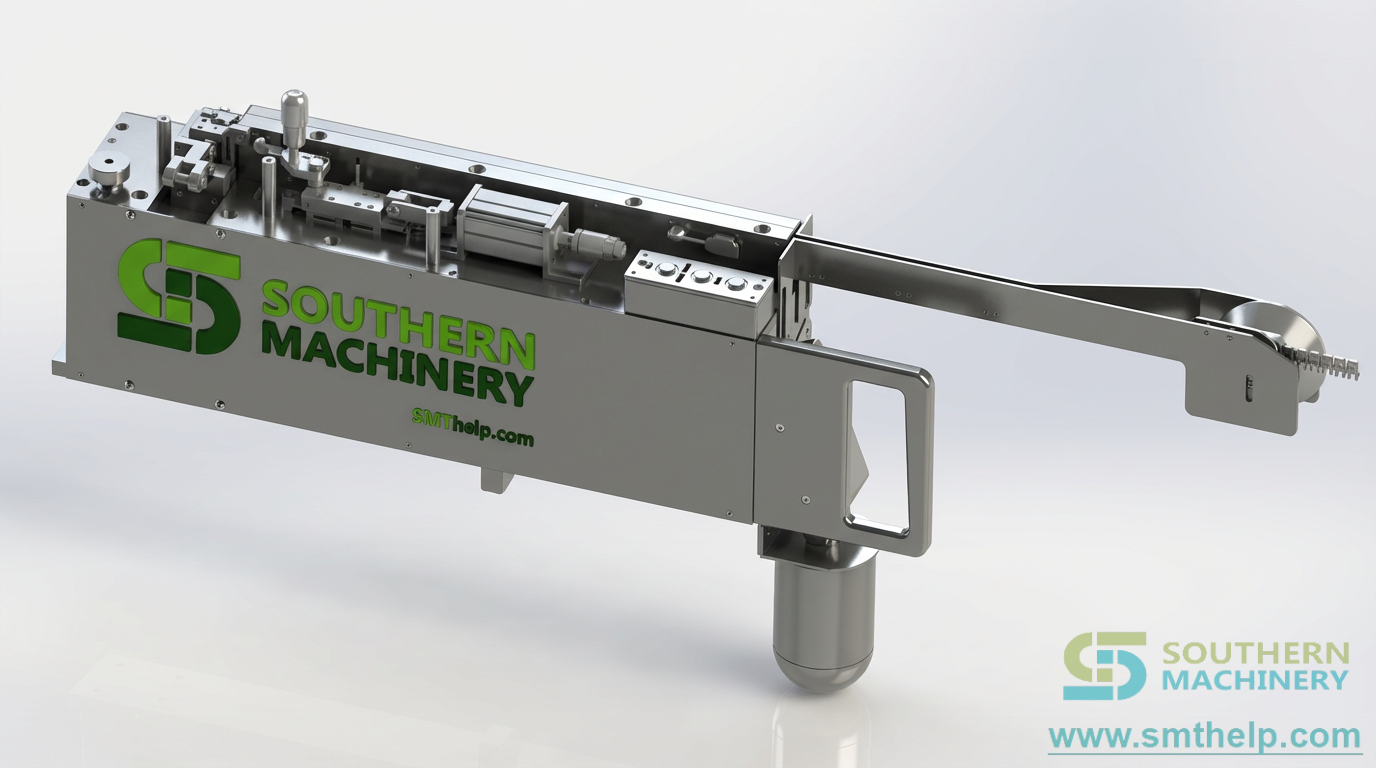
Typical applications
Automotive electronics
ECU boards and connector-heavy assemblies often include terminals that must be inserted with stable orientation and good repeatability. Automated terminal feeding reduces the risk of inconsistent manual preparation.
Industrial control boards
Relay boards, control boards, and interface modules frequently combine SMT components with THT connectors and terminals. The SRT7001 fits into this mixed-technology environment as a terminal feeding station.
Appliance and consumer electronics control boards
Home appliance control boards may use wire-to-board terminals, crimp terminals, and other electrical connection parts. A feeder-driven workflow helps standardize production when volume grows beyond manual handling.
High-mix EMS production
For EMS factories, the challenge is not only speed. It is changeover discipline. Custom brackets, I/O mapping, nozzles, and grippers help adapt the feeder to different host machines and terminal formats.
How to connect it into a complete PCB assembly line
A practical hybrid PCB assembly process can look like this:
- SMT section: PCB loader, stencil printer, pick-and-place, reflow oven, and optional SPI/AOI depending on quality requirements.
- THT preparation: board buffer or transfer conveyor after SMT, with fixtures if needed for terminal insertion.
- Terminal feeding and insertion: SRT7001 feeds reel-packed terminals to the insertion or robotic station. Custom tooling presents the terminal for stable pickup and placement.
- Wave soldering or selective soldering: selected according to board design, thermal mass, solder keep-out area, and product mix.
- Inspection and test: visual inspection, THT AOI, ICT/FCT, barcode tracking, or MES data collection depending on the factory standard.
Southern Machinery can support the full line, not only the feeder. That matters because terminal feeding must match the real board flow, soldering method, inspection plan, and handling equipment.
Key selection parameters for buyers
Before choosing a terminal feeder, confirm these points:
- Terminal type: FASTON, pin connector, crimp terminal, wire-to-board terminal, or other odd-form part.
- Terminal drawing: dimensions, insertion direction, allowed deformation tolerance, and pickup surface.
- Reel format: pitch, carrier tape design, reel capacity, and terminal orientation.
- Host machine: Panasonic NPM/CM, JUKI RS/RX, YAMAHA YS series, or another platform requiring a custom interface.
- Required output: target boards per hour, shifts per day, and expected utilization.
- PCB details: board size, thickness, fixture use, and whether the terminal is inserted before wave/selective soldering.
- Signal interface: start, ready, error, and any machine-side interlock requirements.
- Tooling: nozzle or gripper design for stable pickup without damaging the terminal.
If these details are unclear, do not select by feeder price alone. A cheap feeder that cannot hold the pickup point or match the host machine timing will usually cost more in downtime and rework.
ROI, quality, and capacity value
The value of the SRT7001 is mainly in process control:
- Labor reduction: less manual terminal preparation and fewer repetitive handling steps.
- Quality stability: more consistent terminal presentation can reduce mis-picks and insertion variation.
- Capacity support: the source document lists feeding speed up to 1,200 CPH, subject to final confirmation by terminal type and integration method.
- Changeover discipline: reel feeding and defined tooling make the process easier to standardize across product families.
- Line integration: the feeder can be planned together with THT insertion, board handling, wave soldering, and inspection.
Real payback depends on your current labor cost, defect cost, volume, terminal count per board, and line utilization. Southern Machinery can help calculate the practical business case after reviewing your product mix.

FAQ
Can the SRT7001 handle every FASTON terminal?
Not automatically. Terminal geometry, reel pitch, carrier design, and pickup surface must be checked. Southern Machinery will match the feeder, bracket, nozzle, and gripper to your actual terminal sample and drawing.
Is the listed 1,200 CPH speed guaranteed for all terminals?
No. The source page lists up to 1,200 CPH, but practical output depends on terminal shape, machine interface, insertion cycle, PCB handling, and process stability. Final capacity should be confirmed during technical evaluation.
Which host machines are mentioned in the source document?
The source document lists Panasonic NPM/CM, JUKI RS/RX, and YAMAHA YS series as compatible machine families through custom brackets and I/O mapping.
Do I need a custom nozzle or gripper?
Usually yes. The source document highlights customizable nozzle and gripper options because different terminals have different pickup surfaces and damage risks.
Can this feeder be part of a full SMT/THT automation line?
Yes. Southern Machinery can plan the SRT7001 together with SMT equipment, THT insertion, wave or selective soldering, board handling, inspection, and traceability options.
What should I send for a technical recommendation?
Send the terminal drawing, reel specification, photos or samples, host machine model, PCB information, target output, and any current feeding or insertion problems.
CTA: get a feeder and line integration review
If FASTON or reel terminal feeding is slowing your THT process, send Southern Machinery your terminal reel spec, host machine model, PCB information, and target output. We can recommend whether the SRT7001 is the right feeder class, what custom tooling is needed, and how to connect it into your complete PCB assembly line.
Comments