
SRT7001 Reel Terminal Feeder for FASTON Terminal Insertion by Southern Machinery
The SRT7001 Reel Terminal Feeder from Southern Machinery helps EMS factories automate FASTON and tab terminal feeding for THT odd-form insertion. Instead of relying on operators to sort, orient, and present terminals man
Jul 5, 2026 · Updated Jul 5, 2026 · Southern Machinery
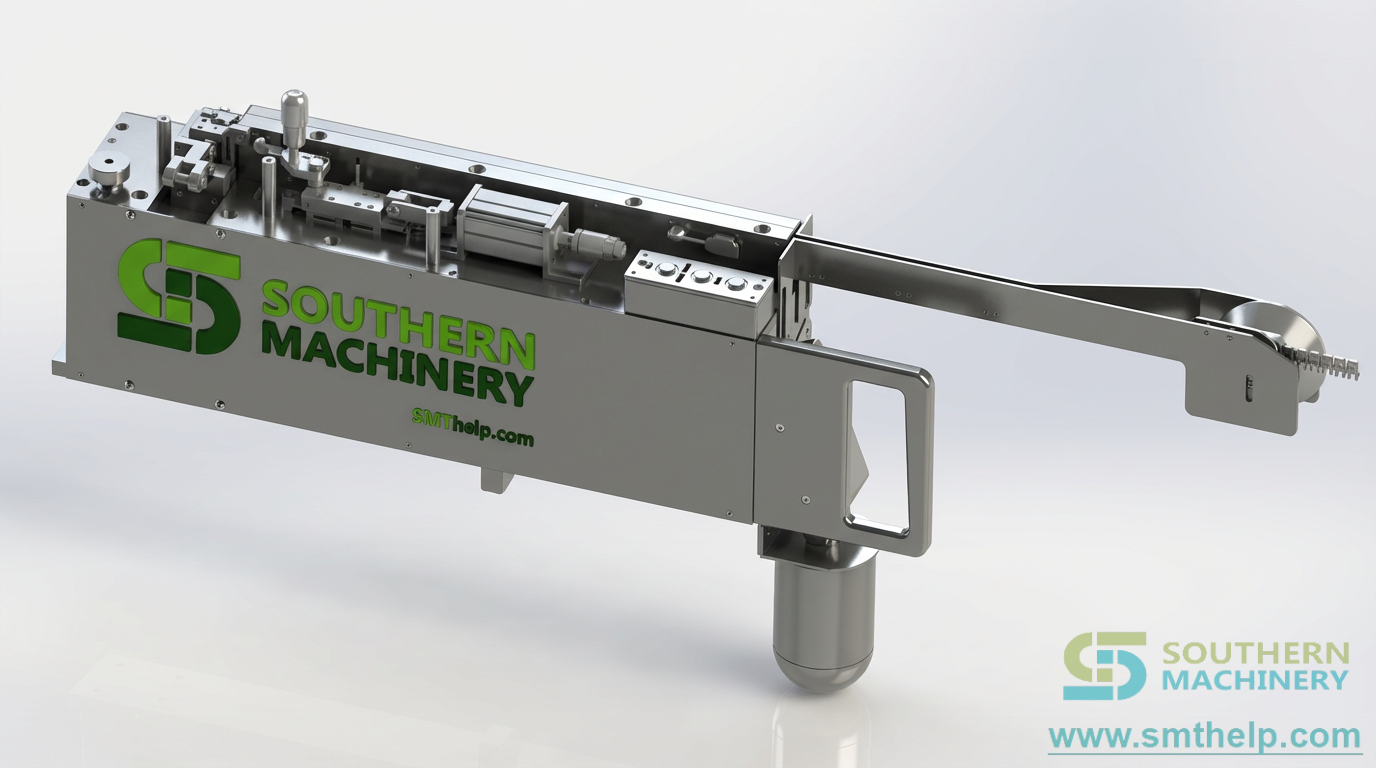
SRT7001 Reel Terminal Feeder for FASTON Terminal Insertion by Southern Machinery
Manual feeding of FASTON terminals, tabs, and similar odd-form THT components is still a common bottleneck in EMS factories. Operators need to pick, orient, and present each terminal correctly before insertion. On high-mix power supply, automotive, and industrial control boards, that manual step can slow takt time, introduce handling variation, and make quality depend too heavily on operator skill.
The SRT7001 Reel Terminal Feeder by Southern Machinery is designed to turn reel-packed terminals into a stable, repeatable pick point for odd-form insertion machines, compatible SMT platforms, or robotic pick-and-insert stations. Instead of feeding terminals from loose trays or bags, the feeder indexes tape-and-reel terminals to a defined mechanical reference so the host machine can pick, insert, and send the board forward to wave soldering with less manual intervention.
Southern Machinery, founded in 2011 in Shenzhen, focuses on SMT and THT PCB assembly automation equipment for global EMS factories. The SRT7001 fits that direction: it isn't just a small accessory, but a practical module for improving terminal insertion flow inside a complete SMT + THT + wave soldering line.
What is this machine used for?
The SRT7001 Reel Terminal Feeder feeds FASTON terminals, tab terminals, and similar reel-packed THT odd-form components to an insertion head, SMT head, or robot in a controlled and repeatable way.
In simple terms, it converts terminal reels into a machine-friendly supply system. The operator loads the reel, routes the tape through the guide path, and the feeder indexes one pitch at a time so each terminal reaches the same pick position. A customized nozzle or gripper then picks the terminal and inserts it into the PCB before the board moves to downstream soldering.
This is most useful when a factory has boards with repeated terminals, heavy connectors, power tabs, or automotive-style contact parts that are difficult to handle with a standard SMT feeder.
Why manual terminal feeding becomes a bottleneck
FASTON and tab terminals are mechanically simple parts, but the process around them is not always straightforward. They may have irregular geometry, exposed contact surfaces, larger mass than chip components, or orientation requirements that must be controlled before insertion.
Common factory problems include:
- Operators spending too much time sorting and presenting terminals.
- Inconsistent terminal orientation before pick-up or insertion.
- Variation between shifts or operators.
- Extra rework when terminals are inserted at the wrong angle or damaged during handling.
- Poor line balance when SMT is automated but the THT terminal process is still manual.
For example, a power supply PCB may have several FASTON terminals plus transformers, relays, and connectors. If the SMT section is already stable but the terminal station depends on manual loading, the full line takt time is still limited by the slowest THT step.
How the SRT7001 works in a THT assembly flow
The source page describes SRT7001 as a dedicated reel terminal feeder for FASTON and similar terminals. The working concept is straightforward:
- Reel loading and tape guidance
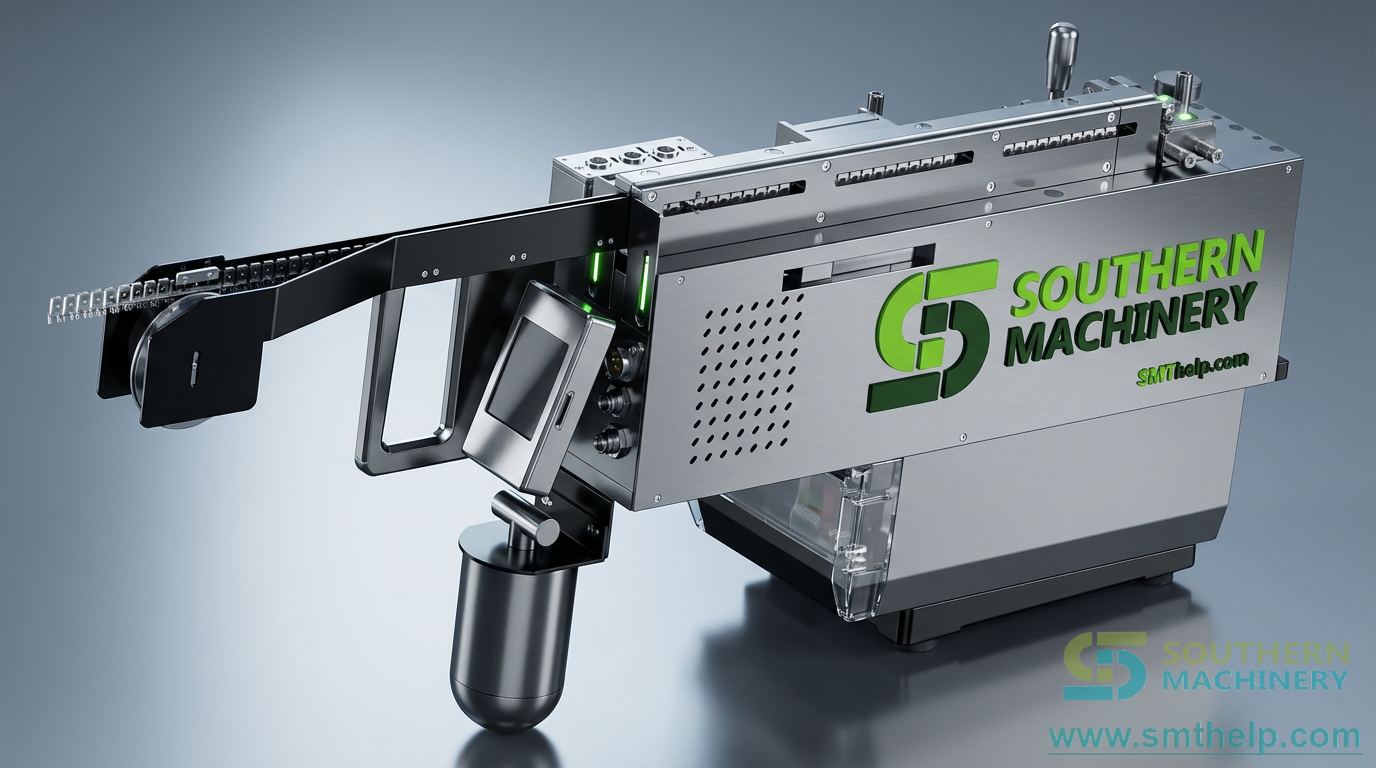
The operator mounts the terminal reel on the feeder shaft and routes the carrier tape through the guide and clamping area.
- Pitch indexing to a fixed pick point
The feeder advances the tape one pitch per cycle so the next terminal arrives at a repeatable reference point. The source document notes motor-driven pitch indexing and pick-position accuracy up to +/-0.5 mm, subject to final technical confirmation for the terminal and host platform.
- Pick-up by customized tooling
Southern Machinery designs the nozzle, gripper, bracket, and interface according to the terminal geometry and host machine. This is important because many terminal shapes cannot be handled reliably by a generic vacuum nozzle.
- Insertion and downstream soldering
The host machine inserts the terminal into the PCB. After insertion, the board can continue to wave soldering or selective soldering depending on product design and process requirements.
Typical applications
The SRT7001 is a good fit for EMS, ODM, and OEM factories producing boards such as:
- Power supply boards with FASTON terminals and high-current tabs.
- Automotive electronics and harness interface boards.
- Industrial control boards with THT connectors and contact terminals.
- Relay boards and terminal-heavy mixed-technology assemblies.
- Products where the same terminal family appears repeatedly across many PCB variants.
It is usually not justified for a prototype line that inserts only a few terminals per day. For very low volume, manual handling may still be more cost-effective. The feeder becomes more attractive when terminals appear frequently, manual labor is unstable, or the factory needs a more repeatable insertion process for quality control.
How to connect it into a complete PCB assembly line
A practical terminal insertion project should not be evaluated as a standalone feeder only. It should be checked against the full production flow.
A common line architecture may look like this:
SMT section
- Magazine loader or PCB loader.
- Stencil printer.
- Pick-and-place machine.
- Reflow oven.
- AOI if post-reflow inspection is required.
- Buffer or transfer conveyor before THT.
THT and odd-form section
- Manual assist or automatic insertion for axial/radial components if needed.
- Odd-form insertion machine or robotic station.
- SRT7001 Reel Terminal Feeder for FASTON/tab terminal supply.
- Customized nozzle, gripper, and mounting bracket.
- Conveyor or buffer between insertion and soldering.
Soldering and inspection section
- Wave soldering machine for standard through-hole flow.
- Selective soldering if the board has SMT components or thermal constraints that make wave soldering unsuitable.
- Visual inspection, AOI, ICT, or FCT according to quality requirements.
Southern Machinery can support the wider line around the feeder, including SMT, THT insertion, wave soldering, board handling, inspection options, training, spare parts, and global service support.
Key selection parameters before buying
Before selecting SRT7001 or any customized feeder, the engineering team should confirm these points:
- Terminal type and packaging: FASTON, tab, contact, or other terminal; tape width; pitch; reel diameter; orientation.
- Host machine: dedicated odd-form inserter, compatible SMT platform, or robot station.
- Pick method: vacuum nozzle, mechanical gripper, or special hybrid tooling.
- PCB requirements: hole pattern, insertion depth, terminal orientation, board support, and fixture needs.
- Line takt target: boards per hour, terminals per board, shifts per day, and expected utilization.
- Interface needs: start, ready, error, presence signal, empty detection, and any MES or traceability requirements.
- Soldering process: wave soldering or selective soldering after insertion.
The source document states that exact electrical details, pinouts, bracket dimensions, and host interface values are defined case by case. That is the correct approach because terminal feeding is highly dependent on the component and the machine receiving it.
ROI, quality, and capacity value
The main value of SRT7001 is not only labor reduction. The stronger argument is process stability.
For a factory where operators manually present terminals all day, automation can help reduce fatigue, stabilize takt time, and make the pick point more predictable. This can improve line balance and reduce the risk of missed, skewed, or damaged terminals. The final ROI depends on labor cost, terminal count per board, shift pattern, product mix, and the level of integration required.
A low-volume factory may choose manual loading plus fixtures first. A medium- or high-volume line should evaluate a feeder-based solution earlier, especially if terminal insertion is already the bottleneck before wave soldering.
Example of related customized feeding capability
Southern Machinery also develops customized feeders and tooling for other non-standard components. The SRT7001 project should be viewed together with the nozzle and gripper design process, because a reliable terminal process needs both stable feeding and reliable pick-up.

FAQ
Can SRT7001 handle every FASTON terminal?
Not automatically. The terminal geometry, tape format, pitch, and orientation must be checked first. Southern Machinery can match the feeder configuration and tooling after reviewing terminal samples or drawings.
Can it be installed on an existing SMT or odd-form machine?
In many cases, yes, but it depends on the available space, pick head reach, I/O interface, and mechanical mounting position. The bracket and interface are normally customized for the host platform.
Does it replace the whole THT insertion machine?
No. SRT7001 is a feeding module. It supplies terminals to a host insertion machine, SMT head, or robot. The complete solution may also include an odd-form inserter, conveyor, wave soldering machine, and inspection station.
What information is needed for a proposal?
Send the terminal drawing or sample, reel/tape specification, PCB drawing, target output, current machine model, and any photos or videos of the current manual process.
Should I choose wave soldering or selective soldering after terminal insertion?
It depends on the board design. Standard THT assemblies often use wave soldering. Boards with sensitive SMT areas, restricted solder zones, or special thermal requirements may need selective soldering.
Is the +/-0.5 mm feeding accuracy guaranteed for all terminals?
The source page lists up to +/-0.5 mm at the pick position, but final performance must be confirmed against the terminal, tape format, feeder setup, and host machine integration.
Talk to Southern Machinery
If FASTON or tab terminal insertion is slowing your THT line, the next step is a practical line assessment. Share your PCB layout, terminal reel specification, current process photos, and target output. Southern Machinery can help check whether SRT7001 is the right feeder, what nozzle or gripper is needed, and how it should connect with your SMT, THT, wave soldering, board handling, and inspection flow.
Southern Machinery is a Shenzhen-based manufacturer founded in 2011, serving 237+ global customers with cost-effective SMT/THT PCB assembly automation equipment, professional training, spare parts support, and complete line integration.
Comments