
SRF1001 Radial Tape Feeder for THT Automation by Southern Machinery
The SRF1001 Radial Tape Feeder helps EMS and PCB assembly factories reduce manual insertion work for radial through-hole components by feeding parts into an automated placement or insertion process. Based on the local pr
Jul 2, 2026 · Updated Jul 2, 2026 · Southern Machinery
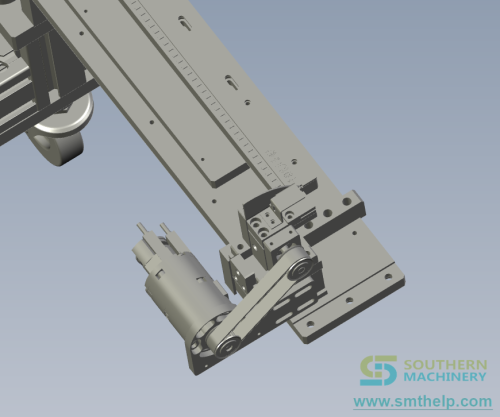
SRF1001 Radial Tape Feeder for THT Automation by Southern Machinery
Manual insertion of radial through-hole components is still a common bottleneck in mixed-technology PCB assembly. Operators can usually keep up during small batches, but fatigue, inconsistent lead forming, and hiring pressure become real problems when output increases.
The SRF1001 Radial Tape Feeder from Southern Machinery is positioned as a compact automation option for feeding radial taped components into an SMT mounter, robotic station, or THT automation process. For EMS, ODM, automotive electronics, medical electronics, and industrial control factories, the practical goal is simple: reduce repetitive manual insertion work while keeping the line flexible.
What is this machine used for?
The SRF1001 Radial Tape Feeder feeds radial leaded components from tape packaging into an automated PCB assembly process.
In plain language, it handles parts such as radial components that otherwise would be manually picked, formed, and inserted by operators. The source page describes the feeder as a way to transform an SMT platform into a high-speed THT insertion support station. The exact machine interface, mounting, and component handling setup should be confirmed against your mounter brand, PCB design, and component tape format before final configuration.
Why radial component feeding is a production issue
Radial THT parts are not always difficult individually, but they create hidden cost when the same action repeats thousands of times per shift.
Common problems include:
- Operators spending too much time on repetitive insertion work.
- Quality variation caused by fatigue or inconsistent handling.
- Production planning pressure when hiring more workers becomes the only way to increase capacity.
- Slower changeover when different radial components need different handling methods.
- Extra rework when lead forming or insertion position is unstable.
The source page compares manual insertion, used/legacy machines, and a Southern Machinery feeder-based solution. Those comparisons are useful as a buying framework, but any payback or cost saving calculation should be treated as an example only, because labor cost, component count, maintenance cost, and line utilization vary by factory.
How SRF1001 fits into a complete PCB assembly line
Southern Machinery is not only a single-machine supplier. Founded in Shenzhen in 2011, we focus on SMT and THT PCB assembly automation equipment for smart EMS factories, with experience supporting 237+ global customers.
A practical line layout can look like this:
SMT section
- PCB loader or magazine loader.
- Automatic stencil printer or semi-auto printer depending on volume.
- SPI if solder paste control is critical.
- Pick-and-place machine for SMT components.
- Reflow oven with a profile matched to the PCB and solder paste.
- Inline AOI after reflow when the quality target requires it.
THT radial component section
- Buffer or conveyor after SMT reflow.
- SRF1001 Radial Tape Feeder configured for the target radial component package.
- SMT mounter, robotic station, or insertion station adapted to pick and place the radial components.
- Manual assist only where the part mix is too low-volume to justify automation.
Soldering section
- Wave soldering for standard mixed-technology boards with many THT joints.
- Selective soldering when the board has heat-sensitive areas, dense SMT parts near THT joints, or limited solder access.
- Fume extraction, fixtures, and nitrogen can be considered depending on board design and process requirements.
Board handling and inspection
- Conveyors, buffers, PCB inverters, loaders, unloaders, and NG/OK sorting as needed.
- THT AOI or visual inspection after soldering.
- Barcode and data collection if traceability is part of the customer requirement.
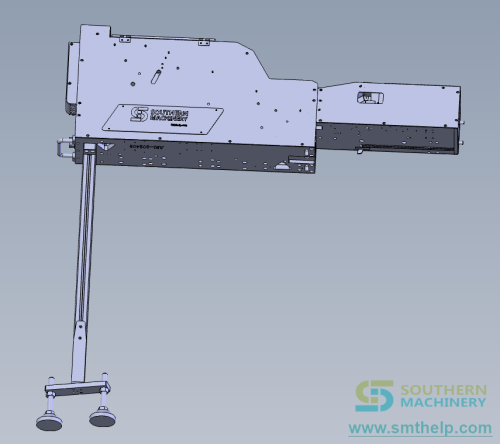
Key selection parameters to confirm
Before recommending the final feeder configuration, these points matter more than a generic model name:
- Radial component type and tape packaging format.
- Lead diameter, lead pitch, component body size, and required lead forming.
- Target output per shift or per month.
- Number of radial components per PCB.
- PCB size, thickness, panelization, and whether boards are single-sided or double-sided.
- Current equipment brand and available feeder/mounter interface.
- Whether the process needs insertion only, lead cutting/forming, or a complete pick-place-insert workflow.
- Required quality level, inspection method, and traceability requirement.
The source page mentions Mitsubishi PLC/ARM control, precision, cutter durability, fast changeover, monthly labor assumptions, and payback examples. These should be treated as source-page examples subject to final technical confirmation, not universal specifications for every application.
ROI, quality, and capacity value
The strongest reason to consider a radial tape feeder is not only machine speed. It is process stability.
For example, if a board has several radial parts and production runs every day, manual insertion becomes a staffing and quality control problem. A feeder-based automation setup can reduce the number of repetitive touches, keep component handling more consistent, and make output planning easier.
Main business benefits:
- Lower dependence on manual radial insertion labor.
- More stable component feeding and placement rhythm.
- Better fit for mixed SMT/THT smart factory upgrades.
- Easier scaling when daily board output increases.
- Cleaner integration with board handling, soldering, and inspection equipment.
For low-volume, high-mix production, full automation may be overkill. In that case, Southern Machinery can propose a semi-automatic or manual-assist configuration first, then reserve space for future feeder automation when volume grows.
Typical applications
The SRF1001 Radial Tape Feeder is relevant when a factory handles radial taped components in products such as:
- Power supplies and LED drivers.
- Industrial control boards.
- Automotive electronics modules.
- Consumer electronics with mixed SMT and THT components.
- Medical or instrumentation PCB assemblies where stable handling matters.
- Assemblies using radial capacitors, MOVs, LEDs, or similar radial leaded parts, subject to component confirmation.
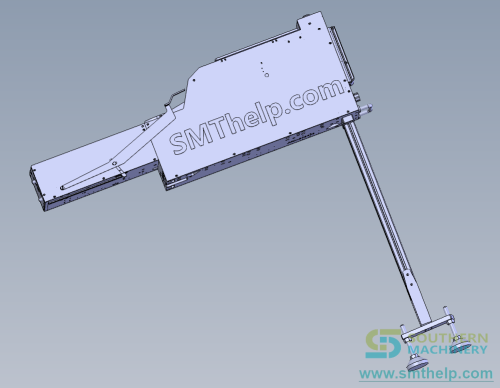
Why work with Southern Machinery?
Southern Machinery provides high-efficiency, cost-effective SMT and THT automation solutions from Shenzhen, China. Our scope covers SMT lines, THT insertion, wave soldering, selective soldering, board handling, inspection, training, and spare parts support.
For a radial feeder project, the important value is application engineering. The feeder must match the component, mounter or insertion platform, board design, and expected line rhythm. We can review your component drawings, PCB photos, output target, and current equipment list, then match the closest Southern Machinery configuration from our catalog.
FAQ
Is the SRF1001 only for one SMT mounter brand?
The source page positions it as customizable for existing SMT platforms, with mechanical mounting and communication adapted to the application. Final compatibility must be confirmed using your machine brand, model, feeder interface, and available I/O.
Can it replace all manual THT insertion?
No. It is best for repeatable radial taped components. Large transformers, connectors, heatsinks, or irregular odd-form parts may need a different feeder, odd-form insertion machine, robotic station, or manual assist.
Should I choose wave soldering or selective soldering after radial insertion?
Use wave soldering when the board layout and THT volume suit batch soldering. Use selective soldering when there are dense SMT components, heat-sensitive parts, or limited solder areas. The right choice depends on the PCB design.
What information is needed for a quote?
Please share component photos or drawings, tape packaging details, PCB size, parts per board, target output, current machine brand/model, and whether you need feeder only or full line integration.
Are the ROI numbers in the source page guaranteed?
No. They are example calculations based on assumed labor cost, board output, component count, and machine cost. Real ROI depends on your factory’s labor rate, utilization, product mix, maintenance cost, and process yield.
Can Southern Machinery support a complete line, not just the feeder?
Yes. Southern Machinery can support SMT, THT, wave/selective soldering, board handling, inspection, training, and spare parts. This is important when the feeder must become part of a stable production line rather than a standalone accessory.
Next step: send your radial component and line data
If you are considering automation for radial THT components, send us:
- Product type and monthly or daily output target.
- PCB size and panelization.
- Radial component photos, drawings, and tape packaging format.
- Current SMT/THT equipment brand and model.
- Required automation level: semi-auto, feeder integration, or full inline solution.
Southern Machinery will then suggest a practical feeder and line configuration that balances cost, output, quality, and future expansion.
Comments