
SPD330 Shuttle Conveyor: Redirect PCB Flow Between Parallel Lines | Southern Machinery
Automate PCB flow redirection between parallel SMT and THT lines with the SPD330 shuttle conveyor from Southern Machinery: servo-driven and SMEMA-compatible.
Aug 17, 2026 · Updated Aug 17, 2026 · Southern Machinery
SPD330 Shuttle Conveyor: Redirect PCB Flow Between Parallel Lines | Southern Machinery
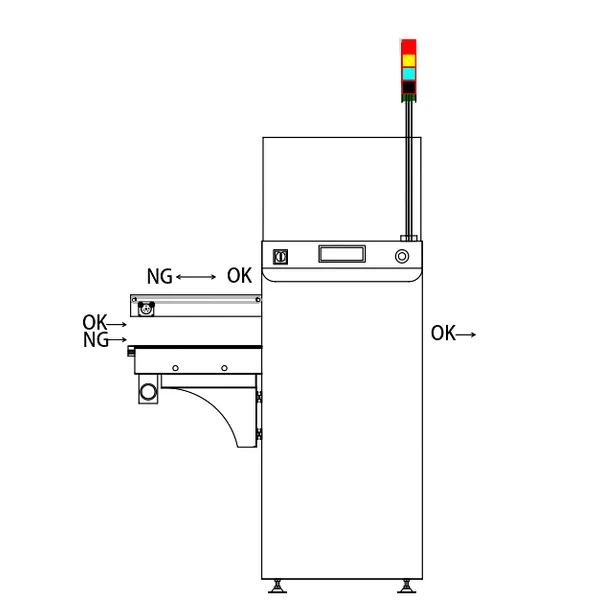
Shuttle conveyors (also called translational conveyors) solve one of the most common bottlenecks in PCB assembly: moving boards sideways between parallel or multi-lane lines without manual handling. The SPD330 from Southern Machinery is a servo-driven, SMEMA-compatible shuttle conveyor designed to redirect PCB flow into different channels inside a production line, keeping SMT, THT, and wave soldering lines balanced and continuous.
What is this machine used for?
A shuttle conveyor is a board handling unit that translates a PCB sideways from one conveyor lane to another, instead of moving it straight ahead. The SPD330 carries a PCB on a sliding carriage and transfers it to a parallel channel — for example, from an unloader into a bypass lane, from a single line into two parallel inspection or testing channels, or between a main conveyor and a buffer or rework loop.
It is used for:
- Merging or splitting PCB flow in multi-lane SMT lines
- Bypassing a downstream machine that is down for changeover or maintenance
- Feeding parallel AOI, SPI, or testing stations from one main line
- Redirecting PCBs between a THT insertion line and a wave soldering line
- Connecting board handling equipment where 90-degree turning is not enough and a parallel transfer is required
Southern Machinery's SPD330 shuttle conveyor redirects the flow of PCBs into different channels in a production line, replacing manual board transfer with a controlled, repeatable, automated move.
Typical Application Scenarios
EMS manufacturing. High-mix EMS factories often run multiple product families on the same line. A shuttle conveyor lets the line split boards into two parallel quality-control or packaging channels, or merge two sub-lines into one downstream process, without reconfiguring conveyors.
Automotive electronics. ECU and instrument cluster lines run large batches with strict traceability. Shuttle transfer into parallel test stations keeps the line moving while maintaining lot integrity.
Consumer electronics and power supply assembly. PCBA lines producing chargers, adapters, and power supplies frequently need NG/OK splitting or parallel final assembly. The SPD330 complements NG/OK unloaders and buffer conveyors to create a complete board routing system.
Industrial control and white goods. For boards with mixed SMT/THT content, the shuttle conveyor links the SMT section to THT insertion and wave soldering while giving operators a controlled point to divert boards for hand assembly or rework.
How It Integrates into a Complete PCB Assembly Line
A typical SMT/THT PCB assembly line from Southern Machinery flows: PCB loader → solder paste printer (SP-830-A) → SPI (SH8650) → pick and place → reflow oven → AOI → THT auto insertion (radial, axial, odd-form) → wave soldering → inline lead cutter → inline PCBA cleaning → final inspection.
Board handling equipment links these process steps. The SPD330 shuttle conveyor sits wherever flow must change direction laterally:
- After a magazine loader or destacker, to distribute bare boards into two parallel printing lines
- Between reflow and AOI, to feed two inspection machines from a single line
- After wave soldering, to route boards to inline cleaning or to a buffer/NG station
- Around selective soldering or rework stations, to create a bypass loop
Because the SPD330 is SMEMA-compatible, it plugs directly into the standard SMEMA handshake of adjacent machines (loader, printer, oven, AOI, unloader), so integration does not require custom protocols. The unit is PLC-programmed with a soft-touch LED membrane control panel, and the PCB direction flow can be customized to match the line layout.
Key Selection Parameters
When choosing a shuttle / translational conveyor for your line, confirm these parameters with your equipment supplier:
- PCB size range — the SPD330 handles PCBs from 50×50 mm up to 460×330 mm; the smaller SPD250 covers up to 330×250 mm
- Traversing distance — machine width depends on how far the board must travel sideways; confirm the distance between your parallel lanes
- Board thickness and weight — verify the board weight your process uses, especially for heavy power-supply or aluminum boards
- Lane configuration — how many input/output lanes are needed and the direction of flow (left-to-right, right-to-left, or reversible)
- Interface standard — SMEMA-compatible I/O ensures plug-and-play integration with existing equipment
- Facility footprint — SPD330: 600 mm (L) × W × 1050 mm (H), approx. 200 kg; SPD250: 500 mm (L) × W × 1050 mm (H), approx. 140 kg (W depends on traversing distance)
- Control and safety — PLC control, servo-driven sliding motion, enclosed design with a top safety cover that opens for maintenance
ROI, Quality & Throughput Perspective
Manual PCB transfer between lines is a hidden cost: an operator standing between two conveyors, picking boards and placing them into another lane, limits throughput, introduces ESD and handling risk, and breaks the SMEMA chain. A shuttle conveyor removes that labor from the process and makes the move automatic and repeatable.
Throughput. Servo-driven sliding motion delivers fast, parallel, precise transfer, so the shuttle keeps pace with line takt time instead of becoming a bottleneck.
Quality. Automatic transfer eliminates dropped boards, wrong-lane placement, and ESD exposure from manual handling. Board flow becomes deterministic, which matters for traceability in automotive and medical applications.
Labor and line balance. One shuttle conveyor can replace a dedicated transfer operator per shift, and it lets you keep a line running when one downstream machine is down by diverting to a parallel channel. Combined with buffer conveyors, NG/OK unloaders, and turn conveyors, it is part of a complete board handling system that reduces overall line staffing.
Rework reduction. Fewer manual touches mean fewer bent leads, scratched boards, and misplaced components — all common sources of rework in mixed SMT/THT lines.
FAQ
Q: What is a shuttle conveyor in SMT?
A: A shuttle conveyor (translational conveyor) is a board handling unit that moves a PCB sideways from one conveyor lane to a parallel lane, redirecting PCB flow into different channels inside a production line. It is used to split, merge, or bypass PCB flow in multi-lane SMT, THT, and wave soldering lines.
Q: What PCB sizes can the SPD330 handle?
A: The SPD330 handles PCBs from 50×50 mm up to 460×330 mm. Southern Machinery also offers the smaller SPD250 for boards up to 330×250 mm. Confirm your specific board dimensions with the supplier.
Q: Is the SPD330 compatible with my existing SMT line?
A: Yes. The SPD330 is SMEMA-compatible and PLC-programmed, with a soft-touch LED membrane control panel. It integrates with standard SMEMA handshake equipment such as loaders, printers, reflow ovens, AOI, and unloaders. PCB direction flow can be customized for your line layout.
Q: Where should a shuttle conveyor be placed in a PCB assembly line?
A: Place it wherever flow must move laterally: after loaders to distribute boards into parallel lines, between reflow and AOI to feed multiple inspection machines, or after wave soldering to route boards to cleaning or NG/OK stations.
Q: Does Southern Machinery provide full board handling systems?
A: Yes. Southern Machinery supplies complete SMT/THT PCB assembly automation, including loaders, unloaders, destackers, buffer conveyors, turn conveyors, turnover machines, and shuttle conveyors, so you can build a seamless line from bare board to finished PCBA.
Q: How does the SPD330 improve quality compared with manual board transfer?
A: Automatic servo-driven transfer eliminates manual handling, which reduces ESD exposure, dropped boards, bent leads, and wrong-lane placement. Transfer is repeatable and traceable, supporting quality systems in automotive, medical, and industrial electronics manufacturing.
Contact Southern Machinery for Configuration Advice
Need help deciding where a shuttle conveyor fits in your line, or which SPD model matches your board sizes and traversing distance? Contact Jason Wu at jasonwu@smthelp.com or call/WhatsApp +86 13602562576. Southern Machinery has served 237+ customers worldwide since 2011 with SMT/THT PCB assembly automation equipment — high-efficiency, cost-effective, with global support, spare parts, and training.
- Visit file.autoinsertion.com for catalogs and datasheets
- See machine photos at ph.smthelp.com
- Explore the full product range at www.smthelp.com
Founded in 2011 in Shenzhen, China, Southern Machinery designs and manufactures SMT/THT PCB assembly automation equipment — SMT lines, THT auto insertion, wave soldering, board handling, and inspection — for EMS, automotive, medical, industrial control, LED, and power supply manufacturers worldwide.
Comments