
SMT Stencil Cleaning Wiper Paper Roll: Dust-Free 55/45 Spunlace by Southern Machinery
Under-stencil cleaning quietly decides how much solder paste actually transfers through fine-pitch apertures. Southern Machinery's SMT stencil cleaning wiper paper rolls are dust-free, lint-free 55% wood pulp + 45% polyester spunlace sheets at 56 gsm / 0.3 mm, with ≤0.5 s water absorption and strong wet and dry tensile strength. They are cut to the exact core, notch and width for DEK, MPM, GKG, EKRA, JUKI, Fuji, Yamaha, Panasonic and other screen printers, with six customizable parameters and common brand fit references. One supplier, one consumable for every printer on your floor: sample-trialed before bulk, 20 individually wrapped rolls per carton, and confirmation of your exact specification within 24 hours. See how the right wiper roll protects print transfer efficiency and reduces rework in SMT/THT PCB assembly lines.
Aug 14, 2026 · Updated Aug 14, 2026 · Southern Machinery
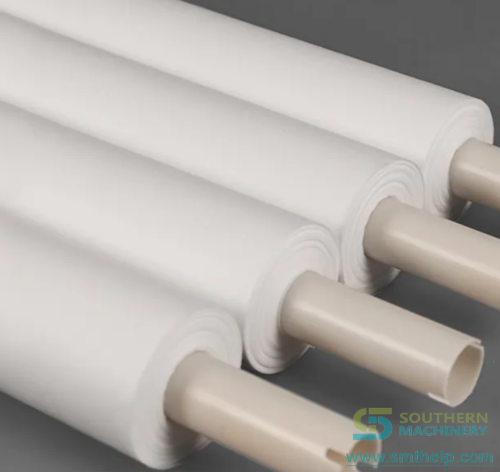
SMT Stencil Cleaning Wiper Paper Roll: Dust-Free 55/45 Spunlace by Southern Machinery
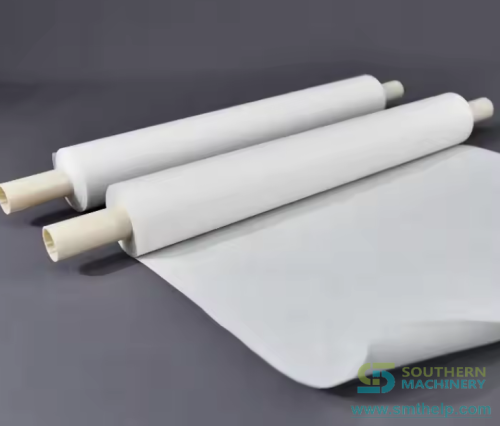
Under-stencil cleaning is where solder paste print quality is won or lost. The roll inside your automatic cleaning unit either lifts paste and flux residue out of the apertures — or leaves it there for the next board to print through. Southern Machinery's SMT stencil cleaning wiper paper rolls are dust-free, lint-free 55% native wood pulp + 45% polyester spunlace sheets at 56 gsm / 0.3 mm, cut to the exact core, notch and width your screen printer needs.
What is this machine used for?
Strictly, the wiper paper roll is the consumable that automatic under-stencil cleaning systems use inside screen printers from DEK, MPM, GKG, EKRA, JUKI, Fuji, Yamaha, Panasonic, KME, Hitachi, Sony, Minami, Desen and more. It is the roll that keeps the underside of the solder paste stencil clean between prints: solvent is applied on the wet stroke, particles are pulled into the sheet by vacuum, and a fresh dry pass sweeps the underside clean. When the right roll is fitted, apertures stay clear, transfer efficiency is protected, and fine-pitch printing stays stable shift after shift.
Why the wrong wiper paper quietly costs you print defects
Poor wiper paper taxes every board you print. The source product material highlights six failure modes that show up on real lines:
- Plugged apertures. Residual paste in small apertures cuts transfer efficiency — at an area ratio of 0.50 you can lose half the deposit, causing opens on 0402s and fine-pitch CSPs (example figures from the product material).
- Underside smearing. Paste smeared on the stencil bottom transfers to incoming boards and becomes solder balls and bridging between fine-pitch leads.
- Lint left behind. Cheap wipes shed fibers into apertures during the dry stroke; the next board prints through a partially blocked opening.
- Paper that weakens when wet. Cellulose-heavy sheets swell and tear mid-stroke under vacuum, stopping the printer and wasting the cleaning cycle.
- Wrong core, jammed roll. Each printer brand uses a different take-up shaft — cross notch, one-word notch, 12-rib groove or paper tube. A mismatched core slips or jams.
- Procurement fragmentation. Buying a different wipe per printer brand multiplies SKUs, suppliers and qualification work for one consumable.
What the paper must survive inside your printer
Modern screen printers clean with a programmed sequence of strokes. The wiper roll must wet evenly, hold its strength under vacuum and leave zero lint on the dry pass.
- Wet stroke — solvent is applied and the paper lifts paste and flux residue.
- Vacuum stroke — particles are pulled out of apertures into the sheet.
- Dry stroke — fresh dry paper sweeps the stencil underside clean.
- Apertures clear — transfer efficiency is restored for the next board.
The source material gives reference figures for evaluation: typical transfer efficiency of 49% at a 0.50 area ratio when apertures are not cleaned properly, versus 98% when a clean aperture at a 0.88 area ratio is achieved (example values, subject to your process and final technical confirmation). Cleaning quality is print quality.
Verified material and key specifications
| Specification | Value |
| --- | --- |
| Material | 55% native wood pulp + 45% polyester, spunlace double layer |
| Basis weight / thickness | 56 gsm / 0.3 mm |
| Water absorption rate | ≤0.5 sec |
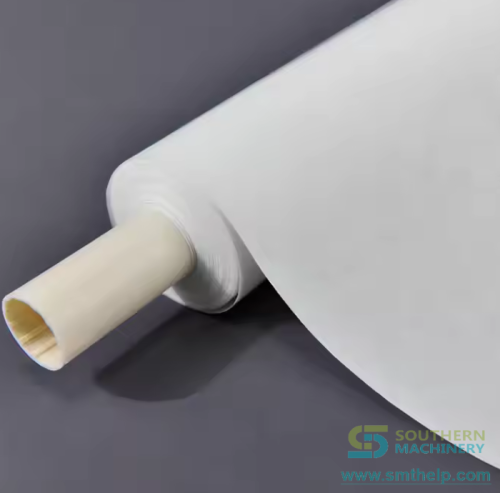
| Surface | Dust-free, lint-free, no stimulation; clear even paper grain |
| Strength | Soft, durable, strong tensile strength wet and dry; adapts to high vacuum pressure |
| Reference roll dimensions | Core ID 20 mm · core length 410 mm · core wall 1.5 mm · core OD 23 mm · finished roll OD 50 mm · paper width 300 mm · paper length 10 m (±1 mm hand-measured) |
| Core options | PVC cross notch (+), PVC one-word notch (−), PVC 12-rib groove, smooth PVC without notch, paper tube |
| Packaging | Individually wrapped rolls, 20 per carton |
| Cleaning cycle support | Wet, vacuum and dry strokes with IPA or water-soluble cleaning agents |
Reference dimensions describe one common configuration. Your printer may need a different core ID, length, width or notch — send the printer model or the six parameters and Southern Machinery confirms the exact specification before quotation.
Printer fit guide: one roll for every printer brand
Common brand references from the source material (format: core ID × core length × paper width × paper length, mm × m):
| Printer family | Common reference roll specs |
| --- | --- |
| DEK | 20×530×250/300/350/400/450/490/500/510×10 · hose · two-headed or one-word mouth |
| MPM | 19.5×455×250/300/330/350/400×10 · 12-rib inner tube |
| GKG | 20×410×400×10 · hose · two crosses |
| EKRA | 13.5×400×300×10 / 13.5×400×400×10 · hose · two-headed mouth |
| JUKI | 38×270×260×15 / 38×353×345×15 / 38×408×400×8 / 36×535×520×12 · hose |
| Fuji | 26×500×500×15 · paper tube |
| Yamaha | 25.5×360×350×10 / 25.5×420×400×10 · paper tube |
| Panasonic / Matsushita | 38×350×350×10 · paper tube |
| KME | 38×480×480×20 · paper tube |
| Hitachi | 30×360×300×10 · paper tube |
| Sony | 20×280×260×20 · hose · two-headed mouth |
| Minami / Desen | 8×290×270×10 / 8×410×350×10 / 20×410×300×10 · hose · two-headed mouth |
When ordering, also confirm the notch type (cross, one-word, 12-rib, smooth or paper core) and the winding direction of the roll for your cleaning unit. If your printer is not listed, custom rolls are made from six measured parameters: core length, core ID, notch type, roll OD, material width and material length.
From printer model to stocked consumable
Southern Machinery qualifies a wiper roll the same disciplined way it qualifies machines:
- Printer review — send printer brand/model, or your current roll's six parameters plus notch and winding direction.
- Spec confirmation — core ID/length, width, length, notch type and tube material confirmed within 24 hours.
- Sample trial — sample rolls run a wet-vacuum-dry trial on your line before bulk commitment.
- Bulk production — 20 rolls per carton, individually wrapped, labeled per printer position.
- Reorder support — worldwide support, one-day spare-part lead time culture and about a one-month customize solution window.
ROI, quality and productivity value
- Fewer print defects and less rework. Clean apertures protect transfer efficiency in the fine-pitch range where opens, solder balls and bridging are most costly.
- No more line-side improvisation. A matched core and notch stop slips, jams and mid-cycle paper tears that stop the printer.
- One consumable, every printer. Standardizing on one 55/45 roll across DEK, MPM, GKG, EKRA, JUKI, Fuji, Yamaha, Panasonic and others collapses SKUs and qualification work.
- Predictable consumption. Individually wrapped rolls, 20 per carton, labeled per printer position — simple stocking and reorder.
- Sample-first risk reduction. The wet-vacuum-dry trial happens before bulk commitment, so your line confirms the roll before the cartons arrive.
For global EMS, ODM, automotive electronics, medical electronics and industrial control factories, this is the kind of small consumable decision that shows up in first-pass yield and customer audits — and it plugs directly into the SMT, THT, wave soldering, board handling and inspection lines that Southern Machinery has provided to 237+ customers since 2011.
FAQ
What is the paper made of and why 55/45?
The sheet is 55% native wood pulp (cellulose) for absorbency and 45% polyester for strength, bonded as a spunlace double layer at 56 gsm / 0.3 mm. Cellulose grabs flux and solvent fast (≤0.5 s absorption); polyester keeps the sheet from swelling, weakening or linting during wet and vacuum strokes.
Which screen printers does it fit?
Reference specifications cover DEK, MPM, GKG, EKRA, JUKI, Fuji, Yamaha, Panasonic/Matsushita, KME, Hitachi, Sony, Minami and Desen cleaning units. If your printer is not listed, send the six parameters and Southern Machinery makes it.
How do I choose the right size and core?
Tell us the printer model, or measure your current roll: core inner diameter, core length, paper width and paper length, then the notch type (cross "+", one-word "−", 12-rib groove, smooth PVC or paper tube) and winding direction.
Does it work with IPA and water-based cleaning agents?
Yes. The roll supports wet, vacuum and dry cleaning strokes with standard production cleaning agents including IPA and water-soluble chemistry, engineered to wet out on a controlled area without changing its mechanical properties.
Is it really lint-free?
The spunlace structure leaves enough distance between fibers to trap solder particles without releasing fibers, and wear testing over sharp aperture edges shows no lint deposited on the stencil — which is what keeps apertures clear for fine-pitch printing.
What is the packing and how fast can you ship?
Rolls are individually wrapped and packed 20 per carton. Standard specifications ship quickly from stock; custom specifications are confirmed within 24 hours with a sample-first process and about a one-month customize solution window.
Get an exact wiper roll spec for your printer
Send your printer brand and model, or the six roll parameters plus notch and winding direction, and Southern Machinery replies with the matched specification, quotation and packing plan. With complete SMT/THT line solutions, professional training and spare parts support, Southern Machinery helps high-mix EMS and electronics factories automate from stencil printing to soldering to inspection. Contact info@smthelp.com or +86 136 0256 2576.
Comments