
SMT Solder Paste Squeegee: Stainless Steel Blade for Stencil Printing
Replace worn squeegees with stainless steel SMT solder paste blades from Southern Machinery. DEK-compatible 400 mm steel blade in 45° or 60° angle.
Sep 6, 2026 · Updated Sep 6, 2026 · Southern Machinery
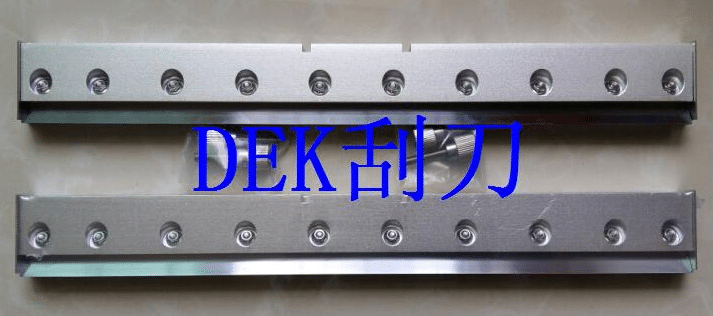
SMT Solder Paste Squeegee: The Stainless Steel Blade Behind Repeatable Print Quality
<iframe width="560" height="315" src="https://www.youtube.com/embed/kmMq-Yv3nnI" title="New design SMT solder paste Squeegee for Smart EMS factory PCB assembly" frameborder="0" allow="accelerometer; autoplay; clipboard-write; encrypted-media; gyroscope; picture-in-picture" allowfullscreen></iframe>
Solder paste printing is the first quality gate on every SMT line: if the paste deposit is wrong, no downstream process can fix it. The component that actually transfers that paste through the stencil is a small, frequently overlooked piece of steel — the squeegee blade. Southern Machinery supplies a DEK screen printing stainless steel squeegee for SMT solder paste printers, built for EMS factories that need repeatable deposits run after run.
What is an SMT solder paste squeegee used for?
An SMT squeegee is the blade that travels across a solder paste stencil during the print stroke. It rolls a bead of solder paste ahead of the blade and forces the paste through the stencil apertures onto the PCB pads underneath. The squeegee angle, pressure, and speed determine how fully each aperture is filled and how cleanly the stencil wipes — which is why the squeegee directly controls paste volume, deposit shape, and print-to-print consistency.
Southern Machinery's stainless steel squeegee for screen printing is a DEK-style printer squeegee listed with a 400 mm specification, 45° or 60° angle options, steel material, and an overall dimension of 61 × 19 × 7 cm. Steel blades hold their edge longer than polymer blades and deliver a stable deposit profile over many thousands of strokes, making them the standard choice for production SMT lines.
Typical Application Scenarios
- EMS and contract manufacturers running high-mix boards where print quality must stay stable across frequent changeovers and multiple stencil widths.
- Automotive electronics lines (ECU, body control, and sensor boards) where solder joint consistency is a documented quality requirement.
- LED lighting and power supply makers printing boards with large paste volumes where a worn blade visibly degrades deposit height.
- Medical device and industrial control PCBA where rework is expensive and first-pass yield is the operating metric.
- Any factory running semi-automatic stencil printers (like Southern Machinery's SP-300 or SP-830-A) where operator-dependent printing needs a repeatable consumable.
In every case the squeegee is a maintenance-grade consumable: it wears, it gets cleaned between runs, and replacing it is far cheaper than absorbing the reflow defects a worn blade causes.
How It Integrates into a Complete PCB Assembly Line
The squeegee fits into the first station of the SMT process — the solder paste printer. On a typical line:
- A loader or magazine unloader feeds bare PCBs into the line.
- The stencil printer (manual, semi-automatic, or automatic) aligns the stencil to the board; the squeegee head then lays down paste through the apertures. Southern Machinery's SP-300, SP-830-A, and SP-1008 printers all use squeegee-based printing.
- SPI (solder paste inspection) verifies deposit volume before components are placed.
- Pick-and-place machines mount SMD components into the wet paste.
- The board passes through a reflow oven to form the solder joints.
The squeegee also connects to the rest of your print process ecosystem: automatic stencil cleaners (S-1688, SME800) wipe paste residue from the underside of the stencil between prints, and Southern Machinery's SME220 automatic squeegee cleaning machine keeps the blades themselves free of dried paste so they keep a clean wiping edge. A mesh tension meter verifies that the stencil frame tension stays within spec so the squeegee gets the snap-off it needs.
Because Southern Machinery sells the whole SMT/THT line — printing, placement, reflow, wave soldering, board handling, inspection, and cleaning — one supplier can keep your squeegee, stencil, and printer consumables consistent across the entire line.
Key Selection Parameters (confirm with Southern Machinery)
- Length vs. print width: the listed specification is 400 mm; choose a squeegee long enough to cover the full stencil print area of your boards.
- Angle: 45° is the common all-round choice for standard paste and aperture mixes; 60° suits applications that need a different paste roll characteristic. Southern Machinery offers both.
- Material: steel (stainless) for long service life and consistent deposit control.
- Printer compatibility: this is a DEK screen printing squeegee — confirm the blade and holder fit for your printer brand and model (DEK, or other stencil printers using DEK-style squeegee heads).
- Cleaning compatibility: blades cleaned between runs (manually or in an automatic squeegee cleaner) should survive solvent exposure without edge damage.
- Spares availability: keep a spare set on the shelf so a damaged blade never stops a line mid-shift.
ROI, Quality & Throughput Perspective
The squeegee is one of the lowest-cost items on an SMT line, yet it has an outsized effect on cost of quality. A worn or nicked blade causes skipping, insufficient paste, smearing, and inconsistent deposit volume. Those defects travel downstream: SPI rejects, pick-and-place misprints, reflow opens and poor joints, and ultimately rework or board scrap. Each defect costs far more than the blade itself.
Replacing squeegees on a planned schedule delivers:
- Consistent first-pass yield — stable deposits mean stable reflow results and fewer surprises at AOI.
- Less rework and scrap — eliminating print-induced defects removes the most common root cause of downstream rework.
- Lower cost per board — a steel blade with a long service life, amortized over thousands of prints, is negligible per board.
- Simpler process control — when the squeegee is known-good, print pressure and speed settings behave predictably, so SPI data stays in control.
For an EMS factory running multiple shifts, keeping verified spare squeegees in stock is a small inventory line item that protects the entire line's throughput.
FAQ
Q: What is an SMT solder paste squeegee used for?
A: It is the blade that wipes solder paste across a stencil, forcing paste through the apertures onto PCB pads during screen printing. Its angle, pressure, and condition determine paste deposit quality.
Q: What squeegee specifications does Southern Machinery offer?
A: The DEK screen printing stainless steel squeegee is listed with a 400 mm specification, 45° or 60° angle options, steel material, and overall dimensions of 61 × 19 × 7 cm. Contact Southern Machinery to confirm the exact length and angle for your printer.
Q: Is this squeegee compatible with DEK printers?
A: The product is a DEK screen printing squeegee. Confirm the blade dimensions and holder type against your specific printer model before ordering.
Q: How often should an SMT squeegee be replaced?
A: It depends on print volume, paste type, and cleaning practice. Inspect the blade edge regularly for nicks, wear, and bending, and replace it when deposits become inconsistent. Planned replacement is cheaper than rework from a worn blade.
Q: How does squeegee condition affect PCBA quality?
A: A worn or damaged squeegee causes insufficient paste, smearing, and inconsistent deposit volume, which show up downstream as reflow defects, opens, and poor solder joints. Keeping the squeegee edge clean and square is essential for first-pass yield.
Q: Where can I see the squeegee and related printers?
A: Southern Machinery publishes product videos on its YouTube channel and machine photos at ph.smthelp.com. Request the SMT equipment catalog from file.autoinsertion.com to review the full printer and consumables range.
Contact Southern Machinery for Configuration Advice
Southern Machinery Sales And Service Co., Ltd (est. 2011, Shenzhen, China) supplies SMT/THT PCB assembly automation equipment and consumables to 237+ customers worldwide, from individual spare parts to complete lines covering SMT placement, THT insertion, wave soldering, board handling, and inspection. The company backs its equipment with global support, spare parts, training, and retrofit services.
Contact Jason Wu at jasonwu@smthelp.com or visit www.smthelp.com for squeegee specifications and configuration advice. Browse machine photos at ph.smthelp.com and download catalogs from file.autoinsertion.com.
Comments