
Automatic SMT Reel Splicing Machine with LCR Measurement for EMS PCB Assembly
Automatic SMT reel splicing with LCR measurement from Southern Machinery cuts downtime and prevents wrong-component placement on EMS pick-and-place lines.
Aug 8, 2026 · Updated Aug 8, 2026 · Southern Machinery
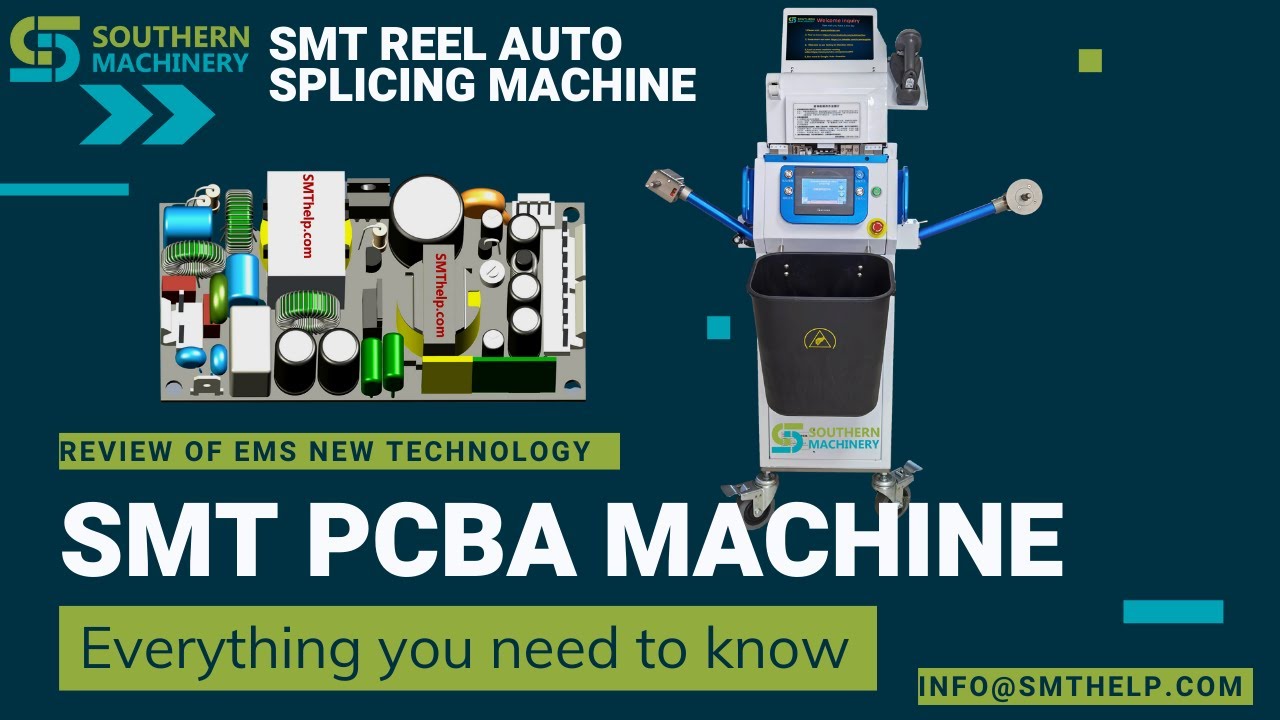
Automatic SMT Reel Splicing Machine with LCR Measurement for EMS PCB Assembly
Splicing component tapes together is one of those small jobs that quietly decides how much uptime your SMT line gets. When a feeder runs dry, the pick-and-place machine stops, an operator walks over, re-threads the tape, and the line loses minutes — multiplied across dozens of feeders and every reel change in a shift. An automatic SMT reel splicing machine with LCR measurement solves the material side of that problem: it joins tape reels automatically and verifies component values at the same time, so placement never waits on material and wrong components never reach the board.
Southern Machinery designs and builds this class of SMT material-handling equipment in Shenzhen, China, and has supported 237+ electronics manufacturers worldwide since 2011. This article explains what the machine does, where it fits in a PCB assembly line, and what to check when you evaluate one.
What is this machine used for?
An SMT reel splicing machine joins the end of one component tape to the beginning of the next reel — typically 8 mm to wider carrier tapes used on pick-and-place feeders — so the placement machine can keep feeding without a full stop. The automatic version does the cut, align, and join sequence with consistent pressure and positioning instead of relying on hand-applied splicing tape.
The distinguishing feature of Southern Machinery's unit is integrated LCR measurement (inductance, capacitance, and resistance). As the splice is made, the machine can measure the electrical value of components on the tape, giving the line a verification step that catches wrong-value or misplaced components before they ever reach a nozzle. In practice this means two outcomes EMS buyers care about: fewer feeder-empty stoppages, and fewer wrong-component defects downstream.
Southern Machinery demonstrates the machine on its product channel, including a comparison of manual versus automatic splicing methods and a how-to on automatic reel tape splicing with LCR value measurement. Related videos on the channel cover the supporting kit: SMT splicing carts and splicing tools, splice cutters for radial tape, and how splicing reduces factory downtime.
Typical Application Scenarios
- EMS / contract manufacturing: High-mix, high-volume lines where frequent reel changes are the norm. Automatic splicing keeps feeders topped up so placement heads stay busy.
- Automotive electronics: Long production runs with strict traceability; LCR verification adds a documented check before components are placed.
- Medical electronics: Small batches of high-reliability boards where a single wrong component is expensive to catch later.
- Industrial control and power electronics: Board assemblies with many passive components (resistors, capacitors, inductors) supplied on tape — exactly the parts LCR measurement can verify.
- LED and lighting manufacturing: Bulk tape-fed components in continuous runs where every minute of placement uptime counts.
- SMT lines with limited operators: Smaller factories that want to reduce the manual labor tied up in reel changes and tape splicing during shifts.
How It Integrates into a Complete PCB Assembly Line
The splicing machine is a material-preparation and material-management station, not an in-line process tool. It works ahead of the SMT line:
- Receiving and kitting: Reels arrive, are identified (barcode or label), and prepared for the line.
- Splicing station: Tapes are joined automatically with LCR verification before reels go to the floor or directly onto feeders.
- Feeder setup: Spliced reels load onto pick-and-place feeders; because the tape was already joined and verified, the feeder runs through the splice without interruption.
- Placement: The SMT pick-and-place machine consumes the joined tape continuously.
- Downstream: Boards proceed to reflow, inspection (AOI/SPI), and THT processes — with one fewer source of wrong-component risk.
For THT-oriented lines, Southern Machinery also supports radial tape splicing and offers manual splice cutters and splicing tools, so the same material-management discipline applies to radial insertion machines and odd-form inserters. In a full SMT/THT PCB assembly line — stencil printing, pick-and-place, reflow, wave soldering, board handling, and inspection — the splicing station is part of the material flow that keeps the expensive machines fed.
Key Selection Parameters
Every factory has different tape stock and line layouts, so confirm these parameters with Southern Machinery before choosing a configuration:
- Applicable tape widths and pitch: Which carrier tape sizes the machine accepts (8 mm and wider), and whether it handles paper or embossed tapes.
- Splice method and quality: How the splice is cut and joined, and whether the joint passes smoothly through your pick-and-place feeders without jamming.
- LCR measurement capability: Which component types and value ranges can be verified, and how results are displayed or logged.
- Integration method: Whether the unit works as a standalone station or connects to your material-management / MES workflow.
- Changeover and setup: How long it takes to switch between tape types and component programs.
- Facility requirements: Power, air, and floor space needed for your line layout.
- Throughput class: Typical splicing cycle time for your tape type — confirm with the supplier for your specific mix.
Southern Machinery publishes product videos and catalogs so you can see the machine running before you commit.
ROI, Quality & Throughput Perspective
The ROI case for automatic reel splicing is built on three measurable effects:
- Placement uptime: Every reel change handled by hand costs minutes of placement time. Automatic splicing compresses that to a quick feeder reload, which directly raises CPH (components per hour) over a shift.
- Defect prevention: LCR measurement catches wrong-value components at the material stage. Catching a wrong resistor or capacitor before placement is far cheaper than rework, AOI escapes, or field failures.
- Labor reallocation: Operators who previously did manual splicing can move to setup, quality, or line-balancing tasks. Factories running multiple shifts see the benefit compound.
Quality-wise, a machine-applied splice is consistent: same pressure, same alignment, every time. Manual splicing quality depends on the operator and the moment — which is exactly the variability EMS quality systems try to remove. Southern Machinery positions this equipment as part of high-efficiency, cost-effective material management for SMT and THT assembly, backed by global support, spare parts availability, and operator training.
FAQ
Q: What is an SMT reel splicing machine used for?
A: It joins the end of one component tape reel to the beginning of the next so pick-and-place machines can keep feeding without stopping. The automatic version with LCR measurement also verifies component values during the splice.
Q: How does LCR measurement help PCB assembly quality?
A: LCR stands for inductance, capacitance, and resistance. Measuring these values on taped components catches wrong-value or misplaced parts before placement, reducing wrong-component defects and downstream rework.
Q: Does the splicing machine work with existing SMT lines?
A: Yes. It is a material-preparation station that feeds standard pick-and-place feeders, so it integrates with existing lines and with Southern Machinery's full SMT/THT equipment range.
Q: What industries use automatic reel splicing?
A: EMS/contract manufacturers, automotive electronics, medical electronics, industrial control, power supplies, and LED lighting — any factory running tape-fed components in continuous production.
Q: How does automation improve on manual tape splicing?
A: Machine splicing is faster and consistent in cut, alignment, and pressure. It removes operator-to-operator variability and keeps the placement machine running instead of waiting on a manual reel change.
Q: Can I see the machine in operation?
A: Yes. Southern Machinery publishes product videos on its YouTube channel and catalogs on its file portal. Contact the team for a live demo or configuration advice.
Contact Southern Machinery for Configuration Advice
Southern Machinery (founded 2011, Shenzhen, China) supplies SMT and THT PCB assembly automation equipment to 237+ global customers, covering SMT placement, THT insertion, wave soldering, board handling, and inspection — with high-efficiency, cost-effective solutions backed by global support, spare parts, and training.
- Email: Jason Wu at jasonwu@smthelp.com
- Website: https://www.smthelp.com
- Product videos: https://www.youtube.com/c/Smthelping
- Catalogs: https://file.autoinsertion.com
- Machine photos: https://ph.smthelp.com
Watch the automatic SMT reel splicing machine with LCR measurement in action:
https://www.youtube.com/watch?v=MtVskLXgDnk
Comments