
SMT Laser Sensor Repair Service: CyberOptics Lasers for Yamaha YVL88/YV88II and JUKI Placement Machines
Laser sensor faults stop SMT lines. Southern Machinery repairs CyberOptics 6604098, 6604033 and 6604035 units for Yamaha YVL88 and JUKI placers.
Sep 14, 2026 · Updated Sep 14, 2026 · Southern Machinery
SMT Laser Sensor Repair Service: CyberOptics Lasers for Yamaha YVL88/YV88II and JUKI Placement Machines
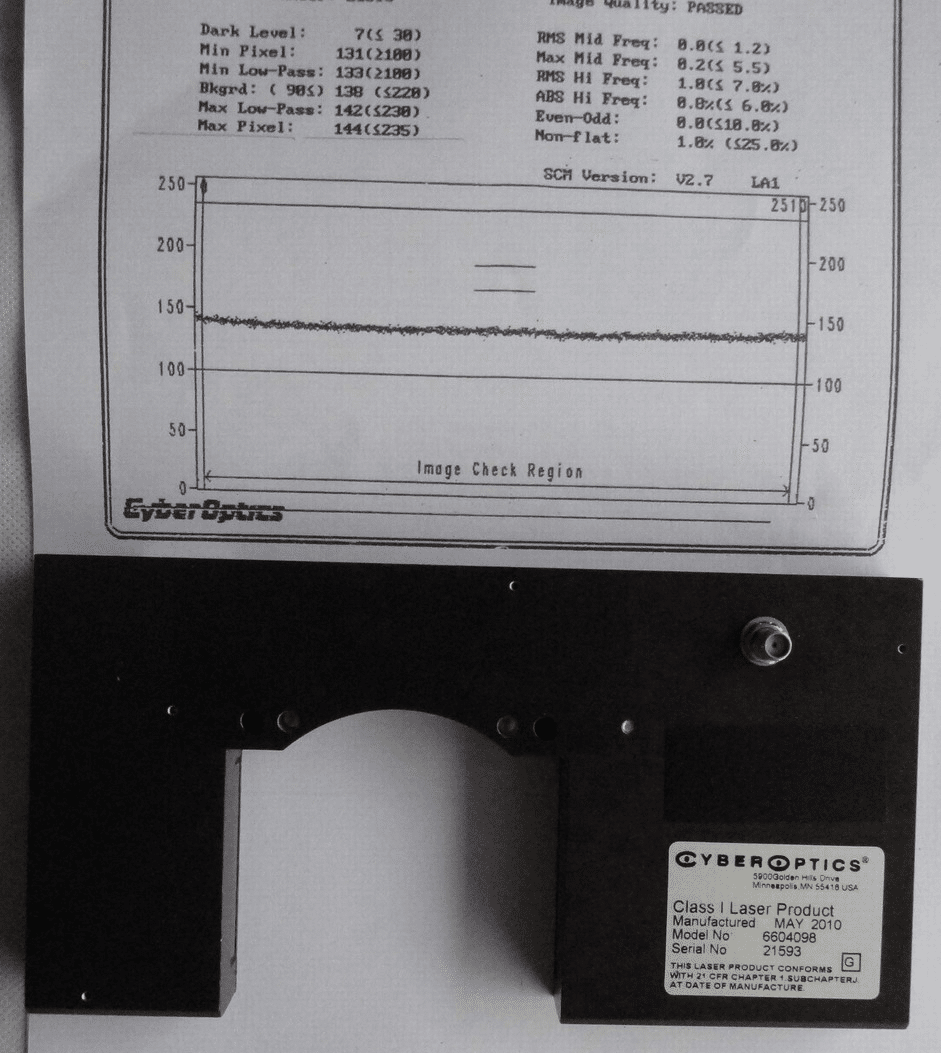
A placement machine does not stop because the whole machine failed. It stops because one head-mounted laser sensor started reporting components it can see perfectly well as "not detected". For EMS factories still running Yamaha YVL88/YV88II platforms or JUKI placers, that single sensor can idle an entire SMT line while a replacement is sourced. Southern Machinery runs a dedicated laser sensor repair service for exactly this case: Cyber Optics Laser units 6604098, 6604033 and 6604035 used on Yamaha YVL88/YV88II machines, and CyberOptics laser sensor repair for JUKI placement machines.
What is the SMT laser sensor repair service used for?
The service returns a failed or drifting laser sensor assembly to working condition so the placement head can keep centering and detecting components. On many JUKI and Yamaha placement platforms, a head-mounted laser sensor performs non-contact component detection and centering as the part is carried from the feeder to the board. When that sensor degrades, the machine loses the reference it uses for component presence, position and orientation, and placement quality becomes unpredictable.
Southern Machinery's repair line is part of the company's SMT AI machine (Parts) Repair Service catalogue, which covers laser sensors as well as the wider set of placement-machine parts and assemblies that wear out over a machine's life.
Which laser sensors and machines does the service cover?
- Yamaha YVL88 / YV88II: Cyber Optics Laser 6604098, 6604033 and 6604035 — the catalogue lists these units both for repair and for outright supply.
- JUKI placement machines: CyberOptics laser sensor repair service, as demonstrated in Southern Machinery's JUKI CyberOptics laser sensor repair video.
- Wider placement-machine and inserter parts: the same service catalogue also lists JUKI machine assemblies such as ATC unit assemblies, system disk and hard-disk assemblies, slide plates and guides, ATC sensor brackets and carrier rails, plus servo amplifier repair (for example servo amp 46878701) and drive mechanism repair (for example drive mechanism 46692902 for Universal radial inserters).
If your machine model is not on this list, send the sensor part number and machine details — the service team confirms coverage before you ship anything.
Symptoms that point to a failing laser sensor
Laser sensors rarely fail cleanly. Typical field symptoms that engineering teams report before they call for service include:
- Intermittent "component not detected" or detection errors on parts that feed correctly
- Rising centering and placement errors on components that were previously stable
- Scrap or rework concentrated on one placement head rather than spread across the machine
- Sensor-related alarms or error codes that clear after a restart and return later
- Placement accuracy that drifts after a sensor has been re-seated or the head has been serviced
A practical first check is to swap the suspect unit to another head or machine: if the fault follows the sensor, the sensor is the problem and not the feeder, nozzle or head mechanics. Confirm the diagnosis with the machine's own self-diagnostics and with Southern Machinery's service team before removing a unit from production.
Repair vs. replacement: why an exchange unit usually wins
On current-generation placers, a sensor failure is often handled with a new assembly. On legacy YVL88/YV88II and older JUKI platforms, that route is slower and more expensive than most factories expect: the platform may still be perfectly capable of running production, but the sensor assembly is no longer a routine catalogue item.
Repair and exchange keep those machines earning. Southern Machinery's approach is to repair the failed unit and/or supply a replacement unit from stock, so the line can go back into production while the original sensor is refurbished and retained as the next spare. That matters most for factories running mixed fleets, where a single legacy platform often carries a disproportionate share of high-mix work.
How the repair workflow runs
- Identification — record the machine model, sensor part number (for example 6604098 or 6604033), serial number and the fault description with any error codes.
- Confirmation — Southern Machinery confirms whether the unit is repairable, whether an exchange unit is available, and what documentation is needed.
- Removal and packing — the sensor is removed using the machine's documented procedure and shipped in ESD-safe packaging with the fault report.
- Repair and test — the unit is repaired and verified before it is returned, with the repair scope reported back to the customer.
- Refit and validation — the sensor is refitted and the head is re-validated with a first-article-style check before full production resumes.
Exact turnaround and logistics depend on the unit and destination — always confirm with Southern Machinery before planning downtime.
Spare parts and consumables around the placement head
A laser sensor is one item in a much longer list. Southern Machinery supports the same machines with:
- Spare parts and sub-assemblies for JUKI, Yamaha, Panasonic, Universal Instruments, Fuji, Samsung, Siplace/Siemens and DEK equipment
- Feeders and nozzles, including custom nozzle and gripper design where the original part is unavailable
- Repair kits, retrofit kits and overhaul services for legacy SMT and THT machines
- Training for maintenance teams so sensors, nozzles and feeders are handled and re-seated correctly
Keeping a stocked spare set — a spare sensor, a spare nozzle set, a spare feeder — is the cheapest insurance against a single head idling an entire line.
How laser sensor uptime fits the complete PCB assembly line
A placement machine does not run alone. In a typical line, board handling feeds the printer, the placement machines populate the board, reflow fuses the joints, and AOI or X-ray verify the result. A laser sensor fault does not stay inside one machine: placement errors created in the mounter surface later as rework at AOI, and a stopped mounter empties the reflow oven and every station behind it.
Service coverage is therefore part of line design, not an afterthought. Factories that treat sensor repair, spare parts and overhaul as a planned part of the maintenance calendar lose far fewer hours than factories that treat them as emergencies.
Key selection and qualification parameters (confirm with Southern Machinery)
- Machine make and model (for example Yamaha YVL88, YV88II, or the specific JUKI platform)
- Sensor part number and revision (6604098, 6604033, 6604035, or the JUKI equivalent)
- Fault description, error codes and machine software/firmware version
- Whether repair or exchange supply is required, and how many spare units the line should hold
- Sensor mounting and head configuration, so a replacement unit arrives ready to refit
- Documentation and ESD handling requirements for shipping a sensitive optical assembly
ROI, quality and throughput perspective
Sensor repair is rarely a large line item, but the downtime it prevents is. The economics are straightforward:
- Avoided downtime — an exchange unit keeps a legacy platform in production while the original sensor is repaired
- Avoided scrap and rework — a healthy sensor restores centering accuracy, which reduces rework at AOI and reduces escapes downstream
- Extended asset life — repairing sensors keeps capable YVL88/YV88II and JUKI platforms economically viable instead of pushing a factory into an early replacement decision
- Planned maintenance instead of emergencies — stocking one spare sensor converts an unpredictable stoppage into a swap that takes minutes
Frequently asked questions
Which laser sensors can Southern Machinery repair?
Cyber Optics Laser units 6604098, 6604033 and 6604035 for Yamaha YVL88/YV88II machines, and CyberOptics laser sensors on JUKI placement machines. The catalogue also covers other placement and insertion machine parts, including servo amplifiers and drive mechanisms.
How do I know the laser sensor is failing and not the feeder or nozzle?
Move the suspect sensor to another head or machine. If the fault follows the sensor, the sensor is the cause. If it stays with the head, check the feeder, nozzle and head mechanics first, then involve the service team.
Is repair or replacement better for a legacy Yamaha YVL88/YV88II machine?
For legacy platforms, repair or exchange supply is usually the faster and more economical route, because the machine remains fully productive while the sensor is restored. Southern Machinery confirms which option fits each unit.
What information should I send with the sensor?
Machine model, sensor part number and serial number, a description of the fault with any error codes, and the machine software or firmware version. This lets the service team confirm the repair scope before shipping.
Does Southern Machinery supply spare parts for the same machines?
Yes. Spare parts and sub-assemblies for JUKI, Yamaha, Panasonic, Universal Instruments, Fuji, Samsung, Siplace/Siemens and DEK equipment, plus feeders, nozzles, repair kits, retrofit kits, overhaul and training.
Do you support factories outside China?
Southern Machinery is based in Shenzhen, China and has served 237+ customers worldwide since 2011, with global service and spare parts support. Contact the team to confirm shipping and turnaround for your location.
Contact Southern Machinery for Laser Sensor Repair and Spare Parts Advice
Southern Machinery (Shenzhen Southern Machinery Sales And Service Co., Ltd) has supported SMT and THT PCB assembly since 2011 with placement equipment, wave soldering, board handling, cleaning, insertion machines, inspection and a full spare parts and repair programme.
Send the machine model, sensor part number and fault description to Jason Wu — jasonwu@smthelp.com for a repair and spare parts assessment. Browse the parts and machine catalogue at file.autoinsertion.com, see machine photos at ph.smthelp.com, and read more at www.smthelp.com. Video reference: SMT JUKI CyberOptics laser sensor repair service — https://www.youtube.com/watch?v=4NGSq-v7Avs
Comments