
SMT Intelligent Reel Storage Rack Installation Guide by Southern Machinery
For many EMS factories, SMT output is limited not by the pick-and-place machine itself, but by slow reel searches, weak kitting discipline, and poor material traceability. This guide explains how Southern Machinery’s SMT
Jul 2, 2026 · Updated Jul 2, 2026 · Southern Machinery
SMT Intelligent Reel Storage Rack Installation and Setup Guide by Southern Machinery
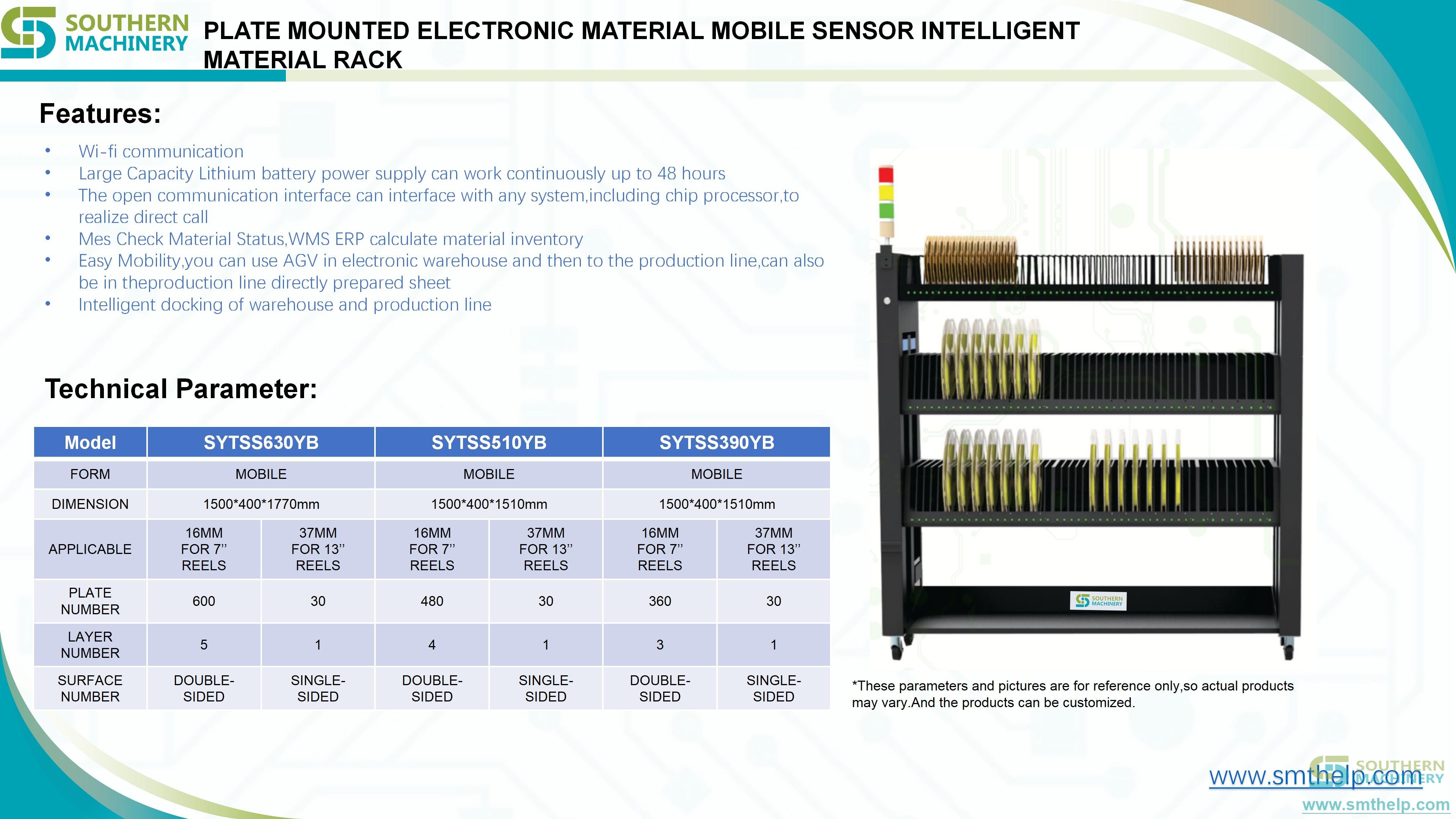
SMT material handling is often viewed as a warehouse issue, but in a busy EMS factory it directly affects line uptime, changeover speed, and wrong-part prevention. Southern Machinery's SMT Intelligent Reel Storage Rack is designed to make reel storage, picking, and traceability more controlled before materials reach the printer, pick-and-place machines, reflow oven, AOI, or THT process.
Southern Machinery was founded in Shenzhen, China in 2011 and focuses on SMT/THT PCB assembly automation equipment. For global EMS, ODM, automotive electronics, medical electronics, and industrial control manufacturers, we can integrate material storage with complete SMT lines, THT insertion, wave soldering, board handling, inspection, training, spare parts, and long-term service support.
What is this machine used for?
The SMT Intelligent Reel Storage Rack is used to organize, locate, and control SMD component reels before they are issued to production. Instead of relying on manual shelf labels and operator memory, the system supports a more structured workflow: server setup, rack network configuration, software/PDA setup, reel location management, and warehouse operation control.
In practical terms, it helps a factory answer three basic questions faster:
- Where is the correct reel now?
- Which operator picked or stored it?
- Is the material flow ready for the next SMT job without delaying the line?
Why SMT reel storage becomes a production bottleneck
A pick-and-place line can be well balanced on paper, but production still stops if materials are hard to find. Manual reel storage creates several common problems:
- Operators spend too much time searching for reels.
- Changeovers wait for kitting instead of starting on schedule.
- Wrong reel picks can create scrap, rework, and quality risk.
- Inventory data and actual shelf locations drift apart.
- New warehouse staff need long training before they can work confidently.
The source setup guide gives example improvement figures: material search time can be reduced from 50 minutes to 16 minutes per 100 reels, labor can be reduced by 63%, and new operator training can be shortened from 90 days to 2 days. These should be treated as example results only. Actual ROI depends on your reel count, warehouse layout, SKU mix, current process discipline, MES/ERP integration, and operator workflow.
Installation and setup workflow
1. Server and virtual machine setup
The system starts with a server environment. The source guide describes a pre-configured virtual machine image that can be imported into VirtualBox or another preferred platform. After import, the network settings need to be configured so the rack, PC software, and PDA can communicate with the server.
For a buyer, this means the project is not just a rack purchase. You should plan IT support, network address assignment, user permission rules, and backup responsibility before installation.
2. Rack network configuration
The physical rack connects through WiFi or Ethernet. The guide describes access through a web-based configuration panel where the rack IP and server address are set.
For stable factory use, Ethernet is usually easier to control in high-interference production areas, while WiFi may be useful when the warehouse layout changes often. The best choice should be confirmed during line-layout review.
3. Software and PDA setup
The setup guide then installs management software on the PC and an app on the PDA. The software points to the server through a configuration file, after which users, materials, and warehouse operations can be managed through the system.
This step is important because the real value is not the rack frame itself. The value comes from disciplined barcode/PDA operation, accurate material master data, and operators following the same store-and-pick process every day.

How it connects to a complete PCB assembly line
An intelligent reel rack sits upstream of production, but it affects the whole PCB assembly line.
For an SMT line, the rack supports faster kitting before stencil printing, placement, reflow, and AOI. For mixed SMT/THT production, it helps keep material preparation separate from THT insertion, selective soldering, wave soldering, and final inspection. For a smart EMS factory, it can become part of a wider material traceability flow together with barcode scanning, MES/ERP connection, feeder management, and production work orders.
A typical Southern Machinery integration discussion would look at:
- SMT section: loader, stencil printer, pick-and-place, reflow oven, AOI, and conveyors.
- THT section: radial insertion, axial insertion, odd-form insertion, manual assist stations, and soldering.
- Board handling: loader, unloader, buffer, conveyor, inverter, NG/OK sorting, and magazine handling.
- Inspection and traceability: barcode rules, data collection points, and material issue records.
Key selection parameters to confirm
Before choosing the final rack configuration, confirm these points with your engineering and warehouse team:
- Reel quantity and reel sizes to be managed.
- Number of active SMT lines and average daily changeovers.
- Current material search time and kitting workflow.
- Barcode rule, label format, and material master data quality.
- Need for WiFi, Ethernet, or both.
- Whether the system must connect to MES or ERP.
- User roles, permission levels, and audit requirements.
- Available floor space and maintenance access.
- Expected expansion over the next 12–24 months.
Southern Machinery can match the rack and software configuration after these details are confirmed. We should not guess the final layout without knowing your reel volume, warehouse process, and integration target.
ROI, quality, and capacity value
The main value of an SMT Intelligent Reel Storage Rack is not simply saving shelf space. It is reducing the hidden losses around material preparation.
ROI value
If operators currently spend a lot of time searching for reels, the system can reduce wasted labor hours and make changeovers more predictable. The source guide's 50-to-16-minute example per 100 reels is a useful discussion point, but it should be recalculated with your actual daily reel movement.
Quality value
Wrong material picking can create expensive defects because the mistake may not be visible until inspection, test, or customer failure analysis. Structured storage, PDA operation, and clear location management reduce this risk.
Capacity value
When kitting is late, expensive SMT equipment sits idle. Improving material readiness helps the line run closer to the planned schedule, especially in high-mix EMS production.
Typical applications
This system is suitable for:
- EMS factories with many SKUs and frequent SMT changeovers.
- ODM/OEM plants that need better reel traceability.
- Automotive electronics production where wrong-part prevention matters.
- Medical and industrial control board assembly where audit records are important.
- Factories preparing for MES/ERP integration or smart warehouse upgrades.
FAQ
Is this only a storage rack?
No. The source guide describes a connected setup with server, rack network configuration, PC software, and PDA operation. The rack is part of a material management workflow.
Can it connect by WiFi?
The source guide says the rack can connect through WiFi or Ethernet. The best option should be confirmed based on your factory network, layout, and reliability requirements.
Does it replace MES or ERP?
No. It supports material storage and warehouse operation control. If MES/ERP connection is required, the interface and data rules should be confirmed during project evaluation.
How fast is the payback?
The source guide includes example improvement figures, but payback depends on reel count, labor cost, daily changeovers, current search time, and implementation discipline. Southern Machinery can help calculate a practical ROI after reviewing your process.
What information is needed for quotation?
Please share the number of reels, reel sizes, warehouse layout, number of SMT lines, barcode format, MES/ERP requirement, and whether you prefer WiFi or Ethernet connection.
Can Southern Machinery support a full line project, not just storage?
Yes. Southern Machinery provides SMT, THT, wave soldering, board handling, inspection, and related automation solutions. For global customers, we also support installation guidance, professional training, spare parts support, and long-term service planning.
CTA: plan the rack around your real material flow
If your SMT line loses time because reels are hard to find, the next step is not just asking for a rack price. Send Southern Machinery your reel quantity, active SMT line count, average changeover frequency, and current kitting process. We can help you define a cost-effective intelligent reel storage setup and connect it with your wider PCB assembly automation plan.
Comments