
SMT Feeder Storage Carts, Loading Tables and IC Tray Feeders by Southern Machinery
An SMT line is only as fast as its feeder logistics. Placement machines get the capital budget, but the feeder storage carts, loading tables and IC tray feeders that keep them supplied are where changeover time and feeder damage accumulate. Southern Machinery manufactures platform-specific feeder storage carts for FUJI NXT, Panasonic BM, SAMSUNG SM/CP and SIEMENS Siplace, a dual-position FUJI NXT feeder loading table with an OMRON controller and FUJI's original communication interface, and IC tray feeders for JUKI, Yamaha and Samsung machines, with published tray sizes including enlarged options. This guide covers what each unit is used for, its published specifications, how it fits a complete PCB assembly line, and the parameters buyers should confirm before ordering.
Sep 21, 2026 · Updated Sep 21, 2026 · Southern Machinery
SMT Feeder Storage Carts, Loading Tables and IC Tray Feeders by Southern Machinery
An SMT line is only as fast as its feeder logistics. Placement machines win the capital budget; the carts, loading tables and tray feeders that keep them fed usually do not — and that is exactly where changeover time, feeder damage and unplanned downtime quietly accumulate. Southern Machinery manufactures the feeder-handling layer that sits around your Pick and Place platform: a FUJI NXT feeder loading table, feeder storage carts for FUJI NXT, Panasonic, SAMSUNG SM/CP and SIEMENS Siplace, and IC tray feeders for JUKI, Yamaha and Samsung machines.
What is this equipment used for?
What is an SMT feeder storage cart used for?
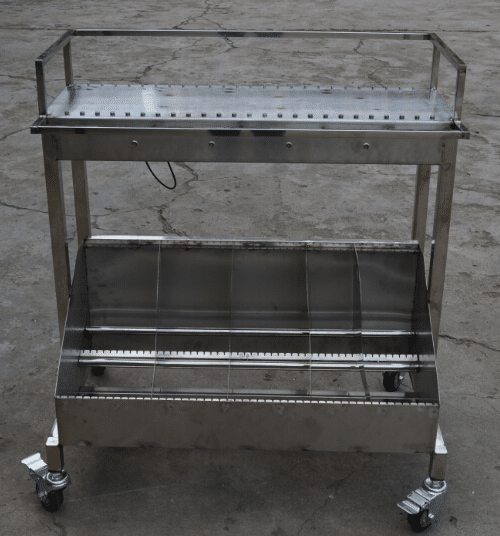
A feeder storage cart is a mobile, layered rack that holds tape feeders while they are off the placement machine. It gives operators a defined, secure place to put unused feeders between set-ups, and it lets you "pre-kit" the next job in the same numbered positions used on the assembler, so the feeder set can be transferred in one motion at changeover. Southern Machinery publishes four platform-specific carts: FUJI NXT (aluminium alloy, 880 x 600 x 1200 mm), Panasonic BM (304 stainless steel, 870 x 700 x 1100 mm), SAMSUNG SM and CP (1000 x 600 x 1200 mm), and SIEMENS Siplace (800 x 600 x 1000 mm, with power supply). Each runs on four metal flexible castors.
What is a feeder loading table used for?
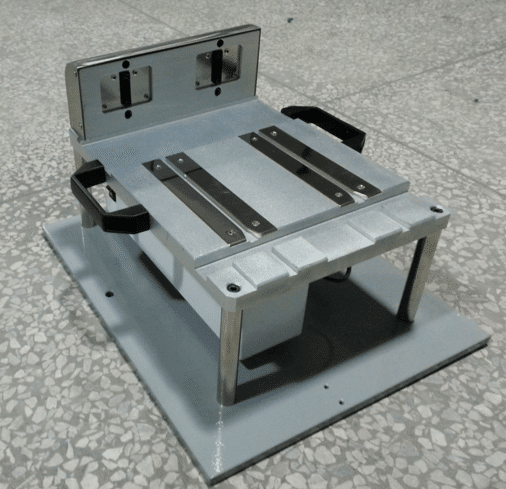
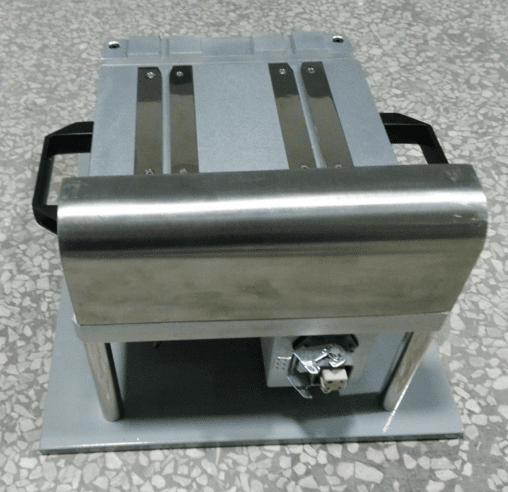
A feeder loading table is a bench-height working surface dedicated to preparing, loading and checking feeders away from the machine. The FUJI NXT feeder loading table documented by Southern Machinery accepts two feeders at a time so loading time overlaps, uses an imported Japanese OMRON controller, and connects through FUJI's original communication interface. It measures 270 x 300 x 220 mm and weighs 25 kg.
What is an IC tray feeder used for?
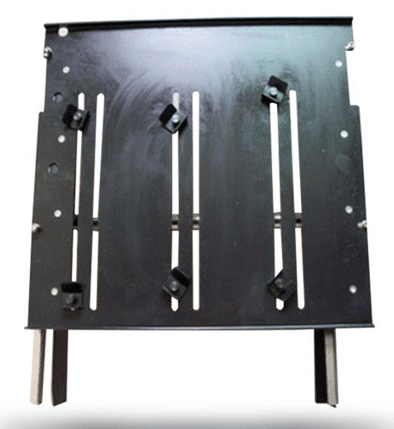
An IC tray feeder supplies tray- and stick-packaged parts from JEDEC-style trays into a placement machine, which is how mid-size ICs, connectors and modules that are not reeled get placed automatically. The Southern Machinery IC tray feeder is built for JUKI, Yamaha and Samsung platforms and is listed in several tray sizes, including enlarged options for larger devices.
Why feeder logistics decides your changeover time
On a high-mix SMT line, the placement machine is rarely the bottleneck — the feeder changeover is. Every job change forces a physical swap of tens of tape feeders, and every one of those feeders is an opportunity for a bent body, a mis-seated latch, a wrong slot number or a damaged reel. Three costs follow directly:
- Changeover minutes. If feeders are pre-kitted on numbered carts in machine slot order, the swap at the machine becomes a transfer rather than a re-setup. Southern Machinery's published SAMSUNG cart guidance is built on exactly this idea: number the cart slots to match the machine's positive latching feeder positions.
- Feeder repair and scrapping. Feeders stored loose on a bench or in a bin take impact damage to the tape path and pickup point. A dedicated cart is the cheapest feeder-protection device in the factory.
- First-pass yield after changeover. A damaged or mis-latched feeder does not announce itself; it produces pickup errors, dropped components and rework several boards later.
The feeder-handling equipment and its published specifications
Southern Machinery publishes a specification table for each of these products on its own product pages. Everything below is taken from those first-party pages — nothing is extrapolated.
1. FUJI NXT feeder loading table
Listed on the product page as the "FUJI NXT feed cart / SMT FUJI NXT feeder cart". Published specifications:
- Material: imported steel plate and aluminum plate
- Table surface: anti-static aluminum plate, to protect the feeder from wear — it is not easy to damage
- Feeder capacity: two feeders can be loaded at the same time, to save time and improve efficiency
- Industrial materials: switching power supply control, imported from Japan OMRON controller
- Communication interface: Japan FUJI company original communication interface
- Working voltage: 50/60 Hz AC / 220 V
- Size: 270 mm x 300 mm x 220 mm
- Weight: 25 kg
The dual-feeder loading capability is the operational point: two operators, or one operator running two loading cycles in parallel, prepare feeders ahead of the changeover instead of serially during it. The FUJI original communication interface matters for anyone auditing compatibility, because it means the table talks to NXT feeders on the platform's own terms rather than through an adapter.
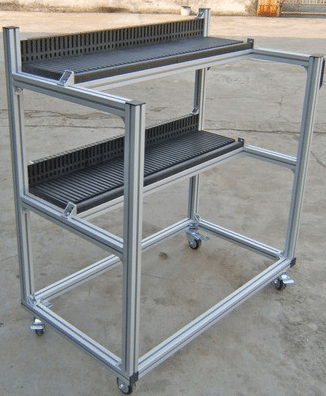
2. FUJI SMT feeder storage cart for NXT feeders
- Model compatibility: FUJI NXT
- Material: aluminum alloy
- Structure: two layers
- Dimension: 880 x 600 x 1200 mm
- Castors: four metal flexible castors
The description block on this page lists the structure as 2 layers at 56 pcs per layer, while the specification table on the same page lists two layers at 40 pcs per layer. Both figures are published by Southern Machinery on one page; because slot count determines how many feeders you can stage per changeover, confirm the final arrangement for your feeder mix before ordering.
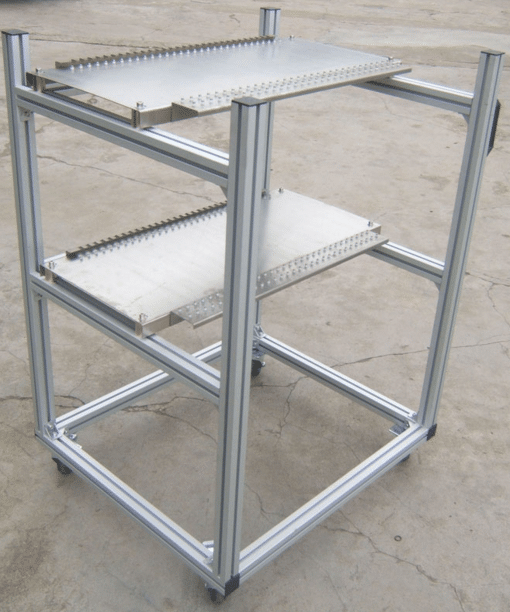
3. Panasonic SMT machine feeder cart
- Model compatibility: PANASONIC (listed as "For PANASONIC BM")
- Material: 304 stainless steel
- Structure: 2 layers, 30 pieces per layer
- Dimension: 870 x 700 x 1100 mm (L x W x H)
- Castors: four metal flexible castors
The 304 stainless steel build is the practical choice for a cart that lives on a workshop floor: it resists the cleaning agents and humidity that corrode painted steel, and it does not shed particles into a feeder's tape path the way chipped coatings can.
4. SAMSUNG SMT feeder storage cart
Two variants are published on the same page:
- For SAMSUNG SM: stainless steel, two layers, 56 pcs per layer, 1000 x 600 x 1200 mm, with four flexible metal castors
- For SAMSUNG CP: 304 stainless steel, two layers, 56 pcs per layer, 1000 x 600 x 1200 mm, with four flexible metal castors
Published specification table: dimension 1000 x 600 x 1200 mm; material 304 stainless steel; structure two layers, 56 pcs per layer; castors four metal flexible castors; model compatible SAMSUNG SM.
This page also carries Southern Machinery's clearest statement of the changeover workflow, published as "Features and Priority" — worth quoting because it explains why the cart exists at all:
- The feeder storage cart gives your operators a secure place to put unused feeders between set-ups, minimising failures due to improper storage or handling.
- When it is time to prepare the next job, the same carts can be used to "pre-kit" the placement system's tape feeder load in positive latching feeder locations, using the same numbering system as used on your placement machine.
- When it is time to change over to the next job, the cart is moved to the correct placement system, existing feeders on the assembler are moved to an unused shelf on the cart, and the "pre-kitted" feeder set moves from the numbered slots on the cart to the same-numbered slot on the machine.
- You can dedicate one cart to removing the previous job's tape feeders and another to the current set-up, minimising changeover time.
Point 4 is the highest-leverage configuration on a line that changes over more than once per shift: two carts per machine converts the swap into a parallel task instead of a serial one.
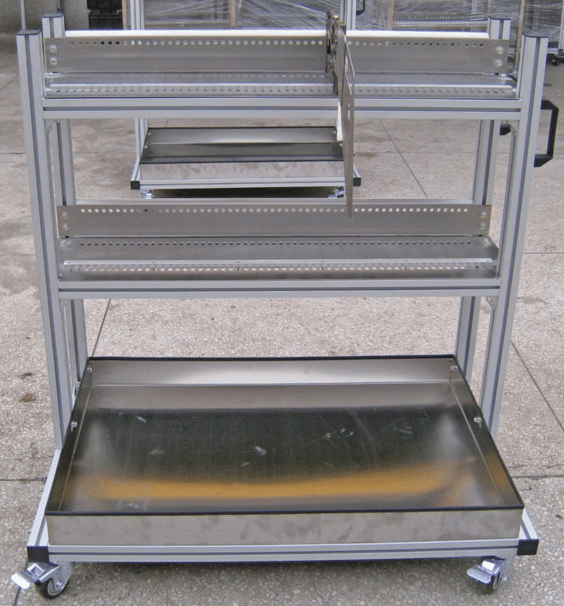
5. SIEMENS Siplace SMT feeder cart
- Model compatibility: SIEMENS (listed as "For SIEMENS D")
- Material: 304 stainless steel
- Structure: 1 layer, 25 pieces per layer, with power supply
- Dimension: 800 x 600 x 1000 mm (L x W x H)
- Castors: four metal flexible castors
The single-layer, 25-position build with an integrated power supply suits Siplace feeder sets that need power while staged off-machine. Note the difference from the other carts: one layer, not two, so the cart footprint stays compact while giving each feeder unobstructed access from the top.
6. IC tray feeder for JUKI, Yamaha and Samsung SMT machines
Published dimensions by platform:
| Machine platform | Tray size | Enlarged option |
|---|---|---|
| JUKI feeder trolley IC tray | 330 x 310 mm | 680 x 310 mm |
| Yamaha YV | 340 x 395 x 20 mm | 710 x 395 x 20 mm |
| Yamaha YG12 | 340 x 310 x 120 mm | — |
| Samsung SM | 300 x 345 x 150 mm | 400 x 560 x 150 mm |
| Samsung CP | 355 x 290 x 150 mm | 440 x 500 x 150 mm |
Published selling points from the same page: it is a JUKI feeder trolley IC tray; it is suitable for Samsung SM/CP models; the price is described as competitive; it is offered in different sizes; and it has a long lifespan. The enlarged options matter when a design change moves a device into a bigger package — the tray envelope, not the machine, is usually what blocks the change.
Typical application scenarios
- High-mix EMS lines that change over several times per shift and need feeders pre-kitted off-machine to keep the placement tool running.
- FUJI NXT shops standardising feeder handling on one platform, where the loading table and the NXT storage cart work as a pair: prepare on the table, stage on the cart, transfer to the machine.
- Panasonic BM and SAMSUNG SM/CP lines where the cart doubles as a daily 5S asset — a defined home for every feeder instead of an ad-hoc shelf.
- SIEMENS Siplace lines running feeder sets that need to stay powered while staged.
- Mixed SMT/THT assembly where tray-packaged ICs and connectors must be placed alongside reeled parts, and loose hardware or non-reeled components need a feeder, not a hand-insertion station.
- Factories moving from manual DIP or hand placement that discover their real constraint is component presentation, not machine speed.
How this fits into a complete PCB assembly line
None of these products replace a machine — they protect the throughput of the machines you already own. In a complete line, they sit at three points:
- Before the line. The feeder loading table is where feeder preparation happens. Trained on a bench-height anti-static surface with the platform's own communication interface, so feeders arrive at the machine already validated rather than discovered to be faulty at the placement head.
- At the line edge. The storage carts are the buffer between jobs. A cart in machine slot order turns changeover into a transfer; a second cart in parallel makes the transfer non-blocking.
- Inside the placement cycle. The IC tray feeder extends the placement machine's component range to tray and stick packaging, which removes a manual placement step that would otherwise be the line's slowest station.
Southern Machinery supplies SMT, THT, Wave Soldering, board handling and inspection equipment as complete line solutions, so feeder handling can be specified together with the placement, insertion and soldering stages instead of as an afterthought. Since it also designs and manufactures custom feeders and nozzles, non-standard packaging can usually be addressed by engineering rather than by accepting a manual step.
Key selection parameters to confirm before you order
These are the questions that determine whether a cart or table actually fits your line. Where Southern Machinery publishes a value it is given above; where it does not, the item is yours to confirm with us:
- Platform and model. FUJI NXT, Panasonic BM, SAMSUNG SM, SAMSUNG CP and SIEMENS D are the published compatibility lines. Anything outside those needs confirmation.
- Feeder slot count and layer configuration. Determines how many feeders you can stage per job. Confirm the layer count and pieces per layer for your exact model rather than relying on a headline number.
- Cart dimensions and castor type. The published footprints range from 800 x 600 x 1000 mm (SIEMENS) to 1000 x 600 x 1200 mm (SAMSUNG). Check aisle width, machine-side clearance and door widths against the loaded cart, not the empty one.
- Material and surface finish. Aluminium alloy or 304 stainless steel, depending on the model. Both are specified on the product pages.
- Anti-static construction. The FUJI NXT loading table specifies an anti-static aluminium table surface. Confirm the same requirement for any other cart surface that will contact ESD-sensitive components.
- Electrical supply and controller. The NXT loading table publishes 50/60 Hz AC / 220 V with an imported Japanese OMRON controller and the FUJI original communication interface. The SIEMENS cart is published as one layer, 25 pieces per layer, with power supply. Confirm voltage and plug standard for your region.
- Tray envelope. For IC tray feeders, match the largest device plus tray to the published dimensions; use the enlarged options if the device grows.
- Feeder numbering scheme. Whether you can replicate your machine's slot numbering on the cart, which is what makes pre-kitting work.
ROI, quality and capacity
Feeder handling rarely appears in a capital plan because it is not a machine, but it shows up in three measurable places:
- Capacity. Pre-kitted, numbered carts shorten equipment changeover. The gain is largest on the highest-mix lines, and it is realised without buying a second placement machine.
- Quality. Protected feeder storage reduces the pickup and placement faults that follow from damaged tape paths and mis-seated latches — faults that typically surface as rework well downstream of where they were caused.
- Cost. A cart that prevents one feeder repair or one scrapped reel pays for a meaningful share of itself. Scaling that across an operator team that handles hundreds of feeders per week is the real business case.
Southern Machinery publishes a typical payback of 6–12 months for its insertion automation on the strength of reduced headcount and improved first-pass yield, backed by a published 5-step QA protocol that includes 100% incoming inspection of critical imported components, micron-level mechanical alignment checks, optical and vision verification, a 72-hour continuous full-load burn-in, and a customer sample acceptance run with video sign-off before crating. Its stated commercial terms are enquiries answered within 2 hours, quotations the same day, and all spare parts and equipment covered by warranty.
What Southern Machinery does not publish on these pages
Stating the limits is part of a straight answer. On the product pages for these feeder carts, loading table and IC tray feeder, Southern Machinery does not publish:
- Price or lead time
- Feeder slot count for every model beyond the configuration shown (see the 40 vs 56 pieces-per-layer note on the FUJI NXT cart page)
- IP rating or any third-party certification for the carts and tables
- Cycle-time or throughput figures, which are not meaningful for passive handling equipment
- An ESD test standard for cart surfaces other than the anti-static aluminium table specified on the NXT loading table
Those items are quoted per configuration. If any of them is a hard requirement in your purchase specification, raise it early and it will be confirmed in writing.
Frequently asked questions
Are SMT feeder storage carts compatible with any placement machine brand?
No. Each Southern Machinery cart is published against a specific platform: FUJI NXT, Panasonic BM, SAMSUNG SM, SAMSUNG CP and SIEMENS D. Slot pitch and latch geometry differ between brands, which is why the carts are built per platform rather than as a universal rack.
How many feeders can a feeder storage cart hold?
The published configurations are two layers at 30 pcs per layer for the Panasonic BM cart, two layers at 56 pcs per layer for the SAMSUNG SM and CP cart, and one layer at 25 pcs per layer with power supply for the SIEMENS Siplace cart. The FUJI NXT cart is published as two layers, listed as either 40 or 56 pcs per layer on the same page — confirm the exact figure for your feeder mix.
What is the difference between a feeder loading table and a feeder storage cart?
The loading table is a fixed workstation where feeders are prepared and loaded, and the NXT table accepts two feeders simultaneously with an OMRON controller and FUJI's original communication interface. The cart is mobile storage that moves pre-kitted feeders between the preparation area and the placement machine.
Why does the FUJI NXT feeder loading table use the FUJI original communication interface?
Because it keeps the loading table compatible with NXT feeders on the platform's own signalling terms rather than through an adapter. For anyone auditing line compatibility or planning to standardise on NXT, that removes a conversion layer between feeder preparation and machine.
Can an IC tray feeder handle devices that are too large for the standard tray?
Yes — enlarged tray options are published for most platforms: 680 x 310 mm for the JUKI feeder trolley IC tray, 710 x 395 x 20 mm for Yamaha YV, and 400 x 560 x 150 mm or 440 x 500 x 150 mm for Samsung SM and CP respectively. Yamaha YG12 is published at 340 x 310 x 120 mm with no enlarged option listed.
Does a feeder cart affect first-pass yield?
It affects the conditions that produce yield loss. Feeders stored on a cart in numbered slots experience less impact damage and far fewer mis-seatings than feeders stored loose, and pre-kitting in machine slot order reduces the changeover errors that appear as pickup faults and rework.
Get configuration advice from Southern Machinery
Feeder handling is a line-specification question, not a catalogue question — the right cart count, layer configuration and tray sizes depend on your platform, your feeder inventory and how often you change over.
- Send Southern Machinery your platform model, feeder count and changeover frequency for a configuration recommendation. Engineering support is at jasonwu@smthelp.com or +86 136 0256 2576 (phone/WhatsApp).
- Browse the equipment catalogue — feeder carts, loading tables, IC tray feeders and the rest of the SMT/THT line — at https://file.autoinsertion.com.
- See machine photos and product albums at https://ph.smthelp.com.
- Full product pages for the items in this article are at https://www.smthelp.com.
Southern Machinery Sales And Service Co., Ltd has designed and manufactured SMT and AI machines from Shenzhen, China since March 2011, with a technical team carrying more than 20 years of electronics industry experience, serving 237+ global customers across EMS, automotive electronics, power supply, LED lighting, appliance and industrial control manufacturing.
Comments