
SMT Customized Nozzles and Grippers by Southern Machinery
Custom SMT nozzles and mechanical grippers help EMS and ODM factories handle components that standard tooling cannot pick reliably, including delicate LEDs, odd-form parts, large connectors, THT parts, and parts with difficult surfaces. Southern Machinery designs tooling around the customer component, SMT machine interface, and production problem, then supports integration into a complete PCB assembly line. For buyers focused on reducing manual intervention, stabilizing placement quality, and improving line uptime, this guide explains when to use a custom vacuum nozzle, when to use a gripper, and what technical information should be confirmed before quotation.
Jul 21, 2026 · Updated Jul 21, 2026 · Southern Machinery
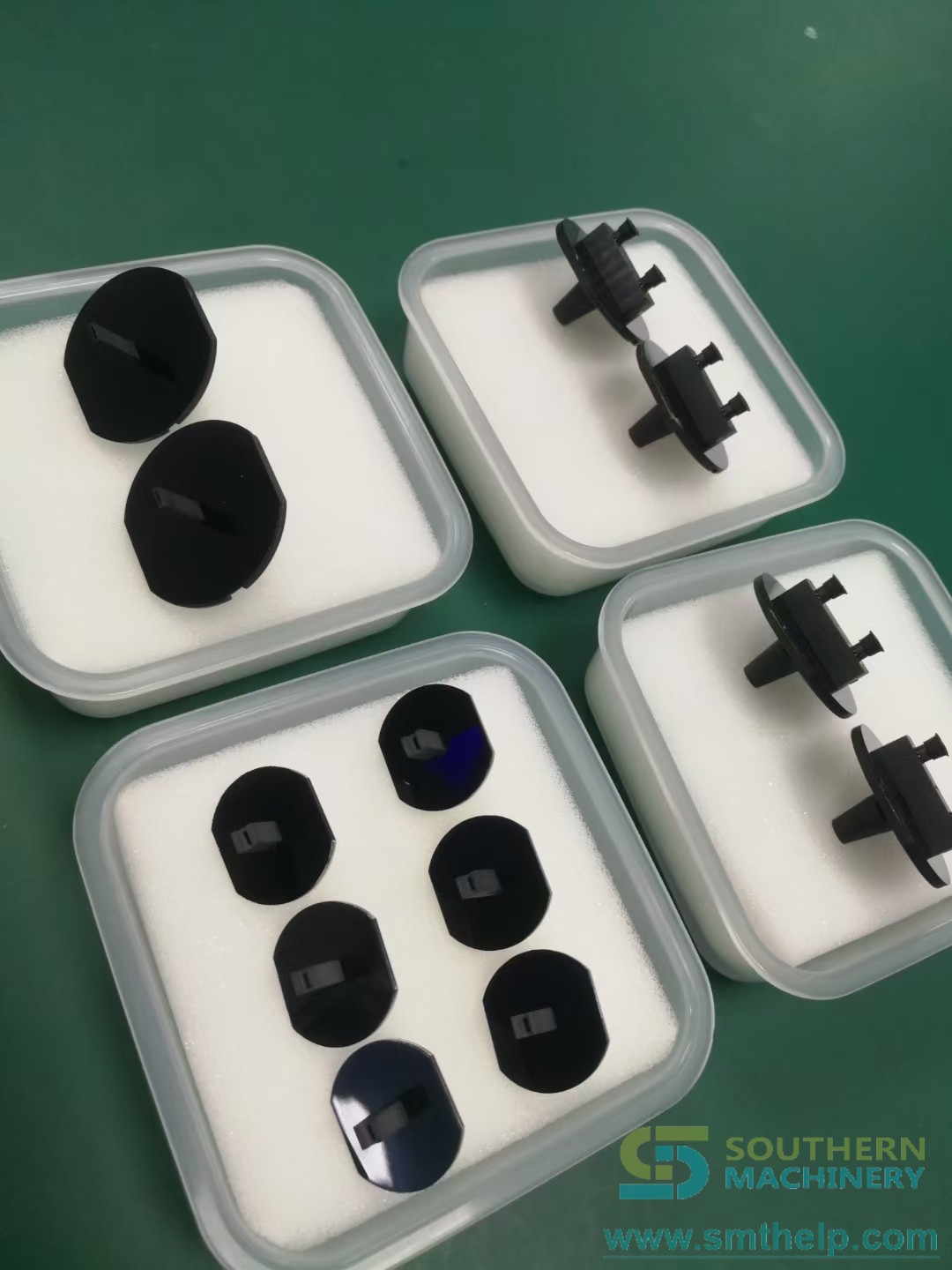
SMT Customized Nozzles and Grippers by Southern Machinery
Standard SMT nozzles are efficient when the component has a predictable shape, stable surface, and known pick point. The problem starts when the line needs to place irregular parts, delicate LEDs, large connectors, shields, jumper-wire related parts, or components where vacuum pick-up is unstable.
Southern Machinery provides SMT customized nozzles and mechanical grippers for these cases. The goal is simple: adapt the tooling to the component and machine, instead of forcing the factory to adapt the process around standard tooling.
Southern Machinery was founded in Shenzhen, China in 2011 and focuses on SMT/THT PCB assembly automation equipment. Our team supports complete-line projects covering SMT placement, THT insertion, wave soldering, board handling, inspection options, spare parts, training, and global service.
What is this machine used for?
SMT customized nozzles and grippers are used to pick, hold, transfer, and place components that standard SMT tooling cannot handle reliably.
A custom vacuum nozzle is normally used when the component has a usable pick surface and needs stable suction. A mechanical gripper is used when vacuum is not reliable, for example with heavy parts, porous parts, large connectors, awkward THT components, or parts with no flat pick surface.
In practical terms, this tooling helps factories reduce manual touch-up, avoid repeated placement errors, and keep the SMT line running more smoothly when odd-form components are part of the product design.
Typical Application Scenarios
Odd-form SMT components
Many EMS factories can run passives and ICs smoothly, but production slows down when the BOM includes irregular parts. Custom nozzles and grippers are useful for:
- Large connectors and sockets
- Shields and mechanical covers
- Special LEDs and delicate optical components
- THT-related parts that need controlled handling
- Components with unusual height, shape, or center of gravity
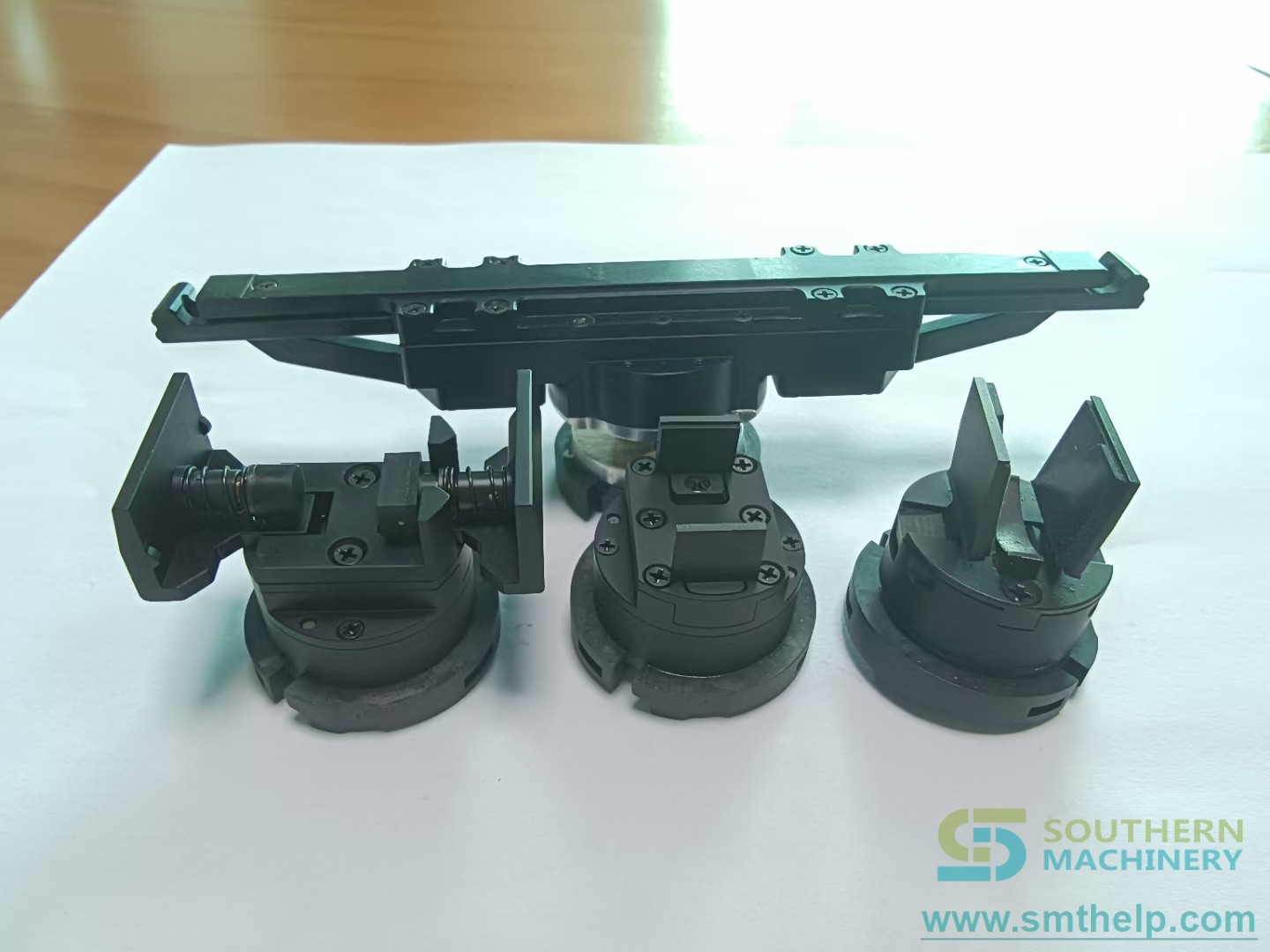
Machine-specific tooling replacement or upgrade
The source document states that Southern Machinery can design mounting interfaces for major SMT platforms such as JUKI, Fuji, Panasonic, Yamaha, Samsung, ASM / Assembleon, and other machines, based on the exact machine model.
That matters because a good tooling design is not only about the component. It also has to match the holder, mounting interface, vacuum behavior, stroke clearance, and production environment of the placement machine.
When vacuum is not enough
For some parts, vacuum pick-up is the wrong tool. If the part is too heavy, has no stable flat surface, leaks air, or shifts during acceleration, a mechanical gripper can provide a more controlled solution.
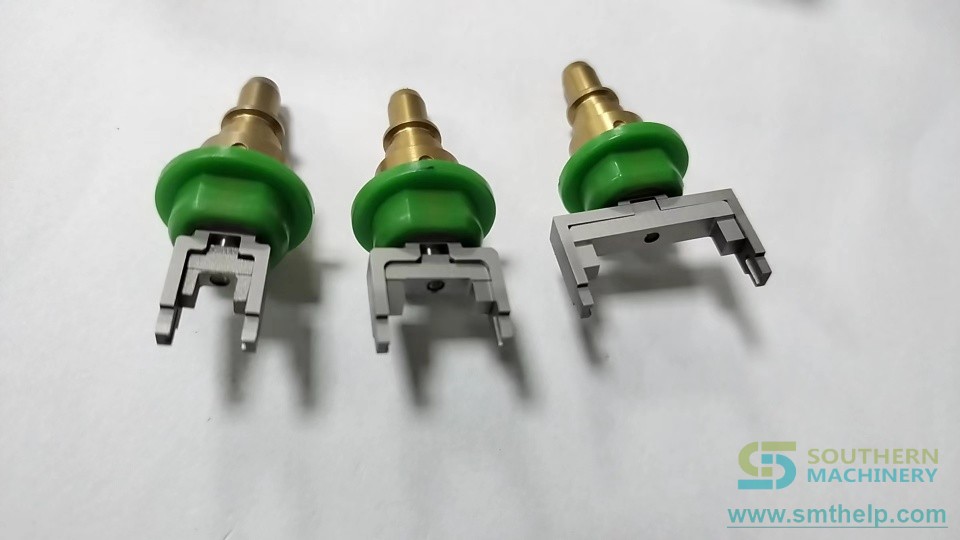
How It Fits Into a Complete PCB Assembly Line
Customized nozzles and grippers are not standalone automation by themselves. They are practical tooling that improves a specific step inside the full assembly flow.
A typical integration path is:
- SMT loader and conveyor bring panels into the line.
- Automatic stencil printer applies solder paste.
- SPI, if required, checks paste volume and offset.
- Pick-and-place machine uses standard nozzles for normal components and custom nozzles or grippers for special parts.
- Reflow oven completes soldering with a profile matched to the board and component mix.
- AOI, if required, checks post-reflow quality.
- THT insertion, wave soldering, selective soldering, board handling, and test can be added when the product includes through-hole components.
For a high-mix factory, this kind of tooling can be the difference between a mostly automated line and a line that still depends heavily on manual handling for difficult parts.
Key Selection Parameters to Confirm
Before Southern Machinery can recommend the right nozzle or gripper design, the engineering team should confirm the following details.
Component information
- Component drawing, datasheet, or 3D model
- Package size, height, weight, and surface material
- Pick surface area and whether the surface is flat, curved, porous, or fragile
- Center of gravity and any risk of tilting during movement
- Required orientation and placement tolerance from the production process
SMT machine information
- SMT machine brand and exact model
- Existing nozzle holder or gripper interface
- Vacuum source and control method
- Placement head clearance and available stroke
- Feeder or tray presentation method
Process problem to solve
- Pick-up failure
- Component sticking to the tooling
- Misalignment after placement
- Damage to delicate parts
- Manual placement bottleneck
- Frequent stoppage caused by non-standard parts
Nozzle vs. Gripper: Practical Trade-off
Choose a custom nozzle when:
- The part has a usable suction surface
- The component is light enough for stable vacuum handling
- Placement speed is important
- The main issue is pick stability, surface contact, or vacuum seal
Choose a mechanical gripper when:
- The part has no reliable suction surface
- The component is heavy or tall
- The geometry is irregular
- Side holding is safer than top suction
- Vacuum pick-up causes shifting, dropping, or repeated errors
The honest answer is that the best choice depends on the real component. For some products, a custom nozzle is enough. For others, pushing vacuum tooling too far only creates more downtime, and a gripper is the better engineering decision.
Materials and Design Notes
The source document highlights material options such as diamond steel, ceramic, and other high-grade materials. The final material should be selected based on wear resistance, contact risk, component sensitivity, and production volume.
For delicate components, the contact surface must be designed carefully to avoid scratches, cracking, or unstable suction. For abrasive or high-use applications, durability becomes more important. For small components, vacuum port size and machining precision matter more than appearance.
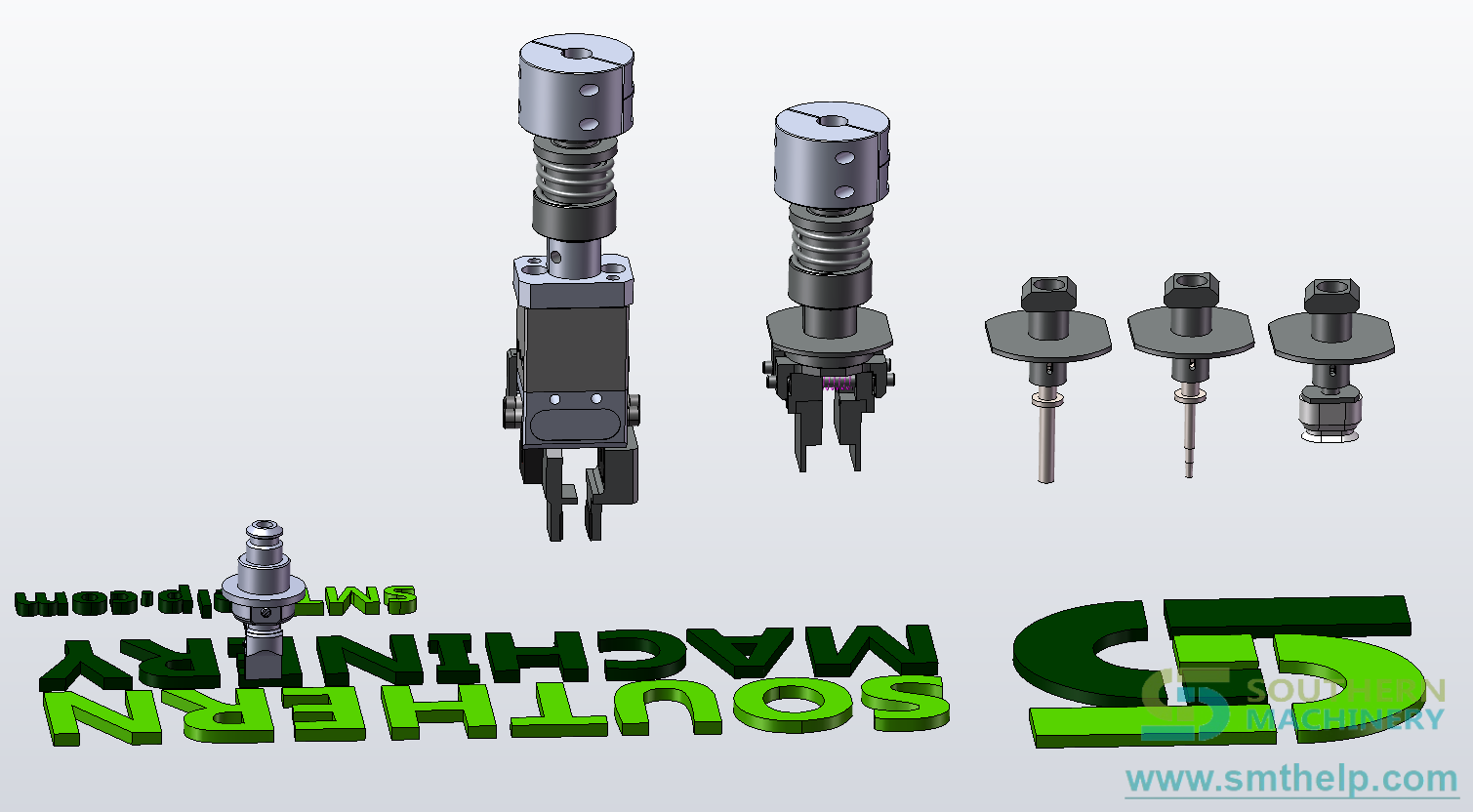
ROI, Quality, and Capacity Value
Customized nozzles and grippers usually create value in three practical ways.
1. Less manual intervention
If operators must manually place one or two difficult parts on every PCB, the whole SMT line can lose efficiency. Tooling that automates those parts can reduce labor pressure and make output more predictable.
2. More stable placement quality
A properly designed pick tool reduces dropped parts, tilted placement, wrong contact points, and repeat adjustment. This is especially important for EMS, automotive electronics, medical electronics, industrial control, and other buyers where repeatability matters.
3. Better use of existing equipment
Many factories do not need to replace a pick-and-place machine just because one component is difficult. In some cases, a custom nozzle or gripper can unlock the current machine and delay unnecessary capital spending. Final feasibility still depends on the component, machine interface, and process confirmation.
Why Work With Southern Machinery
Southern Machinery is a Shenzhen-based manufacturer established in 2011, serving 237+ global customers with SMT and THT PCB assembly automation equipment. Beyond tooling, we can support complete production-line planning, including:
- SMT lines
- THT auto insertion and odd-form insertion
- Wave soldering and selective soldering process support
- Board handling, loaders, unloaders, conveyors, buffers, and inverters
- Inspection options such as SPI and AOI when required
- Spare parts support, professional training, and global service
Our positioning is high-efficiency and cost-effective automation for practical factory needs. We do not recommend high-end automation just for appearance. The right solution should match your product, volume, component risk, and investment target.
FAQ
1. What information do you need to start a custom nozzle or gripper project?
Please provide the component datasheet or 3D model, photos of the component, the SMT machine brand and model, and a short description of the current problem, such as pick-up failure, misalignment, sticking, or damage.
2. Can one custom nozzle work for several components?
Sometimes yes, if the components share a similar pick surface, height, and handling behavior. For critical components, it is better to confirm by sample testing instead of assuming one tool fits all.
3. When should I choose a gripper instead of a nozzle?
Choose a gripper when vacuum pick-up is unstable, the part has no flat surface, the part is heavy, or side holding is safer than top suction. Southern Machinery can review the component and recommend the better direction.
4. Can Southern Machinery match tooling to my existing SMT machine?
Yes. The source document lists compatibility work for major SMT machine brands including JUKI, Fuji, Panasonic, Yamaha, Samsung, ASM / Assembleon, and others. Final design should always be confirmed against the exact machine model and head interface.
5. Is this only for SMT lines?
No. The tooling is mainly used around SMT pick-and-place handling, but it can also support special handling needs for THT-related or odd-form components. Southern Machinery can connect this with THT insertion, wave soldering, and board handling solutions where needed.
6. How do we confirm feasibility?
The practical next step is to send the component file, machine model, photos or video of the failure, and expected production volume. Southern Machinery can then review the pick method, tooling concept, and integration requirements before final quotation.
CTA: Send Your Component for Tooling Review
If your SMT line still depends on manual placement for odd-form components, send Southern Machinery the component drawing, 3D file or datasheet, machine model, and current production issue.
We will help you decide whether a custom nozzle, mechanical gripper, feeder change, or broader SMT/THT line adjustment is the most cost-effective path.
Comments