
SMT Bulk Component Handling: Bowl Feeder vs. S-MVF01 Belt Feeder | Southern Machinery
Bulk-packaged components cost less than the same parts on tape—but only if your line can feed them. Southern Machinery compares two SMT bulk handling approaches: vibratory bowl feeders and the S-MVF01 belt-type universal
Sep 5, 2026 · Updated Sep 5, 2026 · Southern Machinery
SMT Bulk Component Handling: Bowl Feeder vs. S-MVF01 Belt Feeder | Southern Machinery
Bulk-packaged components cost less per part than the same parts on tape or reel—but many EMS factories never capture that saving because their lines cannot feed loose parts reliably. Southern Machinery's product demo video compares the two practical answers for SMT bulk component handling: the classic vibratory bowl feeder and the S-MVF01 belt-type universal bulk feeder. This article explains what the S-MVF01 is actually used for, where a belt bulk feeder beats a bowl feeder, how it slots into an SMT/THT PCB assembly line, and what buyers should evaluate before switching from taped to bulk component supply.
<iframe width="100%" height="480" src="https://www.youtube-nocookie.com/embed/mtQX516P1ZA?rel=0" title="SMT Bulk Component Handling: Bowl Feeder vs. S-MVF01 Belt Feeder | Southern Machinery" frameborder="0" allow="accelerometer; autoplay; clipboard-write; encrypted-media; gyroscope; picture-in-picture; web-share" referrerpolicy="strict-origin-when-cross-origin" allowfullscreen></iframe>
What is this machine used for?
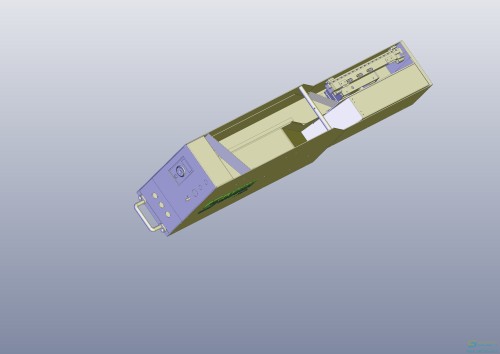
The S-MVF01 is a universal bulk feeder—an electric feeding device that stores loose components in a hopper and delivers them in a controlled flow to a fixed pickup position, where a pick-and-place head or insertion head can collect each part. The S-MVF01 variant demonstrated in the video uses a belt-based feeding mechanism to move components to that pickup point.
In plain buyer terms: if a component arrives at your factory in a bag or box instead of on 8 mm or 12 mm tape, you have two ways to present it to the machine:
- Vibratory bowl feeder — parts are poured into a bowl and driven by vibration along an inclined spiral track that orients them before they reach a pickup window. Bowl feeders are excellent at orienting symmetrical or semi-symmetrical parts, but they can be sensitive to part geometry, and changeover can mean changing or retuning the bowl.
- Belt-type bulk feeder (S-MVF01) — parts are held in a hopper and singulated by a belt conveyor to a fixed pickup position. This is a simpler mechanical path for components that do not strictly need full orientation in the bowl, and it is easier to adapt across a wider mix of loose parts.
The comparison matters because manual handling of loose components—pouring, lining up, hand-placing—is exactly where PCB assembly lines lose labor cost, feeding consistency, and throughput. A bulk feeder turns that loose-part stream into a repeatable, machine-paced supply.
Typical applications
Southern Machinery positions the S-MVF01 within SMT placement, THT insertion, and odd-form assembly lines where components are bought or supplied in bulk rather than tape. Real application scenarios include:
- LED and lighting boards — loose LEDs, light bars, and small hardware that are more economical to buy in bulk than on tape, fed to the placement or insertion head at a fixed pickup position.
- Power supply and ballast assembly — bulk-packaged capacitors, varistors, thermistors, and terminal-type parts used in vehicle power supplies, energy-saving power supplies, and electronic ballasts.
- Home appliance control boards — small connectors, fuse holders, and electromechanical parts in air conditioner, microwave oven, induction cooker, and electric kettle PCB lines where volume is high and packaging cost matters.
- Odd-form and hardware feeding for THT insertion — standoffs, pins, springs, nuts, and similar loose hardware that an odd-form insertion machine or auto insertion cell must pick in sequence.
- General electronics with mixed packaging — any EMS line that wants to consolidate several loose-component SKUs into a single automated feeding station instead of assigning an operator to each bag.
If your component list contains parts that are only available in bulk, or that you deliberately buy in bulk to save cost, that is the candidate list for the S-MVF01.
How it fits into a complete PCB assembly line
A bulk feeder is never a standalone machine—it is a material-supply station, and it should be planned as part of the whole SMT/THT flow:
- On the SMT side, the S-MVF01 sits alongside tape feeders, tube feeders, and tray feeders on or beside the pick-and-place machine. Tape feeders handle the standard chip passives and ICs; the bulk feeder covers the loose-component SKUs that would otherwise force a manual kitting step.
- On the THT side, bulk feeding connects to auto insertion. Radial tape feeders such as the RTF-2002 supply taped radial components, tube feeders such as the STF-1002 supply tube-packaged parts, bowl feeders such as the BF-2002D handle oriented bowl-fed parts—and the S-MVF01 belt feeder covers the loose and odd-form remainder feeding an insertion head at a fixed pickup position.
- Upstream and downstream, the feeder is one element of the material-handling ecosystem: smart reel storage and feeder carts keep taped inventory organized, board handling systems move PCBs between printing, placement, insertion, and soldering, and wave soldering (lead-free dual wave platforms) forms the through-hole joints after insertion.
- On the data side, a feeder with a fixed pickup position and controlled feed rate is predictable enough to be scheduled like any other line station—which is what makes bulk component supply compatible with MES-driven production planning rather than an operator-dependent manual bench.
Because Southern Machinery supplies the feeders, the insertion machines, the pick-and-place platforms, and the board handling and soldering equipment, one supplier can engineer the feeding strategy for the whole line—including which parts should run taped, tubed, or bulk.
Key selection parameters
There is no universal "best" bulk feeder—the right choice depends on your component mix. When comparing a vibratory bowl feeder against a belt-type bulk feeder such as the S-MVF01, evaluate these parameters and ask the supplier to confirm them against your actual parts:
- Component range — the body sizes, shapes, weights, and materials each feeder type can singulate without jamming or damaging parts.
- Orientation requirements — whether the downstream head needs parts presented in a specific orientation (bowl feeders excel here) or can pick from a controlled but un-oriented flow at a fixed pickup position (the belt feeder's strength).
- Feed rate and pickup reliability — the realistic feeding speed and the risk of empty or double feeds at the pickup position, matched to your placement or insertion cycle time rather than a headline number.
- Changeover effort — how long it takes to switch from one component to another, and whether the bowl, track, hopper, or belt settings must be changed.
- Hopper capacity and refill — how many parts the feeder holds and how the line is alerted when it needs refilling, since loose parts are normally refilled in bulk rather than reel-by-reel.
- Machine integration — mounting interface, electrical and signal compatibility with your placement or insertion machine, pickup position accuracy, and ESD-safe material handling.
- Maintenance and cleaning — how easy the feeder is to open and clean when changing between component types, and the availability of spares and support.
ROI and quality perspective
From the buyer's perspective, moving bulk-packaged components onto a belt or bowl feeder pays back on four lines:
- Material cost. Bulk components are typically cheaper per thousand than the same parts supplied on tape or reel, because you are not paying for the carrier tape, cover tape, and reeling. Over high-volume SKUs, that difference alone can justify the feeder investment.
- Waste reduction. Taped components generate empty reels, carrier tape, and cover tape waste for every changeover. Bulk feeding eliminates that packaging stream—directly supporting the zero e-waste and lean-material goals many EMS factories now report on.
- Labor and consistency. A manual loose-parts bench needs an operator to pour, orient, and often hand-place parts, with quality that varies by shift and by skill. A bulk feeder presents parts at a fixed pickup position at a controlled rate, so placement and insertion quality stops depending on the person doing the feeding.
- Line utilization. Feeding is only visible when it fails: a jammed bowl or an empty hopper stops the placement or insertion machine. A reliable, correctly sized bulk feeder removes those unscheduled stops, and that is where the real throughput gain shows up on the line's OEE report.
The bowl-versus-belt decision then becomes an engineering trade-off: if your part must be fully oriented before pickup and the geometry suits a bowl, a bowl feeder is the proven answer; if you need a simpler, more flexible way to move a wider mix of loose parts to a pickup point, the S-MVF01 belt feeder is the practical choice. Southern Machinery can advise on either approach for a specific component list.
Frequently asked questions
What is the S-MVF01 bulk feeder?
The S-MVF01 is Southern Machinery's universal bulk feeder: an electric device that stores loose components in a hopper and feeds them at a controlled rate to a fixed pickup position. In the S-MVF01 belt feeder configuration, a belt conveyor moves the loose parts to the pickup point for a pick-and-place or insertion head.
What is the difference between a bowl feeder and a belt bulk feeder?
A vibratory bowl feeder uses vibration to drive parts up a spiral track that orients them before pickup, which suits parts that must arrive in a specific orientation. A belt-type bulk feeder such as the S-MVF01 conveys loose parts from a hopper to a fixed pickup position with a simpler mechanical path, which makes it easier to adapt across a wider mix of loose components.
Which components can a bulk feeder handle?
Bulk feeders handle components supplied in loose or bulk form rather than on tape or in tubes—for example bulk-packaged capacitors, LEDs, connectors, terminals, springs, standoffs, and other small hardware used in SMT placement and THT insertion. The practical range depends on part size, shape, and the feeder configuration.
Where does a bulk feeder sit in a PCB assembly line?
A bulk feeder is a material-supply station: on the SMT side it works beside tape, tube, and tray feeders at the pick-and-place machine, and on the THT side it can supply loose and odd-form parts to auto insertion. Downstream, boards continue through wave soldering and inspection as in a standard SMT/THT line.
When should my factory switch from taped to bulk component supply?
When a component is available in bulk, your volume justifies the feeder investment, and the packaging cost saving outweighs the engineering effort, bulk supply is worth evaluating. The best candidates are high-volume SKUs currently purchased on tape or reel, and loose components that today require manual feeding or hand placement.
Does Southern Machinery help select the right feeder?
Yes. Southern Machinery designs and manufactures feeders—including bowl feeders, belt-type bulk feeders, radial tape feeders, and tube feeders—plus insertion machines, pick-and-place equipment, board handling, and wave soldering. Send your component list and board data, and Southern Machinery will recommend the feeding configuration that fits your line.
Get a quote
Southern Machinery—Smart EMS factory partner—designs and manufactures SMT and THT automation in Shenzhen, China. Since 2011, we have served more than 237 customers worldwide with feeders, insertion machines, pick and place equipment, wave soldering, board handling systems, custom nozzles, and global after-sales support.
- Email: jasonwu@smthelp.com
- Product catalog: browse machine catalogs and datasheets at file.autoinsertion.com
- Machine photos: find product images at ph.smthelp.com
- Website: www.smthelp.com
Send us your component list and PCB data—we will recommend the bulk feeding configuration, bowl feeder or S-MVF01 belt feeder, that fits your line.
Comments