
SME800 Electric Stencil Cleaning Machine: Automate SMT Stencil Cleaning for Consistent Print Quality
Automate SMT stencil cleaning with the SME800 electric stencil cleaning machine. Clean solder paste stencils, red glue stencils, and misprinted PCBs in a controlled, repeatable process. Built for EMS factories that need
Jul 7, 2026 · Updated Jul 7, 2026 · Southern Machinery
SME800 Electric Stencil Cleaning Machine: Automate SMT Stencil Cleaning for Consistent Print Quality
Remove solder paste residue, adhesive deposits, and contamination from SMT stencils with a repeatable electric cleaning process — no manual scrubbing, no solvent waste, no skipped stencils.
---
Stencil printing is the first quality gate in any SMT assembly line. If the stencil apertures get clogged with dried solder paste, if flux residue builds up after repeated print cycles, or if misprinted boards leave paste on the stencil surface, those defects carry over to placement and reflow. The result is solder balls, bridging, opens, and rework that could have been prevented at the stencil cleaning step.
Manual stencil cleaning — wiping with solvent-soaked cloths — is inconsistent. Operators vary in technique, pressure, and thoroughness. High-mix production with frequent stencil changes makes the problem worse: stencils get less attention between changeovers, and cleaning quality drifts across shifts.
The SME800 Electric Stencil Cleaning Machine by Southern Machinery replaces that variability with a controlled, automated process. It cleans solder paste stencils, red glue stencils, resin masks, and misprinted PCBs using a programmed cleaning cycle — repeatable every time, regardless of operator experience.
What is the SME800 used for?
The SME800 is an automatic electric stencil cleaning machine designed for SMT solder paste stencils and adhesive stencils. Its primary function is to remove paste residue, adhesive deposits, flux, and other contamination from the stencil surface and apertures after a print run or between product changeovers.
In practical production terms, it solves three specific problems:
- Clogged apertures: Dried paste inside fine-pitch apertures causes incomplete paste transfer, leading to opens or insufficient solder joints.
- Stencil surface contamination: Residue on the stencil underside transfers to the PCB as unwanted paste smears, creating solder balls and bridging.
- Inconsistent manual cleaning: Operators clean stencils differently. The SME800 applies a consistent cleaning cycle every time.
The machine also handles related cleaning tasks such as:
- Red glue (SMT adhesive) stencil cleaning
- Resin mask cleaning
- Misprinted PCB cleaning
- IC tray cleaning
- Camera module fixture cleaning
Typical application scenarios
The SME800 is most relevant for:
- EMS (Electronics Manufacturing Services) factories running multiple SMT lines with frequent stencil changeovers. Consistent cleaning between jobs reduces defect carryover from one product to the next.
- Automotive electronics production where solder joint reliability requirements are high and stencil condition is critical for first-pass yield.
- Medical device PCB assembly where paste volume consistency directly affects electrical performance and field reliability.
- Industrial control and power supply manufacturing where mixed through-hole and SMT components create diverse stencil requirements.
- LED lighting and display manufacturing where large-format stencils need uniform cleaning across the entire aperture area.
- High-volume consumer electronics where every percentage point of yield improvement translates directly into cost savings.
How it integrates into a complete SMT PCB assembly line
Stencil cleaning is a process-support step, not a standalone station. The SME800 fits into the SMT workflow at the stencil preparation and maintenance stage.
A typical SMT production flow:
- Stencil storage: Stencils retrieved from storage or a smart stencil rack
- Stencil cleaning (SME800): Automated cleaning before loading into the printer — ensures clean apertures for the first print
- Solder paste printing: Semi-automatic or automatic stencil printer applies paste
- SPI (Solder Paste Inspection): Optional inspection step
- Pick-and-place: SMD components placed on the PCB
- Reflow soldering: Completed in a reflow oven
- AOI (Automated Optical Inspection): Post-reflow inspection
- THT assembly: Through-hole components inserted, wave soldered
For factories that already use automatic stencil printers and SPI, the SME800 closes a gap in the stencil management loop. Clean stencils before printing, inspect after printing — the cleaning step should not be left to manual judgment.
Key selection parameters
Before selecting a stencil cleaning machine, confirm these points with Southern Machinery:
- Stencil size range: Maximum and minimum stencil frame dimensions the machine can accept
- Cleaning method: Electric (SME800) vs pneumatic (S-1688) — electric machines typically offer programmable cycles and quieter operation
- Cleaning media: Solvent compatibility and consumption rate
- Cycle time: How long a complete cleaning + drying cycle takes
- Throughput: Number of stencils per hour needed to match your changeover frequency
- Drying capability: Whether the machine includes a drying stage after cleaning
- Aperture size: The smallest aperture the machine can clean effectively — relevant for fine-pitch and micro-BGA stencils
- Facility requirements: Power supply, compressed air (if any), ventilation, and floor space
ROI, quality, and throughput value
The return on investment for an electric stencil cleaner is not from a single dramatic saving, but from eliminating multiple small losses across every shift.
Quality improvements:
- Reduced solder balls and bridging from cleaner stencil surfaces
- Fewer insufficient-solder defects from unclogged apertures
- More consistent paste transfer between print cycles
- Lower first-pass reject rate on AOI
Throughput benefits:
- Faster stencil changeover — clean the next stencil while the current job runs
- Predictable cleaning cycles — operators know exactly when a stencil will be ready
- Less printer downtime from stencil-related defects
Labor effects:
- One operator can manage multiple lines when stencil cleaning is automated
- Less training dependency — cleaning quality does not vary with operator skill
- Reduced solvent handling and exposure compared to manual cleaning
FAQ
What types of stencils can the SME800 clean?
The SME800 is designed for SMT solder paste stencils and red glue (adhesive) stencils. It can also clean resin masks, misprinted PCBs, IC trays, and camera module fixtures. Confirm your stencil frame size with Southern Machinery for compatibility.
How is the SME800 different from the S-1688 pneumatic cleaner?
The SME800 uses an electric cleaning mechanism, offering programmable cycles and typically quieter operation. The S-1688 is pneumatic (compressed air driven). The choice depends on facility utility availability, cycle time requirements, and automation preferences.
Does the SME800 include a drying stage?
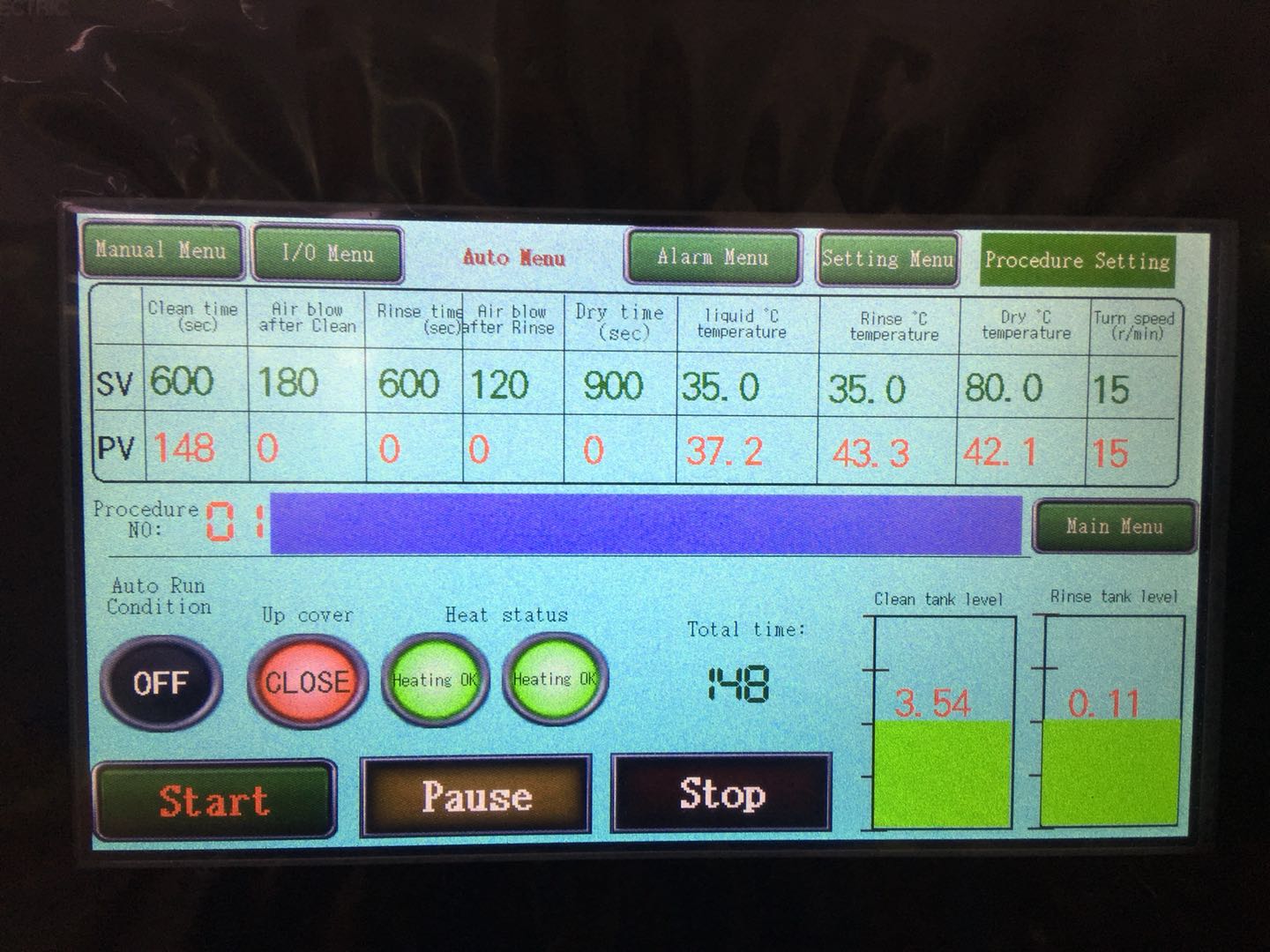
The SME800 includes a drying function as part of the programmed cleaning cycle. The exact drying capability depends on the configuration, so confirm the cycle sequence with Southern Machinery for your specific stencil types.
Can the SME800 handle fine-pitch stencils?
Stencil cleaning machines are generally effective for fine-pitch apertures when the solvent and cleaning mechanism match the aperture geometry. For stencils with very small apertures (micro-BGA, 0.3 mm pitch and below), confirm the aperture size and paste type with Southern Machinery so the cleaning parameters can be validated.
How does automated stencil cleaning improve yield?
Consistent stencil cleaning removes paste residue from apertures and the stencil surface between every print run. This prevents clogged apertures from causing insufficient solder joints and prevents surface contamination from creating solder balls. The result is more repeatable paste transfer and lower first-pass defect rates.
What support does Southern Machinery provide?
Southern Machinery offers installation support, operator training, spare parts availability, and remote technical service. The company was founded in Shenzhen, China in 2011 and serves more than 237 global customers across EMS, automotive, medical, industrial, and consumer electronics manufacturing.
Why work with Southern Machinery
Southern Machinery focuses on high-efficiency, cost-effective SMT and THT PCB assembly automation equipment. The SME800 is part of a broader portfolio that includes stencil printers, pick-and-place machines, reflow ovens, wave soldering machines, board handling equipment, inspection systems, and spare parts support.
For stencil cleaning specifically, the advantage is not only the machine itself but the ability to match the cleaning solution to your actual production conditions: stencil size range, paste type, cycle time targets, and integration with your existing SMT workflow.
CTA: Evaluate the SME800 for your SMT line
If your production team still relies on manual stencil wiping between changeovers, or if your AOI first-pass yield shows stencil-related defects that are hard to trace, the SME800 is worth a practical review.
Contact Jason Wu at jasonwu@smthelp.com or +86 13602562576 to discuss your stencil sizes, paste types, and changeover frequency.
- Browse the product catalog: file.autoinsertion.com
- See machine photos: ph.smthelp.com
- Watch the YouTube video: SME800 Electric Stencil Cleaning Machine
---
Published by Southern Machinery — SMT/THT PCB Assembly Automation Equipment. Founded 2011 in Shenzhen, serving 237+ global customers.
Comments