
Smart SMT Stencil Storage System by Southern Machinery
Southern Machinery Smart SMT Stencil Storage System helps EMS, ODM, automotive, medical and industrial electronics factories control stencil storage, retrieval and traceability. With guided LED locations, PDA scanning, QR-code slot identification, FIFO/LIFO logic and usage tracking, the system is designed to reduce manual searching, support more stable solder printing preparation and connect stencil records with the wider PCB assembly workflow. ROI and efficiency figures should be evaluated from each factory baseline and confirmed during technical review.
Jul 23, 2026 · Updated Jul 23, 2026 · Southern Machinery
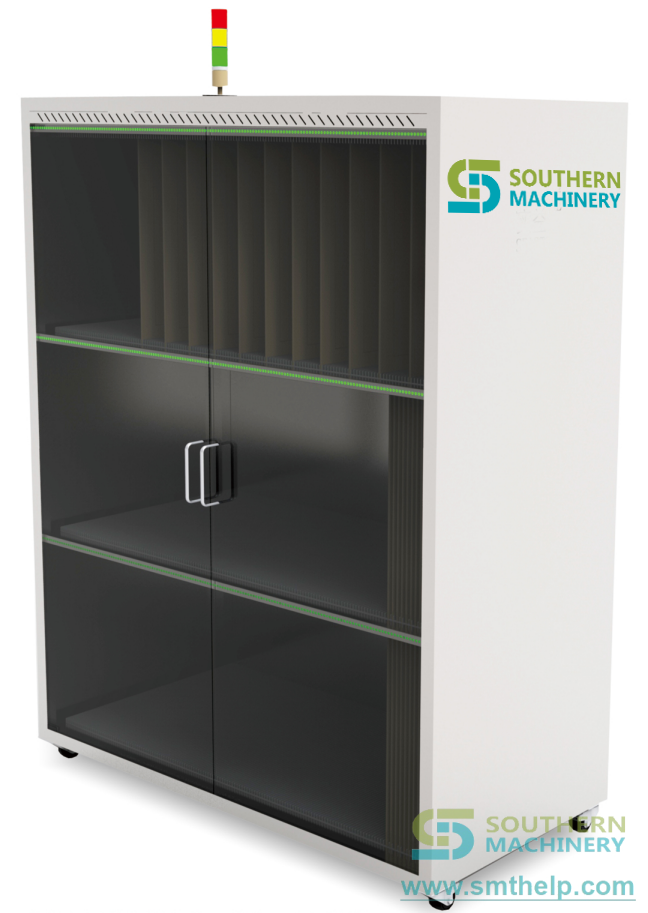
Smart SMT Stencil Storage System by Southern Machinery
For high-mix EMS, ODM, automotive electronics, medical electronics and industrial control production, stencil control is a small workflow that can create large line-side losses. When operators search manually, use the wrong stencil, or cannot confirm stencil history before a product changeover, the solder printing process becomes harder to stabilize.
Southern Machinery's Smart SMT Stencil Storage System is designed to make stencil storage, retrieval and traceability more controlled. The source material highlights automated storage and retrieval, smart LED guidance, PDA scanning, QR-code slot identification, FIFO/LIFO logic, usage tracking and audit-ready records. Actual cabinet layout, capacity and software integration should be confirmed against the customer's stencil size, line quantity and MES/ERP requirements.
Southern Machinery was founded in Shenzhen, China in 2011 and serves 237+ global customers with SMT and THT PCB assembly automation equipment, including SMT line support, THT insertion, wave soldering, board handling, inspection options, spare parts support, professional training and global service coordination.
What is this machine used for?
The Smart SMT Stencil Storage System is used to store, identify, retrieve and track SMT solder paste stencils before and after printer changeover. It helps production teams reduce manual searching, guide operators to the correct stencil location, maintain usage records, and support more consistent stencil handling across multiple SMT lines.
In practical terms, the system is positioned for factories that need better control of stencil availability, stencil life-cycle records and production preparation. It does not replace the stencil printer; it supports the preparation and material management workflow around SMT printing.
Why stencil storage becomes a production bottleneck
A stencil is not just a storage item. It is tied to a product revision, PCB program, print quality history and changeover schedule. If the wrong stencil is pulled, if the correct stencil cannot be found quickly, or if the usage record is incomplete, the SMT line may wait while operators verify information manually.
The source document gives several operational improvement figures, including 5-second retrieval, 83% reduction in search time, 300% efficiency increase, 42% fewer printing defects, 97% reduction in training time, and 12-18 month ROI with an example annual saving of $80,500. These numbers should be treated as example results depending on factory layout, starting process, stencil quantity, software integration and final technical confirmation. They are useful as ROI discussion points, not as universal guarantees.
Core functions for SMT stencil control
Automated storage and retrieval
The system uses guided storage positions with indicator lights and QR-code slot identification. This helps operators locate the right stencil faster and reduces reliance on memory, paper lists or manual shelf searching.
PDA scanner operation
PDA scanning supports the operator workflow when stencils are stored, retrieved or returned. For factories with frequent product changeovers, scanning can help connect the physical stencil with the digital record.
FIFO/LIFO and usage tracking
The source document mentions FIFO/LIFO logic and usage tracking. In a production environment, this is valuable because stencil handling is not only about finding the item; it is also about knowing whether the selected stencil is appropriate for the next print run and whether its usage history is traceable.
MES/ERP integration planning
The source material describes software integration with existing MES/ERP platforms. The exact integration method should be confirmed during project evaluation, including barcode rules, stencil master data, work order references, operator permissions and reporting requirements.
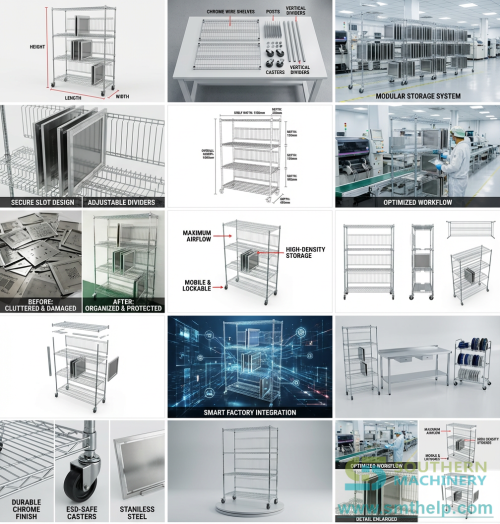
Typical application scenarios
This system is most relevant for SMT factories with many product models, frequent line changeover, growing stencil libraries, or audit pressure from automotive, medical and industrial electronics customers.
Common scenarios include:
- High-mix EMS production where operators need to retrieve the correct stencil quickly for each work order.
- Automotive electronics lines that need stronger traceability around printing process preparation.
- Medical electronics manufacturing where controlled material handling and audit records matter.
- Industrial control PCB production with repeated model changeovers and stencil storage growth.
- Multi-line SMT workshops where stencil storage is separated from the printer area and manual travel/search time becomes visible.
How it connects into a complete PCB assembly line
The Smart SMT Stencil Storage System normally sits upstream of the SMT printing process as part of production preparation and warehouse-side material control. A practical line flow may look like this:
- Work order or production plan is released from planning, MES or ERP.
- The required stencil is identified by product, PCB revision or stencil code.
- The operator uses PDA scanning or software guidance to retrieve the correct stencil from the storage system.
- The stencil is delivered to the solder paste printer for setup and verification.
- After production, the stencil is cleaned or inspected according to the customer's process, then returned and scanned back into storage.
- Usage, retrieval and return records are kept for traceability and future process review.
Southern Machinery can support the surrounding PCB assembly automation discussion, including SMT lines, THT insertion equipment, wave soldering, board handling and inspection options. For a complete project, the stencil storage system should be evaluated together with printer changeover process, material flow, line-side space and data connection requirements.
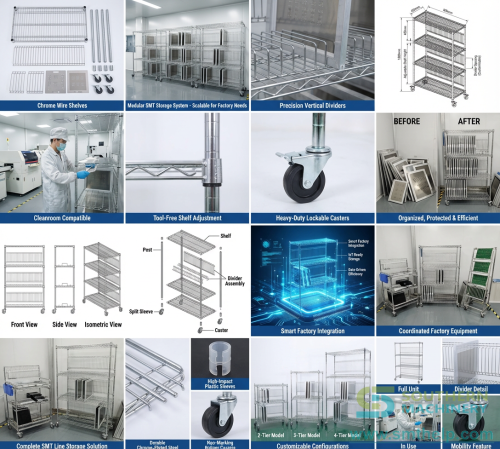
Key selection parameters for buyers
Before requesting a quotation, prepare the following information so the storage configuration can be matched to the real factory process:
- Stencil size range and frame type.
- Total stencil quantity and expected growth over the next 12-24 months.
- Number of SMT lines and average daily product changeovers.
- Current storage method and average search/retrieval time.
- Whether barcode, QR code or existing stencil IDs are already used.
- Required FIFO/LIFO rules and stencil usage-life control method.
- MES/ERP integration requirements, including data fields and work order flow.
- Available floor space, cabinet layout preference and operator access direction.
- Required reports for quality, audit, maintenance or customer traceability.
- Training, spare parts and after-sales support expectations for the plant location.
ROI, quality and capacity value
The basic ROI logic is straightforward: stencil search time, incorrect pulls, training dependence and incomplete records all consume production capacity. A smart storage system creates value when it reduces these losses enough to offset equipment cost and implementation effort.
For example, if a factory has frequent changeovers and many operators spend time searching manually, LED guidance and PDA scanning can reduce non-production time. If stencil records are currently maintained by paper or spreadsheet, automated usage tracking can improve audit readiness. If new operators require long training before they can manage the stencil library reliably, guided operation can reduce skill dependence.
Any ROI estimate should be calculated from the customer's own baseline: number of lines, operators involved, changeovers per day, average search time, defect/rework history, and quality documentation burden. The source figures such as 83% search-time reduction, 300% efficiency increase and 12-18 month ROI can be used as example benchmarks only, subject to final technical confirmation.

Why work with Southern Machinery
Southern Machinery focuses on high-efficiency, cost-effective SMT and THT PCB assembly automation equipment. Because stencil storage is connected to the larger production flow, buyers benefit from a supplier that can discuss the complete assembly process rather than a single cabinet alone.
For global EMS and OEM manufacturing teams, Southern Machinery can support equipment selection, line integration planning, spare parts, training and service coordination. The goal is to help factories reduce manual handling, stabilize quality records and build a more traceable PCB assembly workflow.
FAQ
Does the Smart SMT Stencil Storage System replace the solder paste printer?
No. It supports stencil storage, retrieval and traceability around the printing process. The stencil is still used with the SMT solder paste printer according to the factory's normal process.
Can it connect with MES or ERP?
The source document states that the software can integrate with existing MES/ERP platforms. The exact interface, barcode rules and data fields should be confirmed during project evaluation.
Are the ROI and efficiency figures guaranteed?
No. Figures such as 5-second retrieval, 83% search-time reduction, 300% efficiency increase, 42% fewer printing defects and 12-18 month ROI should be treated as example results depending on configuration, baseline workflow and final technical confirmation.
What information is needed for sizing the system?
Buyers should provide stencil dimensions, stencil quantity, expected growth, number of SMT lines, changeover frequency, current storage method, software integration needs and available floor space.
Is this suitable for automotive or medical electronics manufacturing?
Yes, it is relevant where traceability, controlled handling and audit-ready records are important. Final configuration should match the customer's quality system and production documentation requirements.
Can Southern Machinery support a complete line project?
Yes. Southern Machinery provides SMT, THT insertion, wave soldering, board handling, inspection and related PCB assembly automation solutions, with global service, spare parts support and professional training.
Request a stencil storage evaluation
If your SMT team is losing time searching for stencils, relying on manual records, or preparing for stricter customer audits, contact Southern Machinery for a Smart SMT Stencil Storage System evaluation. Share your stencil quantity, SMT line count, changeover frequency and MES/ERP requirements so the team can recommend a practical configuration for your factory.
Comments