
Smart SMT Stencil Storage Buyer Guide by Southern Machinery
For EMS factories, stencil control is often a small workflow—until it becomes a real production bottleneck. Operators search for the right stencil, print quality depends on storage discipline, and audit records are scatt
Jul 4, 2026 · Updated Jul 4, 2026 · Southern Machinery
Smart SMT Stencil Storage Buyer Guide by Southern Machinery
SMT stencil management is easy to underestimate. A stencil is not a high-speed machine like a pick-and-place system, but when the wrong stencil is used, it's hard to find, or its maintenance history is unclear, the entire PCB assembly line can lose time and quality stability.
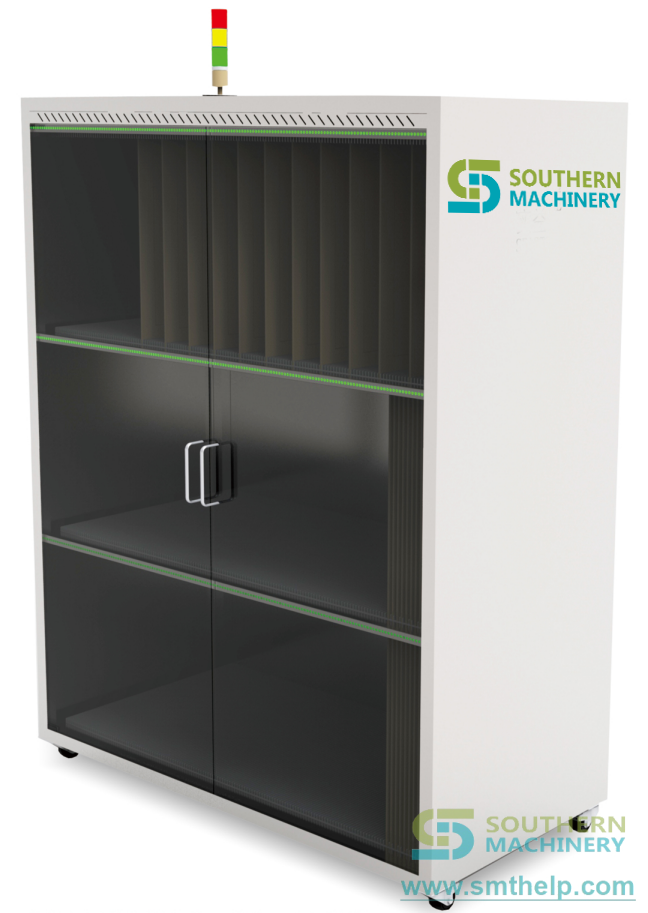
Southern Machinery's Smart SMT Stencil Storage System is designed for EMS and electronics factories that want a more controlled way to store, find, track, and manage SMT stencils. It supports a cleaner material-preparation process before solder paste printing, especially in high-mix production where frequent product changeovers are routine.
Southern Machinery was founded in Shenzhen, China, in 2011. We focus on cost-effective SMT and THT PCB assembly automation equipment, including SMT lines, THT insertion, wave soldering, board handling, inspection options, and supporting factory automation. Our team serves 237+ global customers with equipment selection, line integration, spare parts support, training, and remote service.
What is this machine used for?
The Smart SMT Stencil Storage System organizes and controls stencil storage before and after solder paste printing.
In a typical SMT line, the stencil is used at the printer stage to apply solder paste to PCB pads. If the stencil is misplaced, damaged, used for the wrong product, or not cleaned and stored correctly, the factory may experience setup delays, printing defects, rework, or traceability gaps. A smart storage system helps operators find the correct stencil faster and creates a more reliable workflow around stencil use.
For example, a high-mix EMS factory may change products many times per shift. Manual stencil racks can work at small scale, but once the stencil count grows, operators often spend too much time searching or confirming the right version. Smart storage is designed to reduce that friction.
Typical applications
This system suits factories that run SMT printing and need better stencil control, especially:
- EMS factories with many product models and frequent changeovers.
- ODM and OEM electronics plants that require stronger process traceability.
- Automotive electronics lines where documentation and repeatability matter.
- Medical electronics and industrial control PCB assembly where quality records are critical.
- SMT production areas where operators still search manually through stencil racks.
- Factories preparing for MES, barcode, or digital material-management integration.
How it fits into a complete PCB assembly line
The stencil storage system does not replace the SMT line. It supports the preparation and changeover process around the printer.
A typical full line flow may look like this:
- Stencil and material preparation: smart stencil storage, solder paste control, feeder preparation, reel storage, and barcode confirmation.
- SMT printing: automatic or semi-automatic stencil printer.
- SPI inspection: optional solder paste inspection for higher quality requirements.
- Pick-and-place: chip shooter and multifunction placement, depending on component mix.
- Reflow soldering: configured by board size, throughput, thermal mass, and process window.
- AOI inspection: optional post-reflow inspection for defect control.
- THT and final assembly: auto insertion, manual assist, selective soldering, wave soldering, board handling, ICT/FCT, or packing as needed.
For Southern Machinery customers, stencil storage can be discussed together with SMT printers, reel storage, board handling, THT insertion, wave soldering, and inspection options—so the factory gets a practical end-to-end workflow instead of isolated machines.
Key functions from the source document
The selected source page describes a smart stencil storage concept with:
- Automated storage and retrieval guidance for faster access to the correct stencil.
- Indicator lights and QR code slot identification to guide operators.
- Traceability support from stencil receipt through usage and disposal.
- Reduced manual searching during production preparation.
- Operator-friendly workflow that lowers dependence on long training cycles.
- Better stencil rotation and maintenance discipline to support print quality.
Some source-page performance figures—such as search-time reduction, efficiency improvement, defect reduction, training reduction, annual savings, or ROI timing—should be treated as example values from the source concept. They are not universal guarantees. Final numbers depend on the actual factory stencil count, line changeover frequency, labor structure, quality baseline, and integration scope.
Buyer checklist: what to confirm before selecting a stencil storage system
Before choosing a smart stencil storage solution, confirm these points:
- Stencil quantity and size range: current count, expected growth, and maximum frame size.
- Changeover frequency: number of product changes per day or per shift.
- Current search time: average time operators spend finding and confirming stencils.
- Traceability needs: barcode, QR code, MES connection, audit records, or customer-specific documentation.
- Storage method: cabinet, rack, trolley, or combined layout depending on floor space.
- Operator workflow: who registers, retrieves, cleans, returns, and audits each stencil.
- Quality pressure: common print defects, stencil damage, wrong-stencil incidents, and rework cost.
- Integration level: standalone smart storage or connection with wider SMT material management.
These details allow Southern Machinery to match the closest equipment configuration from our catalog without overstating specifications.
ROI, quality, and capacity value
The biggest value usually comes from a more stable preparation process rather than any single metric.
A smart stencil storage system can help by reducing search time, lowering the chance of using the wrong stencil, making stencil status easier to confirm, and creating cleaner records for audits. In high-mix EMS production, this can protect line utilization because the SMT printer and placement line are less likely to wait for preparation issues.
For ROI calculation, Southern Machinery typically asks for:
- Number of active stencils.
- Average changeovers per shift.
- Current stencil search and confirmation time.
- Labor cost and shift pattern.
- Defect or rework cost related to stencil handling or printing.
- Whether MES or barcode traceability is required.
With those inputs, we can estimate whether a simple storage solution is sufficient or whether a more automated smart system makes sense.
Why Southern Machinery
Southern Machinery, based in Shenzhen and founded in 2011, does not just supply standalone machines. We help customers design practical PCB assembly automation lines across SMT, THT, wave soldering, selective soldering, board handling, inspection, and supporting factory systems.
For overseas customers, the value goes beyond machine price. It includes a cost-effective configuration, installation guidance, operator training, spare parts support, and long-term service from a team familiar with EMS factory constraints.
FAQ
What is the main purpose of a smart SMT stencil storage system?
It helps operators store, locate, identify, and track SMT stencils in a controlled way. The goal is to reduce search time, avoid wrong-stencil usage, and improve traceability around the printing process.
Is this system only for large EMS factories?
No. It is most valuable when stencil quantity, product variety, or changeover frequency creates a real management problem. A smaller factory may start with a simpler layout, while a high-mix EMS factory may need stronger automation and traceability.
Can it connect with MES or barcode workflows?
The source page highlights QR code and traceability concepts. Final MES, barcode, or data-collection integration should be confirmed according to the factory's software environment and Southern Machinery's available configuration.
Does it directly improve solder paste printing quality?
It does not replace printer setup, stencil cleaning, solder paste control, or SPI. Its value is indirect but important: better stencil identification, rotation, maintenance discipline, and storage control can support more stable printing results.
What information should I send for a recommendation?
Send your stencil size range, number of active stencils, product changeover frequency, current storage method, traceability requirements, and available floor space. If you also share your SMT line layout, Southern Machinery can suggest a more complete workflow.
Are ROI figures guaranteed?
No. Any ROI or savings figure should be treated as an example until the factory data is reviewed. Actual payback depends on labor cost, changeover frequency, defect baseline, stencil quantity, and integration scope.
CTA: build a cleaner SMT preparation workflow
If stencil searching, wrong-stencil risk, or weak traceability is slowing your SMT line, Southern Machinery can help review your current workflow and recommend a practical stencil storage configuration.
Send us your stencil quantity, frame size, changeover frequency, and whether you need barcode or MES connection. We can then match the closest Southern Machinery solution and explain how it fits with your SMT printer, reel storage, board handling, inspection, and full PCB assembly automation line.
Comments