
SM-JWF-01 SMT/THT Jumper Wire Feeder by Southern Machinery
The SM-JWF-01 SMT/THT Jumper Wire Feeder helps EMS factories automate jumper wire cutting, forming, and feeding so this small but repetitive process can run with better consistency. Based on Southern Machinery source mat
Jul 2, 2026 · Updated Jul 2, 2026 · Southern Machinery
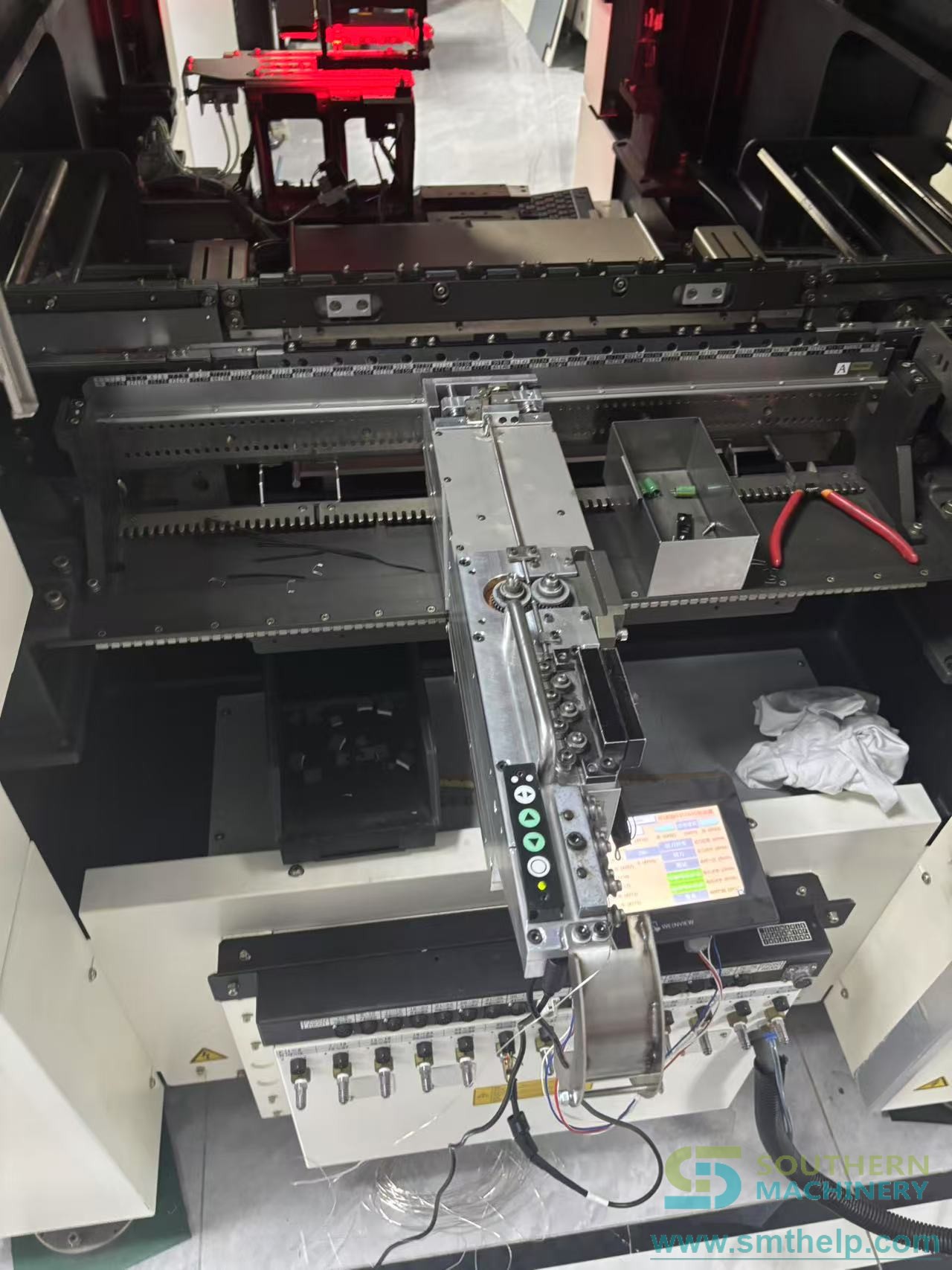
SM-JWF-01 SMT/THT Jumper Wire Feeder by Southern Machinery
Manual jumper wire insertion is still common in many PCB assembly factories, especially on power supplies, LED drivers, industrial control boards, appliance boards, and mixed SMT/THT products. The problem is simple: jumper wires are small, repetitive, easy to mishandle, and difficult to keep at a stable production rhythm when the process depends on manual cutting, forming, and feeding.
The SM-JWF-01 SMT/THT Jumper Wire Feeder from Southern Machinery is designed to automate jumper wire cutting, forming, and feeding so the jumper wire can be supplied to an SMT mounter as part of a more stable PCB assembly process. Instead of treating jumper wires as a manual side process, the feeder helps turn them into a controlled production step.
Southern Machinery was founded in Shenzhen in 2011 and focuses on high-efficiency, cost-effective SMT and THT PCB assembly automation equipment. Our team supports complete line planning across SMT placement, THT insertion, wave soldering, board handling, inspection options, spare parts support, and operator training for global EMS factories.
What is this machine used for?
The SM-JWF-01 jumper wire feeder automatically cuts, forms, and feeds tinned copper jumper wire for PCB assembly. It is intended for factories that want to reduce manual jumper wire handling, improve feeding consistency, and integrate jumper wire placement into an SMT/THT production flow.
In practical terms, it helps when your operators are currently preparing jumper wires by hand, loading preformed wires manually, or dealing with unstable takt time around jumper wire assembly. The source document describes the feeder as compatible with SMT mounter brands and built for automated jumper wire cutting, forming, and feeding. Final interface matching should always be confirmed against your mounter model, feeder table, jumper wire specification, and PCB layout.
Why jumper wire feeding becomes a bottleneck
Jumper wires look simple, but they can create real production drag. A manual process often introduces three issues:
- Inconsistent cycle time because operator speed changes during the shift.
- Variation in wire forming and lead length, which can affect placement and downstream soldering.
- Material waste from manual cutting, sorting, and rework.
For low-volume production, manual handling may be acceptable. For repeated products or growing EMS orders, the manual step becomes harder to control. A feeder-based process gives the line a more predictable rhythm and makes the operation easier to train, audit, and improve.
Key source-stated specifications
The selected source file lists the following specifications for the SM-JWF-01. These should be treated as application data for initial evaluation and remain subject to final technical confirmation before quotation.
| Item | Source-stated data |
|---|---|
| Model | SM-JWF-01 |
| Function | Automated jumper wire cutting, forming, and feeding |
| Compatibility | Universal for SMT mounter brands, subject to interface confirmation |
| Feeding speed | <=1.5 seconds per piece |
| Wire material / diameter | Tinned copper wire, 0.5 mm to 1.2 mm diameter |
| Jumper span | 6 mm to 40 mm, customizable by mold change |
| Lead length | 3 mm to 5 mm |
| Control system | Single-chip microcomputer program control |
| Power supply | 24V DC / 50Hz, 150W |
| Dimensions | 580 mm x 50 mm x 180 mm |
| Maintenance note | Easy operation, about 5 minutes for mold replacement |

Typical applications
This feeder is most relevant for PCB assemblies where jumper wires are repeatedly used and manual preparation creates a bottleneck. Common application areas include:
- LED driver boards and lighting power modules.
- Power supply and inverter control boards.
- Industrial control PCB assemblies.
- Appliance electronics and mixed SMT/THT boards.
- EMS production lines that need a repeatable process for tinned copper jumper wires.
It is not a universal answer for every wire or every PCB design. The jumper span, lead length, wire diameter, feeder interface, and mounter pickup method need to be checked before final selection.
How it fits into a complete PCB assembly line
The SM-JWF-01 is best understood as a process module inside a complete SMT/THT automation plan, not as an isolated accessory.
A typical line concept may look like this:
- Magazine loader or PCB loader feeds boards into the SMT section.
- Automatic or semi-automatic stencil printer applies solder paste.
- SMT mounter places standard SMD components.
- The jumper wire feeder supplies formed jumper wires to the mounter for automated placement, depending on final compatibility.
- Reflow oven completes the SMT soldering process where applicable.
- For mixed-technology boards, manual assist or automatic THT insertion follows for connectors, transformers, terminals, and other through-hole components.
- Wave soldering or selective soldering is selected according to board design and thermal requirements.
- AOI, visual inspection, ICT/FCT, barcode traceability, and board handling buffers can be added based on quality and volume targets.
Southern Machinery can support this complete line view: SMT equipment, THT insertion, wave soldering, board handling, inspection options, and customized feeding/tooling. That matters because jumper wire automation only delivers value when it matches the actual line speed, PCB design, and downstream soldering process.

Buyer checklist before selecting a jumper wire feeder
Before choosing a feeder configuration, confirm these points:
- Jumper wire diameter and material: for example, whether your product uses tinned copper wire within the source-stated 0.5 mm to 1.2 mm range.
- Jumper span: confirm whether your design fits the 6 mm to 40 mm span range or needs a custom mold.
- Lead length requirement: compare your soldering and insertion needs with the source-stated 3 mm to 5 mm lead length.
- SMT mounter brand and model: interface, feeder location, pickup height, and placement logic must be checked.
- Product mix: confirm whether one mold is enough or whether frequent changeover is required.
- Throughput target: compare the <=1.5 seconds per piece source-stated speed with the actual bottleneck in your line.
- Quality process: decide whether post-placement AOI, visual inspection, or downstream solder inspection is required.
ROI, quality, and capacity value
The business case is strongest when jumper wire handling consumes labor, slows a higher-value SMT line, or creates rework. The value is not only speed. It is also repeatability.
For example, if operators spend time cutting and forming jumper wires manually, the true cost includes labor, variation, sorting, work-in-process delays, and inspection effort. A feeder can reduce the manual touch points and create a more stable process window. That supports better line balance and easier operator training.
The source document describes a zero-material-waste design concept for cutting, molding, and feeding coiled copper wire. In a real quotation, material savings should be calculated using your actual wire cost, scrap rate, product mix, and production volume.
When this feeder may not be the right first purchase
If jumper wires are rare on your boards, or if production volume is very low, a manual fixture or semi-automatic method may be more cost-effective. If your PCB uses many different jumper spans that change every few batches, mold changeover and setup time must be reviewed carefully.
This is where a line-level discussion helps. Southern Machinery can compare a feeder-based setup against manual assist, custom tooling, or broader THT automation depending on your product and volume.
FAQ
Can the SM-JWF-01 work with any SMT mounter?
The source file describes universal compatibility with SMT mounter brands. In practice, final compatibility must be confirmed against the exact mounter model, feeder table, pickup position, communication or mechanical interface, and component program requirements.
What wire diameter does it support?
The source-stated range is 0.5 mm to 1.2 mm tinned copper wire. Final confirmation should be made with wire samples and the required jumper geometry.
What jumper span can it form?
The source file lists 6 mm to 40 mm, with customization by mold change. If your design uses multiple spans, we should review the product mix and changeover plan before final configuration.
Is this only for THT production?
No. The selected source positions it as an SMT/THT jumper wire feeder. The core idea is to prepare and feed jumper wires so they can fit into a controlled PCB assembly process, often alongside SMT placement and mixed-technology assembly.
Does it replace all manual jumper wire work?
It can reduce or remove manual cutting, forming, and feeding for suitable jumper wire applications. It does not remove the need for engineering confirmation, process validation, inspection, or downstream soldering control.
What information is needed for a quotation?
Please provide your PCB layout or jumper wire drawing, wire diameter, jumper span, lead length, SMT mounter brand/model, target output per shift, and whether the line uses reflow, wave soldering, or selective soldering after placement.
Next step
If jumper wire handling is slowing your SMT/THT assembly line, send Southern Machinery your wire specification, PCB photo or drawing, and SMT mounter model. We can check whether the SM-JWF-01 is the right fit, then match it with the surrounding SMT, THT, wave soldering, board handling, and inspection equipment for a cost-effective complete line solution.
Comments