
Automating Jumper Wire Insertion: Southern Machinery’s SM-JWF-01 Feeder
Manual jumper wire handling can quietly eat into your SMT/THT line’s efficiency—creating uneven takt times, inconsistent wire shapes, extra scrap, and more rework. This post looks at how Southern Machinery’s SM-JWF-01 au
Jul 5, 2026 · Updated Jul 5, 2026 · Southern Machinery

Automating Jumper Wire Insertion: Southern Machinery’s SM-JWF-01 Feeder
Manual jumper wire insertion might seem like a small step, but on a busy SMT/THT line it can quietly tank your OEE. Speed depends on the operator, wire length varies from shift to shift, and downstream machines often end up waiting on a task that should be predictable.
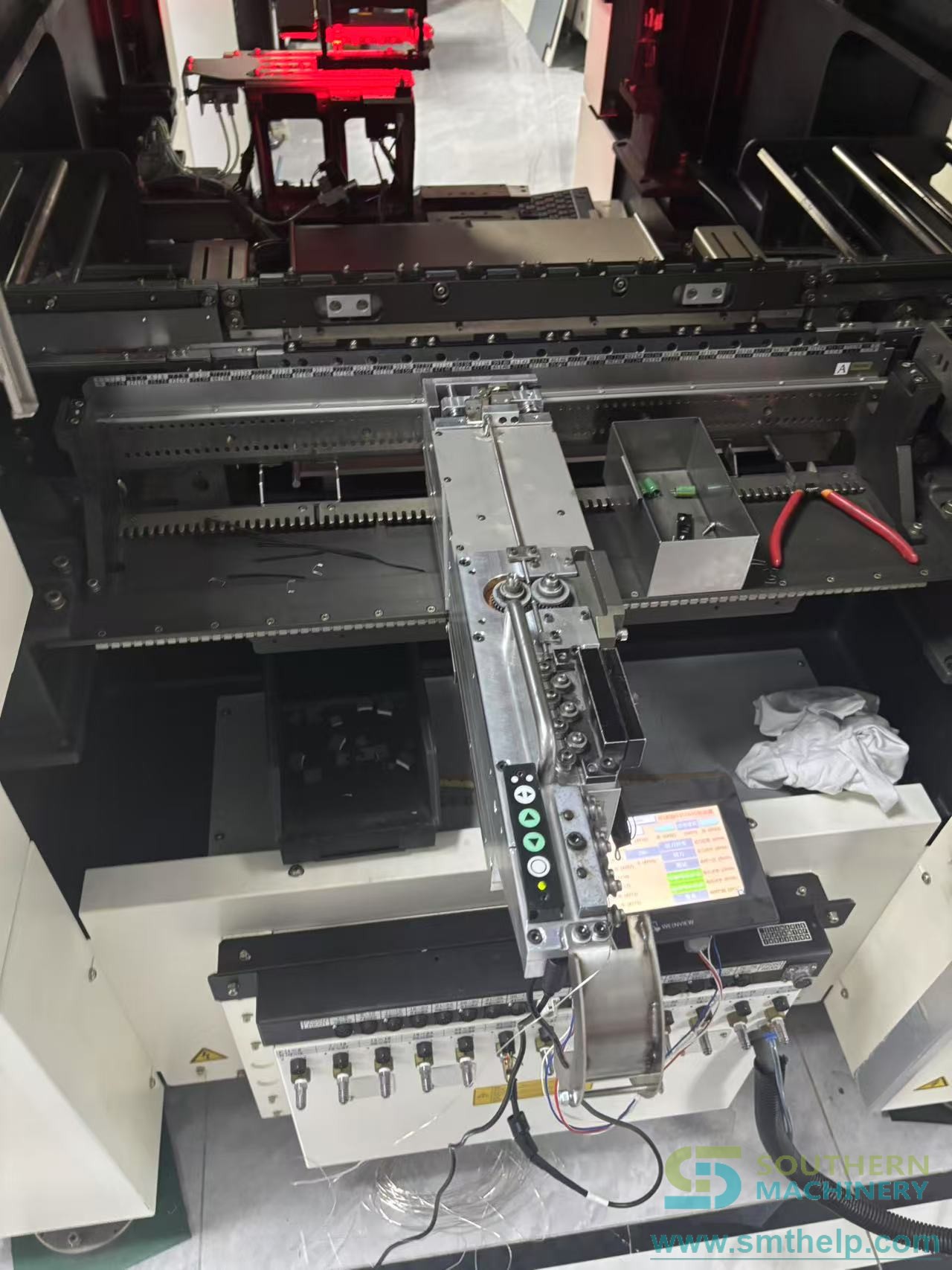
Southern Machinery’s SM-JWF-01 automated jumper wire feeder is built to replace that unreliable manual process with a machine-ready feeding method for both SMT and THT assembly. It’s aimed at factories that want steadier output, fewer repairs, and a cleaner move from hand-placed wires to automated line integration.
What’s this machine for?
The SM-JWF-01 feeds, cuts, forms, and presents jumper wires for PCB assembly—handling them with far better repeatability than you’d get with manual work.
In real EMS production, jumper wires are used whenever a board needs a simple electrical bridge, a design tweak, or a through-hole connection. If operators are cutting and placing those wires by hand, the line suffers from an inconsistent pace, variable placement quality, extra material waste, and more inspection pressure. This feeder turns that chore into a controlled, automated step.
Why manual jumper wire insertion hides real costs
The original technical brief points to three common headaches with manual jumper wire handling:
- Inconsistent line speed: manual work creates unpredictable takt times, which slows down downstream assembly and soldering.
- Variable placement quality: wire length, shape, and position can all shift when the process relies heavily on each operator.
- Material waste and rework: imprecise cutting and forming leads to more scrap and defects that have to be caught later.
For low-volume prototype work manual handling might be fine. But for repeated EMS runs—think power supplies, industrial control boards, LED drivers, or mixed SMT/THT lines—that same manual step can quietly cap your throughput.
The core fix: SM-JWF-01 automated jumper wire feeding
The SM-JWF-01 is Southern Machinery’s answer to replacing manual jumper wire prep with a stable, programmable feeding process.
Key points from the original material:
- Automated jumper wire feeding: keeps production pace steadier than manual handling.
- Cutting and forming support: reduces variation in how wires are prepared.
- Microcomputer program control: gives you repeatable feeding and consistent process results.
- Compatibility: designed to fit into existing SMT/THT lines, though final integration should always be checked against your specific machines and setup.
- Cycle time example: the source mentions a cycle time of <= 1.5 seconds. Take that as a reference—confirm actual performance with your wire specs, machine interface, and production conditions.
Typical places to use it
EMS factories with repeated jumper wire jobs
If the same jumper wire process shows up across multiple products or regular batches, automation cuts your dependence on skilled manual labor and makes output easier to plan.
Power supply and LED driver assembly
These products often mix SMT parts with through-hole components and simple wire links. A feeder helps stabilize the bridge between manual THT work and automated line flow.
Industrial control and appliance electronics
Boards with mixed component types benefit from a more controlled jumper wire process—especially when consistent quality matters more than just chasing the lowest equipment cost.
Upgrading an existing SMT/THT line
If you don’t want to rebuild your whole line but need to fix one persistent manual bottleneck, this feeder is a focused upgrade worth evaluating.
How it fits into a complete PCB assembly line
Southern Machinery always looks at jumper wire automation as part of the bigger PCB assembly picture, not as a standalone accessory.
A typical flow might look like:
- SMT section: loader, stencil printer, pick-and-place, reflow oven, and optional SPI/AOI.
- Jumper wire feeding / placement: the SM-JWF-01 automates preparation and feeding for the needed assembly step.
- THT section: radial insertion, axial insertion, odd-form insertion, or manual-assist depending on your component mix.
- Soldering: wave or selective soldering, based on board design, thermal mass, and component layout.
- Inspection and handling: conveyors, buffers, AOI, visual checks, ICT/FCT, and traceability where needed.
This is where Southern Machinery’s broader experience matters. Founded in Shenzhen in 2011, the company focuses on SMT/THT PCB assembly automation and can help with machine selection across the whole line—SMT, THT insertion, wave soldering, board handling, and inspection. The goal isn’t just to sell you a feeder, but to make sure it fits your actual factory flow.
Key parameters to pin down before you buy
Before finalizing the feeder setup, you’ll want to confirm these details:
- Jumper wire diameter and material.
- Required wire length range and forming style.
- Target output per hour or per shift.
- PCB size, panelization, and whether the process is inline or offline.
- Your existing SMT/THT machine brand and available interface points.
- Required placement accuracy and inspection method.
- Product mix: one stable product, several variants, or high-mix EMS production.
- Whether the line will use wave soldering, selective soldering, or another downstream soldering process.
These details decide the final feeder configuration and whether you need extra tooling, fixtures, or handling equipment.
What’s the real ROI, quality, and capacity value?
The clearest value isn’t just labor reduction—it’s process stability.
A manual jumper wire station can run great with a strong operator, then slow down or cause more defects when that operator changes. Automation makes the process easier to measure, train, and repeat. On the production floor, that means fewer line stops, more predictable output, less rework, and cleaner quality control.
The original technical brief mentions measurable ROI, but you should calculate your own numbers using your actual labor costs, defect rate, product volume, wire usage, shifts, and current bottleneck data. Southern Machinery can help model that after reviewing your production info.

Why go with Southern Machinery?
Southern Machinery has been in the SMT/THT PCB assembly automation game since 2011, based in Shenzhen, China. They serve 237+ global customers and focus on high-efficiency, cost-effective equipment for EMS and electronics manufacturers.
For jumper wire automation projects, Southern Machinery can also help evaluate the rest of your line: loaders, conveyors, SMT equipment, THT insertion, wave and selective soldering, board handling, inspection, spare parts, training, and global service support. That lowers the risk of buying a standalone machine that doesn’t match your actual production flow.
FAQ
Is the SM-JWF-01 only for fully automatic lines?
No. It can work in both line upgrades and more automated cells, depending on your existing equipment and the jumper wire process. Always check final integration against your machine brand, PCB flow, and production targets.
Can it replace all manual jumper wire work?
It can reduce or replace manual handling for suitable applications, but the final answer depends on wire size, forming requirements, PCB layout, and how the jumper wire is inserted or placed in your current process.
Does the cycle time always stay under 1.5 seconds?
The source lists <= 1.5 second cycle time as a feature. Treat it as a reference example—actual output depends on wire specs, feeder setup, and your production process.
What info do you need for a technical proposal?
Send a jumper wire drawing or sample, wire diameter, length range, PCB photos, target output, current process video if possible, and the brand/model of the machine you want to integrate with.
Can Southern Machinery support a complete line, not just the feeder?
Yes. Southern Machinery can support SMT, THT insertion, wave soldering, board handling, inspection, traceability, training, spare parts, and global service guidance.
Ready to check if jumper wire automation fits your line?
If manual jumper wire insertion is slowing down your SMT/THT assembly, send Southern Machinery your jumper wire size, PCB photo, current process video, and target output. They’ll help confirm whether the SM-JWF-01 is the right fit and how it should connect with your full PCB assembly line.
Comments