
S-JVF02 Vibration Stick Feeder for JUKI RS-1 by Southern Machinery
The S-JVF02 Vibration Stick Feeder by Southern Machinery helps JUKI RS-1 SMT lines handle tube and stick packaged components with a repeatable pickup point. For EMS and PCBA factories, it can reduce manual feeding interruptions, improve component presentation stability, and support cleaner high-mix production planning. This guide explains where the feeder fits, what source specifications matter, and how to connect it into a complete SMT/THT assembly line with board handling, soldering, inspection, training, and spare parts support.
Jul 9, 2026 · Updated Jul 9, 2026 · Southern Machinery
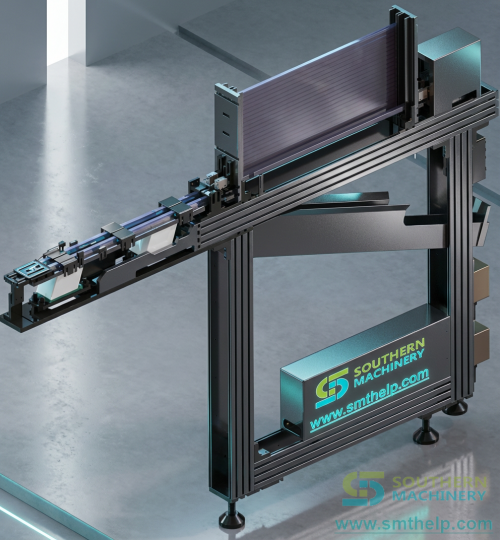
S-JVF02 Vibration Stick Feeder for JUKI RS-1 by Southern Machinery
Tube and stick packaged components are still common in real EMS production, especially for ICs and legacy multi-pin parts that are not always supplied on tape. The S-JVF02 Vibration Stick Feeder is designed for JUKI RS-1 placement lines where these parts need a stable, repeatable pickup point instead of slow manual handling.
Southern Machinery, founded in 2011 in Shenzhen, builds cost-effective SMT and THT automation equipment for global PCB assembly factories. For buyers planning a complete line, this feeder is not just an accessory. It is one small but important part of keeping component supply, placement, soldering, handling, and inspection flowing together.
What is this machine used for?
The S-JVF02 Vibration Stick Feeder is used to feed tube or stick packaged components into a JUKI RS-1 SMT placement machine. It advances components to a fixed pickup position so the placement head can pick parts consistently.
Typical component formats include DIP, SOIC, PLCC, and other multi-pin components supplied in tubes rather than tape or tray. The source document specifies a supported component size range from 3 x 3 mm to 30 x 10 mm, with final suitability depending on tube design, component geometry, and technical confirmation.
Product snapshot
| Item | Source document specification |
|---|---|
| Product | S-JVF02 Vibration Stick Feeder (RS-1) |
| Target machine | JUKI RS-1 |
| Input channels | 4 input channels |
| Power | 24V DC |
| Power consumption | 15W |
| Component package | Tube / stick packaged components |
| Component size range | 3 x 3 mm to 30 x 10 mm, subject to final confirmation |
The value is simple: instead of stopping operators to manually present low-volume or tube-packed parts, the feeder provides a controlled component supply method for the placement head.
Why stick feeding matters in EMS production
Many factories optimize tape feeders first because tape is the standard SMT format. The problem appears when the BOM includes tube-packed ICs or special components. If the feeder setup is unstable, the line loses time through missed pickups, manual intervention, and repeated adjustment.
A vibration stick feeder helps by moving components forward inside the tube and presenting them at a repeatable pickup point. For a high-mix EMS line, that can be the difference between a smooth changeover and a line that keeps waiting for one awkward component.
Typical applications
The S-JVF02 is a practical fit for factories using JUKI RS-1 placement equipment and handling components such as:
- Tube packaged ICs used in industrial controls, power electronics, and communication boards.
- DIP, SOIC, PLCC, or similar multi-pin parts when tape supply is not available.
- Legacy or low-volume parts that remain in tube packaging.
- Mixed SMT/THT products where some components need special feeder handling.
- EMS production lines that want to reduce manual component presentation at the mounter.
For example, a contract manufacturer building industrial controller boards may have most passives on tape but a few ICs supplied in sticks. A dedicated stick feeder keeps those parts inside the placement process instead of creating a manual side task.
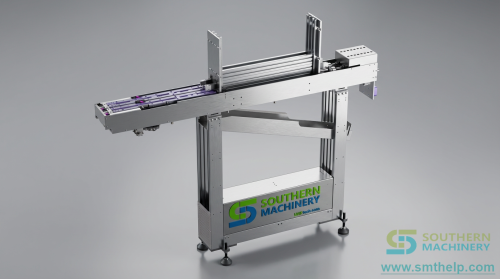
How it connects into a complete PCB assembly line
A feeder decision should be made together with the full line plan. Southern Machinery can support complete SMT and THT PCB assembly automation, including SMT line equipment, THT insertion, wave soldering, board handling, and optional inspection.
A typical line using the S-JVF02 may look like this:
- Magazine loader and PCB conveyor feed boards into the SMT line.
- Automatic stencil printer applies solder paste.
- SPI can be added if paste quality control is required.
- JUKI RS-1 places standard tape-fed parts plus tube-fed components through the S-JVF02.
- Reflow oven completes soldering based on the board profile.
- AOI checks post-reflow quality where required.
- Downstream THT insertion, wave soldering, selective soldering, testing, and unloading are matched to the product.
This is where Southern Machinery's value is strongest: the feeder is selected as part of the whole production flow, not as an isolated item.
Key selection parameters before ordering
Before final feeder matching, confirm these points:
- Mounter model: the source document specifies JUKI RS-1 compatibility. For other platforms, the interface must be checked.
- Component package: confirm tube dimensions, component orientation, and pickup surface.
- Component size: source range is 3 x 3 mm to 30 x 10 mm, but actual fit depends on the part and tube.
- Channel requirement: S-JVF02 provides 4 input channels; confirm how many part numbers need stick feeding.
- Electrical interface: source document lists 24V DC and 15W.
- Pickup coordinates: confirm the final pickup position with the placement program.
- Line objective: decide whether the goal is fewer manual stops, better changeover discipline, or stable low-volume part feeding.
ROI, quality, and capacity value
The ROI case should be stated honestly. A stick feeder does not magically increase total line CPH by itself. Its value comes from reducing manual interruption around tube-packed components and improving pickup repeatability for parts that are difficult to feed through standard tape feeders.
For EMS factories, the main benefits are:
- Less operator handling at the mounter for tube packaged parts.
- More stable pickup presentation for compatible components.
- Better changeover discipline because the feeder setup is defined.
- Lower risk of line waiting time caused by one non-tape component.
- Easier integration into a complete SMT/THT production plan.
The exact productivity gain depends on product mix, feeder count, operator practice, tube quality, and final machine configuration.
Why source from Southern Machinery?
Southern Machinery has been based in Shenzhen since 2011 and focuses on high-efficiency, cost-effective SMT and THT PCB assembly automation equipment. The company serves 237+ global customers and can support complete line planning across SMT, THT insertion, wave soldering, board handling, and inspection options.
For overseas buyers, that matters because feeder selection is rarely only about the feeder. You also need professional training, spare parts support, remote service, and the ability to match future product changes.
FAQ
Is S-JVF02 only for JUKI RS-1?
The selected source document specifies S-JVF02 for JUKI RS-1. If you need JUKI, Yamaha, FUJI, Panasonic, ASM, Mirae, or another platform, Southern Machinery should evaluate the machine interface before confirming a model.
What component package does it handle?
It is designed for tube or stick packaged components. The source document gives examples such as DIP, SOIC, PLCC, and similar multi-pin components.
What component size range is listed?
The source document lists 3 x 3 mm to 30 x 10 mm. This should be treated as a selection reference and confirmed against the actual component drawing, tube design, and pickup requirements.
How many channels does this feeder have?
The S-JVF02 model is listed with 4 input channels.
What power does it require?
The source document lists 24V DC input and 15W power consumption.
Can it be part of a full PCB assembly automation project?
Yes. Southern Machinery can integrate feeder selection with SMT placement, stencil printing, reflow, THT insertion, wave soldering, board handling, and inspection planning.
CTA: confirm your feeder fit before buying
If your JUKI RS-1 line still depends on manual handling for tube packaged parts, send Southern Machinery your component drawing, tube photo, RS-1 configuration, target output, and current bottleneck. We can check whether S-JVF02 is the right feeder and match it with the wider SMT/THT assembly line plan.
Comments