
S-JVF02 Vibration Stick Feeder for JUKI RS-1 by Southern Machinery
The S-JVF02 Vibration Stick Feeder helps EMS and PCBA factories feed stick or tube-packaged components on JUKI RS-1 placement lines with less manual handling and fewer line interruptions. Based on the local Southern Mach
Jul 2, 2026 · Updated Jul 2, 2026 · Southern Machinery
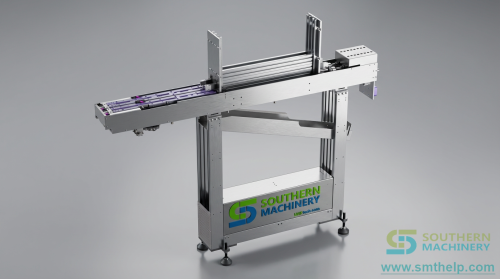
S-JVF02 Vibration Stick Feeder for JUKI RS-1 by Southern Machinery
Tube and stick-packaged components may seem like a minor line-side detail, but in a real EMS factory they often cause unstable feeding, repetitive operator handling, and avoidable pick-and-place interruptions.
The S-JVF02 Vibration Stick Feeder by Southern Machinery is designed to feed stick or tube-packaged components on JUKI RS-1 placement lines. According to the local Southern Machinery source page, the feeder offers 4 input channels, runs on 24V DC / 15W, and has a compact listed size of 365 x 66 x 125 mm with a 6.5 kg weight.
Southern Machinery was founded in Shenzhen, China in 2011 and serves over 237 global customers with SMT/THT PCB assembly automation equipment. Our work goes beyond a single accessory: we cover SMT, THT automation, wave soldering, board handling, inspection, spare parts, global service, and professional training.
What is this machine used for?
The S-JVF02 Vibration Stick Feeder feeds stick or tube-packaged components into a JUKI RS-1 SMT placement process with more stable line-side presentation.
In simple terms, it converts tube-loaded components into a repeatable feeding workflow. The operator loads tube or stick components into the feeder channels, and the vibration-based mechanism moves them steadily toward the pickup area for the placement machine.
This is helpful when the component is not supplied in standard SMT tape-and-reel form, but the factory still wants to keep the placement line running with less manual intervention.
Why tube and stick feeding matters in EMS production
Many EMS factories run high-mix products. One PCB may use standard reels for most passives and ICs, then require a few connectors, terminals, LEDs, or special parts supplied in sticks or tubes.
If those parts are handled manually or with an unstable feeding setup, the placement line can lose time through:
- Stop-and-reload events during production
- Variation in how operators handle components
- Pick instability when the component is not presented consistently
- More attention needed from operators during high-mix changeovers
- Lower confidence when scaling from prototype builds to repeat production
The source page positions the S-JVF02 as a vibration-based feeder for EMS/PCBA environments where stable feeding and reduced operator intervention support uptime.
Source-confirmed specifications
The following details come from the selected local source document. Final configuration should still be confirmed against your actual component tube, machine interface, and production process.
| Item | Source-confirmed value |
|---|---|
| Model | S-JVF02 Vibration Stick Feeder (RS-1) |
| Compatible platform | JUKI RS-1 |
| Input channels | 4 input channels |
| Tube component range | 33 mm - 3010 mm (as written in the source page) |
| Stick width | 66 mm |
| Overall size | 365 x 66 x 125 mm |
| Voltage | 24V DC |
| Power | 15W |
| Weight | 6.5 kg |
The tube component range should be checked during quotation because the local source text may need engineering confirmation for your specific tube format and component body.
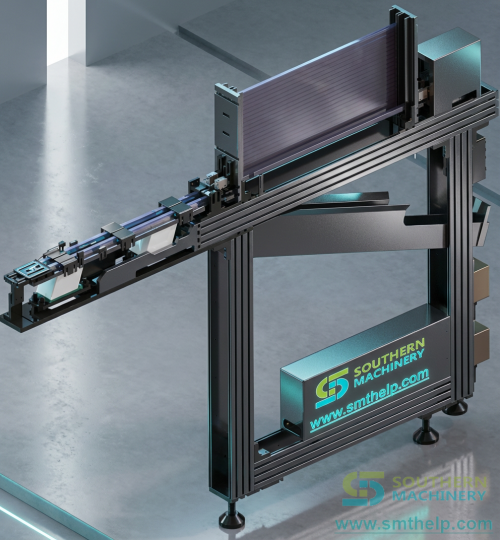
How it connects into a complete PCB assembly line
A feeder only creates value when it supports the full line flow. For a JUKI RS-1 based SMT line, a practical setup may look like this:
- PCB loading and handling: magazine loader, conveyor, and line-side board handling.
- Solder paste printing: automatic or semi-automatic stencil printer depending on volume.
- Placement: The JUKI RS-1 uses the S-JVF02 for stick or tube-packaged components while standard feeders handle tape-and-reel parts.
- Reflow soldering: configured by board size, thermal mass, and production output.
- Inspection: post-reflow AOI, and SPI if solder paste control is critical.
- Downstream THT or final assembly: odd-form insertion, wave soldering, selective soldering, ICT/FCT, and final handling as needed.
Southern Machinery can help review the feeder as part of a complete SMT/THT solution, not just as a single accessory. That matters because feeder stability, placement process, inspection, and board handling must all fit the same takt time.
Typical application scenarios
The S-JVF02 is most useful when your line already uses or plans to use JUKI RS-1 and you have components supplied in tubes or sticks.
Common scenarios include:
- High-mix EMS lines with frequent product changeovers
- Industrial control or consumer electronics boards using tube-packaged components
- Automotive or medical electronics production where line discipline and repeatability matter
- PCBA factories trying to reduce operator attention around special component feeding
- Engineering teams that need a defined feeder option before scaling a tube-component process
If your volume is very low or the tube component changes every few hours, a simpler manual setup may still be acceptable. If the component appears repeatedly across stable builds, a dedicated feeder is usually easier to justify.
Key selection parameters for buyers
Before recommending the final feeder configuration, Southern Machinery should confirm:
- Exact placement machine model and interface requirements
- Component drawing, photos, tube dimensions, and sample tubes
- Tube length, stick width, component orientation, and pickup position
- Required number of channels and expected reload frequency
- Available mechanical space around the placement machine
- Electrical interface and connector expectations
- Target boards per hour, shifts per day, and changeover frequency
For other platforms, the source page specifies the S-JVF02 for JUKI RS-1. If you need JUKI, Yamaha, FUJI, Panasonic, ASM, Mirae, or another platform, send the exact machine model and interface details for evaluation instead of assuming compatibility.
ROI, quality, and capacity value
The value of a stick feeder is usually not about a headline CPH number. The better question is: how much time does your line lose because operators must babysit tube components?
The S-JVF02 can support ROI in several practical ways:
- Less operator intervention: fewer repeated manual feeding actions during production
- More stable uptime: better feeding discipline around tube/stick components
- Cleaner changeover planning: 4 input channels help organize component loading for suitable applications
- Better line balance: the placement process becomes less dependent on ad hoc manual support
- Scalable production: the same feeding concept can be evaluated before increasing volume
Real ROI depends on your component mix, local labor cost, line stop frequency, shift pattern, and placement program. Southern Machinery should calculate this case by case after reviewing your current process.
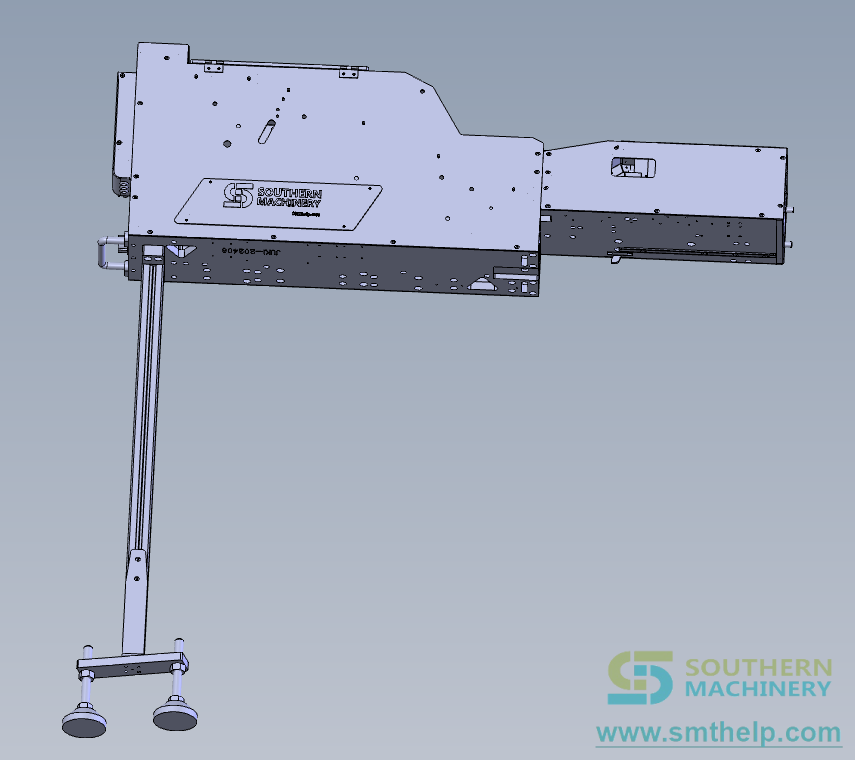
Why choose Southern Machinery
Southern Machinery is a Shenzhen-based manufacturer founded in 2011, focused on high-efficiency and cost-effective PCB assembly automation equipment.
For buyers, the key benefit is full-line support:
- SMT line equipment and feeder integration
- THT insertion and odd-form automation
- Wave soldering and selective soldering
- Board handling conveyors, loaders, unloaders, buffers, and inverters
- Inspection and traceability options
- Spare parts, training, remote support, and overseas service guidance
This reduces integration risk. A feeder decision should not be isolated from placement accuracy, line balance, board handling, and downstream soldering or inspection.
FAQ
Is the S-JVF02 only for JUKI RS-1?
The selected source page specifies the S-JVF02 as compatible with JUKI RS-1. For other machine platforms, Southern Machinery should review the exact machine model, mounting, electrical interface, and pickup geometry before confirming feasibility.
What components can it feed?
The source page describes stick or tube-packaged components. Final suitability depends on component body size, tube format, orientation, pickup surface, and how the RS-1 program will pick the part.
Does it replace all manual special-part feeding?
No. It targets stick or tube component feeding for a compatible placement process. Other odd-form THT components, reel terminals, radial parts, axial parts, or bulk parts may need different feeders or THT insertion equipment.
What information should I send for a quotation?
Send your placement machine model, component drawing, tube photos, tube dimensions, target output, and a description of your current feeding issue. Samples are recommended before final confirmation.
Can Southern Machinery support the surrounding line?
Yes. Southern Machinery can help with SMT line planning, feeder matching, board handling, THT automation, wave soldering, inspection, spare parts, training, and service support.
Are the listed specifications guaranteed for every application?
No. They are source-page specifications for this product page. Final performance and compatibility should be confirmed during engineering review, especially tube range, connector/interface details, and pickup behavior.
CTA: review your stick feeder requirement
If tube or stick components are slowing down your JUKI RS-1 line, send Southern Machinery your machine model, component drawing, tube dimensions, target output, and a short video of the current feeding process.
Our sales engineers can confirm whether the S-JVF02 is the right feeder, whether a customized feeder is needed, and how the feeder should connect into your complete SMT/THT PCB assembly line.
Comments