
SMT AGV Robots by Southern Machinery: Automate Material Transport in Smart EMS Factories
Automated Guided Vehicles (AGVs) eliminate manual material movement across SMT lines, freeing operators from repetitive transport and reducing handling damage to PCBs, reels, and fixtures. Southern Machinery's AGV platform — including the SFY02 AGV with WiFi API connectivity — moves electronic components, printed circuit boards, and production materials between storage, kitting, and assembly stations. With advanced sensors, cameras, and control software, these robots dock with AGV-compatible reel racks and smart storage systems to create a continuous, traceable material flow. Founded in 2011 in Shenzhen, Southern Machinery supports 237+ global customers with full-line SMT/THT automation and local service.
Aug 15, 2026 · Updated Aug 15, 2026 · Southern Machinery
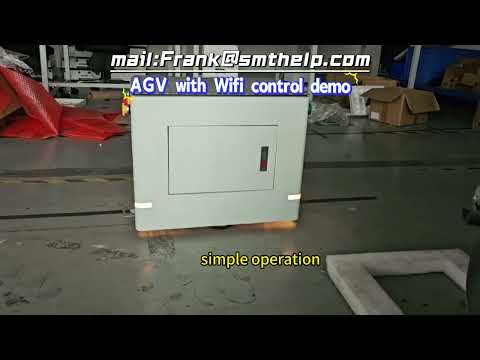
Automated Guided Vehicles (AGVs) are transforming how PCB assembly factories move materials between storage, kitting, and production stations. Instead of relying on operators to push carts of SMT reels, stencils, and finished boards across the floor, AGVs transport these items autonomously — reducing manual handling, cutting transit time, and improving material traceability. Southern Machinery's AGV platform, including the SFY02 AGV with WiFi API connectivity, brings this automation to smart EMS factories of all sizes.
What Is an AGV Used For in SMT Assembly?
Q: What exactly does an AGV do on an SMT line?
An AGV (Automated Guided Vehicle) is a self-driving mobile robot that transports materials between fixed points on the production floor. In an SMT/PCB assembly environment, it typically moves:
- SMT component reels and trays between the warehouse, kitting area, and Pick and Place machines
- Printed circuit boards (PCBs) and magazines between Stencil Printing, placement, Reflow Oven, and inspection stations
- Wave Soldering pallets and fixtures to and from the soldering line
- Finished PCBA panels from final assembly to packaging or test
Q: How does the AGV know where to go?
Modern AGVs combine sensors, cameras, and control software to navigate. Some follow magnetic tape or QR markers; others use SLAM-based mapping to move freely. The SFY02 AGV adds a WiFi API, allowing the vehicle to be dispatched and monitored through the factory's MES or warehouse management software — so transport tasks can be triggered automatically when a Pick and Place line signals a reel change.
Typical Application Scenarios
Southern Machinery AGVs support the industries it serves, including:
- EMS contract manufacturing — high-mix, low-volume lines where frequent reel changes and material moves create constant transport demand
- LED lighting and display assembly — moving large LED panels and MCPCB boards that are heavy or awkward to handle manually
- Automotive electronics — traceable material flow between kitting and SMT lines, supporting strict lot control and documentation
- Industrial control and power supply — steady, repeatable transport of boards and fixtures through Wave Soldering and test
How It Integrates Into a Complete PCB Assembly Line
An AGV is not a standalone machine — it is the connective tissue of a smart factory. Southern Machinery positions AGVs alongside its full-line SMT and THT equipment:
- Storage & kitting — the AGV docks with AGV-compatible reel racks and smart storage systems to retrieve the exact reels for the next job
- Line feeding — the AGV delivers component reels, stencils, and magazines to the correct Pick and Place or insertion station
- Inter-process transport — boards move between Stencil Printing, placement, Reflow Oven, SPI/AOI inspection, and Wave Soldering without manual cart pushing
- Outfeed & finished goods — completed PCBA panels are carried to test, packaging, or warehouse zones
Because the AGV communicates through the factory network (the SFY02 exposes a WiFi API), it can be integrated with MES, ERP, and warehouse systems for end-to-end material traceability.
Key Selection Parameters
When evaluating an AGV for your SMT line, confirm these parameters with the supplier:
- Payload capacity and platform size — must accommodate your largest reel rack, magazine, or pallet
- Navigation technology — magnetic tape, QR-code, or SLAM mapping; choose based on floor layout and whether routes change frequently
- Docking accuracy — repeatable positioning tolerance for aligning with racks and conveyors
- Connectivity & API — whether the AGV exposes a WiFi/Ethernet API for MES/WMS dispatch and monitoring
- Battery and charging — runtime per charge and whether opportunity charging is supported
- Safety features — obstacle detection, emergency stop, and speed control for operator areas
- Fleet scalability — the ability to add vehicles and coordinate them through a single control system
Always request a live demonstration with your actual payload and floor layout before committing.
ROI, Quality & Throughput Considerations
The business case for an AGV is built on labor, quality, and traceability:
- Labor redeployment — operators spend less time walking carts and more time on value-adding work such as changeovers and inspection
- Reduced handling damage — fewer manual transfers mean fewer dropped reels, scratched boards, and mis-loaded Feeders
- Better traceability — automated moves can be logged and linked to work orders, supporting lot control and audit requirements
- Consistent flow — materials arrive on schedule, reducing line-starvation downtime
When assessing ROI, calculate current manual-transport labor hours per shift, the cost of handling-related defects, and the value of real-time material visibility. For many EMS operations, the payback comes from a combination of all three rather than any single factor.
FAQ
Can an AGV work alongside people on a busy SMT floor?
Yes. Modern AGVs include obstacle-detection sensors, emergency stops, and controlled speeds so they operate safely around operators and static equipment.
Do I need to modify my floor to use an AGV?
It depends on the navigation method. Magnetic-tape guidance requires installed tape; SLAM or QR-based navigation works on existing floors with minimal modification.
Can the AGV dock with my existing reel racks and storage?
Southern Machinery offers AGV-compatible reel racks and smart storage systems. For third-party racks, verify the docking interface and payload dimensions with the supplier.
How does the AGV connect to my MES or ERP?
The SFY02 AGV exposes a WiFi API, enabling dispatch and status monitoring through factory software. Confirm the specific integration method and protocol for your systems.
Is an AGV cost-effective for a single line?
It depends on transport volume. High-mix, low-volume EMS lines and multi-line factories see the fastest payback; single low-volume lines may be better served by manual carts initially.
Contact Southern Machinery
Southern Machinery (founded 2011, Shenzhen, China) designs and manufactures full-line SMT and THT PCB assembly automation — from insertion machines and Wave Soldering to board handling, storage, and AGV material-flow robots, serving 237+ global customers.
What is your current material-transport method, and how many operator hours per shift are spent moving reels and boards between stations? What would eliminating that walking time be worth to your throughput?
Contact Southern Machinery today:
- Email: jasonwu@smthelp.com
- Phone / WhatsApp: +86 13602562576
- Website: https://www.smthelp.com
- File Portal: https://file.autoinsertion.com
- Image Library: https://ph.smthelp.com
Watch in Action: SFY02 AGV — WiFi API Features
Comments