
S7900 Odd Form Insertion Machine for THT Automation by Southern Machinery
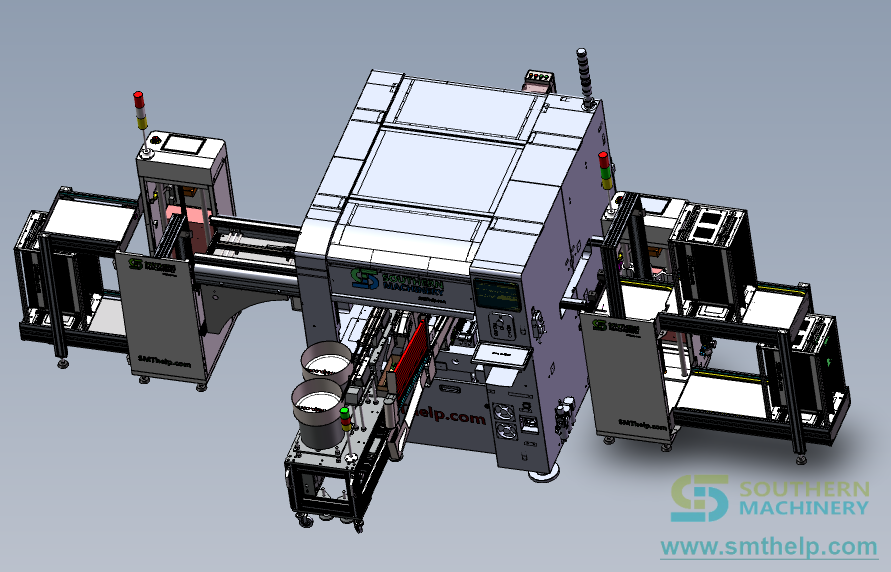
The S7900 Odd Form Insertion Machine from Southern Machinery helps EMS and PCB assembly teams automate tricky through-hole components that are still tough to insert by hand. Designed for odd-form parts supplied via tape,
Jul 3, 2026 · Updated Jul 3, 2026 · Southern Machinery
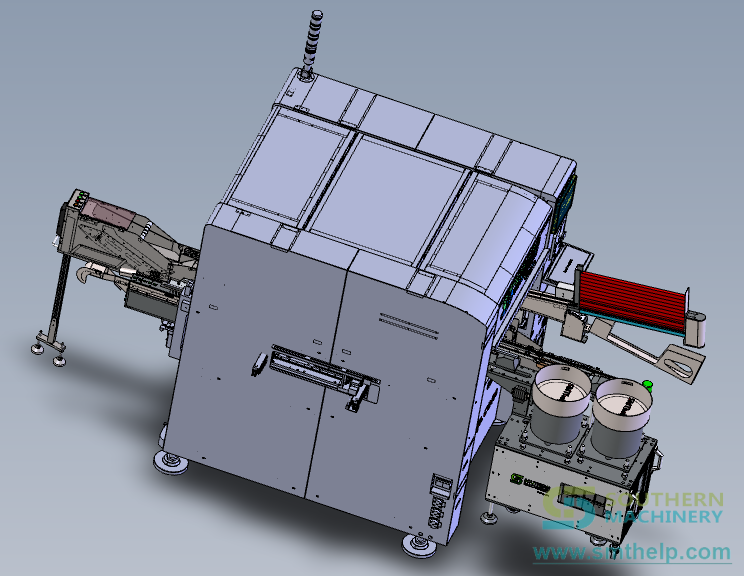
S7900 Odd Form Insertion Machine for THT Automation by Southern Machinery
Manual insertion of odd-form through-hole components is still one of the slowest steps in many EMS factories. Connectors, terminals, large parts, and mixed package types often require careful orientation, controlled insertion force, and stable PCB positioning. The S7900 Odd Form Insertion Machine by Southern Machinery is designed to automate these challenging THT insertion tasks and help manufacturers move from operator-dependent assembly toward a more repeatable PCB assembly process.
Southern Machinery, founded in Shenzhen in 2011, specializes in high-efficiency and cost-effective SMT/THT PCB assembly automation equipment. The S7900 fits into that strategy as part of a complete solution covering SMT lines, THT insertion, wave soldering, board handling, inspection options, global service, spare parts support, and professional training.
What is this machine used for?
The S7900 automates the insertion of odd-form through-hole components that are difficult to handle with standard radial or axial insertion machines. In practical PCB assembly, this includes components supplied from tape, tube, tray, or bowl feeding systems, depending on the component geometry and final engineering confirmation.
Instead of relying only on manual operators to pick, orient, and insert each component, the S7900 combines automated handling, vision support, programmable insertion logic, and optional lead clinching. The goal is simple: reduce manual variability and make odd-form THT assembly easier to scale.
Why odd-form insertion matters in modern EMS production
In a mixed SMT/THT factory, the SMT side may already be highly automated: loader, stencil printer, pick-and-place, reflow oven, AOI, and board handling. The bottleneck often appears after SMT, when large through-hole components must be inserted before wave soldering or selective soldering.
For example, a power electronics board may move smoothly through SMT but then slow down because connectors and special components still need manual insertion. This creates uneven line balance, operator fatigue, and inconsistent component seating. An odd-form insertion machine helps close that gap.
Key capabilities from the source document
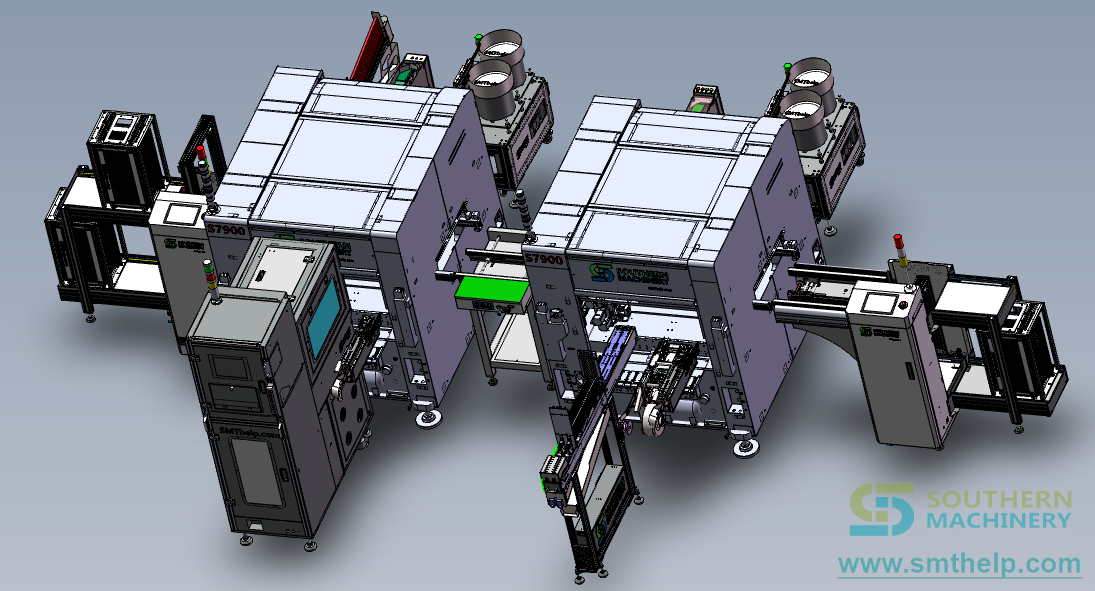
The selected source page describes the S7900 as an odd-form insertion machine for complex through-hole components. It highlights the following capabilities:
- High-speed precision concept: the source page lists placement accuracy of +/-0.06 mm and speed up to 4,700 CPH. These values should be treated as configuration-dependent and subject to final technical confirmation against your PCB, component, feeder, and insertion process.
- Flexible feeding: designed to handle components from tape, tube, tray, and bowl feeders, depending on the component and tooling plan.
- Vision support: the page describes intelligent vision, barcode recognition, and auto-learning functions to support placement setup and process control.
- Optional clinching: optional lead bending/clinching helps secure inserted components and reduces floating before soldering.
- Custom tooling: grippers, nozzles, and feeders can be adapted for different odd-form component shapes.
Typical application scenarios
The S7900 is most relevant when a factory has enough odd-form THT volume or quality pressure to justify automation. Typical use cases include:
- EMS factories building industrial control boards with mixed connectors and special THT parts.
- Automotive electronics where repeatable insertion quality and traceable process control matter.
- Power supply and energy electronics with large or mechanically sensitive components.
- Medical and high-reliability products where manual variation can become a quality risk.
- High-mix production where programmable insertion and flexible feeding reduce dependence on operator skill.
For very low volume prototypes, manual insertion may still be more economical. For medium or high-volume production, especially where the same component family repeats across many boards, the S7900 can be a strong automation candidate.
How the S7900 fits into a complete PCB assembly line
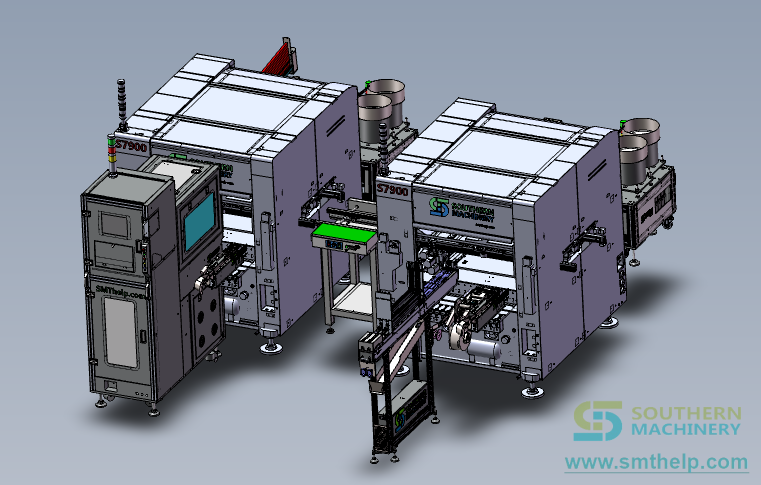
A practical line layout depends on the product, but a typical flow might look like this:
- SMT section: magazine loader, stencil printer, SPI if needed, pick-and-place, reflow oven, and post-reflow AOI.
- Board handling: conveyors, buffers, or PCB transfer modules to connect SMT output with THT automation.
- THT insertion section: radial insertion, axial insertion, or the S7900 odd-form insertion machine depending on component type.
- Soldering section: wave soldering or selective soldering, selected according to PCB layout, thermal mass, and solder access.
- Inspection and test: THT AOI, visual inspection, ICT/FCT, barcode tracking, or MES data collection as required.
Southern Machinery can support this as a single integrated project rather than isolated machine selection. That matters because odd-form insertion only performs well when feeding, tooling, PCB support, soldering, and board handling are planned together.
Selection checklist for buyers
Before choosing an S7900 configuration, prepare these details:
- PCB size range, thickness, panelization, and component side.
- List of odd-form components, including drawings, photos, pitch, body size, pin geometry, and insertion depth.
- Component supply format: tape, tube, tray, bowl, or bulk.
- Required output target in boards per hour, boards per shift, or monthly production.
- Whether lead clinching/bending is required before soldering.
- Current bottleneck: manual labor, insertion quality, missing parts, wrong orientation, or slow changeover.
- Required quality level, inspection method, and traceability needs.
- Downstream process: wave soldering, selective soldering, manual soldering, or mixed process.
With these details, Southern Machinery can match the machine, feeder, tooling, PCB support, and board handling configuration more accurately.
ROI, quality, and capacity value
The source page mentions replacing manual labor and improving ROI, including example labor-saving figures. In a real project, those numbers must be calculated from your local labor cost, component count per board, cycle time, working shifts, yield loss, and maintenance assumptions.
The stronger business case usually comes from a combination of benefits:
- Fewer operators assigned to repetitive insertion work.
- More consistent component seating before soldering.
- Lower dependence on individual operator skill.
- Better line balance between SMT and THT sections.
- More stable output when product volume increases.
- Easier process standardization across shifts.
For a factory running only small trial batches, a fully automated odd-form cell may be too much. For a factory repeating connector-heavy products every month, the S7900 can be a serious upgrade path.
FAQ
Can the S7900 handle every odd-form component?
No. Odd-form components vary widely. Feasibility depends on component shape, pin structure, supply method, PCB clearance, and insertion force. Southern Machinery needs component samples or drawings before confirming tooling.
Does it replace radial or axial insertion machines?
Not always. Radial and axial machines are better for their standard component formats. The S7900 is for odd-form components that need flexible handling, custom feeders, or special grippers.
Should I use wave soldering or selective soldering after S7900 insertion?
It depends on PCB layout, solder access, thermal mass, and component sensitivity. Many THT lines use wave soldering for higher throughput. Selective soldering is useful when solder areas are restricted or sensitive parts are nearby.
Are the speed and accuracy numbers fixed for every project?
No. The source document lists example values, but final performance depends on configuration, component type, feeder method, PCB support, insertion path, and process validation.
Can this be connected to an existing SMT/THT line?
Usually yes, but the mechanical interface, board transfer height, PCB flow direction, buffers, barcode logic, and safety layout should be reviewed before final layout approval.
What information should I send for a quotation?
Send PCB drawings, component photos or datasheets, supply package format, target output, current process flow, and whether you need wave soldering, selective soldering, AOI, or MES traceability.
CTA: plan your odd-form THT automation line
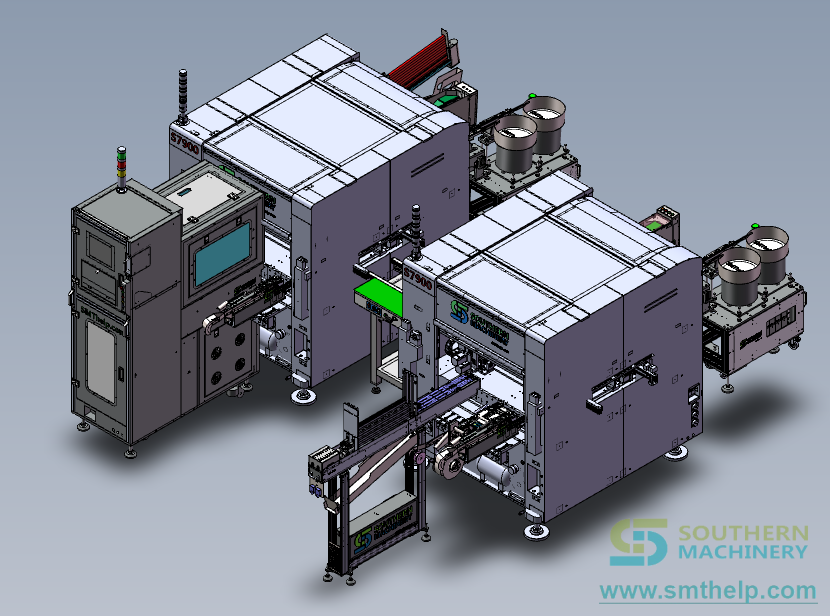
If odd-form insertion is slowing your PCB assembly line, share your PCB size, component list, supply format, target output, and current bottleneck. Southern Machinery can review whether the S7900 is the right fit and propose a complete SMT/THT line plan covering insertion, board handling, soldering, inspection, spare parts, training, and global support.
Comments