
S7900 Odd Form Insertion Machine: Automating THT Assembly for EMS Factories
Manual odd-form THT insertion can quietly limit EMS factory output, labor efficiency, and soldering consistency. The Southern Machinery S7900 odd form insertion machine is designed for factories that need to automate con
Jul 7, 2026 · Updated Jul 7, 2026 · Southern Machinery
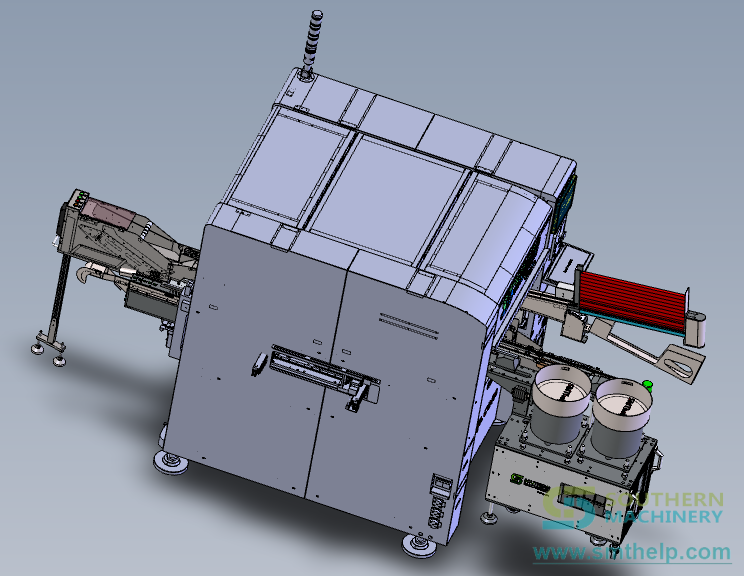
S7900 Odd Form Insertion Machine: Automating THT Assembly for EMS Factories
Manual odd-form THT insertion is often one of the quiet bottlenecks inside an EMS factory. Operators may handle connectors, terminals, relays, large capacitors, coils, or other irregular components one by one. The work looks simple, but it affects cost, throughput, and quality every shift.
The Southern Machinery S7900 odd form insertion machine is designed to help factories automate this stage of THT production. Instead of treating odd-form insertion as a purely manual process, the S7900 gives manufacturers a structured way to improve repeatability, reduce labor dependence, and connect THT assembly more cleanly with downstream soldering.
Southern Machinery is a Shenzhen-based manufacturer founded in 2011. We focus on high-efficiency, cost-effective SMT and THT PCB assembly automation equipment, including SMT lines, THT insertion, wave soldering, board handling, inspection options, spare parts support, professional training, and global service for 237+ customers.
What is this machine used for?
The S7900 is used to automatically insert odd-form through-hole components into PCBs. In practical EMS production, this usually means components that are difficult to place with a standard SMT mounter or a conventional axial/radial insertion machine.
Typical examples include non-standard THT components supplied from tape, tube, tray, or bulk feeders. The source brief positions the S7900 for factories that need to solve manual odd-form insertion challenges while maintaining cost, quality, and throughput.
In simple terms: if your operators are manually inserting irregular THT parts before wave soldering or selective soldering, the S7900 is the type of machine to evaluate.
The production problem it solves
Manual odd-form insertion creates several common factory problems:
- Labor cost rises as volume grows.
- Output depends heavily on operator speed and training.
- Component position can vary before soldering.
- Changeover and line balancing become harder.
- Quality control becomes more reactive than preventive.
The source document describes these as core EMS challenges around cost, quality, and throughput. That is exactly where odd-form insertion automation has value. It does not only replace manual work; it makes the upstream THT process more stable before the PCB reaches soldering.
Key S7900 capabilities from the source brief
Based on the selected local source document, the S7900 is presented with these key capabilities:
- Designed for odd-form THT component insertion.
- Supports a wide range of components from tape, tube, tray, or bulk feeders.
- Uses vision-assisted placement for quality control.
- Offers optional lead clinching to help keep components stable before soldering.
- Supports offline programming to reduce changeover pressure.
- Includes auto-correction features to help maintain placement consistency.
- Can integrate into existing production lines with installation, training, and worldwide support.
The source brief also lists example performance and business figures: placement accuracy of ±0.06 mm, speed up to 4,700 CPH, replacement of 5-10 manual workers, estimated annual labor savings of $60,000, and ROI in less than 2 years. These figures should be treated as source examples only. Final results depend on component geometry, PCB design, feeder configuration, working hours, labor cost, soldering process, and acceptance testing.
Typical applications
The S7900 is suitable for factories where odd-form THT components are part of regular production rather than occasional rework. Typical users include EMS, ODM, automotive electronics, industrial controls, power electronics, and other manufacturers that need higher consistency before soldering.
Common application scenarios include:
- Manual THT insertion stations are limiting line output.
- Operators insert irregular components before wave soldering.
- Component stability before soldering is a quality concern.
- Product mix requires different feeder types.
- The factory wants to reduce labor dependence without losing flexibility.
- Existing SMT/THT lines need a stronger automation link between placement and soldering.
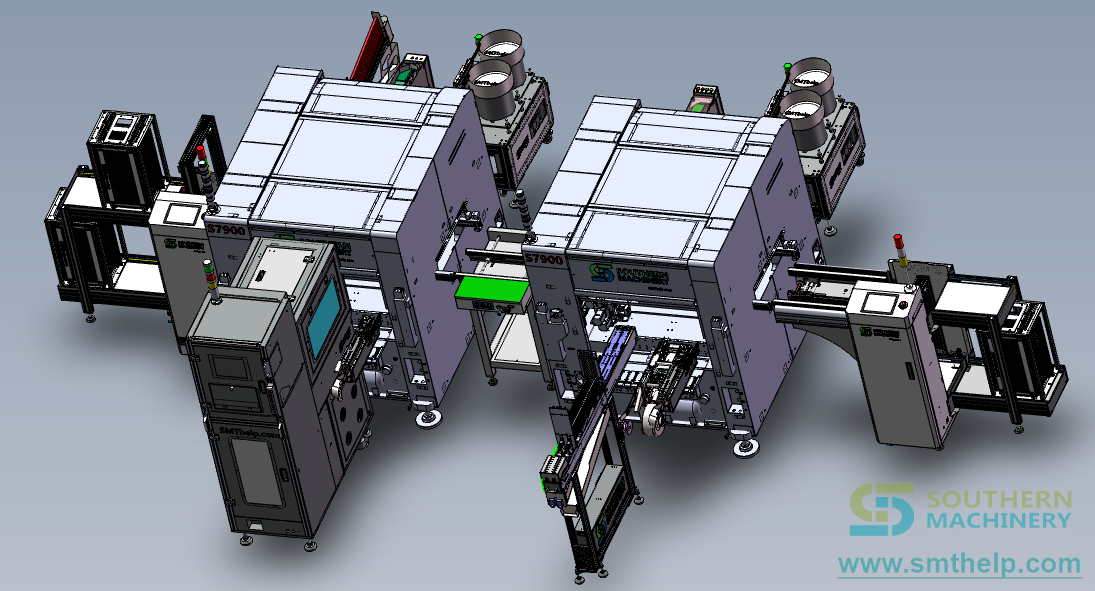
How it fits into a complete PCB assembly line
For most buyers, the S7900 should not be considered as an isolated machine. It works best when the complete process is reviewed from SMT placement through THT soldering and inspection.
A practical line structure can look like this:
- SMT section: loader, stencil printer, SPI if needed, pick-and-place, reflow oven, AOI.
- THT preparation: buffer, barcode scan if required, manual assist or automatic insertion depending on part type.
- Odd-form insertion: S7900 for non-standard through-hole components from suitable feeders.
- Soldering: wave soldering or selective soldering depending on PCB design and component layout.
- Inspection and test: THT AOI, visual inspection, ICT/FCT, and data collection if required.
- Board handling: conveyors, buffers, loaders, unloaders, PCB inverters, and NG/OK sorting as needed.
Southern Machinery can match the S7900 with board handling, wave soldering, selective soldering, inspection, and other SMT/THT equipment so the line works as a complete production system.
Key selection parameters before buying
Before selecting a final S7900 configuration, engineering and purchasing teams should confirm these details:
- PCB size range, panelization, thickness, and board support method.
- Component list for all odd-form THT parts.
- Feeding method required for each component: tape, tube, tray, or bulk.
- Component body size, pin shape, lead pitch, polarity, and insertion force.
- Required placement accuracy and acceptable defect level.
- Whether lead clinching is needed before soldering.
- Target output per shift and working hours per day.
- Changeover frequency and offline programming requirements.
- Existing soldering process: wave soldering or selective soldering.
- Need for barcode scanning, traceability, or MES connection.
This is where a technical review matters. A low-cost machine choice can become expensive if the feeder concept, PCB support, or downstream soldering process is not checked early.
ROI, quality, and capacity value
The strongest business case for the S7900 is not one single number. It is the combined effect of labor reduction, fewer manual variations, faster line balancing, and more predictable output.
The source document gives an example that one S7900 may replace 5-10 manual workers and save an estimated $60,000 annually in labor cost, with ROI in less than 2 years. Treat this as an example scenario, not a fixed guarantee. The real ROI should be calculated from your labor cost, product mix, number of shifts, feeder configuration, utilization, and final cycle time.
For quality, the source brief highlights ±0.06 mm placement accuracy, AI-powered vision, auto-correction, and optional lead clinching. In practice, these features are valuable because they help keep the component stable and correctly positioned before soldering. That can reduce rework pressure and make downstream inspection more predictable.
For capacity, the source brief lists speeds up to 4,700 CPH. Final usable output depends on the actual component mix, feeder layout, PCB handling time, inspection requirements, and changeover frequency.
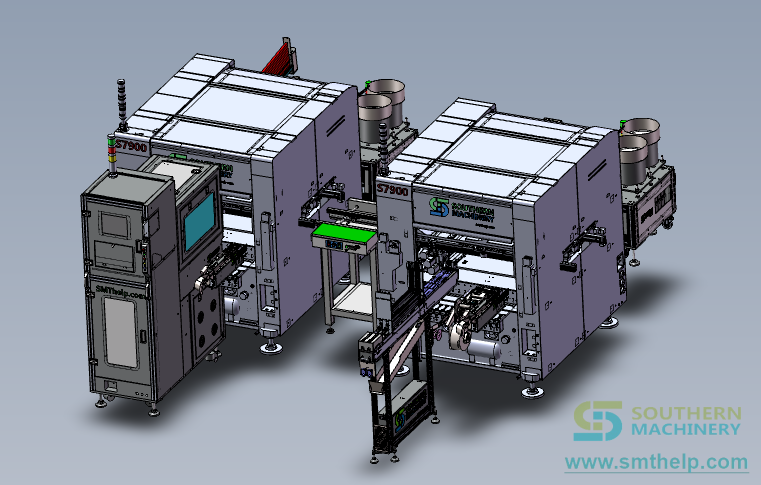
Why Southern Machinery
Southern Machinery builds complete PCB assembly automation solutions, not only standalone machines. For an S7900 project, we can review how the odd-form insertion station connects with your SMT line, manual THT work, wave soldering, selective soldering, conveyors, buffers, inspection, and training plan.
That matters because odd-form insertion is rarely a one-machine decision. The feeder method, component stability, board handling, and soldering process all affect the final result.
Our role is to help buyers choose a cost-effective configuration that solves the real bottleneck without overbuilding the line.
FAQ
1. Is the S7900 only for one type of component?
No. The source brief describes the S7900 as suitable for a wide range of components supplied from tape, tube, tray, or bulk feeders. The final feasibility depends on the actual component drawing, packaging, pin design, and required feeder method.
2. Can it replace manual odd-form insertion completely?
It can reduce or replace manual insertion for suitable components, but this should be confirmed part by part. Some unusual parts may still need manual assist or a custom feeder/nozzle solution.
3. Should I use wave soldering or selective soldering after insertion?
That depends on the PCB layout, component thermal sensitivity, soldering keep-out areas, and production mix. Southern Machinery can configure the S7900 with wave soldering or selective soldering as part of a complete THT line review.
4. Are the ROI and labor-saving numbers guaranteed?
No. The source document gives example values such as 5-10 workers replaced, estimated $60,000 annual labor saving, and ROI in less than 2 years. These must be recalculated for your factory conditions and confirmed during technical evaluation.
5. What information is needed for a quotation?
Please prepare PCB size, product type, monthly or shift output, odd-form component photos/drawings, packaging method, soldering process, current manual insertion headcount, and target automation level.
6. Can the S7900 connect with an existing production line?
Yes, the source brief states that it can integrate into existing lines. The actual layout depends on board handling direction, conveyor height, upstream/downstream equipment, and whether traceability is required.
CTA: send your component list for a technical review
If manual odd-form THT insertion is becoming your bottleneck, send Southern Machinery your PCB size, component photos, feeder packaging, and target output. We can review whether the S7900 odd form insertion machine is the right fit and suggest a complete SMT/THT line configuration with board handling, soldering, inspection, training, and spare parts support.
Comments