
S380A Visual PCB Separator Router: Stress-Controlled Depaneling by Southern Machinery
For EMS factories producing compact, high-value PCB assemblies, depaneling is often a hidden quality risk. The S380A Visual PCB Separator Router from Southern Machinery replaces high-stress manual breaking or basic V-cut
Jul 4, 2026 · Updated Jul 4, 2026 · Southern Machinery
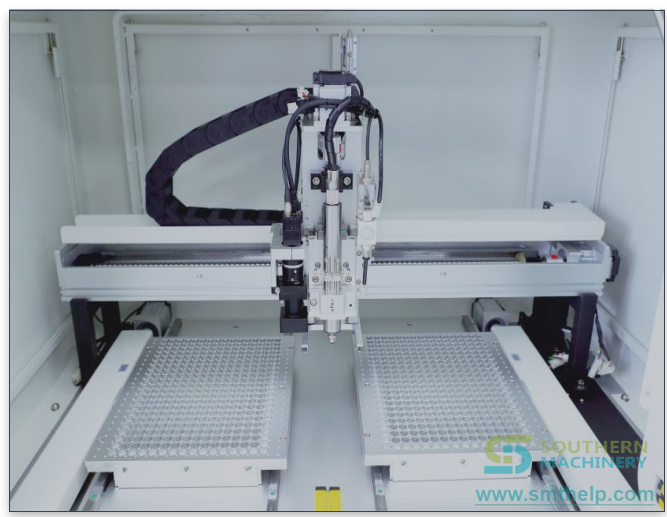
S380A Visual PCB Separator Router: Stress-Controlled Depaneling by Southern Machinery
PCB depaneling looks simple until it starts creating hidden defects. For EMS, ODM, automotive electronics, medical electronics, and industrial control factories, a poor separation process can introduce solder joint stress, component damage, inconsistent output, and extra inspection work at the end of an otherwise stable SMT or mixed-technology line.
The S380A Visual PCB Separator Router by Southern Machinery is designed for factories that need a more controlled way to separate complex PCB panels. Based on the source document, the solution focuses on vision-guided routing, flexible path programming, high-speed spindle cutting, dual Y-axis workflow, and practical ROI analysis for factories moving beyond manual breaking or traditional V-cut limits.
Southern Machinery was founded in Shenzhen, China in 2011 and focuses on high-efficiency, cost-effective SMT/THT PCB assembly automation equipment. For customers planning a full production line, the depaneling station can be integrated with SMT, THT insertion, wave soldering, board handling, inspection, spare parts support, and professional training as part of a complete factory solution.
What is this machine used for?
The S380A Visual PCB Separator Router separates assembled PCB panels into individual boards with lower mechanical stress than manual breaking or basic V-cut separation.
It is especially useful when the PCB is thin, densely populated, non-rectangular, close to sensitive components, or used in quality-sensitive applications. Instead of relying on bending force, the router cuts the programmed path with a milling bit, reducing stress on solder joints and nearby components.
Typical use cases include:
- SMT boards with components placed close to the panel break line
- Irregular PCB shapes such as arcs, circles, L-shapes, or stamp-hole layouts
- Automotive sensor boards and other high-reliability assemblies
- Medical, industrial control, and high-density electronics where hidden cracking is costly
- EMS factories that need repeatable depaneling across multiple product models
Why depaneling becomes a bottleneck
The source page highlights three common factory pain points.
First, manual hand-breaking and older separation methods can introduce mechanical stress. That stress may not be immediately visible, but it can later show up as solder joint cracks, component damage, or field reliability problems.
Second, manual depaneling depends heavily on operator skill. As labor costs rise, this makes the process harder to scale and standardize across shifts.
Third, complex boards are becoming more common. When customers bring non-rectangular PCB shapes, dense placement, or strict quality audit requirements, a basic separation process may no longer be sufficient.
Core capabilities from the source document
The source file describes the S380A as a fully automated, vision-guided routing system with several key capabilities.
Vision-guided routing and flexible cut paths
A CCD visual programming system supports whole-board visual programming. Instead of treating every new PCB as a difficult G-code task, the operator can define the cut path visually on screen. This is important for high-mix EMS production because setup speed matters when product models change frequently.
The source also mentions automatic tool height correction and broken tool detection. These functions help protect process consistency and reduce avoidable downtime.
High-speed spindle and servo-driven motion
The source document lists a high-speed 60,000 RPM spindle, Panasonic A6 servo drives, cutting accuracy of ±0.02 mm, and repeat accuracy of ±0.01 mm. These figures come from the selected local document and should be confirmed against the final machine configuration, fixture, PCB material, routing bit, and official quotation before using them in a purchase specification.
For buyers, the real question is not just the number. The practical question is whether the machine can hold the required cutting path while avoiding sensitive components, copper areas, and nearby mechanical structures.
Dual Y-axis workflow
The source describes a dual Y-axis table configuration. In practical terms, one table can be cutting while the other is being loaded or unloaded. This helps reduce spindle idle time and supports a smoother production rhythm compared with a single-table workflow.
The final throughput depends on panel size, routing path length, bit diameter, fixture design, operator loading speed, and quality requirements.
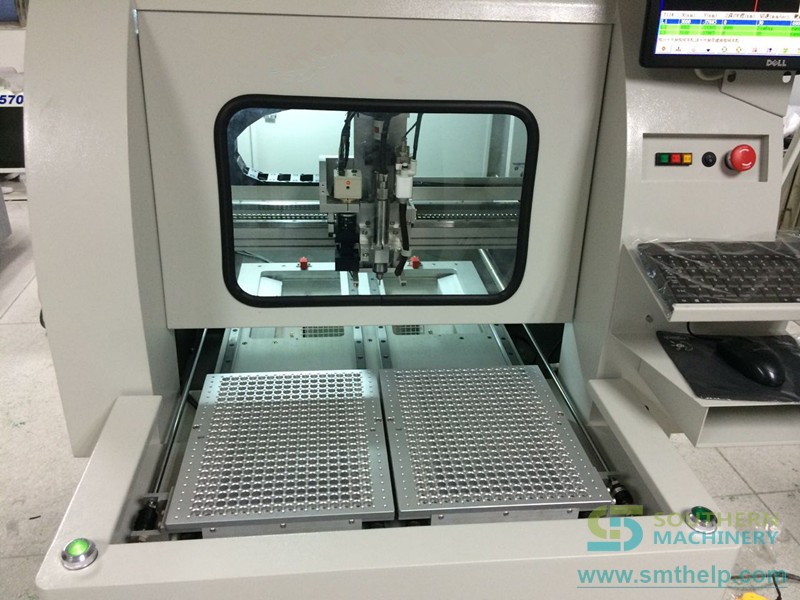
How it connects into a complete PCB assembly line
A PCB separator is not an isolated island. It should be planned as part of the full assembly flow.
For a typical SMT line, the upstream process may include a magazine loader, automatic stencil printer, SPI if required, pick-and-place, reflow oven, post-reflow AOI, and board handling conveyors. Depaneling normally comes after assembly and inspection, depending on product flow and whether boards are tested before or after separation.
For mixed SMT/THT products, the sequence may include SMT assembly, THT insertion, wave soldering or selective soldering, THT inspection, functional test, and then depaneling if the panel design supports that sequence.
Southern Machinery can help match the depaneling station with board handling, buffers, inspection points, and operator stations so the machine does not simply move the bottleneck to another part of the line.
Key selection parameters for buyers
Before selecting a PCB separator router, buyers should confirm these points:
- PCB panel size range and individual board size
- PCB thickness, material, copper weight, and rigidity
- Panelization method: tabs, stamp holes, V-cut, curved routing, or mixed design
- Distance from the cutting path to the nearest component
- Whether the board has heavy connectors, transformers, heatsinks, or sensitive parts
- Required cut quality, burr limit, dust control, and fixture requirements
- Product mix: one stable model or many high-mix models
- Monthly volume, shifts per day, and expected changeover frequency
- Whether depaneling happens before or after ICT/FCT
- Need for barcode scanning, MES traceability, or process data collection
If these details are unclear, the safest next step is to share PCB drawings, panel drawings, sample photos, and expected volume. Southern Machinery can then recommend the closest suitable configuration and fixture approach.
ROI, quality, and capacity value
The source page includes an example case-style comparison where an automotive EMS provider reduced depaneling-related defects and increased line output after moving from V-cut to routing. Treat this type of ROI content as an example scenario, not a universal guarantee. Actual savings depend on your current defect rate, labor cost, product value, panel design, routing cycle time, and inspection standard.
A practical ROI review should include:
- Current monthly PCB volume
- Current scrap or rework rate related to depaneling
- Average cost per defective board
- Labor cost for manual separation and rework
- Time lost to line stoppage or quality investigation
- Fixture cost and routing bit consumption
- Expected production mix over the next 12-24 months
For many factories, the value is not just faster separation. The stronger value is more stable quality, lower process stress, and fewer hidden defects reaching final test or the customer.
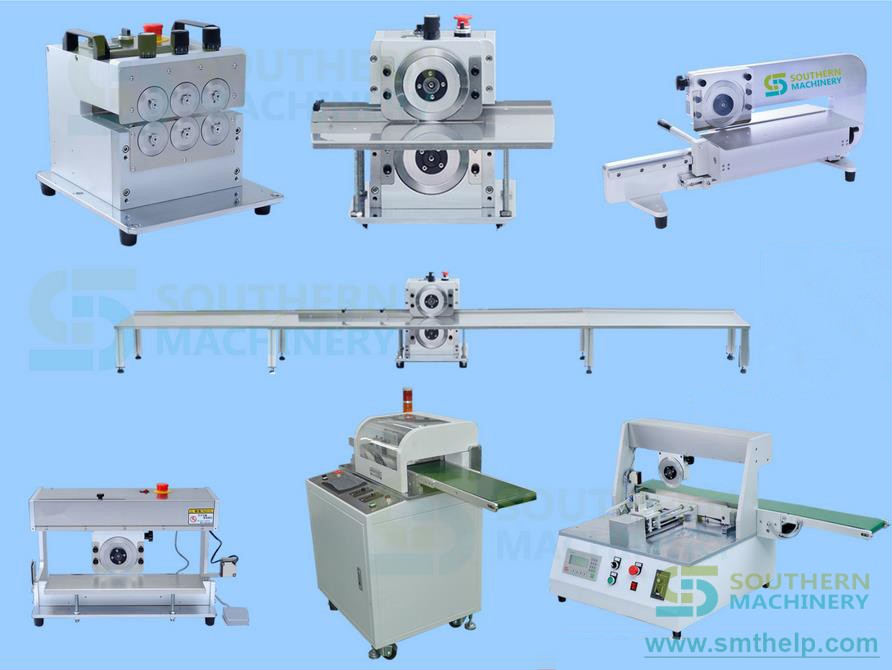
Typical applications
The S380A-style visual PCB separator router is a good fit for factories building:
- Automotive electronics and sensor boards
- Industrial control PCB assemblies
- Medical and instrument electronics
- LED driver and power supply boards where stress must be controlled
- Dense SMT boards with components near the edge
- High-mix EMS orders requiring frequent model changeovers
- Non-rectangular or special-shape PCB products
It may be overkill for very low-volume simple boards if manual separation is already safe, stable, and low-risk. In that case, a smaller desktop router or simpler separator may be more cost-effective. The right answer depends on the board design and production target.
Southern Machinery line support
Southern Machinery supports more than standalone machines. The broader solution scope includes:
- SMT line equipment: loader, stencil printer, pick-and-place, reflow oven, AOI, conveyors, and unloaders
- THT automation: axial insertion, radial insertion, odd-form insertion, terminal insertion, and manual assist stations
- Wave soldering and selective soldering process planning
- PCB board handling: conveyors, buffers, inverters, NG/OK sorting, and magazine handling
- Inspection and traceability options depending on customer requirements
- Global service support, spare parts support, and professional training
The company serves 237+ global customers and focuses on practical, cost-effective automation for EMS factories that need better productivity without overbuilding the line.
FAQ
1. Is the S380A only for V-cut boards?
No. The source document positions the machine as useful for curved, irregular, L-shape, circular, stamp-hole, and other non-rectangular PCB layouts. The final suitability depends on your panel design and routing path.
2. Can it reduce solder joint cracks?
A routing process can reduce mechanical bending stress compared with manual breaking or basic V-cut separation. However, the result depends on PCB design, fixture support, routing path, cutting parameters, and component placement. Final performance should be confirmed with sample testing.
3. What information is needed for quotation?
Share the PCB panel drawing, board size, thickness, material, component clearance near the cut path, monthly volume, and preferred workflow. Photos or sample boards are also helpful.
4. Can the machine connect with a full SMT/THT line?
Yes, it can be planned with upstream and downstream board handling, inspection, test, and operator stations. The exact layout depends on whether depaneling happens before or after testing and whether the factory needs inline or offline operation.
5. Are the accuracy and spindle numbers fixed for every configuration?
The source document lists 60,000 RPM spindle speed and specific accuracy figures. These should be treated as source-document values and confirmed against the official machine configuration before final purchase.
6. Is this machine suitable for every EMS factory?
No. If your boards are simple, low-volume, and safely separated by a lower-cost method, a smaller solution may be enough. If your boards are complex, high-value, dense, or quality-sensitive, a visual router is usually easier to justify.
Call to action
If you are reviewing PCB depaneling quality or planning a new SMT/THT production line, send Southern Machinery your PCB panel drawing, board thickness, component clearance, monthly volume, and current separation method. We can help check whether the S380A Visual PCB Separator Router, a smaller desktop router, or another board handling solution is the best fit for your factory.
For a complete line review, Southern Machinery can also support SMT, THT insertion, wave soldering, inspection, board handling, training, and spare parts planning from one integrated supplier.
Comments
Southern Machinery Admin
Jul 4, 2026As an SMT operator, what I care about most is how easy a machine is to program and maintain during a long shift. We've all dealt with older depaneling setups that create a massive amount of dust, clogging up the internal sensors and forcing us to stop the line constantly just to clean the housing.The automatic tool height calibration and broken tool detection on the S380A Visual PCB Separator Router sound like a lifesaver for avoiding ruined boards when a milling bit wears out. Also, the CCD visual programming looks a lot faster than manually jogging an axis or typing in coordinates, which will definitely make product changeovers less painful for us on the floor. I'm definitely going to show this to our line supervisor for our next upgrade