
S380A Full Vision PCB Depaneling Router by Southern Machinery
The S380A Full Vision PCB Depaneling Router helps EMS and OEM factories cut complex PCB panels using visual programming, low-stress routing, dual Y-axis tables, and tool management. This guide explains how the S380A fits
Jul 2, 2026 · Updated Jul 2, 2026 · Southern Machinery
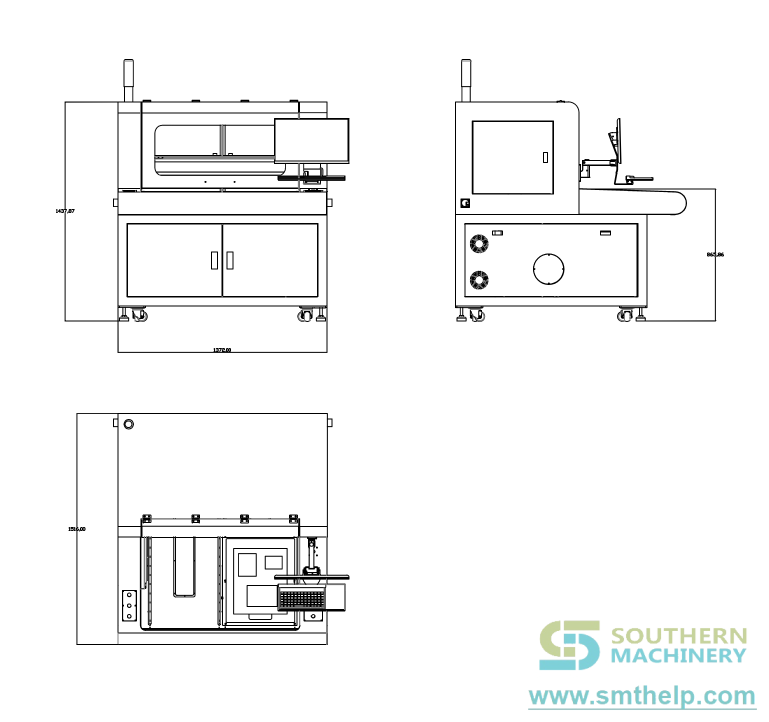
S380A Full Vision PCB Depaneling Router by Southern Machinery
For EMS, ODM, automotive electronics, medical electronics, and industrial control factories, PCB depaneling is often treated as a low-priority downstream process. In reality, it can quietly affect yield, operator workload, and final board reliability. If routing stress is too high or programming too slow for complex board shapes, the factory loses time that has already been invested in SMT, THT insertion, reflow, wave soldering, AOI, and testing.
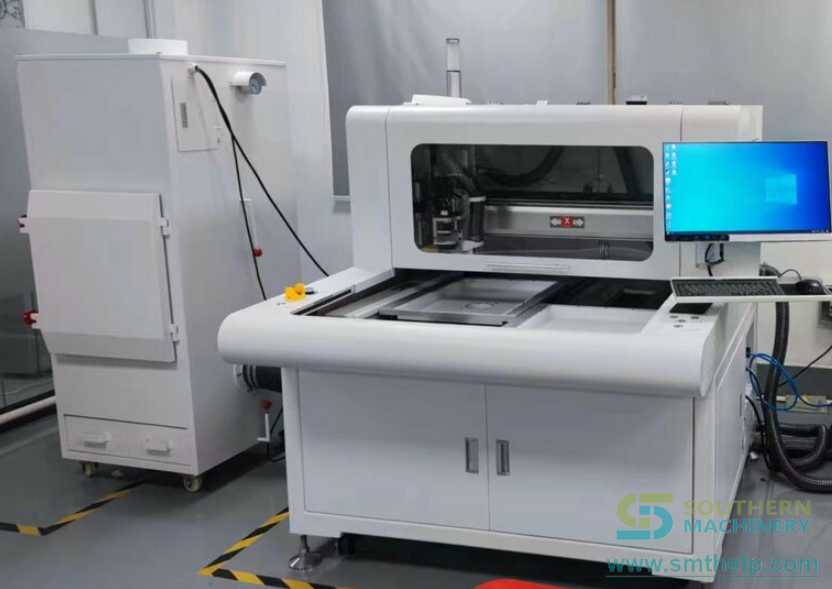
Southern Machinery's S380A Full Vision PCB Depaneling Router is designed for automatic PCB cutting with visual programming, low-stress routing, dual Y-axis table operation, and tool-management functions. It is a practical choice when a factory needs more flexibility than simple V-cut separation and more automation than manual depaneling.
Founded in Shenzhen, China, in 2011, Southern Machinery serves over 237 global customers with high-efficiency, cost-effective SMT/THT PCB assembly automation equipment. Beyond depaneling, we can support complete line planning across SMT, THT insertion, wave soldering, board handling, inspection, training, spare parts, and global service.
What is This Machine Used For?
The S380A separates individual PCBs from panels by routing along programmed cutting paths. In simple terms, it is a PCB depaneling router for boards that need controlled cutting—especially when the panel includes curved paths, stamp holes, irregular shapes, or mixed separation requirements. The machine is described as a Full Vision Curve Splitter with CCD whole-board visual programming. Technicians can draw straight lines and arcs directly on the PCB image rather than relying solely on traditional coordinate editing.
This makes the S380A ideal for factories where manual cutting, basic V-cut separation, or slow offline programming creates a bottleneck.
Why Full-Vision PCB Depaneling Matters
Depaneling happens near the end of the assembly process, so scrap at this stage is costly. A board may have already gone through solder paste printing, pick-and-place, reflow, THT insertion, wave or selective soldering, AOI, and functional test preparation.
A more controlled router process helps manufacturers reduce three common risks:
- Mechanical stress around components and solder joints
- Operator variation during manual separation
- Programming and changeover time for complex panel layouts
The S380A is specifically designed for low-stress cutting, high precision, simplified programming, and handling straight lines, arcs, circles, L-shaped, U-shaped, stamp-hole, and V-slot models.
Key S380A Capabilities from the Source Document
CCD Visual Programming
The S380A uses full-vision programming. The operator works from a PCB image and draws straight lines or arcs for the cutting path. For high-mix EMS production, this reduces time spent editing and debugging programs when product models change frequently.
High-Speed Spindle and Precision Routing
The spindle speed range is 20,000 to 60,000 rpm. Machine repetition accuracy is +/-0.01 mm, and cutting accuracy is +/-0.02 mm. These values should be confirmed against the final machine configuration, fixture, cutter, PCB material, and acceptance criteria during quotation.
Dual Y-Axis Table Operation
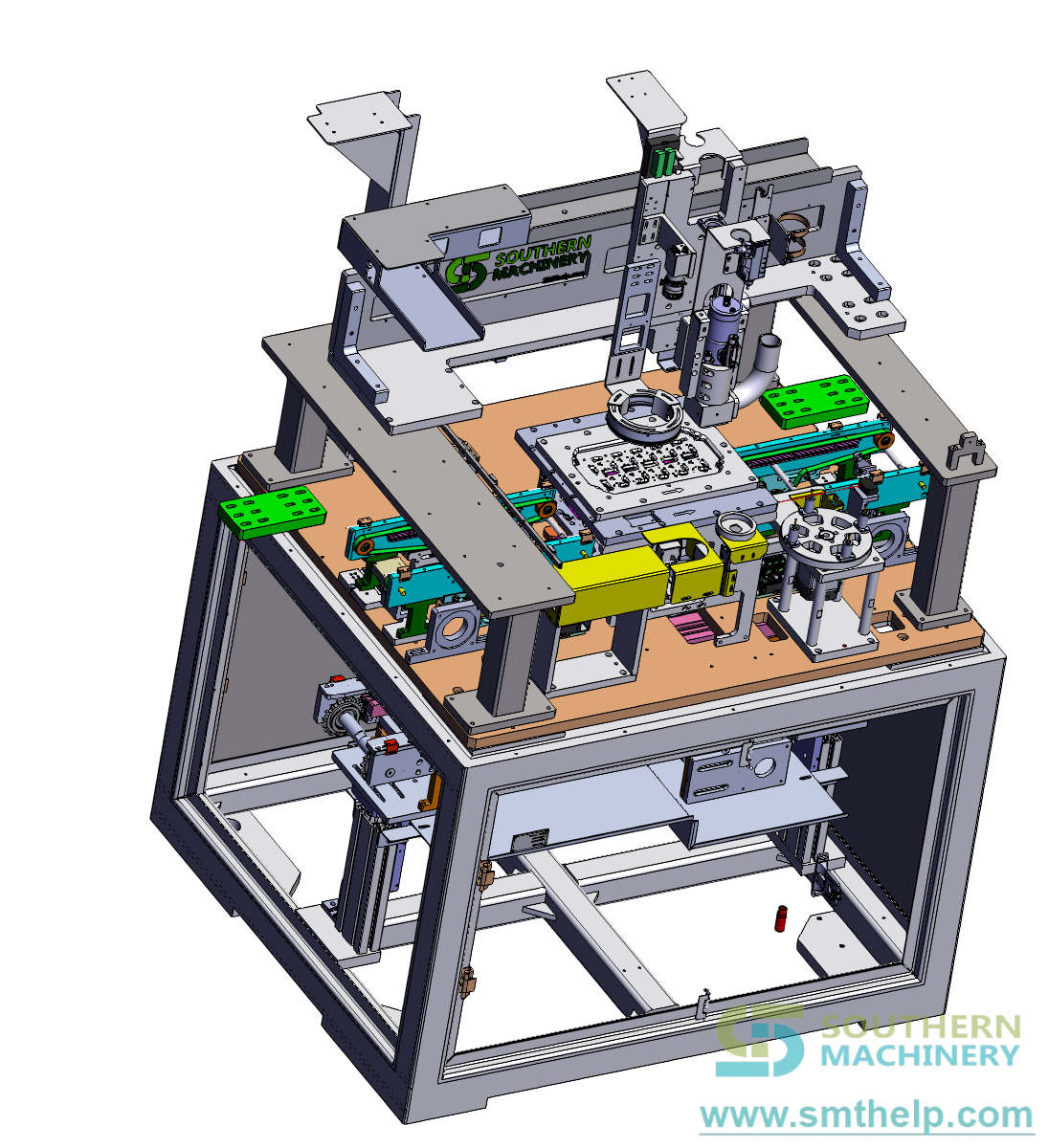
The machine has two independent Y axes, Y1 and Y2. This dual-table structure allows one table to support cutting while the other is used for board placement, or it can handle two different products depending on setup. The result is lower waiting time for loading and unloading.
Automatic Tool-Management Functions
The Q380A configuration includes automatic tool change, broken tool detection, and automatic tool height correction after a tool change. These features are important because router-bit wear, breakage, and Z-height drift directly affect cutting quality and board safety.
Safety and Stable Motion Control
Safety grating, an emergency button, Panasonic A6 AC servo motors for X, Y1, Z, and Y2 axes, and Windows 7 / Windows 10 software compatibility are standard. Final safety configuration should be confirmed for the destination factory's local requirements.
Source-Listed Technical Parameters
The following parameters come from the source document and should be confirmed in the final technical quotation:
| Item | Source-Listed Value |
|---|---:|
| Machine repetition accuracy | +/-0.01 mm |
| Cutting accuracy | +/-0.02 mm |
| Cutting speed | 5–100 mm/s, adjustable |
| Effective cutting size | 350 x 550 mm |
| Machinable stroke | L350 x W330 mm |
| PCB thickness range | 0.3–3 mm |
| Applicable milling cutter size | 0.8–3.0 mm |
| Separator power supply | AC220V 50/60Hz, 1 HP (also listed as 5 kW) |
| Dust collector power supply | AC380V 50/60Hz, 3 HP (also listed as 3 kW) |
| Host size / weight | L1230 x W1180 x H1350 mm / 800 kg |
| Dust collector size / weight | 665 x 635 x 1610 mm / 155 kg |
| Gas supply requirement | > 4.5 kg/cm² |
| Recommended ambient temperature | 10–30°C |
| Relative humidity | 35–80% |
| Minimum site dimensions | L2500 x W2500 x H2500 mm |
| Dust collection mode | Lower standard, top optional |
The source combines HP and kW notation for power, so buyers should confirm the final electrical drawing and utility requirements before purchase.
Typical Application Scenarios
High-Mix EMS Production
EMS factories often change product models frequently. Full-vision programming is especially useful when panel shapes vary and engineering teams need faster setup for short runs.
Automotive and Industrial Control Boards
These products often include connectors, heavy components, or reliability-sensitive solder joints. Low-stress routing helps protect boards after high-value assembly steps.
Medical and Precision Electronics
When board cleanliness, edge quality, and repeatability are critical, controlled routing and dust collection are far more important than manual separation speed.
Complex or Irregular PCB Panels
The S380A supports arcs, circles, L-shaped, U-shaped, stamp-hole, and V-slot models, making it a better fit than a simple separator for boards that are not limited to straight V-cut panels.
How It Connects to a Complete PCB Assembly Line
The S380A is typically installed after the main assembly and inspection processes—not at the beginning of the line. A practical Southern Machinery flow might look like this:
PCB loader
-> stencil printer
-> SPI (if required)
-> pick-and-place
-> reflow oven
-> AOI
-> THT insertion (if required)
-> wave soldering or selective soldering
-> functional inspection or test
-> S380A PCB depaneling router
-> final visual check / packing
For factories with higher automation goals, Southern Machinery can also discuss loaders, unloaders, conveyors, buffers, NG/OK handling, dust collection layout, barcode tracking, and MES traceability around the depaneling station. The key is line balance: a high-precision router still needs the right fixture, operator workflow, dust extraction, and upstream/downstream handling to avoid becoming a bottleneck.
Key Selection Parameters for Buyers
Before selecting an S380A configuration, confirm these points:
- PCB panel size and maximum single-board size
- Board thickness and material
- V-cut, stamp-hole, curved route, or mixed separation method
- Components close to the cutting edge
- Required edge quality and burr limit
- Target boards per hour or panels per shift
- Number of product changeovers per day
- Dust collection direction and factory exhaust plan
- Fixture requirements for each panel design
- Barcode, MES, or traceability requirements
- Local power, air supply, and floor-space conditions
- Whether automatic tool change is needed for the application
These inputs determine whether the standard S380A configuration is sufficient or whether extra tooling, fixture design, dust collection options, or automation interfaces are required.
ROI, Quality, and Capacity Value
The ROI of an automatic PCB router is not just about labor reduction. The bigger value often comes from protecting boards after they already carry expensive components. For example, if a high-value industrial control board is damaged during manual depaneling, the cost is much higher than the bare PCB. Controlled routing, repeatable fixtures, tool monitoring, and lower stress can significantly reduce that risk.
Capacity value comes from faster programming, dual-table operation, and reduced downtime thanks to tool-management functions. The final payback depends on your product value, scrap rate, manual labor cost, panel complexity, and daily volume. Southern Machinery can help model this after reviewing your PCB drawings and production targets.
Why Choose Southern Machinery
Southern Machinery focuses on complete PCB assembly automation, not just standalone machines. For an S380A project, this matters because depaneling touches fixture design, operator workflow, dust collection, downstream inspection, and packaging.
We can support:
- S380A PCB depaneling router selection
- Fixture and cutting-process discussion
- SMT and THT line layout planning
- Wave soldering and board handling integration
- Inspection and traceability options
- Spare parts planning, operator training, and remote support
For overseas buyers, the goal is practical: a high-efficiency, cost-effective depaneling process that fits the real factory layout and does not create a new bottleneck.
FAQ
Is the S380A only for V-cut PCBs?
No. The source document mentions support for straight lines, arcs, circles, L-shaped, U-shaped, stamp-hole, and V-slot models. For simple straight V-cut panels, a simpler separator may be enough. For complex boards, a router-style solution is usually more flexible.
What accuracy does the source document list?
The source lists +/-0.01 mm machine repetition accuracy and +/-0.02 mm cutting accuracy. These should be confirmed with the final fixture, cutter, PCB material, and acceptance criteria.
Does the S380A include dust collection?
The source lists a dust collector with lower collection as standard and top collection as optional. The final dust collection layout should be confirmed based on factory space and process requirements.
Can this machine be integrated into a full SMT/THT line?
Yes. Southern Machinery can plan the depaneling station together with SMT, THT insertion, wave soldering, board handling, inspection, and traceability equipment. The exact automation level depends on your volume and budget.
Do we need automatic tool change?
It depends on product mix, cutter life, board material, and downtime sensitivity. The source lists automatic tool change for the Q380A configuration, so this should be discussed during quotation if your factory runs many products or long shifts.
What information is needed for quotation?
Send the PCB panel drawing, board thickness, material, cutting path, components near the edge, target output, changeover frequency, and any traceability or dust collection requirements.
CTA: Send Your Panel Drawing for a Depaneling Review
If PCB depaneling is causing stress cracks, edge defects, slow changeovers, or manual labor pressure, send Southern Machinery your panel drawing and target output. We can review whether the S380A Full Vision PCB Depaneling Router fits your application, then recommend the right fixture, dust collection plan, and full-line integration approach for your SMT/THT production flow.
Comments