
S300AS Desktop PCB Router for PCB Depaneling by Southern Machinery
The S300AS Desktop PCB Router by Southern Machinery helps EMS, ODM, automotive, medical, and industrial electronics teams move from manual PCB separation to cleaner, repeatable depaneling. Based on the local buyer report
Jul 2, 2026 · Updated Jul 2, 2026 · Southern Machinery
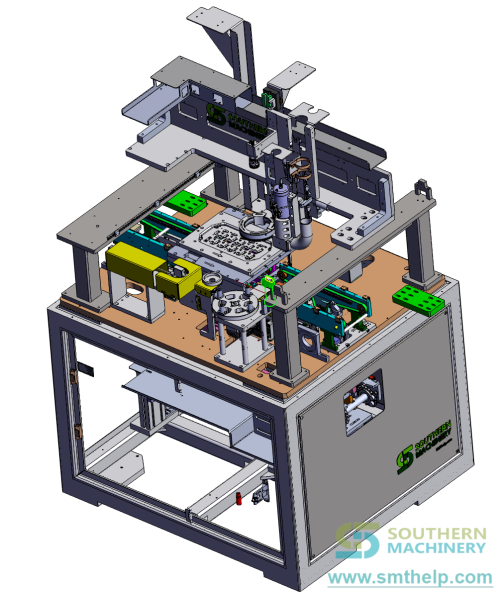
S300AS Desktop PCB Router for PCB Depaneling by Southern Machinery
For EMS, ODM, automotive electronics, medical electronics, and industrial control factories, PCB depaneling is often treated as a small post-process step. In reality, poor board separation can create edge burrs, component stress, cracked solder joints, and inconsistent manual output.
The Southern Machinery S300AS Desktop PCB Router is an offline PCB depaneling router designed for small to medium-batch production, prototype/R&D rooms, and quality-focused manufacturers that need cleaner, repeatable board separation without moving directly to a fully inline industrial depaneling cell.
Southern Machinery was founded in Shenzhen, China, in 2011 and serves over 237 global customers with SMT, THT, wave soldering, board handling, inspection, and process-support equipment. For buyers, the value is not just one machine: it is matching the router to the full PCB assembly flow, fixture plan, inspection requirements, spare parts support, and operator training.
What Is This Machine Used For?
The S300AS Desktop PCB Router separates PCB panels into individual boards using a high-speed milling cutter. It is designed for applications where manual breaking, V-cut hand separation, or simple low-cost routers may create too much mechanical stress, uneven edges, or operator-dependent quality.
Typical use cases include:
- Depaneling assembled PCBs after SMT reflow and inspection
- Separating prototype panels or small to medium production batches
- Cutting boards with curved, slotted, or irregular routing paths
- Reducing burrs and edge damage compared with manual methods
- Supporting high-mix EMS work where flexible programming matters
Typical Applications
EMS and ODM Batch Production
For high-mix EMS factories, not every product justifies a fully automatic inline router. The S300AS fits as an offline depaneling station where operators can load panels, run programmed cutting paths, and maintain consistent output across different products.
R&D and Prototype Labs
The source document positions the machine as useful for prototyping and R&D facilities that frequently cut complex PCB prototypes. Its programming flexibility is important when panel shapes change often.
Quality-Sensitive Electronics
Automotive modules, medical electronics, industrial controllers, LED drivers, and control boards can be sensitive to board-edge stress. A router-based process helps reduce the risk of component stress when the panel layout is not ideal for simple manual separation.
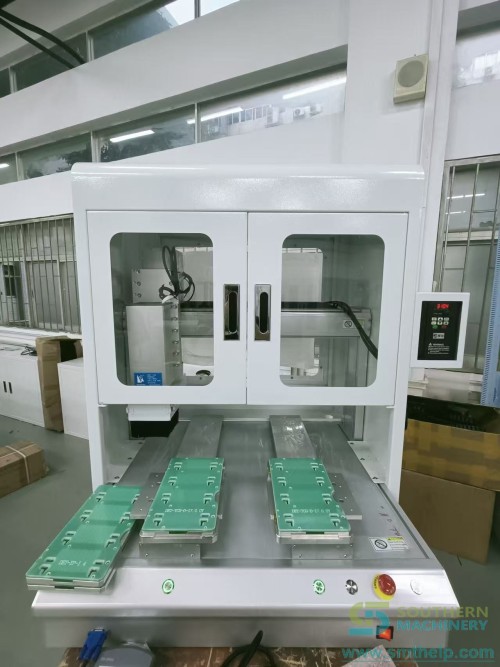
How It Fits Into a Complete PCB Assembly Line
The S300AS is best understood as a post-SMT or final assembly support machine, not an isolated desktop tool. A practical process flow can look like this:
SMT Loader -> Stencil Printer -> Pick-and-Place -> Reflow Oven -> AOI -> PCB Router Depaneling -> ICT/FCT -> PackingFor mixed SMT/THT products, it may also sit after wave soldering or selective soldering, depending on the panel design and fixture strategy:
SMT Line -> THT Insertion -> Wave / Selective Soldering -> Inspection -> PCB Router Depaneling -> Final TestSouthern Machinery can also match upstream and downstream equipment around the router, including loaders, unloaders, conveyors, buffers, AOI, wave soldering, selective soldering, and other PCB assembly automation modules.
Source-Based Technical Highlights
The selected source document lists the following S300AS points. Treat them as quotation-stage references that should be confirmed against your actual PCB, fixture, and final datasheet.
| Item | Source Information |
|---|---|
| Machine type | Desktop PCB router / PCB depaneling router |
| Application class | Small to medium-batch production, R&D, high-precision depaneling |
| Equipment dimensions | 1350 x 800 x 1900 mm |
| Cutting range | Source lists 600 x 400 x 400 x 100 mm; axis interpretation should be confirmed |
| Spindle power | 800 W high-speed precision milling cutter |
| Movement speed | 0-500 mm/sec |
| Repeatability / cutting accuracy | +/-0.02 mm, subject to PCB and fixture confirmation |
| Maximum load | 10 kg |
| Control method | Microcontroller + handheld controller |
| Programming | Teach programming and graphic import |
| Program capacity | Source lists 1000 sets and 100+ files / 8,000 instructions per file |
| External control interface | RS232 |
| Dust handling | Dust collection trays and exhaust pipeline mentioned in source |
| Power input | Full voltage AC110-220V |
The source also mentions Shinano Electric motor system, YAKO driver, HIWIN linear guide, TBI lead screw, Bakelite fixture material, and a sheet-metal protective cover. Final component brands and configuration should be verified during quotation.
Key Selection Parameters for Buyers
Before selecting a PCB router, confirm these points with your engineering and production team:
- PCB panel size and route path: Send panel drawings, routing paths, breakaway tabs, and fixture requirements.
- Board material and thickness: FR4, aluminum substrate, ceramic PCB, and thick boards may require different tool and feed settings.
- Component clearance near the cutting path: Tall components, connectors, and sensitive solder joints need safe keep-out distance.
- Target output: The source gives approximately 120 boards/hour and about 30 seconds per panel as planning figures; actual UPH depends on panel layout and route length.
- Dust control requirement: Routing creates dust, so extraction and tray cleaning must be planned.
- Offline vs inline strategy: S300AS is better suited to offline or semi-automatic depaneling. For mass production, ask whether a larger inline router is more appropriate.
- Programming workflow: Confirm whether your team prefers teach programming, graphic import, DXF/PLT-style import, or stored repeat jobs.
ROI, Quality, and Capacity Value
The business case is straightforward: the router should reduce manual separation variation and improve edge quality. The source specifically points to clean, burr-free edges, stable repeatable operation, and reduced dependence on highly skilled manual labor.
For procurement teams, the ROI should be calculated using real factory data:
- Current manual depaneling labor hours per day
- Rework caused by burrs, cracked boards, or component stress
- Scrap cost per panel
- Number of product changeovers per week
- Router bit cost and maintenance schedule
- Whether offline routing creates a bottleneck at peak volume
For example, if an EMS factory is assembling many small control boards but still manually separating panels, even a modest reduction in rework can matter. But if the factory runs very high volumes with strict takt time, a desktop/offline router may be too slow, and a fully inline depaneling cell should be reviewed instead.
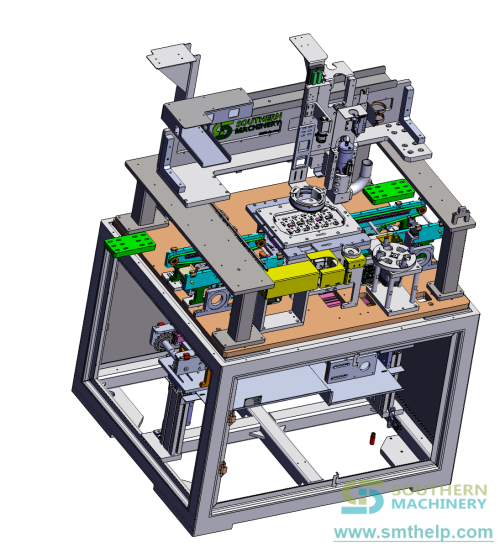
When S300AS Is a Good Fit
The S300AS is a practical fit when:
- You need cleaner PCB separation than manual breaking
- You run prototypes, R&D, or small to medium production batches
- Your boards have irregular shapes or routed profiles
- You want repeatable cutting without a large inline depaneling investment
- Your team can manage offline loading/unloading and fixture setup
It may not be the best fit when:
- You need fully inline, high-volume mass production
- Your line requires MES-linked automatic loading/unloading
- Your product needs automatic tool change, CCD alignment, or advanced inline traceability
- Your panel size, material, or component clearance exceeds the verified process window
FAQ
1. What is the S300AS Desktop PCB Router mainly used for?
It is used for PCB depaneling: cutting individual boards out of a panel using a milling router. It is especially useful when manual separation may create edge burrs, stress, or inconsistent quality.
2. Can it replace a fully inline PCB router?
Not always. The source positions S300AS as a desktop/offline router for small to medium-batch and specialized applications. For high-volume inline production, Southern Machinery should review your takt time and recommend the right depaneling class.
3. Is the listed 120 boards/hour guaranteed?
No. The source gives approximately 120 boards/hour and around 30 seconds per panel as planning references. Real throughput depends on panel size, route length, fixture design, board material, and operator workflow.
4. What information should I send for a router evaluation?
Send PCB Gerber or mechanical drawing, panel drawing, board thickness, material, component height map, desired cut path, target output, and photos of the current depaneling process.
5. Does PCB routing require dust extraction?
Yes. PCB routing creates dust and debris. The source mentions dust collection trays and an exhaust pipeline, so buyers should confirm the final dust extraction configuration for their production environment.
6. Can Southern Machinery provide a complete line around the router?
Yes. Southern Machinery can support the full PCB assembly process, including SMT equipment, THT insertion, wave/selective soldering, board handling, inspection, and process-support machines such as PCB depaneling routers.
CTA: Review Your PCB Depaneling Process
If your team is still separating PCB panels manually, or if board-edge quality is creating rework, send Southern Machinery your PCB panel drawing and a short video of the current process. We can check whether the S300AS Desktop PCB Router is enough, or whether a larger inline depaneling solution is a better fit.
Recommended RFQ files: panel drawing, Gerber/mechanical file, board size and thickness, routing path, target boards/hour, and current depaneling pain points.
Comments