
Radial Insertion Machines by Southern Machinery: Engineered for Uptime and After-Sales Support
A radial insertion machine is only as valuable as the hours it keeps running. Southern Machinery's S3000 radial inserter pairs a servo-driven insertion head and machine-vision self-correction with a service ecosystem that protects production: documented operator training, global spare parts, retrofit kits, and overhaul support. Founded in 2011 in Shenzhen and trusted by 237+ global customers, Southern Machinery engineers the S3000 to insert vertical tape-packed radial components — capacitors, transistors, LEDs, and connectors — at 18,000 PCS/H with 0°–360° insertion and triple-span lead handling. This guide explains how to evaluate radial insertion reliability, what drives total cost of ownership, and the after-sales infrastructure that prevents unplanned downtime on your THT line. Contact Southern Machinery to discuss your insertion requirements and service coverage.
Sep 24, 2026 · Updated Sep 24, 2026 · Southern Machinery
Radial Insertion Machines by Southern Machinery: Engineered for Uptime and After-Sales Support
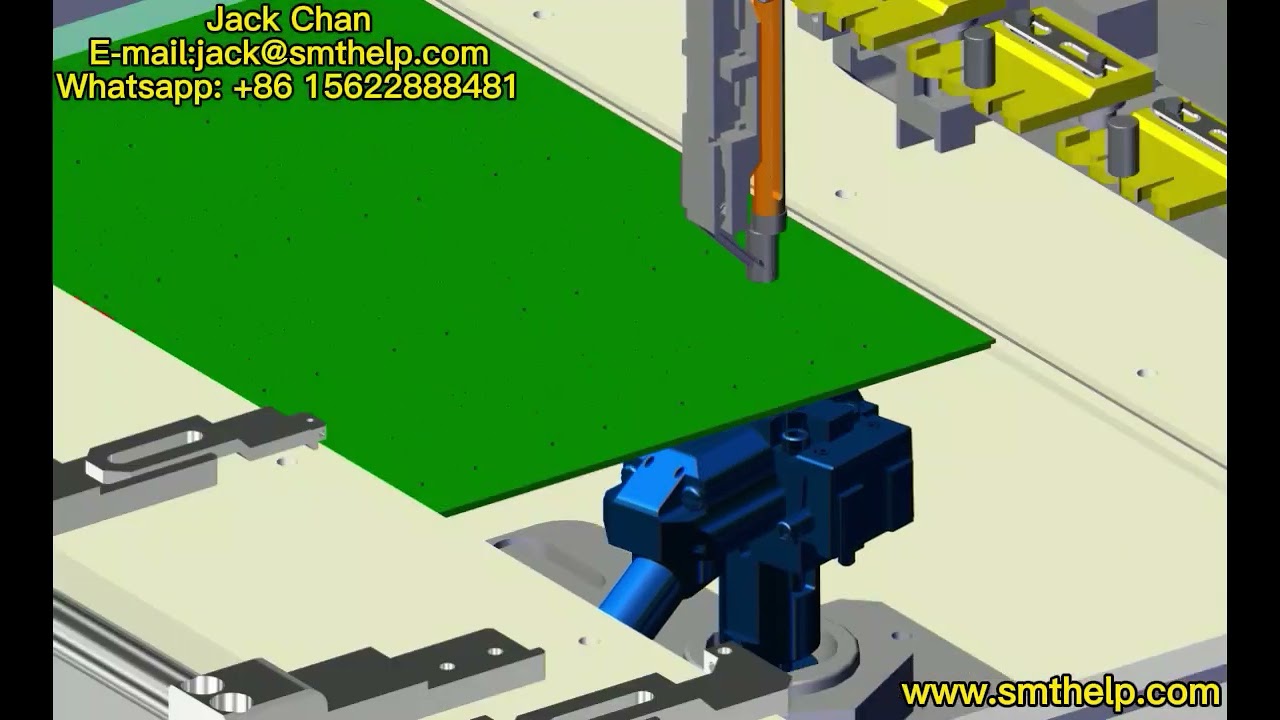
Watch in Action: S3010A Radial Insertion Machine — Product Overview
Maintenance & Reliability: Training Session — Common Technical Failures and Restart Methods
What Is This Machine Used For?
Q: What does a radial insertion machine do?
A radial insertion machine automatically inserts vertical, tape-packed radial-lead components — electrolytic capacitors, transistors, LEDs, key switches, resistors, connectors, and fuse blocks — into a PCB. Southern Machinery's S3000 uses a 10-station Feeder, a servo-driven insertion head, and an "N"-type clinch base to pick, orient, insert, and clinch each lead on the underside of the board, producing a mechanically secure through-hole joint ready for Wave Soldering.
Q: Why is the S3000 suited to continuous, high-volume THT production?
Reliability is engineered in, not bolted on. Three design choices matter most: a servo-driven insertion head that applies repeatable force and placement accuracy; machine-vision coordinate correction that self-calibrates and corrects board-position drift run to run; and a robust clinch base that forms leads at 1.5–2.2 mm length and 10°–35° angle without bending or cracking. Together they reduce the mechanical variance that triggers operator intervention and rework.
Q: What does after-sales support actually cover?
Southern Machinery supplies spare parts, documented operator and maintenance training — including Feeder disassembly and debugging, machine parameter adjustment, and common-failure restart procedures — plus retrofit kits, repair kits, and full machine overhaul. That means routine issues can be resolved in-house by your own technicians, while major service escalates through a single accountable vendor.
Typical Application Scenarios
Radial insertion is the through-hole workhorse across the sectors Southern Machinery serves:
- Electrical appliances — air conditioners, TVs, microwaves, electric kettles, and induction cookers depend on radial capacitors and resistors in power-supply and control boards.
- Power supply — vehicle power supplies, energy-saving power supplies, and ballasts carry large radial electrolytic capacitors and power resistors in long-run production.
- LED lighting and displays — LED control boards and drivers place radial LEDs and capacitors at high volume, where process stability determines yield.
- Vehicle electronics — car audio and vehicle power-supply modules require the repeatable insertion and traceability that automation provides.
How It Integrates Into a Complete PCB Assembly Line
The S3000 sits between SMT and Wave Soldering in a mixed SMT/THT line. Surface-mount parts are placed and reflowed first; the radial inserter then adds through-hole components; finally, the board passes through Wave Soldering. Machine-vision coordinate correction and SMEMA-style board hand-off let the S3000 run as an inline station rather than a manual island, and clinched leads hold every component securely through transport and soldering.
Key Selection Parameters
Before you specify a radial inserter, confirm these points with your supplier:
- Maximum lead span — the S3000 supports triple-span 2.5 / 5.0 / 5.7 mm lead pitches.
- Component envelope — body diameter and lead length of the radial parts in your BOM.
- Insertion direction — the S3000 inserts 0°–360° in 1° increments.
- Feeder capacity and changeover time — how many stations and how fast to switch between part numbers.
- Polarity detection — essential for orientation-sensitive electrolytics, LEDs, and transistors.
- Clinch specifications — lead length and angle for mechanical retention before soldering.
- Board size and thickness range — confirm your largest and thinnest boards fit the work envelope.
- Service and spare-parts availability — regional support and stocked consumables for your geography.
- Training depth — documented disassembly, debugging, and restart procedures for your maintenance team.
ROI, Quality & Throughput Considerations
Reliability is a cost number, not an adjective. Unplanned downtime on a THT line idles every upstream and downstream station. A radial inserter that self-calibrates, holds 18,000 PCS/H, and is backed by documented service converts a capital purchase into a controlled total cost of ownership. Spare parts on hand, technicians trained to restart the machine, and a clear overhaul path each move a portion of "unplanned maintenance" into "scheduled, predictable maintenance" — which is where throughput and first-pass yield are actually protected.
FAQ
What radial components can the S3000 insert?
Vertical tape-packed radial components including capacitors, transistors, LEDs, key switches, resistors, connectors, and fuse blocks.
What is the insertion speed?
18,000 PCS/H.
What lead spans does the S3000 support?
Triple-span lead pitches of 2.5 mm, 5.0 mm, and 5.7 mm.
Can it correct board-position drift automatically?
Yes — machine-vision coordinate correction and calibration compensate for position drift run to run.
Is training available for our technicians?
Yes. Southern Machinery documents Feeder disassembly and debugging, parameter adjustment, and common-failure restart procedures.
Where is Southern Machinery based?
Founded in 2011 in Shenzhen, China, with 237+ global customers across SMT and THT PCB assembly automation.
Contact Southern Machinery
Southern Machinery designs and supports full-line SMT and THT PCB assembly automation — insertion, Wave Soldering, board handling, and inspection — for EMS, ODM, and OEM manufacturers worldwide.
- Email: jasonwu@smthelp.com
- Phone / WhatsApp: +86 13602562576
- Website: https://www.smthelp.com
- File Portal: https://file.autoinsertion.com
- Image Library: https://ph.smthelp.com
If you are currently assembling radial components by hand, what is your real per-board defect rate from polarity reversals and bent leads — and how much rework time is that costing you each shift? If you already run a radial inserter, how much unplanned downtime did the line absorb last quarter, and is your spare-parts and training coverage keeping that number where you need it? Contact Southern Machinery for a conversation about insertion reliability, service coverage, and a cost model built around your throughput targets.
Comments