
S-D5500 Snap-Hole PCB Separator: Clean Depaneling After SMT and THT Assembly
Separate snap-hole and mouse-bite panels without cracking solder joints. See how the S-D5500 PCB separator fits at the end of an SMT or THT assembly line.
Sep 13, 2026 · Updated Sep 13, 2026 · Southern Machinery
S-D5500 Snap-Hole PCB Separator: Clean Depaneling After SMT and THT Assembly
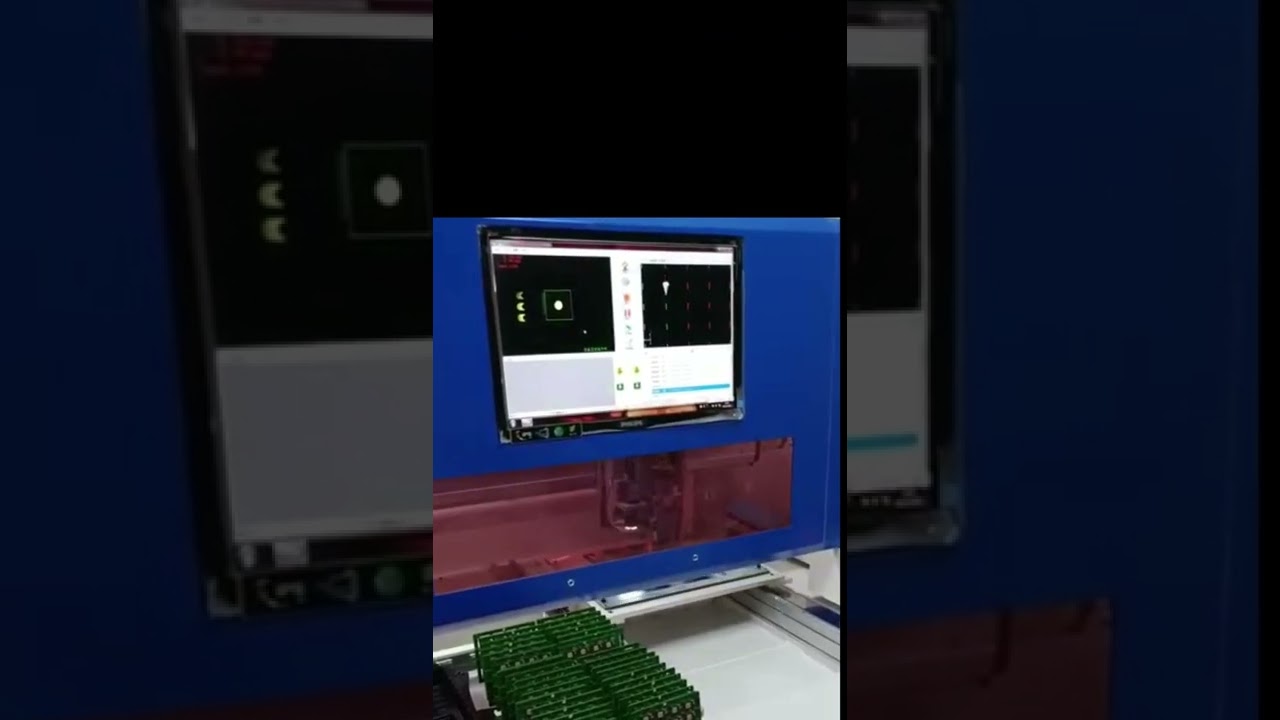
Panel separation is the last mechanical operation on most PCB assembly lines — and on tab-perforated panels it is also the step most likely to crack a solder joint, lift a pad or chip a ceramic capacitor. Southern Machinery's S-D5500 PCB separator / depanelizer is the machine demonstrated in the operation video below: it separates snap-hole (mouse-bite / stamp-hole) panels so boards leave the line with clean edges instead of a pile of rework.
Watch the S-D5500 in operation — S-D5500 PCB Separator/Depanelizer Operation for Snap-Hole PCB (SMT solution provider, Southern Machinery's YouTube channel).
What is snap-hole PCB depaneling used for?
Snap-hole depaneling — also called stamp-hole, mouse-bite or perforated-tab separation — is the process of removing individual PCBs from a production panel by breaking the small pre-perforated tabs that connect each board to the panel frame. Instead of cutting a straight V-score or routing an outline, the board is released by applying a controlled bending or shear force along the perforation line.
It is used after the panel has been fully assembled and soldered, when the panel still needs its frame for rigidity through printing, placement and soldering but the finished boards must ship as separate units. A snap-hole panel is the right panel design when:
- The board outline is curved, irregular or not a straight line — so a V-score cannot follow it.
- The panel mixes boards with different outlines, or mixed V-score and tab-routed sections.
- Component density or connector overhang leaves no room for a full routing path.
- The product is high-mix and the tab layout already exists in the PCB data.
Snap-hole vs. V-cut vs. routing: how do you choose a separation method?
All three methods separate a panel. The difference is the panel design they require and the force the board sees at the break line.
| Method | Panel design | Best fit | Watch out for |
|---|---|---|---|
| Snap-hole / mouse-bite | Short perforated tabs between board and frame | Complex outlines, mixed panels, offline separation | Tab remnants and stress at the break line if broken by hand |
| V-cut (V-score) | Straight V-grooves scored through the panel | Rectangular boards, high volume, straight break lines | Only straight lines; blade alignment and board thickness range |
| Routing / depaneling router | CNC path around the outline, no groove needed | Any outline, high-value or dense boards | Highest capital cost; programming and fixture time |
Southern Machinery builds all three classes. The separator family on smthelp.com includes moveable-blade V-cut models (S-D508, S-D509), a manual hand-push V-cut separator for FR4 (S-D510), multi-blade V-cut separators (SD5140, SC-900), online routing separators (S-D3500S, S-D4500) and a desktop router (S300AS), plus dedicated separators for LED aluminium MCPCB (S-D601) and vision-guided FPC separation (SF680). The S-D5500 shown in the video handles the snap-hole case — the panel style most often broken by hand because it looks simple.
Because tab geometry, panel size and drive type vary, the exact S-D5500 configuration for your panel should be confirmed with Southern Machinery rather than assumed from the video.
Typical application scenarios
- EMS / contract manufacturers — high-mix lines where some products are V-scored and others arrive tab-routed, and every changeover needs a repeatable break instead of an operator's judgment.
- Automotive electronics — control, sensor and lighting boards with MLCCs and heavy connectors close to the outline, where a hairline joint crack can pass inspection and fail in the field.
- Industrial control and power supply — long, narrow panels and driver boards with irregular outlines that cannot be V-scored end to end.
- Medical electronics — low-volume builds with strict edge-quality and documentation requirements, where consistent separation helps every unit pass the same acceptance criteria.
- LED and lighting — FR4 and aluminium metal-core panels. Metal-core and aluminium substrates behave differently at a perforation line, so discuss the separation method with Southern Machinery before committing to a snap-hole layout.
Where snap-hole depaneling fits in a complete SMT / THT line
Depaneling is deliberately close to the end of the line. The panel frame is what keeps a thin board flat through the process, so it is removed only after every heat and handling step is done:
- Stencil printing — solder paste deposition
- SPI — solder paste inspection
- SMT pick and place — reflow oven
- AOI — post-reflow inspection
- THT / odd-form insertion — radial, axial, odd-form and terminal insertion
- Wave or selective soldering
- Cleaning — PCBA and stencil cleaning
- Depaneling — snap-hole separation of the finished panel
- Final inspection, functional test and final assembly
On an inline layout the separator becomes one more station in a SMEMA-compatible board-handling chain — feeding from the cleaning or inspection station, then handing singulated boards to test or assembly. On an offline layout a standalone separator is loaded manually by the operator, which is often the right answer for low volume, high mix and boards that are too long or too heavy for the line conveyor. Southern Machinery supplies both layouts and the loaders, unloaders, buffers and conveyors around them.
Key selection parameters to confirm before you buy
No machine choice should be made on the video alone. Send these parameters and Southern Machinery will match the separator to your panel:
- Panel and board size — largest and smallest panel, board outline complexity
- Tab geometry — number and position of breakaway tabs, perforation pattern and the remaining material web
- Board material and thickness class — FR4, metal-core / aluminium, flex, and your required edge finish
- Component keep-out — distance and height of components near the break line, and any stress-sensitive parts
- Separation drive — hand/lever push or powered operation, and the repeatability you need
- Fixture and tooling — standard or custom support, changeover time between panel families
- Layout — standalone offline unit or inline station with SMEMA handoff
- ESD and safety — grounded frame, ionisation, ESD-safe surfaces, guarding
- Edge acceptance criteria — how much tab remnant is acceptable for your IPC-A-610-based edge specification
- Consumables and service — blade/tooling wear parts, sharpening, spare parts and training
ROI, quality and throughput perspective
Hand-breaking a snap-hole panel is free until it isn't. The cost shows up as cracked MLCCs, lifted pads, hairline solder-joint cracks that pass AOI and fail at the customer, chipped board edges, operator fatigue and the rework labour to sort it all out. Because the damage is often invisible at the moment of the break, the defect escapes to final test or to the field — the most expensive place to find it.
A dedicated separation step changes the economics:
- Consistent, repeatable break — the same force applied in the same place on every panel, so quality does not depend on who is on the shift.
- Protection of nearby components — supporting and controlling the board near the break line is what keeps brittle parts and joints intact.
- Less rework and scrap — fewer cracked boards, fewer sorts, fewer returns.
- Labour released — the operator who was breaking boards by hand moves to value-adding work.
- Higher first-pass yield at final test — clean edges separate reliably in the enclosure.
- A cleaner 5S story — board fragments, tab remnants and hand tools replaced by one station with a defined process.
The right question is not "which separator is cheapest" but "which separation method fits this panel design". A V-cut machine cannot separate a curved tab-routed outline, and a router is overkill for a simple snap-hole panel. Matching the method to the panel is where the savings come from.
FAQ
What is snap-hole PCB depaneling?
Snap-hole depaneling (also called mouse-bite or stamp-hole separation) releases finished boards from a production panel by breaking small pre-perforated tabs that connect each board to the panel frame. It is used at the end of the assembly line, after SMT reflow and THT/wave soldering, when the board outline cannot be V-scored.
What is the difference between snap-hole and V-cut separation?
V-cut scores a straight V-groove along the panel and a blade separator runs down that line. Snap-hole uses short perforated tabs instead, so it can follow curved or irregular outlines and can be combined with tab routing on the same panel. V-cut suits rectangular, high-volume boards; snap-hole suits complex or mixed outlines.
Can depaneling damage solder joints or components?
Yes, if separation is uncontrolled. Breaking a panel by hand applies an uneven bending moment along the perforation line, which is a common cause of cracked multilayer ceramic capacitors, lifted pads and hairline joint cracks. Supporting the board and applying a controlled force at the break line — the principle behind a dedicated separator such as the S-D5500 — is what reduces that risk.
Is the S-D5500 an offline or inline machine?
The video demonstrates the S-D5500 operating on snap-hole panels. Whether the best configuration for your factory is a standalone offline station or an inline unit feeding test and final assembly depends on your panel sizes, mix and conveyor layout — Southern Machinery will confirm this against your panel drawing.
What information should I send for a separator recommendation?
Your panel drawing with tab and perforation details, board material and thickness, largest and smallest panel size, component keep-out heights near the break line, target output per shift, whether the station must be inline (SMEMA) or can be standalone, and your ESD and edge-quality requirements.
Where can I see this equipment in operation?
The S-D5500 snap-hole separation demo is on Southern Machinery's YouTube channel, and machine photos and catalogues are available at ph.smthelp.com and file.autoinsertion.com. Ask Southern Machinery for the specific machine video for your panel type.
Contact Southern Machinery for configuration advice
Shenzhen Southern Machinery Sales And Service Co., Ltd has supplied SMT and THT PCB assembly automation since 2011, serving 237+ customers worldwide. Our range covers insertion machines, wave and selective soldering, stencil printing, board handling, cleaning, inspection and depaneling — as complete lines or as individual stations, supported by spare parts, retrofit kits, training, overhaul and global service.
Send us your panel drawing and we will recommend the separation method and machine configuration that fits your line.
- Jason Wu — jasonwu@smthelp.com | +86 13602562576
- Catalogues and documents — file.autoinsertion.com
- Machine photos — ph.smthelp.com
- Website — www.smthelp.com
Comments