
S-7000E Eyelet Pin Insertion Machine: 12,000 CPH Eyelet & PIN Insertion for THT Lines | Southern Machinery
Eyelets, PINs and odd-form terminals are the small THT parts that radial inserters and chip mounters cannot place, so they are usually hand-inserted. The Southern Machinery S-7000E Eyelet Pin Insertion Machine feeds bulk or reel eyelets, PINs, switches, connectors and terminals, inserts and clinches them automatically, and verifies each insertion in real time. With up to four insertion heads, a 12,000 CPH class speed and a 480 x 390 mm PCB envelope, it turns the manual eyelet bench into a programmable, traceable process on your DIP line.
Sep 24, 2026 · Updated Sep 24, 2026 · Southern Machinery
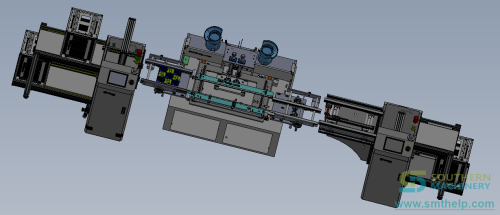
S-7000E Eyelet Pin Insertion Machine: Automating Eyelet, PIN and Terminal Insertion for Smart EMS THT Lines
Eyelets, press-fit pins and odd-form terminals are the small parts that stall a through-hole line. They are not radial components and they are not connectors, so neither a radial inserter nor a chip mounter will place them — which is why on most EMS floors they are still dropped into holes by hand, one operator, one board at a time. The S-7000E Eyelet Pin Insertion Machine from Southern Machinery is the specialised machine built for exactly that gap: it feeds bulk or reel eyelets, PINs and terminals, inserts them into the plated through-holes, clinches the lead for wave soldering and confirms in real time that every insertion actually took place. With up to four insertion heads and a published 12,000 CPH class speed, it turns the manual eyelet bench into a programmable process. This guide covers what the machine does, where it belongs in a line, what to specify, and how to justify it.
<iframe width="560" height="315" src="https://www.youtube-nocookie.com/embed/hUkwtvnoiYE?rel=0" title="Unlock Unmatched Efficiency and Precision in PCB Assembly with the S-7000 Eyelet Pin Insertion Machine" frameborder="0" allow="accelerometer; autoplay; clipboard-write; encrypted-media; gyroscope; picture-in-picture" allowfullscreen></iframe>
The S-7000E eyelet and PIN insertion machine in operation — bulk/reel feeding, insertion and clinching for THT PCB assembly.
What is this machine used for?
The S-7000E is a specialised THT insertion machine for eyelets, PINs and odd-form terminals — the parts that fall outside the scope of a standard radial or axial inserter. It feeds components individually from a feeding system, positions the PCB under the insertion head, drives the component into the hole and clinches the lead so the part survives the downstream wave-soldering process.
The official S-7000E parameter specification positions it clearly:
- Speed: 12,000 CPH class
- Components: 1.3–4.0 mm PIN, round pin, switch, connector, terminal and eyelet
- Insertion heads: single head to four heads (optional)
- Component packaging: bulk package or reel package
- PCB size: max. 480 mm × 390 mm; PCB thickness 0.76–2.36 mm
- PCB transfer: automatic (optional)
- Control: Windows-based control platform, English-version interface, LCD monitor
- Data input: USB interface (EXCEL format)
- System protection: UPS
- Air: 0.4–0.6 MPa (round pin 0.55–0.6 MPa) at 0.3 m³/min
- Power: single-phase 220 V AC, 50/60 Hz, 1.0 kVA
- Footprint / weight: 2140 × 1450 × 1600 mm (L×W×H); 1200 kg
Two engineering behaviours matter more than the headline speed.
Insertion verification. The S7000 platform is documented as supporting electrical continuity or discrete pin-penetration sensing, so the machine confirms in real time that each product was correctly inserted into the PCB and remained there. That means no separate quality-check step is required for the insertion operation, and the QC data can be stored on the system PC for full traceability.
Feeding flexibility. The S7000 series is specified as a bulk or reel PIN / eyelet / terminal inserter. Bulk eyelets and reeled terminals need different feeder concepts — a vibratory bowl feeder for loose parts, a reel feeder for tape — so the feeder is quoted to the component you actually run.
The manual process this replaces is documented by Southern Machinery as: low efficiency, poor quality, difficult processing, high defective and scrap rate, and high manufacturing cost. All five are the reasons eyelet insertion keeps getting pushed towards automation.
Typical applications
1. Automotive and vehicle electronics. Automotive control boards use eyelets and press-fit terminals for power and ground connections where insertion depth and seating are reliability parameters, not cosmetic ones. Automotive electronics is one of the application areas Southern Machinery lists for the S7000 series.
2. Home appliance control boards. Air conditioner, microwave, induction cooker, rice cooker and washing machine control PCBs are full of terminal posts and eyelets. These are high-volume, standardised boards, which is the profile where an insertion machine pays back fastest.
3. Power supply, ballast and power-electronics PCBA. Power boards carry eyelets and heavier terminals that must remain seated through the wave. A programmable insertion head applies them more consistently than an operator with a hand tool.
4. Industrial control products. Controller boards, relay modules and interface cards use odd-form pins and terminals that a radial inserter cannot handle and that a chip mounter cannot place at all.
5. Mixed-model EMS / ODM DIP assembly. Because board programs are stored and imported via USB (EXCEL format), a contract manufacturer can switch between customer boards without rebuilding the mechanical setup, provided the eyelet/PIN dimensions fall inside the machine's window.
How it fits into a complete PCB assembly line
The S-7000E is a THT-process machine that belongs in the through-hole block, after the SMT side of the board is complete and before soldering:
- SMT side (upstream). Paste printing, SPI, pick-and-place and reflow produce the SMT side of the board. Southern Machinery supplies SMT peripheral equipment for this stage as part of the same ecosystem.
- THT block. The eyelet/PIN inserter works alongside radial and odd-form insertion machines — for example the S-3010B radial insertion machine for standard radial parts and the S-70LD odd form insertion machine for connectors, relays and transformers. Radial, odd-form and eyelet/PIN insertion together cover most of what used to be a fully manual DIP bench.
- Board handling. The machine supports automatic PCB transfer, so it can be configured with PCB loader and unloader machines for inline operation instead of load-to-unload by hand.
- Wave soldering (downstream). Clinching holds each eyelet, PIN or terminal in place through flux, preheat and the solder wave. The lead-free dual-wave machines in the Southern Machinery range — such as the S-WS450 and S-WS350B — are the natural partners for this stage.
- Inspection and finishing. AOI, X-ray and SPI equipment, plus stencil cleaning, PCBA cleaning and depaneling equipment, complete the line around the THT block.
- Traceability. Because insertion verification data can be stored on the system PC, the insertion operation can feed the plant's quality record rather than being an unlogged manual step. An industrial PC with a motion-control card and MES connectivity is part of the wider S7000 platform.
Buyers should think in terms of the whole block: an insertion machine is only as productive as the loader feeding it, the wave solder accepting its output, and the material handling around both.
Key selection parameters
Use these categories when comparing eyelet and PIN insertion machines. The values in brackets are the specifications published for the S-7000E — always ask for the datasheet of the exact configuration you are quoted.
- Component types and sizes. [1.3–4.0 mm PIN, round pin, switch, connector, terminal and eyelet]. Confirm every part number you intend to run, and send samples — feeder tooling is built around the component.
- Component packaging. [Bulk package or reel package]. Bulk eyelets and reeled terminals require different feeders, so quote the feeder to the material you buy.
- Head count and throughput. [Single head to four heads optional; 12,000 CPH class]. More heads means more components per cycle — match the count to the number of insertion positions per board.
- Insertion verification. [Electrical continuity or discrete pin-penetration sensing]. This is the parameter that removes a downstream QC step; ask explicitly which verification method is quoted.
- PCB envelope. [Max. 480 × 390 mm; thickness 0.76–2.36 mm]. Check your largest and smallest boards against these limits before committing.
- Board transfer / line integration. [Automatic PCB transfer optional]. Decide up front whether the machine runs standalone or inline with a loader and unloader.
- Programming and data. [Windows-based control platform, English interface, LCD monitor; USB import in EXCEL format]. Programming effort is a real cost — ask how long a new board program takes.
- Utilities and footprint. [Single-phase 220 V AC 50/60 Hz, 1.0 kVA; air 0.4–0.6 MPa at 0.3 m³/min; UPS protection; 2140 × 1450 × 1600 mm; 1200 kg]. Verify the air supply, electrical supply and floor loading before line layout.
- Clinch form. Confirm which clinch orientation your board layout and wave-soldering process require — this is a quotation-time decision.
- Service and training. Confirm operator training, spare-part availability and support coverage. In-house training and multi-brand spare parts are part of the Southern Machinery service offering.
ROI and quality perspective
Look at an eyelet/PIN inserter as a labour-replacement and quality-stabilisation project, not a process experiment.
Labour. The manual eyelet bench scales linearly with volume: more boards means more operators, more shifts and more training cost. A machine running at a 12,000 CPH class speed covers a volume that would need several manual positions, and it does not rotate shifts. Run your own numbers against your local fully-loaded labour rate and annual board volume; Southern Machinery can provide a reference payback calculation for your case.
Yield. Hand insertion produces tilted eyelets, insufficient insertion depth, wrong orientation and simply missed positions — defects that typically escape the bench and are discovered only after wave soldering, where rework is far more expensive. On-machine insertion verification moves detection to the point of insertion.
Board quality. Insertion force is the hidden cost in THT assembly: excessive strain damages plated barrels and creates latent failures that appear only in the field. Requiring documented insertion verification and controlled insertion is the cheapest insurance available on a through-hole line.
Consistency across shifts. A machine program produces the same insertion depth, angle and clinch on the first board of the first shift and the last board of the third. That is what makes output predictable enough to quote lead times with confidence.
Material waste. Bulk eyelets handled by hand spill, bend and get scrapped. Feeding from a bowl or reel with controlled handling reduces that scrap, which is also the direction of the zero-e-waste objective many EMS plants now report against.
Footprint. Replacing two or three manual benches with one inserter plus a loader and unloader frees floor space that is usually worth more than the machine's own capital cost.
FAQ
What is an eyelet pin insertion machine used for?
An eyelet pin insertion machine automatically inserts and clinches eyelets, PINs and odd-form terminals into through-hole positions on a PCB before wave soldering. It replaces the manual bench operation of picking, orienting, inserting and bending these small parts by hand — parts that radial inserters and chip mounters cannot place.
What is the S-7000E's insertion speed?
The published S-7000E parameter specification lists a 12,000 CPH class speed, with a choice of single head to four insertion heads. Confirm the head configuration and the achievable rate for your specific component and board with Southern Machinery before ordering.
Which components can the S-7000E insert?
The specification lists 1.3–4.0 mm PIN, round pin, switch, connector, terminal and eyelet components, supplied in bulk or reel packaging. Because feeder tooling is component-specific, always validate your exact part against the machine using a sample before committing.
How does the S-7000E verify that an insertion actually happened?
The S7000 platform is documented as supporting electrical continuity or discrete pin-penetration sensing. This confirms in real time that each component was correctly inserted and remained in place, removing the need for a separate insertion quality-check step, with QC data storable on the system PC for traceability.
What PCB size can the S-7000E handle?
The published specification gives a maximum PCB size of 480 × 390 mm and a PCB thickness range of 0.76–2.36 mm. Automatic PCB transfer is an option if you want the machine to run inline rather than load-to-unload.
What do I need to send for an eyelet insertion machine quotation?
Send your component part drawings or part numbers, a physical component sample, your PCB photos and dimensions, the component count per board, your insertion requirements and your target output. That is enough for Southern Machinery's engineers to confirm the feeding method, head configuration and tooling.
Contact Southern Machinery
Southern Machinery (Shenzhen, China) has designed and manufactured SMT, THT and PCB assembly automation for 237+ global customers since 2011 — insertion machines, wave soldering, board handling, cleaning, inspection, and the training, spare parts and retrofit services built around them.
If you are specifying an eyelet or PIN insertion machine for a new DIP line, or replacing a manual eyelet bench, send us your component samples and PCB data and we will confirm the right S-7000E configuration.
- Email: [jasonwu@smthelp.com](mailto:jasonwu@smthelp.com)
- Product page: S7000 Series PIN, Eyelet and Terminal Insertion Machine and S7000 series overview
- Machine applications: THT machine range
- Catalogs and documents: file.autoinsertion.com
- Product images: ph.smthelp.com — see the Pin Eyelet Terminal Oddform Insertion album
- Website: www.smthelp.com
Comments