
Automatic SMT Scrap Tape Cutter by Southern Machinery: Reclaim Operator Hours and Cut Labor Cost
On a busy SMT line, one of the most overlooked labor drains is the manual cutting of spent carrier tape after every reel changeover. Operators spend 30–60 minutes per shift, per line, trimming paper and embossed plastic scrap with scissors — time that belongs on Feeder loading, AOI inspection, and line changeovers. The S-680A Automatic Scrap Tape Cutter by Southern Machinery automates this entirely: a PLC-controlled rotary blade cuts tape into uniform 5–150 mm segments at roughly 76 mm/sec, collecting it in an integrated bin that reduces waste volume by up to 90%. It runs unattended, needs no MES interface, and typically pays for itself within six months on recovered labor alone. For EMS and high-reel-volume electronics manufacturers, the S-680A converts a hidden cost into reclaimed capacity.
Sep 14, 2026 · Updated Sep 14, 2026 · Southern Machinery
What Is This Machine Used For?
Q: What does the S-680A Automatic Scrap Tape Cutter actually do?
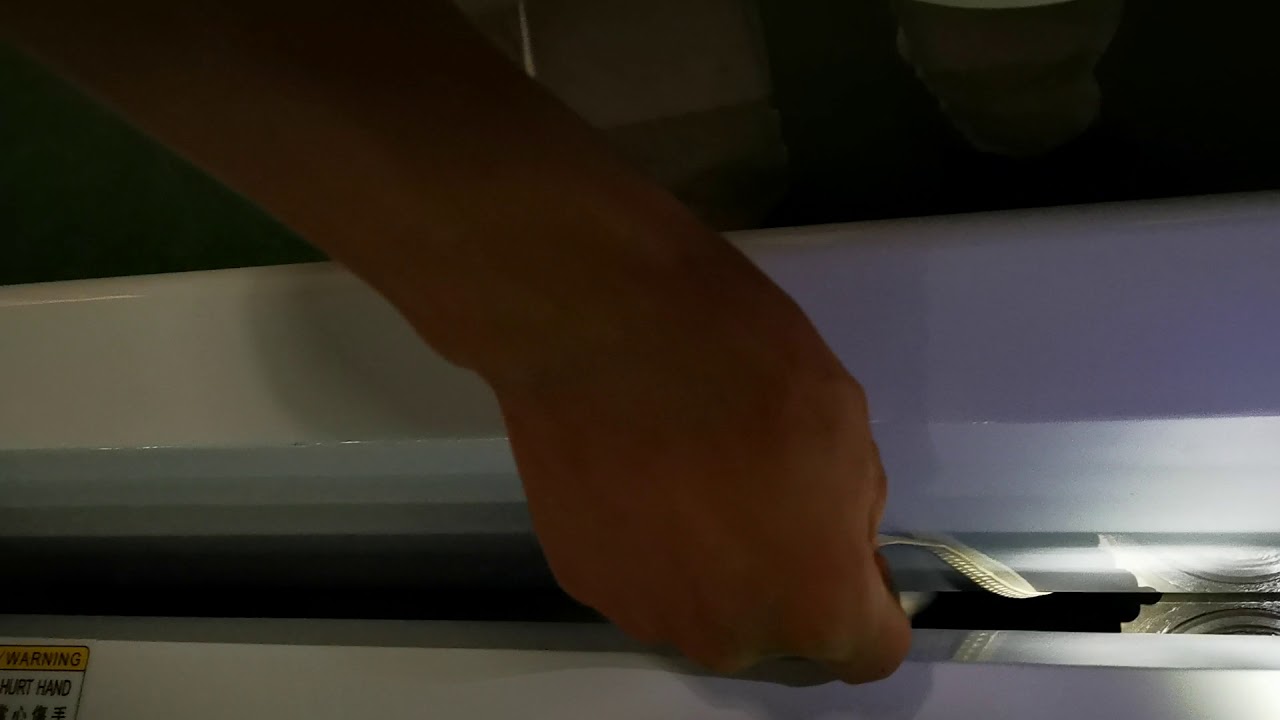
A: The S-680A is a compact, benchtop waste-side automation unit that sits beside a Pick and Place line. It automatically cuts spent carrier tape — the paper and embossed plastic strip left over after each SMT reel is consumed — into short, uniform segments and collects them in an integrated bin.
Q: Why automate something as simple as cutting tape?
A: Because "simple" is not "free." On a busy SMT line, an operator trims scrap carrier tape by hand after nearly every reel changeover. That repetitive task quietly consumes 30–60 minutes of operator time per shift, per line — hours that belong on value-adding work such as Feeder loading, AOI inspection, or line changeover preparation.
Q: How does the S-680A differ from a pair of scissors?
A: A PLC controls the cut length (adjustable from 5 mm to 150 mm) and the feed speed (roughly 76 mm/sec), so the machine cuts continuously and unattended. Rotational circular gear blades deliver approximately 4× the service life of a conventional cutter, and a built-in safety circuit stops the machine automatically if the collection bin is removed.
Typical Application Scenarios
- High-volume EMS and CEM factories consuming 100+ reels per shift across multiple Pick and Place lines, where recovered operator time scales directly with line count.
- Automotive electronics and industrial control manufacturers, where skilled operators are best deployed on quality-critical tasks rather than repetitive trimming.
- Power supply and LED lighting manufacturers running continuous, high-reel-volume SMT production with minimal changeover slack.
- ISO-certified and customer-audited facilities where labor efficiency and floor discipline are measured and reported.
How It Integrates Into a Complete PCB Assembly Line
The S-680A is a standalone peripheral that requires no MES interface and no machine-to-machine link. Place one unit beside each Pick and Place line — or a single unit at a central Feeder preparation station — and operators simply feed the spent tape after each reel changeover. Cut segments drop into an integrated collection bin, ready for recycling or disposal.
Within Southern Machinery's full-line portfolio, the S-680A pairs naturally with the S-6200 Nozzle Cleaning Machine: one keeps the floor clear of scrap tape, the other keeps Pick and Place Nozzles clean. Together they form a compact SMT auxiliary maintenance package that protects both line hygiene and placement performance.
Key Selection Parameters
When evaluating a scrap tape cutter, confirm these parameters with your supplier:
- Tape width compatibility — the paper vs. embossed plastic types you run, and the widest tape in your production.
- Cut-length range and feed speed — an adjustable PLC range lets you match segment size to your recycling or disposal process.
- Blade type and service life — rotary gear blades outlast conventional linear cutters and reduce blade-change downtime.
- Power supply and footprint — single-phase 220V and a compact line-side form factor simplify installation.
- Safety features — emergency stop and auto-stop on bin removal protect operators on the factory floor.
- Collection capacity — an integrated bin that compacts loose tape reduces handling steps and disposal volume.
ROI, Quality & Throughput Considerations
The economics of the S-680A are driven by recovered labor, not by a single headline number. Consider a five-line EMS floor where each line loses 45 minutes per shift to manual tape cutting. Across two shifts and roughly 300 working days, that is thousands of operator-hours per year — hours that can be redirected to Feeder loading, AOI, or faster line changeovers. On this basis, many Southern Machinery customers report payback within six months, before accounting for the 5S and safety benefits.
Quality and throughput improve in parallel. Uniform, PLC-precise cut segments eliminate the tangled, irregular piles that create trip hazards and Feeder-area debris, while freeing operators to focus on the tasks that directly protect CPH and first-pass yield. Rather than adding headcount, the S-680A redeploys the labor you already have.
FAQ
Can the S-680A cut both paper and embossed plastic tape?
Yes. It handles paper tape from 8 mm to 32 mm and embossed plastic tape from 8 mm to 56 mm. If your widest tape is critical to the process, Southern Machinery can confirm compatibility against a sample.
Does the S-680A connect to my MES or Pick and Place machine?
No. It is a standalone benchtop unit with its own PLC — no external PC or machine interface is required.
How much operator time does it actually save?
Most factories report 30–60 minutes per shift, per line, depending on reel volume and changeover frequency.
Is it safe for the factory floor?
Yes. It operates below 70 dB, with an emergency stop and an auto-stop circuit that triggers when the collection bin is removed.
How does it fit into an ESG or 5S program?
The integrated bin reduces scrap tape volume by up to 90%, turning loose, tangled waste into tidy, trackable, recyclable output.
What does "unattended" mean in practice?
The operator feeds spent tape after each reel changeover; the PLC handles cutting, speed, and length automatically, so no one has to stand at the machine during cutting.
Contact Southern Machinery
Automating scrap tape handling is one of the fastest, lowest-risk productivity wins available to an SMT operation. If you are unsure how many operator-hours your lines currently lose to manual cutting — or whether your tape widths fall within the S-680A's range — Southern Machinery's engineering team can help you quantify both before you commit.
Watch in Action: https://www.youtube.com/watch?v=p8kY3BG_MKY
Contact: Jason Wu
- Email: jasonwu@smthelp.com
- Phone / WhatsApp: +86 136 0256 2576
- Website: https://www.smthelp.com
- File Portal: https://file.autoinsertion.com
- Image Library: https://ph.smthelp.com
Two questions to start the conversation: How many Pick and Place lines do you currently run, and how many reels does each line consume per shift?
Comments