
S-500S vs S-600C Semi-Auto Dip Soldering Machine by Southern Machinery
The S-500S and S-600C semi-auto dip soldering machines from Southern Machinery replace slow, labor-heavy manual soldering of through-hole boards. The S-500S takes PCBs up to 350 x 300 mm with an 80 kg solder pot; the S-6
Oct 30, 2026 · Updated Oct 30, 2026 · Southern Machinery
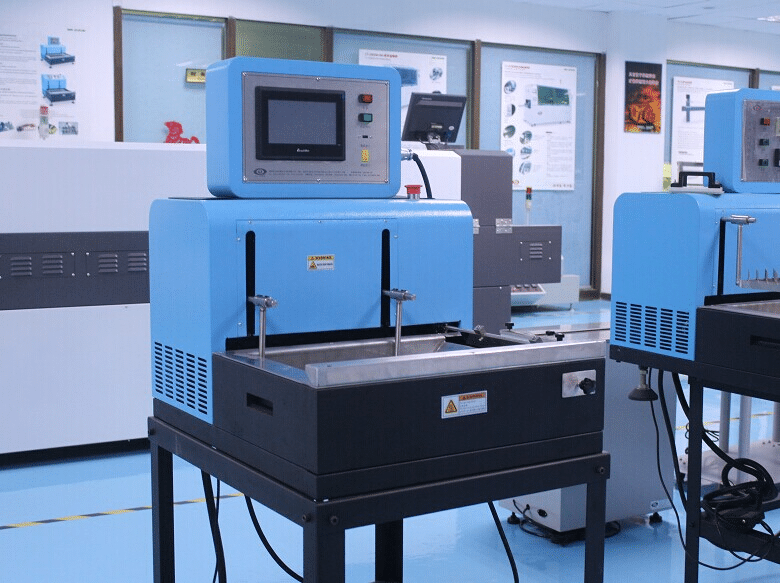
S-500S vs S-600C Semi-Auto Dip Soldering Machine by Southern Machinery
What are the S-500S and S-600C used for? They are semi-auto dip soldering machines from Southern Machinery for soldering through-hole (THT) boards without manual iron work. The S-500S handles PCBs up to 350 x 300 mm with an 80 kg solder pot; the S-600C handles up to 600 x 350 mm with a 120-130 kg pot.
Are you still soldering circuit boards by hand?
Every hand-soldered board carries a quiet bill: high labor cost and low efficiency. The source brochure puts it bluntly, asking whether manual welding is still wasting time and labor. If your THT volume is real but not big enough for a full wave soldering line, that question matters.
Why does a small THT line stay stuck on manual soldering?
Most teams know manual soldering is slow. The hidden problem is the in-between zone: wave soldering feels oversized, manual feels cheap, so nothing changes. Operators stay skilled-labor dependent, and different batches queue behind each other.
The brochure points to a different route: a semi-auto dip machine that needs no technical operation, can run different batches at the same time, and can also run boards without edges.
How do you choose between the S-500S and S-600C?
Use a simple three-step check:
- Board size. Measure your largest PCB against 350 x 300 mm (S-500S) and 600 x 350 mm (S-600C).
- Pot capacity. 80 kg versus 120-130 kg of solder.
- Cycle and power. Compare the cycle times and power draw below against your daily board count.
Specification comparison (from the source brochure)
| Parameter | S-500S | S-600C |
|---|---|---|
| PCB size | 350 x 300 mm | 600 x 350 mm |
| Tin capacity | 80 kg | 120-130 kg |
| Solder dwell height | 0-70 mm | 0-70 mm |
| Solder dwell time | 1-10 sec | 1-10 sec |
| Temperature control | PID, 0-450 C | PID, 0-450 C |
| Preheat time | 0-120 s | 0-120 s |
| Automatic removal cycle | 11 s | 14 s |
| Dip soldering cycle | 16 s | 10-20 s |
| Solder pot size | 400 x 340 x 80 mm | 650 x 400 x 70 mm |
| Overall dimensions | 700 x 750 x 620 mm | 850 x 800 x 550 mm |
| Weight | 75 kg | 100 kg |
| Power | 220V, 50/60 Hz, 3.6 kW | 220V, 50/60 Hz, 7.2 kW |
| Consumed power | 1-2 kW/h | 1.5-3 kW/h |
Both furnaces use 316 stainless steel titanium (selected), with temperature sensed by a K-type thermocouple. Speed is adjustable on both.
What does the machine actually do to the board?
The brochure shows two paths. In one, the machine clamps the product and includes automatic slag removal, with a recycling box. In the other, products pass through a needle bed according to a set dip-soldering angle. Short-lead and long-lead parts are both covered: the product is set to float in the tin furnace for a set time, then taken off.
The brochure also states that electricity cost is around 1 degree per hour, and that oxide over 8 hours is not more than 0.2 kg. These are the manufacturer's stated figures; confirm them for your configuration.
Where does it fit in a real PCB assembly line?
Dip soldering sits after through-hole insertion. Pair it with THT machines and auto insertion equipment upstream, and board handling systems around it. If volume grows, compare it with a wave soldering machine and check results with 3D SPI/AOI.
The brochure lists these board types as successful cases: electrical home appliance control panels, switching power supply boards, industrial control boards, LED lights and traffic signal boards, power amplifier and tuning boards, and security and alarm panels. Customer names and results are not specified in source; contact Southern Machinery to confirm.
What is the payback logic?
Use this formula and replace every input with your own numbers:
Monthly saving = (manual solder hours saved x loaded labor rate) - (extra power + maintenance)
Payback months = machine price / Monthly saving
Example only, depending on configuration: if 100 hours of manual soldering move to the machine and your loaded rate is 5 per hour, the labor side is 500 per month before power and upkeep. Machine price is not specified in source; contact Southern Machinery for a quote. Results are subject to final technical confirmation.
FAQ
What PCB size can the S-500S handle? Up to 350 x 300 mm per the brochure.
What is the S-600C solder capacity? 120-130 kg of tin, with a 650 x 400 x 70 mm solder pot.
Does it need a skilled operator? The brochure states no technical operation is needed.
What temperature range is available? 0-450 C with PID control.
Can it solder boards without edges? The brochure says production can also run without edges.
What support comes with Southern Machinery? Founded in 2011 in Shenzhen and serving 237+ global customers, Southern Machinery offers global service, spare parts support and professional training.
Next in this series
Coming up: how dip soldering compares with wave and selective soldering for mixed-volume THT lines. Browse the latest on the Southern Machinery blog.
Send your board size and daily volume through get a quote and we will help you match the S-500S or S-600C to your line.
Comments