
Reflow Thermal Profiling with the KIC Slim 2000 12-Channel Profiler by Southern Machinery
Validate Reflow Oven and Wave Soldering profiles with a 12-channel thermal profiler. Southern Machinery specifies the KIC Slim 2000 profiler for PCBA lines.
Sep 21, 2026 · Updated Sep 21, 2026 · Southern Machinery
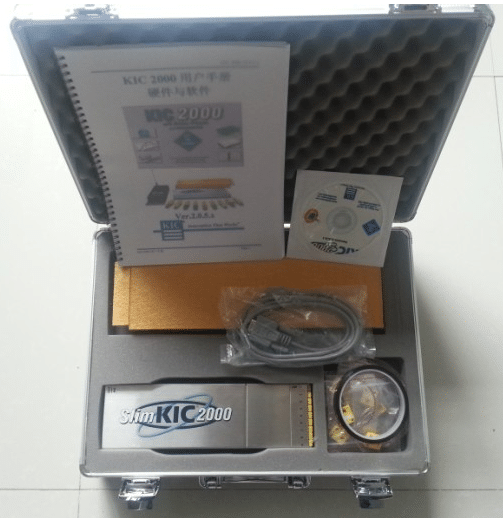
Reflow Thermal Profiling with the KIC Slim 2000 12-Channel Profiler by Southern Machinery
A Reflow Oven is only as good as its recipe. The oven holds the zones; the recipe — heating rate, soak, time above liquidus, peak, cooling — decides whether a lead-free solder joint is sound or a latent field failure. The instrument that proves the recipe is a thermal profiler, and the KIC Slim 2000 is a 12-channel system engineered for exactly that job: turning raw thermocouple data into a thermal profile that process engineers can validate, archive and defend.
Southern Machinery has supplied SMT and THT PCB assembly automation equipment from Shenzhen since 2011 and works with 237+ customers worldwide. This article explains what a 12-channel thermal profiler is used for, where it sits in a complete PCB assembly line, what to confirm before you buy, and how profile data translates into quality, throughput and energy savings.
What is this machine used for?
A thermal profiler records and interprets the temperatures a product experiences as it moves through a conveyorized or batch heating process — typically a Reflow Oven, but also Wave Soldering, selective soldering, dip soldering and curing ovens.
The numeric data collected by the data logger is converted by temperature analysis software into a graph: the thermal profile. That graph tells you what temperatures the assembly reached, for how long, and at which point in the process. Process engineers already know what the ideal profile for a given product should look like. A measured profile that deviates from the ideal is an early warning of a potential problem or unacceptable quality — long before the defect reaches AOI.
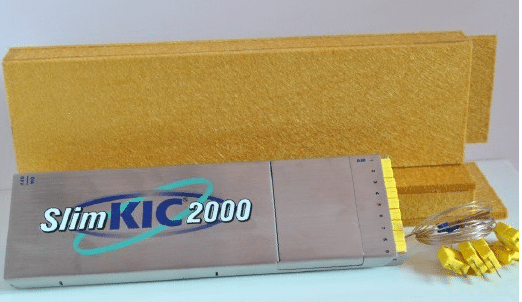
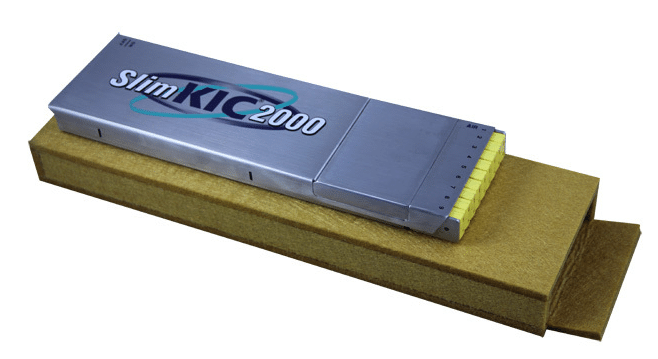
The KIC Slim 2000 is a 12-channel intelligent thermal profiler. Twelve measurement channels let a single profiling run cover more than one reference point on the assembly: a heavy thermal-mass area, a small component in the shadow of a connector, an edge of a pallet-loaded board, and the underside of a double-sided assembly can all be captured in the same pass.
What a thermal profiler is not
A profiler does not inspect solder joints. It does not measure paste volume and it does not detect component placement errors — those jobs belong to SPI, AOI and X-ray. A thermal profiler measures the process itself. That distinction matters in procurement: a profiler is a process engineering instrument, not an inspection station, and it is normally justified by yield, rework and changeover performance rather than by a station on the line balance chart.
Why thermal profile data decides PCBA quality
Solder joint quality is a thermal outcome. Four numbers do most of the work:
- Ramp rate into soak — too fast and you risk thermal shock, solder spatter and tombstoning on small chip components.
- Soak time — activates flux and equalises the assembly before the alloy melts.
- Time above liquidus (TAL) — must be long enough for full wetting on every joint and short enough to protect components, board finish and intermetallics.
- Peak temperature and cooling rate — set grain structure and joint strength.
Lead-free alloys narrowed all four windows relative to SnPb. Add high-density boards with mixed through-hole and SMD content, and an oven that "looks fine" at the zone display can still be out of specification at the joints. A profiler is what converts an opinion about the oven into evidence about the product.
There is a second, more commercial reason: profile documentation. When a customer asks how a high-reliability assembly was qualified, the answer is a dated, archived profile — which process, which oven, which recipe, which revision. A profiling system that archives and compares profiles makes that answer a file rather than a memory.
What the KIC Slim 2000 12-channel profiling system includes
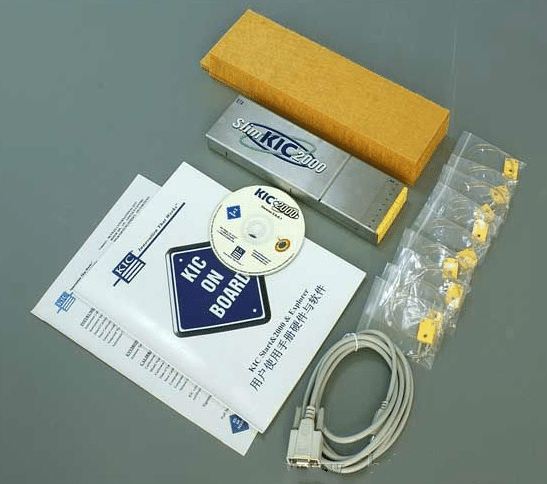
A temperature profiling system is not a single box. Southern Machinery's product page for the KIC Slim 2000 describes an intelligent thermal profiler built around four necessary components:
- Thermocouple sensors — the sensing elements attached to the assembly to gather temperature information.
- A data acquisition logger — the recording unit that collects the numeric data as the board travels.
- A thermal barrier — the enclosure that protects the logger from oven temperature during the run.
- Profiling and analysis software — the most important part, used for analysis and archiving of all temperature data.
The product page positions the system around "Robust Hardware – Ease of Use – Process Optimization", and it publishes a 2-year warranty together with 24-hour customer support.
The benefits of temperature profiling listed on the page are worth reading as a procurement checklist in themselves:
- Improved product quality
- Increased productivity
- Minimized energy costs
- Validated process control (QS/ISO9001)
- Efficient and fast new process setup
- Quick troubleshooting
Every one of those six benefits maps to a cost line an EMS or OEM plant already tracks. That is why profiling tends to pay for itself in the NPI and rework budgets rather than in a capacity plan.
Typical applications and scenarios
Profiling work clusters into a handful of recurring situations. If two or more of these describe your plant, a 12-channel profiler is a working tool rather than a laboratory accessory.
New Product Introduction (NPI) and first-article qualification. Every new assembly starts with an unknown thermal mass. A profiler turns the first build into a measured recipe instead of a copied one.
Lead-free conversion or alloy change. Moving to a lead-free alloy compresses the process window. Profile data is how you prove the window is still met across the whole board, not just at the thermocouple you happened to attach.
Mixed SMT and THT assemblies. Boards that carry both surface-mount and through-hole content often pass through more than one thermal process. Profiling both — Reflow Oven and Wave Soldering — keeps the two processes from fighting each other.
Multi-oven and multi-line plants. The same work order may run on two different ovens. Profile-based comparison is the practical way to prove that a transfer between lines does not change the thermal history.
False-call reduction upstream of AOI. When AOI or X-ray rejects cluster in one region, a profile often shows a cold zone, a shadowed area or a pallet-induced heat sink. Fixing the profile reduces the reject stream at the source.
Wave Soldering and selective soldering verification. Dross, preheat, wave contact time and thermal shock are all measurable. Profiling these processes supports the same discipline that reflow already gets.
Customer and audit documentation. Contract manufacturers frequently need to demonstrate process control for a qualification package. Archived profiles answer that requirement directly.
How the profiler connects to a complete PCB assembly line
A profiler is a line-level tool, so it helps to place it in the whole flow. A modern SMT and THT line typically runs:
Board handling (loader) → stencil printing → SPI → Pick and Place → Reflow Oven → AOI → THT auto insertion → Wave Soldering or selective soldering → cleaning → depaneling → unloader
The profiler does not occupy a station in that sequence. It serves the thermal stations inside it:
- Reflow Oven — profile every new product and every recipe change; re-verify after maintenance or a heating-element replacement.
- Wave Soldering — verify preheat, contact time and thermal shock on the board and on high-mass THT components.
- Selective soldering and dip soldering — verify nozzle or pot contact profiles where fixtures and thermal shadowing dominate.
- Curing and coating ovens — the same measurement principle applies wherever a conveyorized or batch heating process sets a material's final properties.
The output of the profiler belongs with the work order. Keeping the profile alongside the recipe, the oven ID and the date gives process engineering a traceable record and gives MES or quality systems something real to attach to. Southern Machinery supplies SMT, THT, Wave Soldering, board handling and inspection equipment, so a profiling instrument is normally specified as part of a line configuration discussion rather than as a stand-alone purchase.
Key selection parameters: what a buyer must confirm
Before you request a quotation, confirm the following points. Southern Machinery does not publish fixed numbers for every one of these, and your answers should come from your own process window and oven.
Measurement scope
- How many measurement channels do you need for the assemblies you run? (The KIC Slim 2000 provides 12.)
- Which processes must be qualified — Reflow Oven only, or also Wave Soldering, selective soldering, dip soldering and curing?
- What is the thermal mass range of your boards, pallets and fixtures?
Measurement chain
- Thermocouple type and attachment method suitable for your board finish and rework policy.
- Temperature range and sampling interval that match your process window.
- Thermal barrier size, mass and the protected time it delivers at your maximum oven temperature.
- Logger memory and battery life against your longest profile run.
Software and data
- Profile metrics computed by the software: ramp rate, soak, time above liquidus, peak and cooling rate.
- Profile comparison across runs, ovens and product revisions.
- Report export and archiving format, and how the record is attached to a work order or MES record.
- Who owns the profile data and how it is backed up.
Integration and ownership
- Conveyor or pallet interference and how the fixture and thermocouple harness pass through the oven.
- Site electrical and interface requirements.
- Warranty terms, spare thermocouples and barriers, calibration intervals, and support response time.
What Southern Machinery does not publish on this page
To keep this guide verifiable, note what is deliberately absent: the product page does not publish a price, a lead time, a payback period, a yield improvement percentage or a named customer reference for this system. Those depend on your line, your product mix and your current defect cost. Ask for a configuration and the commercial terms rather than accepting a generic number.
ROI: quality, throughput and energy
Profile control pays back through four channels, and each one is measurable in your own plant:
- Quality. A profile inside specification is the cheapest defect-prevention tool available before AOI. Fewer cold joints, fewer tombstoned chips, fewer void complaints from customers.
- Throughput and changeover. The published benefit "efficient and fast new process setup" is a changeover statement. Faster, data-backed recipe creation shortens NPI cycles and reduces the trial-and-error period on a new work order.
- Energy. "Minimized energy costs" comes from setting zones to what the product actually needs instead of running profiles hot to be safe. Over-set ovens waste energy on every board, every shift.
- Rework and troubleshooting. "Quick troubleshooting" is the one that recovers capacity. When a defect cluster appears, a profile comparison between a good run and a bad run usually identifies the change faster than disassembling the oven.
An EMS plant already pays for all four of these costs. The profiler changes them from recurring operating expenses into a documented, controlled process — and provides the record that supports validated process control in the quality system.
Frequently asked questions
What is a thermal profiler used for in SMT and THT assembly? It records the temperatures a PCB assembly experiences as it passes through a heating process, such as a Reflow Oven or a Wave Soldering machine, and converts that data into a thermal profile. Engineers use the profile to validate the process recipe, qualify new products and troubleshoot defects.
How many channels do I need — is 12 useful for a normal reflow line? More channels let one profiling run capture more conditions: a high thermal-mass area, a small component next to a large connector, a pallet-loaded board edge and the underside of a double-sided assembly. The KIC Slim 2000 provides 12 measurement channels, so a single run can characterise a board rather than a single point.
Can the same profiler be used for Wave Soldering and selective soldering? Yes. The measurement principle — thermocouples, a data logger, a thermal barrier and analysis software — applies to any conveyorized or batch heating process. Confirm that the thermal barrier, temperature range and software metrics match your wave and selective process windows when you specify the system.
My Reflow Oven already shows zone temperatures. Do I still need a profiler? Zone displays show the oven's air temperature, not what the assembly reached. The board's thermal mass, copper distribution, pallet and component shadowing all change the profile at the joint. A profiler measures the product, which is what the specification refers to.
How often should profiles be verified? As a working rule, profile every new product and every recipe change, after any oven maintenance or heating-element replacement, and on a recurring schedule for high-reliability work. Your customer's process-control requirements usually define the exact frequency.
What does Southern Machinery supply with the profiling system? Southern Machinery supplies the thermal profiler and supports the surrounding SMT and THT line: stencil printing, Pick and Place, Reflow Oven, Wave Soldering, selective soldering, THT auto insertion, board handling and inspection. We also supply spare parts, retrofit kits, operator training and machine repair. Ask for a configuration that fits your product mix.
Next step
Tell Southern Machinery what you need to qualify — the oven or soldering process, the board and pallet sizes, and the number of processes you want to profile in one run. We will recommend a channel count, barrier and software configuration that matches your process window and give you the commercial terms for your line.
- Contact: jasonwu@smthelp.com | +86 13602562576
- Product catalogues, manuals and PDFs: https://file.autoinsertion.com
- Machine photos by model: https://ph.smthelp.com
- Company and product pages: https://www.smthelp.com
Southern Machinery Sales And Service Co., Ltd — established March 2011 in Shenzhen, China. We design and manufacture SMT/THT PCB assembly automation equipment and provide full service support, spare parts, training and retrofit services to 237+ customers worldwide.
Comments