
Reflow Preheat & Thermocouple Profiling by Southern Machinery
A lead-free reflow oven is won or lost in its first two zones. Preheat brings the board, pads, paste and component bodies to a common temperature at 3 °C/s or less, up to 120–150 °C, and the dry stage that follows holds
Oct 7, 2026 · Updated Oct 7, 2026 · Southern Machinery
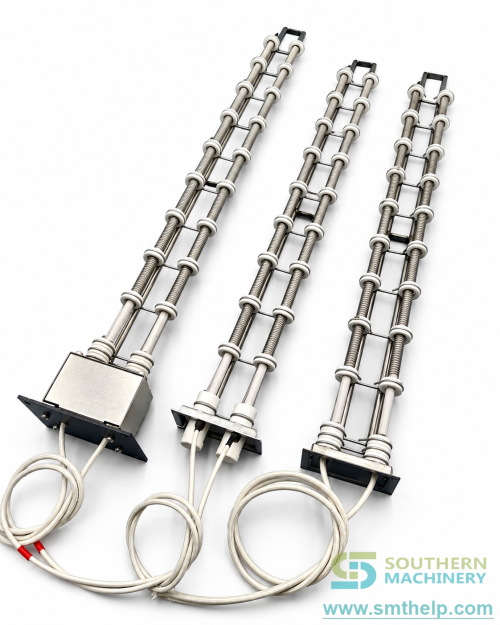
A lead-free reflow oven is won or lost in its first two zones. Preheat brings the board, pads, paste and component bodies to a common temperature at 3 °C/s or less, up to 120–150 °C. The dry stage then holds a plateau near 150 °C — deliberately below the 183 °C melting point of the reference tin-lead alloy — so flux activates and volatiles escape before the alloy melts. On the S-6600-PC 12-zone lead-free reflow oven from Southern Machinery, that stage is measured rather than assumed.
What is the preheat stage of a reflow oven for?
Preheat and dry are the two phases that equalise a PCB thermally before any alloy melts. They are not a warm-up. They are the step that decides whether a heavy connector and a fine-pitch package eight millimetres away see the same temperature — or merely the same setpoint. In an EMS, ODM or OEM plant, that is what separates a repeatable line from a drifting one, and it matters most on:
- Power-supply and motor-drive assemblies with large copper planes
- Automotive control boards whose connectors act as heat sinks
- Medical and industrial-control boards carrying mixed component masses on a single panel
Why the preheat ramp rate, not the peak, decides first-pass yield
Ramp rate is capped at 3 °C/s
The S-6600-PC operation manual prints the profile the machine is built around: a ramp at 3 °C/s or less to 120–150 °C. At that rate the board and the paste reach thermal equilibrium within the same window, so preheat never shocks a sensitive package. Push the rate and the component body arrives before the board does, and the defect surfaces later — at AOI or in the field.
The dry plateau sits below 183 °C on purpose
Between roughly 150 °C and the melting point, the profile holds a long, slow plateau. On this machine the dry phase sits deliberately below the 183 °C melting point of the SN-37Pb reference alloy, the number the whole lead-free curve is measured against. Because the paste is still solid there, flux activation and volatile release carry no risk of a solder ball forming in flight.
Time above liquidus, then the peak
Above 183 °C the alloy wets the pad and the intermetallic layer grows: too little time leaves wetting incomplete, too much grows the layer thick and brittle — and both can pass a visual inspection. The manual's worked profile ramps to 120–150 °C in about a minute, holds near 150 °C for 90–150 seconds, then spends about 30 seconds climbing from 183 °C to a 210–230 °C peak. Operators watch the peak; the joint remembers the time above liquidus.
How do you verify a reflow profile with thermocouples?
Five channels across a ten-minute window
The S-6600-PC control software runs a temperature profile test that plots five thermocouple channels, TL1 to TL5, across a ten-minute window with a 160–220 °C band, then exports the curve to PDF or PNG, or prints it for the board traveller. That exported curve — not the setpoint screen — is the evidence of the profile the machine actually delivered.
Re-measure on a trigger, not on a calendar
A profile describes one board on one day, not a property of the oven: a board that moves from 1.0 mm to 1.6 mm, a new paste lot, a new panel array or a replaced heater all shift the curve while the setpoints stay put. Each is a reason to run one test plate, and the recipe store keeps the previous set under a dated name for comparison.
How do the upper and lower preheat zones split the work?
The twelve heating zones on the S-6600-PC are six pairs. Each pair is one position along a 2300 mm heated tunnel with an upper and a lower chamber, and the manual assigns them as upper preheat, two upper dry stages and an upper reflow stage, mirrored underneath.
Most operators profile from the top because that is where the thermocouples go, and leave the lower zones wherever the last engineer left them. On a board with a large ground plane or a heavy connector that is backwards: roughly half the preheat energy belongs in the bottom zones, with the top only holding the surface at temperature. Heat from below crosses nothing, so the board warms through its thickness before the paste is asked to do anything. Twelve zones with six underneath is a different machine from twelve zones with all the heat on top.
Which S-6600-PC values decide whether the preheat stage fits your board?
- Heating zones: 12 total — 6 upper, 6 lower, independently controlled, over a 2300 mm heated tunnel with 2 cooling zones
- Profile test: 5 thermocouple channels (TL1–TL5), ten-minute window, 160–220 °C band
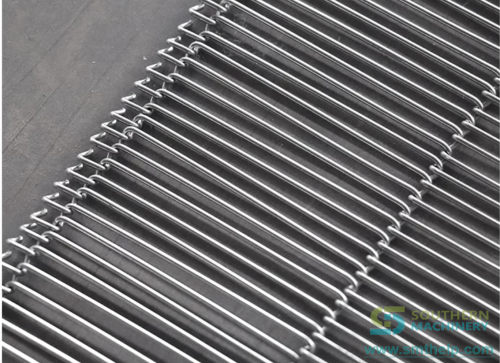
- Conveyor and board size: mesh belt, 0–2000 mm/min, 350 mm maximum board width
- Thermal range: room temperature to 350 °C, ±1 °C precision, ±3 °C distribution error
- Control and power: industrial PC, PID closed loop to SSR drive, one scan per zone per second, 24 kW warm-up and 3–5 kW running
- Option: sealed nitrogen chamber, quoted floor 150 ppm, 20–22 m3/h at a 300–800 ppm band
- Footprint: L3600 x W700 x H1430 mm, approximately 450 kg
Two figures carry a disclosed conflict: the manual's heater table says 12 kW, while the specification sheet and configuration matrix both say 24 kW; and the control screen shows ten channels per side because the HMI is shared across the series — twelve zones is the documented figure, and a screen layout is not a zone count. Confirm both against your build's nameplate.
How does the preheat stage connect to the rest of the PCB assembly line?
The tunnel sits between placement and inspection, and its belt speed ties it to everything on either side.
- Upstream, printing and placement decide what arrives at the inlet: SMT line and placement range
- Downstream, wave soldering handles the through-hole joints a reflow profile cannot reach, fed by the THT insertion range
- Boards enter and leave on the board handling system, and the reflow oven product page carries the machine values quoted here
What does preheat control change in the cost per board?
A reflow oven does not replace operators, so a labour-saving claim would be dishonest. What the profile settings change is how many boards cross the tunnel per hour and what each one costs in electricity:
cycle time per board = (board length + gap) / conveyor speed
energy per board = operating power (kW) x cycle time (h) x tariff ($/kWh)
Example — depends on configuration, subject to final technical confirmation. A 250 mm board with a 50 mm gap at 2000 mm/min is 300 mm of pitch, a 0.15 minute cycle, or about 6.7 boards a minute before line losses. Multiply that cycle by 3–5 kW operating power and your own tariff for the energy line.
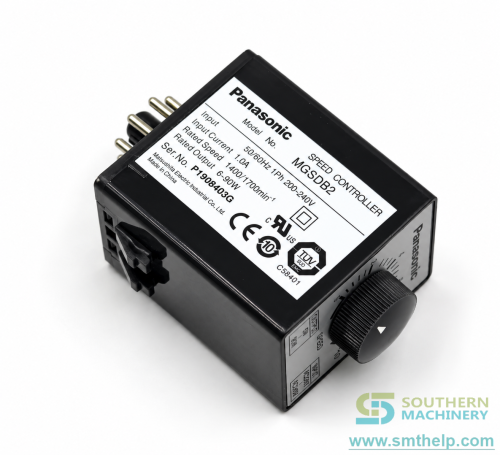
Speed is also the fastest way to break a profile, because it changes every zone at once: the manual's rule of thumb is that a 5–10% cut in belt speed is worth roughly +30 °F at the peak, its worked example taking 500 mm/min to about 460 mm/min, while a single zone setpoint moves in 5 °C steps. Change one thing per run, then re-profile.
FAQ: questions buyers ask before ordering a lead-free reflow oven
How many heating zones does the S-6600-PC have?
Twelve: six upper and six lower, per the specification sheet, the brochure and the configuration matrix. The ten-channel screen layout is a shared HMI, not a zone count.
What preheat ramp rate should the profile use?
The manual's profile ramps at 3 °C/s or less to 120–150 °C. Your own figure still depends on thickness, copper area, component mass and paste, which is why the profile is measured on a test plate rather than copied from a table.
How many thermocouple channels does the profile test use?
Five, labelled TL1 to TL5, over a ten-minute window with a 160–220 °C band. The curve exports to PDF or PNG, or prints for the board traveller.
Can the oven run a nitrogen atmosphere?
Yes. The chamber is sealed against gas loss and includes a flux-reclaiming filter that returns filtered air to the tunnel; the quoted floor is 150 ppm with 20–22 m3/h consumption at a 300–800 ppm oxygen band. Ask for a measured O2 curve on your own board before budgeting for gas.
What maintenance does the preheat stage need?
Seven documented intervals: drive chain weekly, bearings monthly, roller and tension rail every two months, conveyor motor at least twice a week, fans weekly, case and exhaust daily, and a ground continuity check before every start.
Next step: send us your board and we will send back the profile
Tell us the board thickness, the largest component on it and the paste you run. Southern Machinery has built SMT and THT PCB assembly equipment in Shenzhen since 2011 and serves more than 237 customers worldwide, with line integration, spare-part support and operator training behind every machine. Send the board, and we will send back the profile curve with the zone setpoints and belt speed that produced it.
Send a board for a reflow profile test — the full catalogue is at file.autoinsertion.com.
Comments