
Radial Insertion Machine Preventive Maintenance: Monthly Checks & Sticky Pusher Repair Guide
Keep radial insertion machines accurate and profitable with a monthly preventive maintenance checklist, sticky pusher repair and Southern Machinery spare parts.
Sep 9, 2026 · Updated Sep 9, 2026 · Southern Machinery
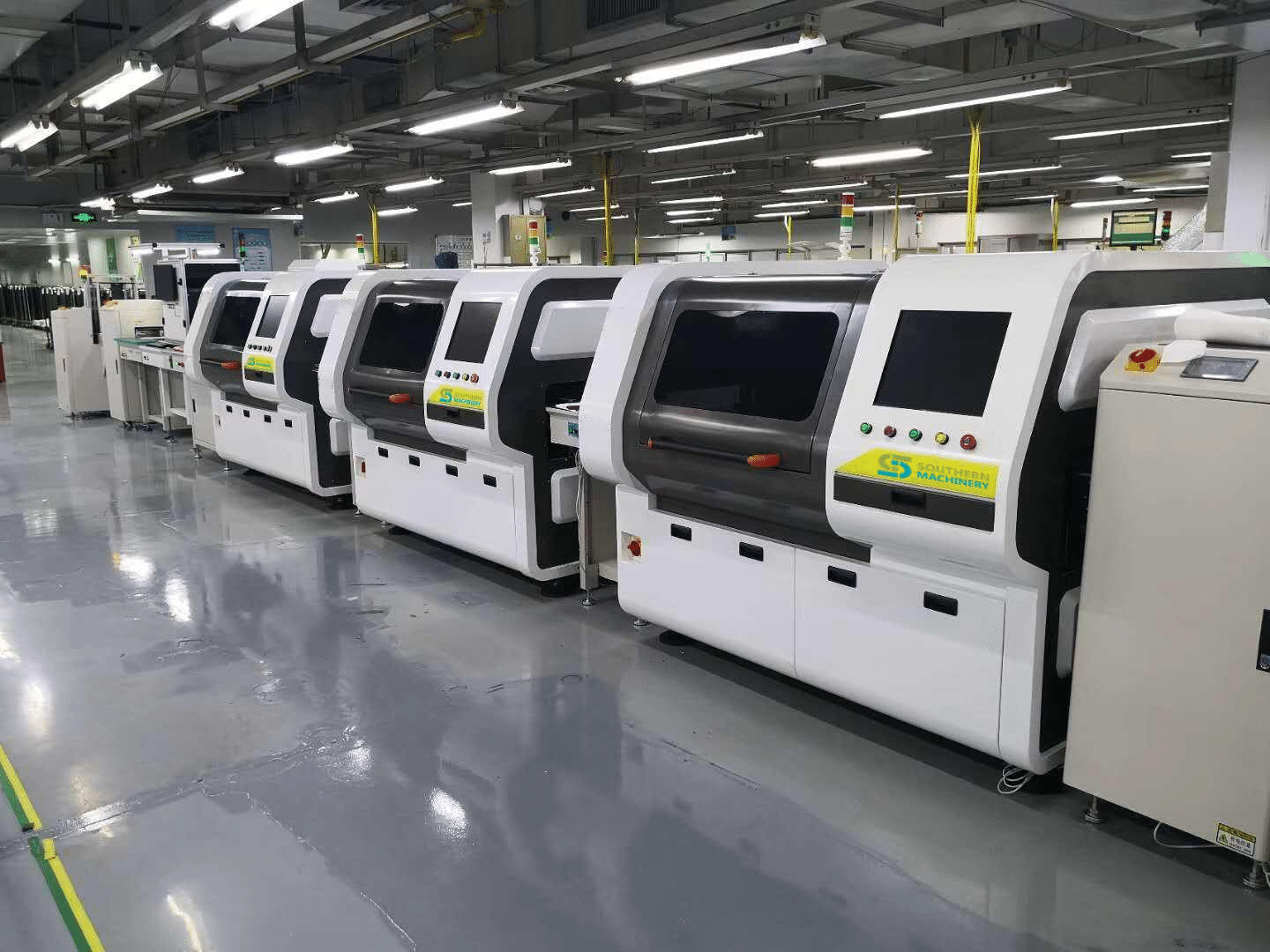
Radial Insertion Machine Preventive Maintenance: Monthly Checks & Sticky Pusher Repair
A radial insertion machine is a long-term production asset. Like any high-speed servo-driven
assembly equipment, it earns its keep only when it runs repeatably — and repeatability is the
direct result of a disciplined maintenance routine. This guide covers the preventive
maintenance workflow Southern Machinery demonstrates for its radial insertion machines,
including the monthly inspection sequence and a common repair every THT line eventually faces:
the sticky insertion pusher.
<iframe width="560" height="315" src="https://www.youtube.com/embed/uATTnC44H7c" title="Radial Repairs - Sticky Insertion Pusher" frameborder="0" allow="accelerometer; autoplay; clipboard-write; encrypted-media; gyroscope; picture-in-picture" allowfullscreen></iframe>
---
What is a radial insertion machine and why does it need maintenance?
A radial insertion machine automatically inserts radial-lead components — capacitors,
transistors, diodes, LEDs, tact switches, coils, potentiometers, lamps and fuses — into
through-hole PCBs, then clinches the leads on the solder side to hold components in place
before wave soldering. Southern Machinery builds this class of equipment in the S-3010 series
(offline models such as the S-3010B) and the S-3000 radial insertion machine, with the insertion
head driven by servo motors and a clinch base that forms the lead clinch under each board.
Because every cycle combines high-speed mechanical motion (head stroke, feeder indexing, board
clamping) with machine-vision coordinate correction, wear and contamination directly affect
insertion quality. Preventive maintenance is what keeps the machine inside its original
tolerance window: components seated fully, leads clinched to the specified angle, and no
intermittent mis-insertions that send boards to rework.
---
Monthly maintenance: what the routine actually checks
Southern Machinery's maintenance video for radial machines walks operators through a monthly
service sequence. The exact steps depend on machine configuration, but a practical monthly PM
for a radial inserter covers:
- Insertion head and pusher assembly — inspect the pusher that drives each component into
the PCB hole. Clean accumulated lead dust and tape debris, check free movement, and verify the
pusher returns cleanly after every stroke.
- Clinch base — check the anvil and clinch mechanism for debris and wear; confirm clinch
length and clinch degree are still within the process setting (the S-3010 series spec cites a
1.5–2.2 mm clinch length and 10–35° clinch range — confirm your model's setting in the
operation manual).
- Feeders and indexing — verify each feeder advances tape cleanly, without skipping, and
that component pitch matches the feeder setting.
- Board clamping and transport — confirm the PCB is clamped flat and consistently at the
insertion position.
- Vision system — run the calibration routine and check the coordinate-correction reference.
- Air pressure and lubrication — confirm supply pressure is within spec and lubricate
moving joints per the manual.
- Electrical and safety checks — inspect cables, connectors and safety interlocks.
Scheduling this as a fixed monthly routine — rather than maintenance-on-failure — is what keeps
changeover repeatable and insertion defects low. Southern Machinery also supplies spare parts,
repair kits and operator training to support factory-led maintenance programs.
---
The sticky insertion pusher: symptom, cause and repair
One repair appears again and again on radial and odd-form insertion lines: the **sticky
insertion pusher**. The pusher is the mechanical finger that seats the component into the board.
When it sticks, you see late insertions, half-seated components, or mis-insertions that read as
component defects downstream.
Southern Machinery's repair video demonstrates the practical repair workflow:
- Diagnose the symptom — watch the insertion cycle for hesitation or incomplete return of
the pusher after the stroke.
- Access the pusher assembly — follow the machine manual to reach the head mechanism.
- Clean — remove hardened lubricant, lead dust and tape residue that make the pusher
stick.
- Check return action — confirm the spring or return mechanism moves the pusher back
freely; replace worn springs or guides if travel is not clean.
- Reassemble and test — run a test cycle and verify full insertion depth and clinch
formation before returning the machine to production.
A clean, freely-moving pusher is the difference between a stable THT line and one that bleeds
yield to intermittent insertion defects. Keeping spare pushers, springs and a repair kit on
hand — Southern Machinery stocks these as spare parts — turns a half-hour repair into a
scheduled, planned event instead of an emergency stop.
---
How radial insertion maintenance fits the complete PCB assembly line
The radial inserter is one station in a longer THT flow. Understanding its place helps you
schedule maintenance without shutting the whole line:
- SMT side — solder paste printing, pick-and-place and reflow for SMD components.
- THT insertion — axial insertion (S4000 series), radial insertion (S-3010B / S-3000) and
odd-form insertion for non-standard parts.
- Wave soldering — the inserted boards pass through the wave to form solder joints.
- Cleaning and inspection — post-solder cleaning, AOI/SPI and functional test.
Because stations are linked by board-handling conveyors, a machine that drifts out of
tolerance creates a stream of defective boards that are only caught at AOI or test. The monthly
PM routine protects the line's overall equipment effectiveness: stable insertion means stable
wave-soldering results, less post-wave rework and fewer false calls at inspection.
---
Key selection parameters for a radial insertion line (confirm with Southern Machinery)
- Component range — radial lead components such as electrolytic, ceramic, box and film
capacitors, transistors, diodes, LEDs, tact switches, coils, potentiometers, lamps and fuses
(per the S-3000 series product specification).
- Lead span capability — the S-3010 series offers multiple span variants (the page
specification references 2.5/5.0/7.5/10.0 mm spans; confirm your model's span options).
- Insertion flexibility — insertion direction up to 360° in 1° increments on the S-3000,
with an inward clinch option for higher bottom-side density.
- Throughput class — the S-3010 series is specified at 22,000 CPH rated / 13,000 CPH
actual, and the S-3000 at 18,000 CPH rated; confirm actual output for your board program.
- Machine vision — coordinate correction and calibration systems for accurate insertion.
- PCB size and thickness — verify your board dimensions fit the machine's PCB range (the
S-3010 series page cites 50×50 mm minimum to 400×400 mm maximum, 0.79–2.36 mm thickness).
- Control and programming — offline programming, Excel-based programs and USB input on the
S-3000, with English/Chinese interface options.
- Utility requirements — power supply, air pressure and floor space; confirm with the
spec sheet for the exact model.
- Maintenance and support — spare parts availability, repair kits, training and the
manufacturer's documented maintenance procedure.
Always request the current specification sheet from Southern Machinery before finalizing a
purchase — parameters evolve with machine configuration and control-software version.
---
ROI, quality and throughput perspective
The business case for preventive maintenance is simple: an insertion machine that runs in
tolerance delivers the labor savings and consistency you bought it for. Skipped maintenance
shows up as:
- Higher defect rates — mis-insertions, floating components and reversed parts that appear
after wave soldering.
- More rework — each defective board costs operator time, solder and inspection capacity.
- Unplanned downtime — a sticky pusher ignored on Monday becomes a stopped line on
Wednesday.
- Shortened machine life — debris and wear accelerate damage to the head, feeders and
clinch base.
A monthly PM routine, backed by genuine spare parts and documented repair procedures, keeps
the machine at its rated throughput and protects the line from the quality escapes that manual
insertion was meant to eliminate.
---
FAQ
Q: How often should a radial insertion machine be serviced?
A: Southern Machinery demonstrates a monthly maintenance routine for radial machines. Daily
operator checks plus a scheduled monthly inspection of the head, pusher, clinch base, feeders
and vision system is a practical baseline; follow the operation manual for your exact model.
Q: What is a sticky insertion pusher and why does it matter?
A: The pusher is the mechanism that seats each radial component into the PCB hole. When it
sticks — usually due to debris, hardened lubricant or a worn return spring — insertion becomes
late or incomplete, producing mis-insertion defects. Cleaning and repairing the pusher restores
stable insertion.
Q: Which components can a radial insertion machine handle?
A: Radial-lead parts such as electrolytic, ceramic, box and film capacitors, transistors,
diodes, LEDs, tact switches, coils, potentiometers, lamps and fuses — components that arrive on
radial tape with parallel leads.
Q: Can maintenance be done by factory staff, or does it need the manufacturer?
A: Routine monthly maintenance is designed for factory operators and technicians following the
manual. For repairs, Southern Machinery provides spare parts, repair kits, training and remote
or on-site support to keep legacy and new lines running.
Q: How does a radial inserter fit into an SMT/THT assembly line?
A: It runs after SMD assembly (reflow) and before wave soldering: boards arrive on a conveyor,
radial components are inserted and clinched, then boards continue to the wave. Southern
Machinery supplies the full SMT, THT, wave soldering, board handling and inspection lineup to
build this flow as one integrated line.
Q: How does automation plus maintenance improve quality versus manual insertion?
A: Automation removes the variability of manual insertion — floating, leakage, mis-insertion
and reversed parts. Preventive maintenance keeps that automation accurate, so the quality gain
is consistent shift after shift.
---
Contact Southern Machinery for Configuration Advice
Southern Machinery (Shenzhen, China, founded 2011) designs and manufactures SMT/THT PCB assembly
automation equipment and has served 237+ customers worldwide. Whether you are automating a new
THT line or maintaining an existing radial insertion machine, the team provides configuration
advice, spare parts, repair kits, training and full-line solutions for SMT, THT, wave soldering,
board handling and inspection.
Contact Jason Wu at jasonwu@smthelp.com for machine configuration and maintenance support.
- Visit file.autoinsertion.com for catalogs and machine documentation
- See machine photos at ph.smthelp.com
- Explore the product range at www.smthelp.com
Comments