
PCB Palletizing Machine: Automate Board Stacking to Cut Labor Cost in PCB Assembly
An automatic PCB palletizing machine from Southern Machinery stacks boards into pallets at the line outfeed, cutting end-of-line labor and boosting consistency.
Sep 1, 2026 · Updated Sep 1, 2026 · Southern Machinery
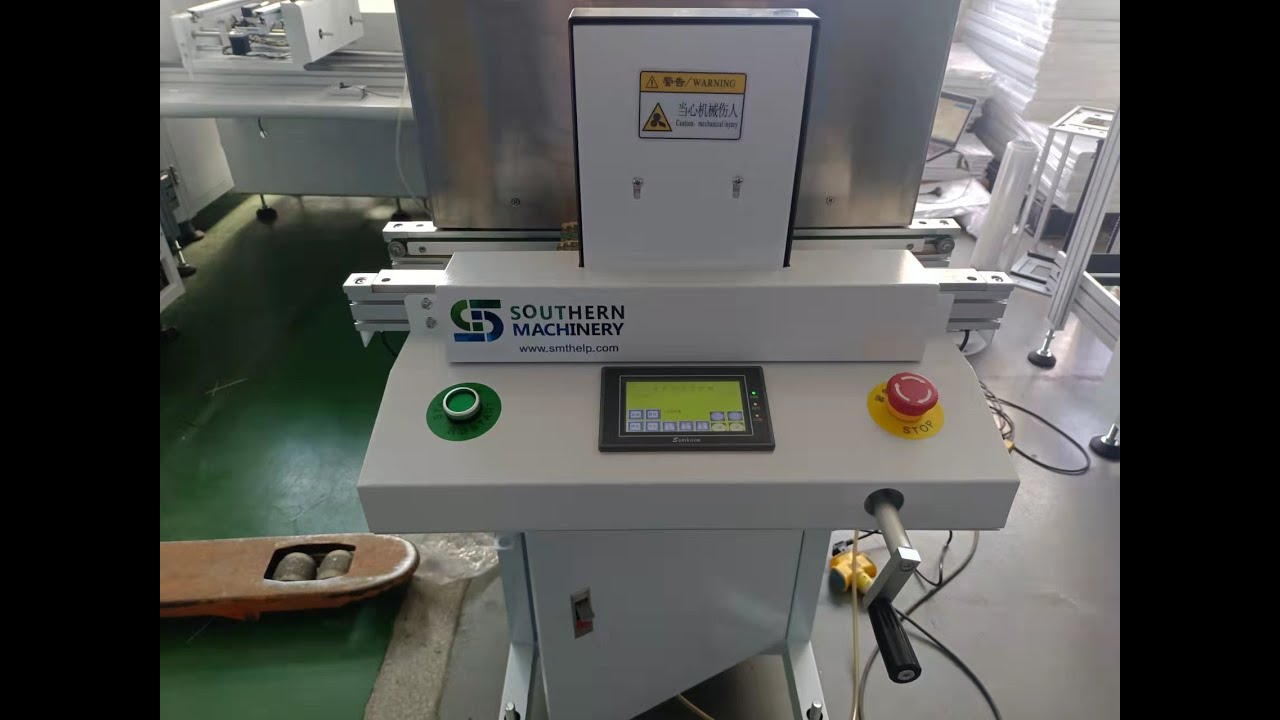
PCB Palletizing Machine: Automate Board Stacking to Cut Labor Cost in PCB Assembly
Manual PCB stacking and palletizing is one of the most repetitive, labor-hungry jobs left on the SMT/THT shop floor. Operators stand at the end of a line, take each board off the conveyor by hand, inspect it briefly, and stack it into a pallet or magazine — board after board, shift after shift. The cost is not just wages: it is the inconsistency, the missed boards, the bottlenecks, and the rework when boards are stacked carelessly.
An automatic PCB palletizing machine does this job mechanically and consistently. Southern Machinery designs and builds palletizing equipment for PCB assembly lines that collects boards from the conveyor, positions them correctly, and stacks them into pallets or magazines without manual handling. The machine's own demonstration videos put the value proposition simply: save labor cost, increase benefit, and recover cost quickly.
This article explains what a PCB palletizing machine is used for, where it fits in a complete SMT/THT line, and the parameters a buyer should confirm when selecting one.
What is this machine used for?
A PCB palletizing machine (also called an automatic PCB stacking or palletizing system) automates the end-of-line handling step where finished PCBs or PCBAs are collected and stacked onto pallets, carriers, or into magazines for the next process stage.
In a typical PCB assembly factory, boards that complete soldering — wave soldering, reflow, or selective soldering — still need to be gathered for inspection, depaneling, testing, or transfer to the next line. Doing this by hand is slow and inconsistent. The palletizing machine replaces that manual step with a mechanical stacker that:
- Takes each board from the outfeed conveyor at line speed
- Aligns and positions it precisely on the pallet or stack
- Counts boards and maintains a consistent stack height
- Signals when a pallet is full and ready for removal
- Runs continuously without fatigue, breaks, or distraction
Because the machine handles the board mechanically, boards are stacked uniformly every time — which directly reduces damage, misalignment, and rework compared with hand stacking.
Typical Application Scenarios
Palletizing automation earns its keep wherever boards flow off a line continuously and someone has to stack them. Typical scenarios include:
- EMS / contract manufacturing: high-mix, high-volume lines where operators are better used on setup, programming, and quality tasks than on repetitive stacking.
- THT / wave soldering lines: boards emerging from wave soldering with pallets or carriers must be collected and stacked for depaneling and final assembly. Palletizing here removes the hottest, most repetitive job on the line.
- Automotive electronics: long-running, high-volume boards where consistency and traceability matter, and where manual stacking is a common source of handling damage.
- Industrial control and power supply manufacturing: large numbers of similar boards per shift make end-of-line stacking a measurable cost center.
- LED lighting and appliance electronics: cost-sensitive production where labor reduction is the fastest lever on unit cost.
In each case the machine pays back by removing a low-skill, high-repetition task from the headcount — while making the outfeed predictable enough for the next process to run without waiting.
How It Integrates into a Complete PCB Assembly Line
The palletizing machine belongs at the outfeed of the assembly process, after the last value-adding step:
- SMT line: printer → pick-and-place → reflow → AOI → (palletizing)
- THT line: auto insertion or manual insertion → wave soldering → lead cutting → (palletizing)
- Mixed SMT/THT line: SMT pass → THT pass → selective wave → final cleaning → (palletizing)
In a full Southern Machinery line, the palletizing machine connects to the same conveyor family as the other board handling equipment — loaders, unloaders, buffers, turn conveyors, and transfer conveyors — using standard SMEMA-style handshaking so it coordinates with the upstream machine. When a board arrives, the upstream machine signals the palletizer; when the palletizer is busy or full, the line knows and responds accordingly.
This is the same integration logic Southern Machinery applies across its board handling range: each station talks to its neighbors, so the line keeps flowing without operators running between machines.
Key Selection Parameters
Every palletizing application is a little different, so confirm these parameters with the supplier before ordering:
- Board size range: minimum and maximum PCB dimensions the machine must handle, including board thickness.
- Pallet / magazine format: pallet dimensions, stack height, and how full pallets are removed — manually or on a conveyor.
- Line speed match: the throughput class of the palletizer must keep up with the upstream machine's output without becoming a bottleneck.
- Board orientation and edge condition: whether boards arrive with components on one or both sides, and whether edge rails or conveyor belts are used.
- Integration method: standalone with its own controller, or inline with SMEMA handshaking to existing loaders, buffers, and conveyors.
- Facility requirements: power supply, air supply (if pneumatically actuated), and floor space at the end of the line.
Southern Machinery's engineers can confirm the correct configuration from your board size, line speed, and pallet format — share those three facts and they can propose a palletizing solution that fits.
ROI, Quality & Throughput Perspective
The business case for a palletizing machine is built on three lines:
- Labor reduction. One palletizing machine replaces one or more operators doing end-of-line stacking — typically the same headcount class as other board handling automation. The saved labor cost is the first and largest ROI line.
- Quality consistency. Mechanical stacking positions every board the same way. There is no fatigue-driven variation, no careless drops, no misaligned stacks that get rejected downstream. Less handling damage means less rework and fewer scrapped boards.
- Line balance. When boards are palletized automatically, the outfeed never backs up and the line never idles waiting for a human stacker. Throughput stabilizes at the machine rate instead of the slowest operator's rate.
For factories already running automated insertion, wave soldering, and board handling, adding palletizing closes the last manual gap in the material flow — and the payback is typically measured in months, not years, because the machine directly removes payroll cost.
FAQ
Q: What does a PCB palletizing machine do?
A: It automatically collects PCB boards from an assembly line outfeed conveyor, positions them, and stacks them onto pallets, carriers, or into magazines — replacing manual board stacking and reducing labor cost.
Q: Where does a palletizing machine fit in an SMT or THT line?
A: It sits at the outfeed of the final process step — after wave soldering, reflow, or final cleaning — collecting finished boards for inspection, depaneling, testing, or transfer to the next line.
Q: Can it integrate with my existing SMT line equipment?
A: Yes. Southern Machinery palletizing equipment uses standard conveyor handshaking (SMEMA-style signaling) and can be configured to work with existing loaders, buffers, conveyors, and other board handling machines.
Q: What boards can it handle?
A: The applicable board size range, thickness, and pallet format depend on the machine configuration — confirm your minimum and maximum PCB dimensions with Southern Machinery to select the right model.
Q: How does automation improve quality compared with manual stacking?
A: Mechanical stacking positions every board uniformly, eliminating the variation, drops, and misalignment that come from manual handling — which reduces damage and rework.
Q: How quickly does a palletizing machine pay back?
A: Because the machine directly replaces end-of-line stacking labor, the payback is driven by saved wages and reduced rework; factories typically recover the investment within months, though exact payback depends on line volume and labor rates.
Contact Southern Machinery for Configuration Advice
Every palletizing application differs in board size, line speed, and pallet format. Contact Southern Machinery with your board dimensions and line configuration to get a recommendation matched to your factory.
- Email: Jason Wu at jasonwu@smthelp.com
- Website: https://www.smthelp.com
- Catalogs: https://file.autoinsertion.com
- Machine photos: https://ph.smthelp.com
Southern Machinery is a Shenzhen-based SMT/THT PCB assembly automation equipment manufacturer founded in 2011, serving 237+ customers worldwide with full-line solutions covering SMT, THT, wave soldering, board handling, and inspection — backed by global support, spare parts, and training.
Watch the machine in action: PCB Palletizing machine demo by Southern Machinery — https://www.youtube.com/watch?v=5BJBuhmTm7E
Comments