
PCB Inspection Methods & Common PCB Defects: SPI, AOI and X-Ray Explained for EMS Lines
SPI, AOI, X-ray and component counting: which PCB inspection method catches which defects, and how inspection machines fit into SMT and THT lines.
Aug 16, 2026 · Updated Aug 16, 2026 · Southern Machinery
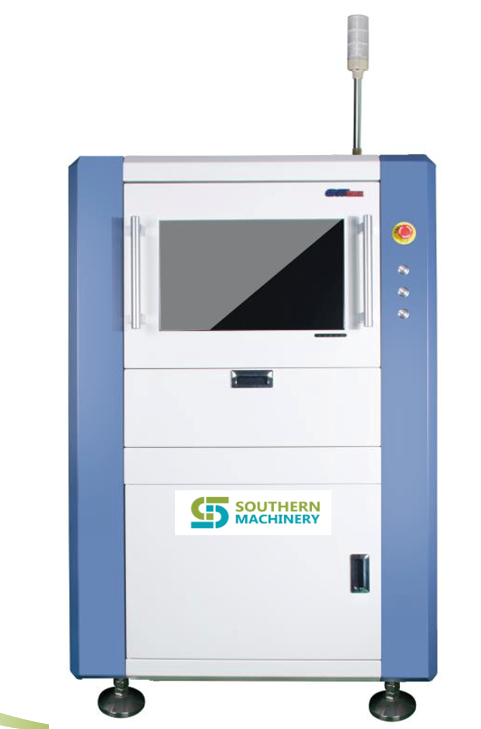
PCB Inspection Methods & Common PCB Defects: SPI, AOI and X-Ray Explained for EMS Lines
Solder paste bridges, tombstoned resistors, lifted pads, missing components — every PCB assembly line meets defects. The question is how fast you catch them. This guide covers the main PCB inspection methods used in SMT and THT assembly — Solder Paste Inspection (SPI), Automated Optical Inspection (AOI), X-ray inspection and component counting — the common PCB defects each one is designed to catch, and how inspection equipment from Southern Machinery fits into a complete PCB assembly line.
Watch the video overview: PCB Inspection Methods & Common PCB Defects
What is this machine used for?
PCB inspection machines are used to verify that a printed circuit board assembly was manufactured correctly before it moves to the next process step or ships to the customer. Where a human inspector uses eyes and a magnifying lamp, an inspection machine uses cameras, structured light or X-ray to compare the board against its design data — automatically, at line speed, and with repeatable judgment.
Inspection equipment is not a single machine type. A typical line uses several, at different points:
- SPI (Solder Paste Inspection) checks the paste deposit right after stencil printing — before components are placed and the board is soldered.
- AOI (Automated Optical Inspection) checks assembled boards using cameras — after placement (pre-reflow), after reflow, or after wave soldering for THT/DIP boards.
- X-ray inspection looks through components to check solder joints hidden under BGA, QFN, connector and other bottom-terminated packages.
- Component counters verify incoming component inventory and reel counts at goods-in and during material kitting.
Southern Machinery supplies this equipment as part of a complete SMT/THT PCB assembly line — alongside stencil printers, pick-and-place machines, insertion machines, reflow ovens, wave soldering and board handling systems — with the same focus on high efficiency, cost-effective operation and global support.
Typical Application Scenarios
PCB inspection equipment earns its place in almost every electronics manufacturing environment:
- EMS (Electronics Manufacturing Services) companies running multiple product types: programmable inspection programs let one AOI or SPI machine switch between different boards quickly, protecting yield across a high-mix production floor.
- Automotive electronics (ECU, BMS, infotainment, lighting): zero-defect requirements and AEC-grade quality demands make solder joint verification — including X-ray for BGA/QFN — standard practice.
- Medical electronics: traceability and first-article inspection are part of regulatory and quality management systems; automated inspection creates objective, documented evidence for every board.
- Industrial control and power electronics: high-current and high-voltage boards often combine SMD and THT components, so inspection after both reflow and wave soldering matters.
- LED lighting and consumer appliances: high-volume, cost-sensitive production where catching defects early avoids expensive rework at final test.
How It Integrates into a Complete PCB Assembly Line
Inspection stations are designed to drop into the line without slowing it down:
- SPI after stencil printing: the printer is followed by the SPI machine, which measures paste height, area and volume on every pad. Boards with unacceptable paste deposits can be rejected and cleaned before a single component is placed — this is where the biggest cost savings happen, because an error caught here costs seconds, not a rework loop.
- AOI before and after soldering: pre-reflow AOI checks component presence, polarity, position and orientation before the board enters the reflow oven; post-reflow AOI checks solder joints. For THT/DIP boards, inline AOI after wave soldering verifies insertion quality and solder fillets.
- X-ray for hidden joints: BGA, QFN, connector and press-fit joints that cannot be seen from above are inspected with X-ray systems, either inline or in a rework/QC cell.
- Material control: SMD component counters and X-ray chip counters verify reel counts at goods-in and kitting, so the line never starts a run with the wrong quantity of components.
Because Southern Machinery builds the full line — printers, placement, insertion, reflow, wave soldering, board handling and inspection — the stations are matched for conveyor height, width, communication and workflow, and one support team covers the whole line.
Key Selection Parameters
When selecting PCB inspection equipment, confirm these parameters with the supplier for your specific boards:
- Board size range (length × width) the machine accepts — for example, the SH8650 3D SPI machine from Southern Machinery handles PCBs up to 510 mm × 460 mm. Verify your largest and smallest boards fit.
- Inspection technology: 2D vs 3D measurement for SPI and AOI; whether X-ray is needed for your package types (BGA, QFN, shielded modules).
- Inspection speed versus line takt time — the inspector must not become the bottleneck.
- Program creation and changeover: how fast new board programs are made, whether offline programming is supported, and how false-alarm rates are managed.
- Inline vs offline (standalone) configuration — inline machines are integrated into the conveyor line; offline units work in QC or rework cells.
- Facility requirements — power supply, air, and footprint. For example, Southern Machinery's X-ray inspection system operates on single-phase AC 110–220 V / 50–60 Hz with geometric magnification up to 120× and system magnification up to 1000×.
- Data output: whether inspection results can be linked to MES for traceability and statistical process control.
ROI, Quality & Throughput Perspective
Inspection equipment pays for itself in three ways:
- Defect containment at the cheapest point: an SPI unit catching a bad paste print before placement avoids a full rework cycle; a post-wave AOI catching an incomplete insertion before final test avoids a customer return. Every defect caught earlier costs less than the same defect caught later.
- Labor replacement and consistency: automated inspection replaces manual visual inspection, which is slow, subjective and exhausting — especially for THT boards with many solder joints. A machine applies the same criteria to every board, every shift.
- Data for process improvement: inspection results reveal which defect is most frequent, which feeder or nozzle is failing, and which process step drifts over time. That data lets process engineers fix root causes instead of endlessly reworking symptoms — improving first-pass yield and line balance.
For an EMS or ODM running high-mix production, the combination of fast program changeover and reliable defect capture directly supports higher throughput with fewer operators per line.
FAQ
Q: What are the most common PCB defects found in assembly?
A: Typical defects include solder paste bridges and insufficient paste, tombstoning, missing or misaligned components, wrong polarity, solder bridges, cold solder joints, insufficient wetting, lifted pads, voids in BGA/QFN solder joints, and — for THT boards — incomplete insertion or poor clinching. Each inspection method is designed to catch a specific group of these defects.
Q: What is the difference between SPI and AOI?
A: SPI (Solder Paste Inspection) inspects the paste deposit immediately after stencil printing, before components are placed. AOI (Automated Optical Inspection) inspects assembled boards — component presence, position, polarity and solder joints — before or after soldering. SPI prevents defects from being created; AOI catches them after assembly.
Q: When is X-ray inspection necessary?
A: X-ray is needed when solder joints are hidden under components — BGA, QFN, shielded modules, connectors and press-fit terminals. Optical inspection cannot see these joints, so X-ray (inline or in a QC cell) is the standard method for automotive, medical and other high-reliability assemblies.
Q: Can inspection machines be integrated into an existing SMT or THT line?
A: Yes. Southern Machinery offers inline inspection machines (for example inline AOI and the S-AO600C AOI) designed to match conveyor height and width of a standard line, as well as offline units for QC and rework cells. Confirming board size, line speed and program workflow with the supplier ensures a clean integration.
Q: What support does Southern Machinery provide with inspection equipment?
A: Southern Machinery, founded in 2011 in Shenzhen, China, serves 237+ global customers with SMT/THT PCB assembly automation equipment. Support includes spare parts, training, and process advice across the full line — stencil printing, placement, insertion, reflow, wave soldering, board handling and inspection.
Q: Can I see inspection machines in operation?
A: Yes. Southern Machinery publishes operation and application videos on its YouTube channel — including PCB inspection methods, 3D SPI operation, AOI after wave soldering, and component counting — and the sales team can arrange a machine demonstration or trial for your boards.
Contact Southern Machinery for Configuration Advice
Choosing the right inspection method and machine depends on your board types, defect history and quality targets. Contact Southern Machinery for configuration advice — Jason Wu at jasonwu@smthelp.com, or visit www.smthelp.com. Browse the machine catalog at file.autoinsertion.com and view machine photos at ph.smthelp.com.
Southern Machinery — Shenzhen, China | Founded 2011 | 237+ global customers | SMT / THT PCB assembly automation equipment: SMT placement, auto insertion, wave soldering, board handling, inspection.
Comments