
Legacy SMT/THT Machine Retrofit & Upgrade Services by Southern Machinery
Southern Machinery retrofits legacy SMT/THT auto insertion machines: automatic PCB loading, AC motor upgrades and control migration support.
Sep 10, 2026 · Updated Sep 10, 2026 · Southern Machinery
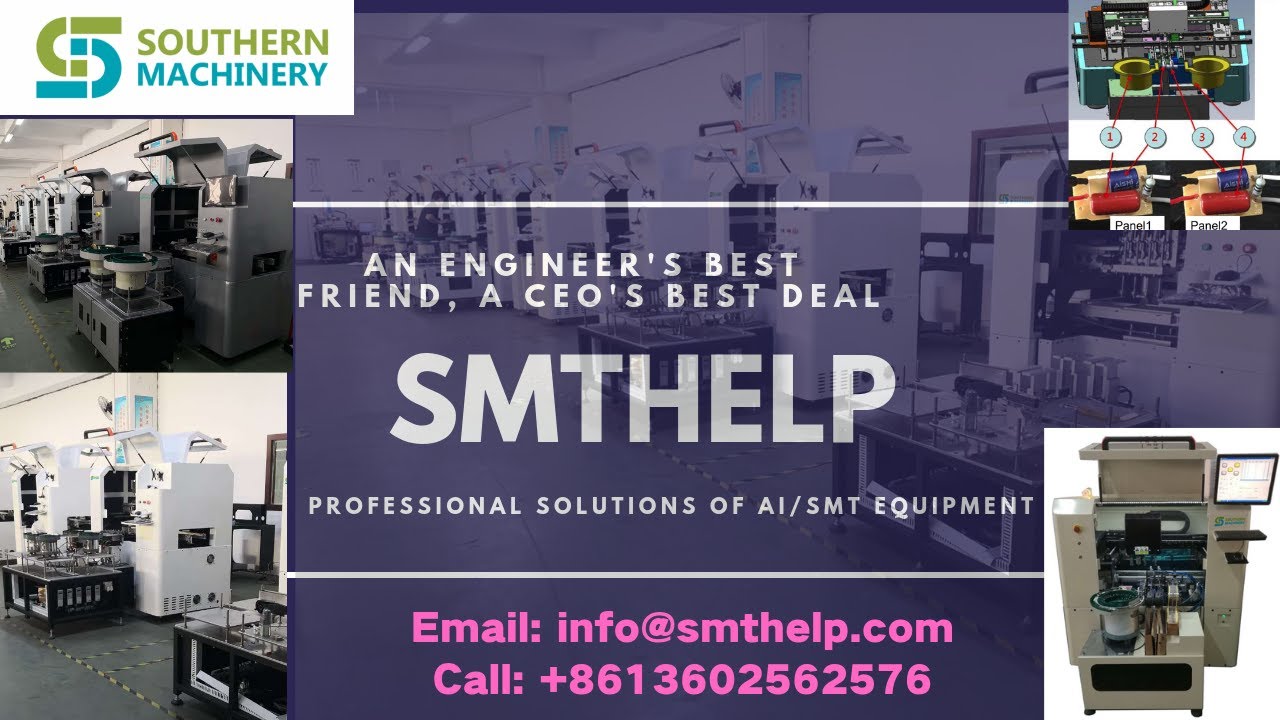
Legacy SMT/THT Machine Retrofit & Upgrade Services by Southern Machinery
A radial or axial auto insertion machine that still places components accurately does not need to be replaced when one subsystem ages out. Southern Machinery retrofits legacy SMT and THT equipment so EMS and OEM factories keep proven insertion platforms in production, with lower capital outlay than a new machine.
What is an SMT/THT retrofit and upgrade service?
A retrofit replaces or modernizes one part of an existing machine - loading, drive, control, or board transport - while the machine frame, tooling and program library stay in place. An upgrade raises the capability of the same platform so it can handle current board designs, wider component spans, or unattended operation.
Southern Machinery is based in Shenzhen, China, founded in 2011, and supports 237+ customers worldwide with SMT and THT PCB assembly automation equipment, full-line solutions, spare parts, training, and repair. Retrofit kits, sub-assemblies, repair kits, overhaul and upgrading are part of the standard service scope - not a one-off engineering project.
Typical application scenarios
- EMS factories running legacy Universal/UIC auto insertion lines where boards and programs are stable and the inserter is mechanically sound, but loading or drives are aging.
- Automotive electronics and industrial control producers who must keep long-life PCBA programs running on qualified platforms.
- Home appliance, power supply and LED assembly lines where a manual loading step is the remaining labor bottleneck before an otherwise automated insertion line.
- Factories with spare-part supply risk on discontinued inserters, where motor, servo and laser-head repairs protect throughput.
- MRO and production engineering teams looking for a documented path from manual THT loading to automatic feeding without buying a new line.
How a retrofit fits into an existing SMT/THT line
Retrofit work is designed around the existing line layout. The auto insertion machine keeps its position between upstream SMT output and downstream wave or selective soldering, cleaning and inspection stations. Loading, transport and control changes are installed so the machine still communicates with the rest of the line and the same board programs remain usable.
Because the platform is unchanged, downstream stations - wave soldering, AOI after wave, lead cutting, depanelizing - do not need to be re-qualified or re-laid out. That is what makes retrofit economics attractive against a full machine replacement.
Retrofit and upgrade options Southern Machinery provides
- Manual PCB loading to automatic loading on Universal auto insertion machines - removes a manual board-loading operator from the THT insertion cycle.
- AC motor upgrade for older Universal auto insertion machines - replaces aging drive motors with a modern AC drive arrangement.
- Control and PLC transition support - when a controller is replaced, the existing machine programs are migrated to the new PLC instead of being rebuilt from scratch.
- Board Handling System (BHS) retrofit - driver clearance adjustment and cutter adjustment as part of restoring stable board transport.
- Radial inserter hardware upgrades, including auto-insert for missing components, to reduce manual touch-up after insertion.
- Odd-form inserter line upgrades with a board handling system - one documented case delivered a one-year ROI.
- Board-level and module repair, including Universal servo amplifier 46878701 service and Cyber Optics Laser 6604098 / 6604033 / 6604035 repair for Yamaha YVL88 and YV88II machines.
- Spare parts supply across Universal, Panasonic, TDK, Fuji, JUKI, Yamaha, Samsung, Siplace/Siemens and DEK platforms.
Triple-span jaw tooling: designing the board to match the insert head
For legacy triple-span machines (5.0 / 7.5 / 10.0 mm spans), Southern Machinery publishes a simple design rule for PCB hole spans so the jaw clamps secure component leads against the fixed jaw guide surfaces:
- 5.0 mm span: one lead diameter (round leads) or one lead width (rectangular leads) + 4.50 mm (0.177 in)
- 7.5 mm span: one lead diameter or width + 7.04 mm (0.277 in)
- 10.0 mm span: one lead diameter or width + 9.58 mm (0.377 in)
Checking these values before a board release avoids the most common retrofit-era complaint - components that insert but are not clamped securely.
Key selection parameters before requesting a retrofit quotation
To size a retrofit, prepare this information rather than a finished specification:
- Machine brand, model and serial, plus the current control and PLC generation.
- Which subsystem is failing: loading, transport/drive, insertion head, clinch, or control.
- Board size range, panelization and the smallest component span in production.
- Current loading method (manual, magazine, or in-line) and target automation level.
- Existing programs available off-machine, and whether a backup exists today.
- Required line interface (upstream SMT output, downstream wave/selective soldering, AOI).
- Facility limits: power supply, air, and floor space around the machine.
- Spare-part and service-history constraints on discontinued modules.
ROI, quality and throughput perspective
Retrofit economics come from three places. First, labor: replacing a manual loading position removes a recurring operator cost from every shift. Second, capital: an upgrade is a fraction of a new inserter purchase and does not restart line qualification. Third, uptime: keeping spares and repair paths for servo amplifiers, laser heads and transport modules avoids days of unplanned downtime when a discontinued part fails.
Quality improves for the same reason a retrofit is cheaper - the process window of a proven platform is already known. Insertion programs, clinch settings and span tooling stay validated, so the retrofit changes the machine's reliability envelope without changing the soldering profile downstream.
FAQ
What kinds of machines can Southern Machinery retrofit?
Legacy SMT and THT platforms, including Universal/UIC auto insertion machines (radial and axial), odd-form inserters, and board handling systems on existing lines.
Can you upgrade manual PCB loading to automatic loading on an existing inserter?
Yes. Manual-to-automatic loading upgrades are one of the most common retrofit requests on Universal auto insertion machines.
What if my controller or PLC is replaced - do I lose my programs?
No. Program migration to the new PLC is part of the retrofit scope, so existing machine programs can be copied from the previous controller to the new one.
Do you repair discontinued electronics as well as mechanical parts?
Yes. Repair services cover boards and modules such as Universal servo amplifiers and Cyber Optics laser heads (6604098 / 6604033 / 6604035) used on Yamaha YVL88 and YV88II machines.
How long does a retrofit take, and what does it cost?
Scope drives both. Send the machine model, the subsystem in question, and the board range, and Southern Machinery will confirm the kit, the work sequence and the expected ROI.
Can a retrofitted line still use my existing programs and tooling?
That is the point of a retrofit. The platform, tooling references and program library stay in use, so downstream soldering and inspection stations continue with validated settings.
Contact Southern Machinery for retrofit and upgrade advice
Tell us the machine model and the subsystem you want to modernize, and we will recommend a retrofit path with the parts, repair and training scope included. Contact Jason Wu at jasonwu@smthelp.com | Visit file.autoinsertion.com for catalogs and ph.smthelp.com for machine photos | www.smthelp.com
Comments